
Search results for "Failure" in Home Design Ideas
 ACE Cabinet Center
Browder's ACE is the place for Composite Decking!
Why MoistureShield?
MoistureShield® decking products make the great outdoors even greater by inspiring care-free living while making a statement. Built to be tough yet beautiful, our durable composite decks outperform and outclass your run-of-the-mill composite, maintenance-heavy wood or plastic-like PVC decks. This innovative vision is why in our long history, we've never had a field failure. And it's why we proudly stand behind the best warranty in the industry.
 Lawn Enforcement Landscaping LTD
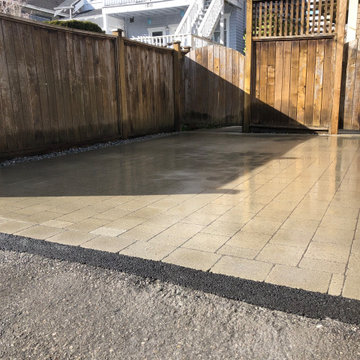
Lawn Enforcement Landscaping takes great pride in our hardscape work. Pictured here is a recent installation of paving stones in Vancouver for a driveway.
COVID-19: We practice safe social distancing with our team and you, and are pleased to be able to help you move forward on projects during this time.
Proper Paving Stone Installation
By following the proper steps of base preparation/compaction, detailed laying of the pavers, certified edge restraints and polymeric jointing sand – we are left with a driveway parking pad that will stay true for years to come!
Know your base! Lawn Enforcement takes pride in their high attention to detail and we only install to ICPI standards International Concrete Paver Institute. The most common failure that comes from paving stones is improper base and compaction. This will cause settling, rutting and edging failure in your finished product.
Overview of Materials Required for Paving Stones
Geotextile Fabric: Prevents gravel base migration into soil sub-base.
Gravel Base (3/4” minus road base gravel). Here are some rough amounts required:
Walkways, Patios: 4”
Driveways, parking pads: 6”-12”
Compacted in 2” lifts depending on plate compactor used at time of installation
Sand base:
1” of bedding sand MAX
Paving Stones/Jointing Sand/Edge Restraints
Keeping Our Pavers As Local as Possible
We work with a variety of local suppliers to bring you a great selection of interlocking and hydrapressed slab pavers!
Click here to request a Paving Stone Installation today!
Find the right local pro for your project
 Gregory Heitzler Design - GHDesign
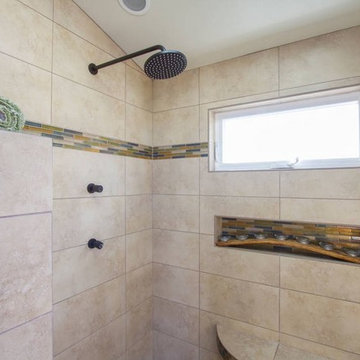
Small transitional master multicolored tile and glass tile travertine floor double shower photo in San Francisco with a vessel sink, furniture-like cabinets, distressed cabinets, wood countertops, a two-piece toilet and white walls
 Rescue Remodeling LLC
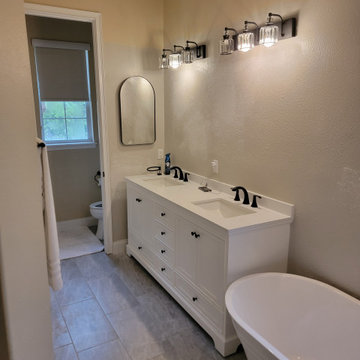
This Palm Bay homeowner needed a full shower replacement due to improper waterproofing and tile failure. We removed the old shower, corrected the curb slope, rebuilt the shower pan, installed new waterproofing, and finished with large-format wall tiles and a premium niche installation. Clean lines, perfect layout, and durable materials made this a long-lasting upgrade.
We specialize in bathroom remodels, tile showers, waterproofing, and small-to-medium renovation projects across Brevard County.
 A & WEZ CONSTRUCTION
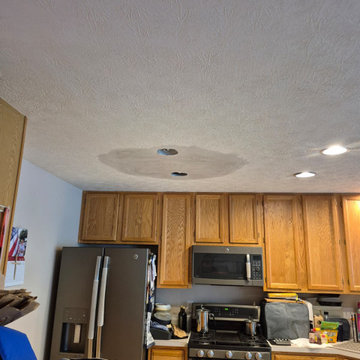
Plumbing and Ceiling Repair
Due to a plumbing failure, water damage occurred to the ceiling on the first floor. Our team repaired the damaged plumbing system and restored the affected ceiling area, ensuring proper functionality and a clean, finished appearance.
 Natural Stone Institute
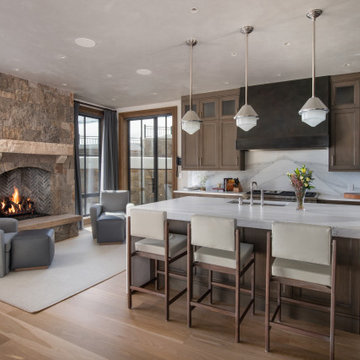
Gallegos was contacted by a client about a project where stone was not just to be an accent material, but the main visual and perceived structural element to create a timeless architectural composition. To further the endeavor: all veneers and dimension stone must be locally sourced and sustainably quarried. The design called for a moss rock veneer with cut stone trim. Sourcing the sandstone moss rock was simple because there were several local quarries to use. The problem
was with the trim pieces.
Gallegos selected Colorado Buff sandstone for the trim since the buff body was a good contrast to the moss rock and it is a stone that can be cut to size. One main concern with any sedimentary stone is hitting what is known as a “dry” layer in the ledge. This is an area in the stone between sedimentary layers that has not solidified or cemented. It is still granular and can lead to future stone failure as water penetrates these layers and creates freeze/thaw issues. To avoid this, they used
an epoxy injected into the dry layers to help solidify the material and prevent any future failures.
The client also wanted sustainable materials for their countertops and bathrooms. Many of the interior stones were either reclaimed materials or were sourced from Colorado quarries – Calacatta Lincoln was used extensively.
Gallegos sourced tiles from reclamation projects in Europe and Asia for use in the master bath and front entry areas. For many of the countertops, the owner’s interior designer spent hours looking through remnants and applied several throughout the residence.
Willow Court is a spectacular and dramatic nod to stone masonry, something the owner, architect, and builder can be proud of and, for the most part, was built with the environment in mind.
 Natural Stone Institute
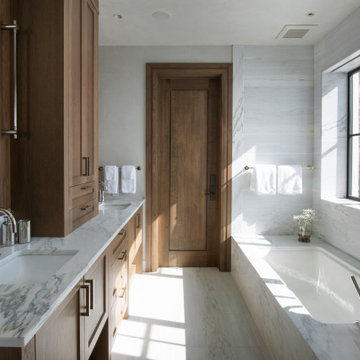
Gallegos was contacted by a client about a project where stone was not just to be an accent material, but the main visual and perceived structural element to create a timeless architectural composition. To further the endeavor: all veneers and dimension stone must be locally sourced and sustainably quarried. The design called for a moss rock veneer with cut stone trim. Sourcing the sandstone moss rock was simple because there were several local quarries to use. The problem
was with the trim pieces.
Gallegos selected Colorado Buff sandstone for the trim since the buff body was a good contrast to the moss rock and it is a stone that can be cut to size. One main concern with any sedimentary stone is hitting what is known as a “dry” layer in the ledge. This is an area in the stone between sedimentary layers that has not solidified or cemented. It is still granular and can lead to future stone failure as water penetrates these layers and creates freeze/thaw issues. To avoid this, they used
an epoxy injected into the dry layers to help solidify the material and prevent any future failures.
The client also wanted sustainable materials for their countertops and bathrooms. Many of the interior stones were either reclaimed materials or were sourced from Colorado quarries – Calacatta Lincoln was used extensively.
Gallegos sourced tiles from reclamation projects in Europe and Asia for use in the master bath and front entry areas. For many of the countertops, the owner’s interior designer spent hours looking through remnants and applied several throughout the residence.
Willow Court is a spectacular and dramatic nod to stone masonry, something the owner, architect, and builder can be proud of and, for the most part, was built with the environment in mind.
 Eurodale Developments Inc
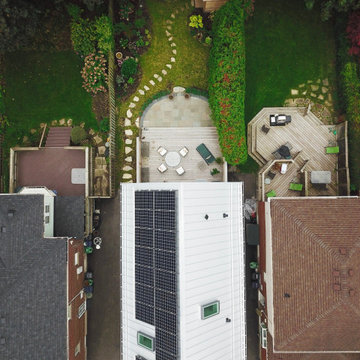
Panasonic whole home energy system solar panels installed as part of this eco conscious addition and renovation project. This system provides reserve energy for up to 3 days in the event of a grid failure, and also feeds into the hydro grid when excess power is generated, offsetting hydro costs from the utility.
 Natural Stone Institute
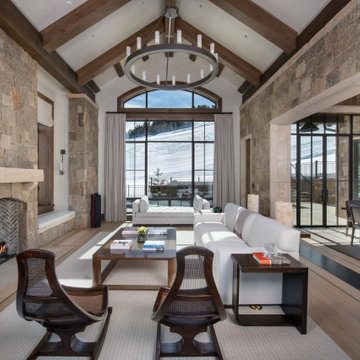
Gallegos was contacted by a client about a project where stone was not just to be an accent material, but the main visual and perceived structural element to create a timeless architectural composition. To further the endeavor: all veneers and dimension stone must be locally sourced and sustainably quarried. The design called for a moss rock veneer with cut stone trim. Sourcing the sandstone moss rock was simple because there were several local quarries to use. The problem
was with the trim pieces.
Gallegos selected Colorado Buff sandstone for the trim since the buff body was a good contrast to the moss rock and it is a stone that can be cut to size. One main concern with any sedimentary stone is hitting what is known as a “dry” layer in the ledge. This is an area in the stone between sedimentary layers that has not solidified or cemented. It is still granular and can lead to future stone failure as water penetrates these layers and creates freeze/thaw issues. To avoid this, they used
an epoxy injected into the dry layers to help solidify the material and prevent any future failures.
The client also wanted sustainable materials for their countertops and bathrooms. Many of the interior stones were either reclaimed materials or were sourced from Colorado quarries – Calacatta Lincoln was used extensively.
Gallegos sourced tiles from reclamation projects in Europe and Asia for use in the master bath and front entry areas. For many of the countertops, the owner’s interior designer spent hours looking through remnants and applied several throughout the residence.
Willow Court is a spectacular and dramatic nod to stone masonry, something the owner, architect, and builder can be proud of and, for the most part, was built with the environment in mind.
 Trane Residential
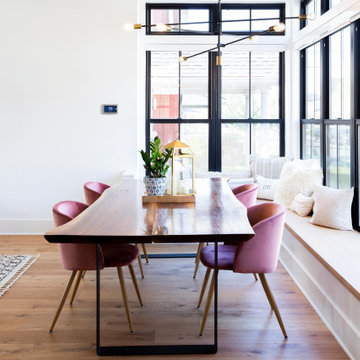
Inspiration for a large contemporary medium tone wood floor and brown floor dining room remodel in Charlotte with white walls
 Delta Tile
Bathroom Tile Installation in Charlotte NC
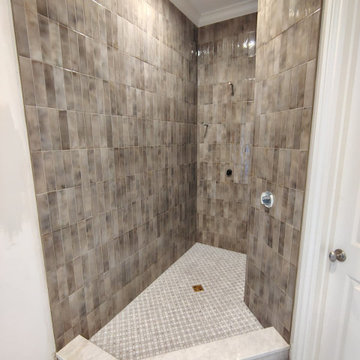
Bathroom tile installation in Charlotte, NC requires more than just setting tile in place. Recently, we completed a full bathroom remodel for homeowners in Myers Park, where the main challenge was an uneven subfloor combined with moisture exposure from a previous installation.
Our team started with proper surface preparation, including leveling and applying a waterproof membrane in the shower area. We installed large-format porcelain tiles on both the floor and shower walls, ensuring tight grout joints and precise alignment. Attention to detail is critical in wet areas to prevent long-term issues like mold or tile failure.
We regularly work with homeowners across neighborhoods like SouthPark and Dilworth, delivering durable and clean tile installations that are built to last.
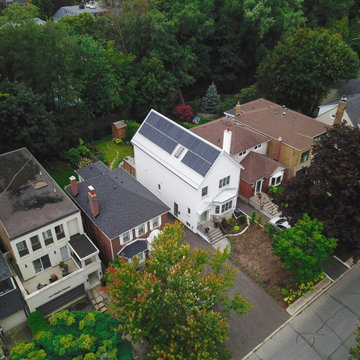 Eurodale Developments Inc
Panasonic whole home energy system solar panels installed as part of this eco conscious addition and renovation project. This system provides reserve energy for up to 3 days in the event of a grid failure, and also feeds into the hydro grid when excess power is generated, offsetting hydro costs from the utility.
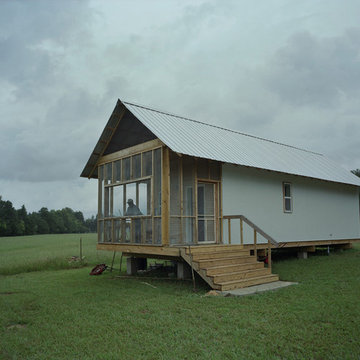
 Auburn University CADC
In this iteration of the 20K house, the team took much care to examine the successes and failures of all previous versions, deciding it would be more beneficial to improve upon the existing research than start anew.
Dave's house has the same footprint as earlier 20K houses, but the size and placement of the porches has been redistributed to allow a larger front porch, a small back stoop, and an additional 9' length of interior space. Enclosing more space did not significantly affect the budget, since a large portion of the cost was embedded in the foundation and floor platform work. Construction techniques and details were streamlined and materials selected to allow for a very quick building timeline: the home could be built in 3-4 weeks.
The gabled form of the house gives it presence and a sense of pride. The front facade consists of corrugated metal, while painted white metal (a more economical cladding material) was placed on the sides and rear of the home.
PROJECT TEAM
Charity Bulgrien, Ian Cook, Obi Elichi
Photo by Timothy Hursley.
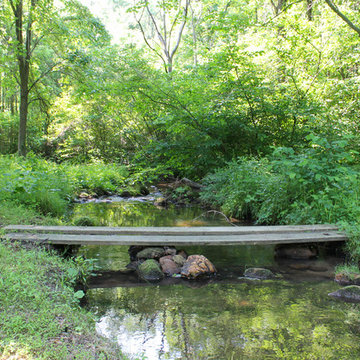
 Michaela Dodd
Photo: Michaela Dodd © 2015 Houzz
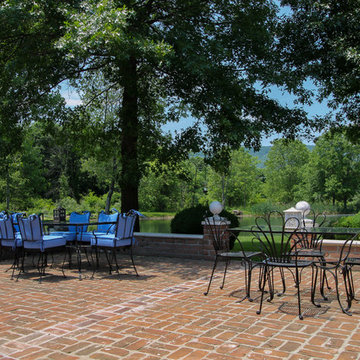
Design ideas for a traditional landscaping in DC Metro.
Design ideas for a traditional landscaping in DC Metro.
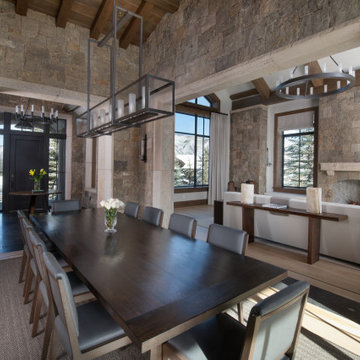 Natural Stone Institute
Gallegos was contacted by a client about a project where stone was not just to be an accent material, but the main visual and perceived structural element to create a timeless architectural composition. To further the endeavor: all veneers and dimension stone must be locally sourced and sustainably quarried. The design called for a moss rock veneer with cut stone trim. Sourcing the sandstone moss rock was simple because there were several local quarries to use. The problem
was with the trim pieces.
Gallegos selected Colorado Buff sandstone for the trim since the buff body was a good contrast to the moss rock and it is a stone that can be cut to size. One main concern with any sedimentary stone is hitting what is known as a “dry” layer in the ledge. This is an area in the stone between sedimentary layers that has not solidified or cemented. It is still granular and can lead to future stone failure as water penetrates these layers and creates freeze/thaw issues. To avoid this, they used
an epoxy injected into the dry layers to help solidify the material and prevent any future failures.
The client also wanted sustainable materials for their countertops and bathrooms. Many of the interior stones were either reclaimed materials or were sourced from Colorado quarries – Calacatta Lincoln was used extensively.
Gallegos sourced tiles from reclamation projects in Europe and Asia for use in the master bath and front entry areas. For many of the countertops, the owner’s interior designer spent hours looking through remnants and applied several throughout the residence.
Willow Court is a spectacular and dramatic nod to stone masonry, something the owner, architect, and builder can be proud of and, for the most part, was built with the environment in mind.
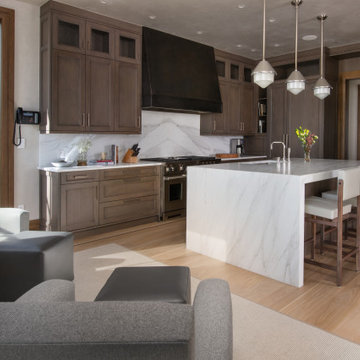 Natural Stone Institute
Gallegos was contacted by a client about a project where stone was not just to be an accent material, but the main visual and perceived structural element to create a timeless architectural composition. To further the endeavor: all veneers and dimension stone must be locally sourced and sustainably quarried. The design called for a moss rock veneer with cut stone trim. Sourcing the sandstone moss rock was simple because there were several local quarries to use. The problem
was with the trim pieces.
Gallegos selected Colorado Buff sandstone for the trim since the buff body was a good contrast to the moss rock and it is a stone that can be cut to size. One main concern with any sedimentary stone is hitting what is known as a “dry” layer in the ledge. This is an area in the stone between sedimentary layers that has not solidified or cemented. It is still granular and can lead to future stone failure as water penetrates these layers and creates freeze/thaw issues. To avoid this, they used
an epoxy injected into the dry layers to help solidify the material and prevent any future failures.
The client also wanted sustainable materials for their countertops and bathrooms. Many of the interior stones were either reclaimed materials or were sourced from Colorado quarries – Calacatta Lincoln was used extensively.
Gallegos sourced tiles from reclamation projects in Europe and Asia for use in the master bath and front entry areas. For many of the countertops, the owner’s interior designer spent hours looking through remnants and applied several throughout the residence.
Willow Court is a spectacular and dramatic nod to stone masonry, something the owner, architect, and builder can be proud of and, for the most part, was built with the environment in mind.
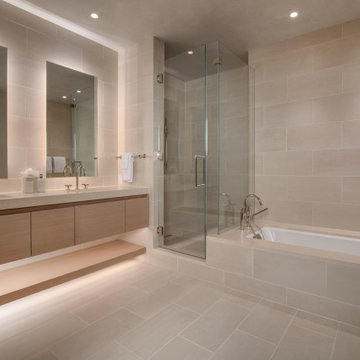 Natural Stone Institute
Gallegos was contacted by a client about a project where stone was not just to be an accent material, but the main visual and perceived structural element to create a timeless architectural composition. To further the endeavor: all veneers and dimension stone must be locally sourced and sustainably quarried. The design called for a moss rock veneer with cut stone trim. Sourcing the sandstone moss rock was simple because there were several local quarries to use. The problem
was with the trim pieces.
Gallegos selected Colorado Buff sandstone for the trim since the buff body was a good contrast to the moss rock and it is a stone that can be cut to size. One main concern with any sedimentary stone is hitting what is known as a “dry” layer in the ledge. This is an area in the stone between sedimentary layers that has not solidified or cemented. It is still granular and can lead to future stone failure as water penetrates these layers and creates freeze/thaw issues. To avoid this, they used
an epoxy injected into the dry layers to help solidify the material and prevent any future failures.
The client also wanted sustainable materials for their countertops and bathrooms. Many of the interior stones were either reclaimed materials or were sourced from Colorado quarries – Calacatta Lincoln was used extensively.
Gallegos sourced tiles from reclamation projects in Europe and Asia for use in the master bath and front entry areas. For many of the countertops, the owner’s interior designer spent hours looking through remnants and applied several throughout the residence.
Willow Court is a spectacular and dramatic nod to stone masonry, something the owner, architect, and builder can be proud of and, for the most part, was built with the environment in mind.

 DC Studios LLC
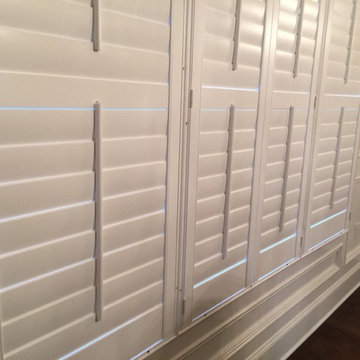
This 1880's monumental ( 10' x 6') figural panel was designed by Elihu Vedder and attributed to fabrication by Tiffany Studios. It once graced a now demolished mansion in Tarrytown, NY. Due to severe bowing, broken or missing glass, and structural failure, the entire window was carefully taken apart and cleaned. Special glass was made to match existing for some replacements. All the lead caming and support bars were replaced, A new thermally insulated triple glazed frame was designed and installed to mount and safely protect the stained glass artwork. This window now graces the living room of our fortunate client, who found this window in a salvage yard many years ago. Photo by Conrad Cultraro
 Dean Harrison
Example of a 90 to 99 inch, white, 70 to 79 inch high and large trendy wood plantation style dining room design in Atlanta
8