
Search results for "Improves safety" in Home Design Ideas
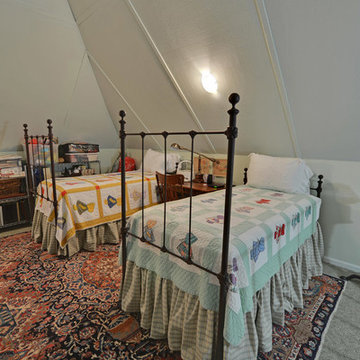
 Envision Web
Stuart Wade, Envision Virtual Tours
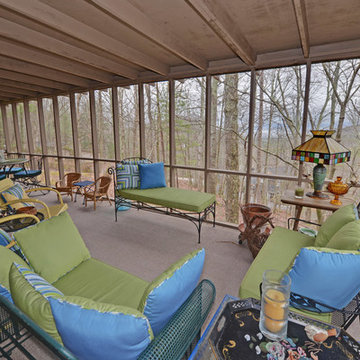
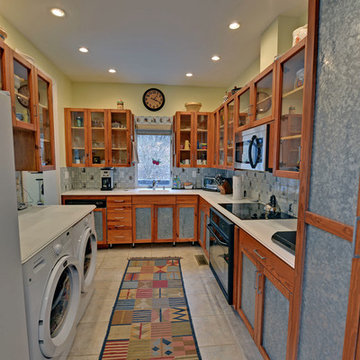
Envision Virtual Tours and High Resolution Photography is your best choice to find just what you are looking for in the Ellijay, Ga. area .Ellijay, Georgia, known as the “Apple Capital” of Georgia, is located between the Ellijay and Cartecay Rivers where they join to make the Coosawattee River and is the county seat of Gilmer County, Georgia. The origin of the city’s name is not certain but thought to be the English derivative of an Indian word(s) meaning “many waters”, “place of green things” or “new ground”. Some histories say it may have been named for an Indian chief.
Inhabited for countless years by the Cherokee people indigenous to the North Georgia, the area was first mentioned as a village and trade center before the onslaught of white settlers inhabited the region. During the 1830’s both white settlers and Indians occupied Ellijay. During the original land lottery in 1832, Martin Scalf acquired the 160 acre lot where the town now stands. In 1833, Clemonds Quinland bought 10 acres from Scalf, retained one acre for himself and donated the rest of the purchase to the County. A plan for twenty town lots, streets and a public square was created and the streets were oriented to allow maximum sunlight exposure to the buildings.
Proceeds from lot sales were used to build a jail and courthouse and pay other city expenses. During this same year, Gilmer County was appropriated $800.00 from the State to build a school, and a three-acre lot was donated for the city cemetery. On December 29, l834, Ellijay was incorporated and designated as the County seat of Gilmer County. By 1837, the town had twenty dwellings, three stores and one attorney. Most of these early buildings were of log construction.
Many roads led to Ellijay by 1849. The population had grown to 150 by 1850 and the town at five stores. Some wood-frame buildings were being constructed at this time and in 1854, a new courthouse was built in the center of the square, replacing the earlier building. The County’s first newspaper was the Ellijay Courier, started in 1875, and during this time period, Ellijay was a stop on the stagecoach line. The railroad bridge over the Cartecay River was completed in 1884 and the town now had rail service.
With the arrival of the railroad and subsequent tracks to White Path, Ellijay began to grow much faster. Many hotels were constructed and land was donated for a depot east of town. More industries, such as a cheese factory and the Shippen Brothers Lumber Mill, located in Ellijay. By 1898, the city had expanded its limits in every direction and now included the depot.
By 1900, all the buildings on the town square were brick. This included the recently completed Hyatt Hotel. Most of the other buildings in town were still of log construction, but new wood-frame buildings were being built. The Shippen Brothers Lumber Company production was expanding and exporting their lumber to Europe. Within the next few decades, this company grew to be one of the largest employers in Ellijay, often with five to six million feet of lumber in the yard at one time.
The population of Ellijay grew to 659 by 1910, and began to acquire many new modern conveniences such as electric lights and power, a telephone company and many new businesses.
Then in 1912, a fire ravaged the city, destroying 23 buildings. As a result, many new buildings were constructed under new and stricter fire and safety guidelines. The population, however, decreased slightly at this time to 632 in 1920.
During the 1920’s the town’s population began to grow again and, by this time, apples were being shipped out of the county and new storage facilities were built. Chickens were also shipped to markets outside of Ellijay and Gilmer County.
From the mid 1930’s to 1950, Ellijay received much assistance from the Federal WPA Programs. The old courthouse was removed from the center of town square and the Hyatt Hotel was remodeled to be the new courthouse. A park was created on the site of the old courthouse and the streets around the square were paved. A new street was built at this time entering town from the northeast. Other new roads, bridges, sidewalks and gutters were constructed to improve the city. A school and gymnasium were also built and other structures improved.
This growth began to impact the city’s infrastructure and in the l950’s and l960’s, a period of upgrading water systems, roads, and power supplies began. New low-rent housing appeared in l960 and a new hospital was built in l957. Georgia Highway 5 was widened in l962, new buildings around the square replaced old ones and some were remodeled. In 1974, the hospital was enlarged.
Currently, Ellijay attracts tourists who love the small-town feel and friendly atmosphere. Hotels and restaurants, unique shops, antiques and art galleries lend their charms to those who visit. A new courthouse constructed to resemble the old one, new streetscaping, family-oriented downtown events and the beautification of the square have stepped up the social and economic activity and have made Ellijay a popular destination.
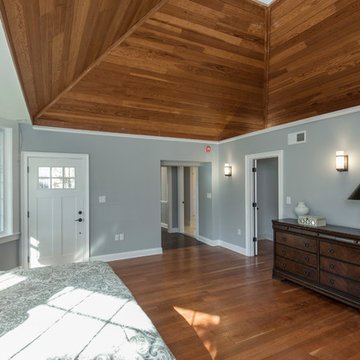
 Cordeiro Construction, Inc
In Wynnewood, PA, we completed a comprehensive home renovation that transformed the entire property. Our services included installing a brand new kitchen with modern cabinets, countertops, and appliances, creating a functional and stylish culinary space. New flooring was laid throughout the home, updating it with durable and attractive materials. A new deck was built to enhance outdoor living and entertainment opportunities. Bathrooms were completely renovated with new fixtures and updated designs, improving both functionality and aesthetics. The entire interior received a fresh coat of paint, revitalizing the home's appearance. We also installed new stairs for improved accessibility and safety. Additionally, the basement was finished to provide additional living space, completing the transformation of this Wynnewood home into a modern and comfortable living environment.
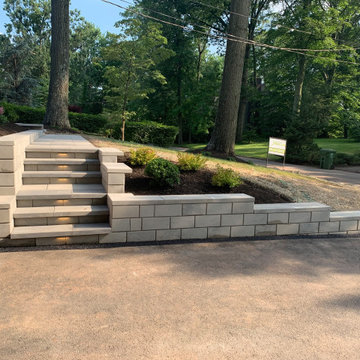
 Parker Landscape Design
Our customer has a contemporary style home and wanted to introduce that same modern flair to their aesthetic improvements outside. They also wished to improve the resale value of their home by creating more curb appeal. Another important request was to select materials that would stand the test of time and would be low maintenance. We replaced old rotting railroad tie retaining walls and steps with new walls and steps that had a very elegant and sleek feel to them. These walls and steps were life time warrantied and offered a beautiful lighter contrast of color to the home’s dark wood façade. LED lighting was built into the new walls and steps to serve three purposes – provide beauty, provide a safety element and also deter potential intruders.
Find the right local pro for your project
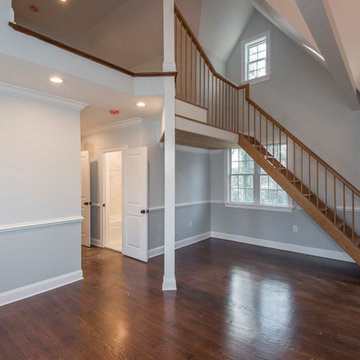 Cordeiro Construction, Inc
In Wynnewood, PA, we completed a comprehensive home renovation that transformed the entire property. Our services included installing a brand new kitchen with modern cabinets, countertops, and appliances, creating a functional and stylish culinary space. New flooring was laid throughout the home, updating it with durable and attractive materials. A new deck was built to enhance outdoor living and entertainment opportunities. Bathrooms were completely renovated with new fixtures and updated designs, improving both functionality and aesthetics. The entire interior received a fresh coat of paint, revitalizing the home's appearance. We also installed new stairs for improved accessibility and safety. Additionally, the basement was finished to provide additional living space, completing the transformation of this Wynnewood home into a modern and comfortable living environment.
 Ross Howard Designs
 Hunter Douglas | Duette®
Duette®
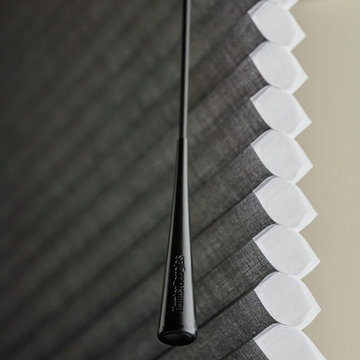
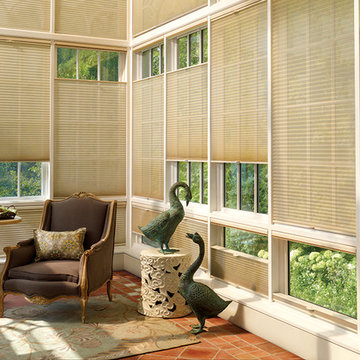
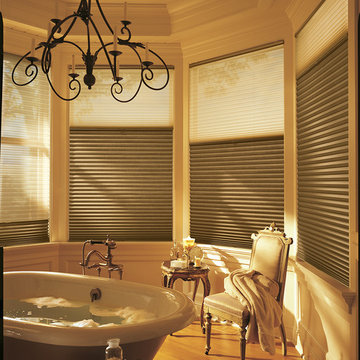
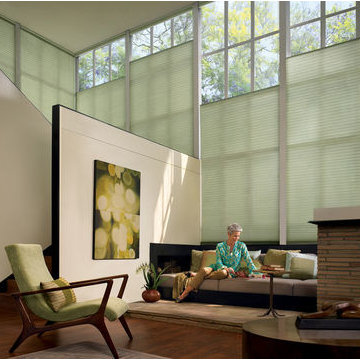
The original single- and double-honeycomb Duette® shades come in multiple cell sizes, a horizontal or Vertiglide™ vertical orientation, and a range of light-control options from sheer to opaque.
Energy Efficiency
COOL IN THE SUMMER, WARM IN THE WINTER
Did you know that up to 50% of a home’s heating and cooling energy can be lost through its windows? That’s why we designed this unique cellular shade that traps air in distinct pockets to help keep your house cool in the summer and warm in the winter.
And while the honeycomb design is praised for its efficiency, its shape and overall aesthetic are nothing short of beautiful.
Double Honeycomb
EVEN GREATER EFFICIENCIES
Our double-honeycomb construction traps air even more efficiently than our single honeycomb by sandwiching two honeycomb cells between your room and the window.
Absorb Sound
REDUCE OUTSIDE NOISE
Improve your room’s acoustics while reducing the intensity of outside sound. It starts at the windows.
The degree of sound control will depend on the fabric you choose, so if this is an important feature to you, be sure to discuss it with your sales expert.
Top-Down/Bottom-Up
PRIVACY WITH A VIEW
The Top-Down/Bottom-Up feature offers a more versatile approach to light control. Open from the top, from the bottom, or find somewhere in-between–for the perfect balance of privacy and light.
Energy Efficiency
COOL IN THE SUMMER, WARM IN THE WINTER
Did you know that up to 50% of a home’s heating and cooling energy can be lost through its windows? That’s why we designed this unique cellular shade that traps air in distinct pockets to help keep your house cool in the summer and warm in the winter.
And while the honeycomb design is praised for its efficiency, its shape and overall aesthetic are nothing short of beautiful.
Double Honeycomb
EVEN GREATER EFFICIENCIES
Our double-honeycomb construction traps air even more efficiently than our single honeycomb by sandwiching two honeycomb cells between your room and the window.
Absorb Sound
REDUCE OUTSIDE NOISE
Improve your room’s acoustics while reducing the intensity of outside sound. It starts at the windows.
The degree of sound control will depend on the fabric you choose, so if this is an important feature to you, be sure to discuss it with your sales expert.
Vertiglide™
FOR LARGE WINDOWS AND SLIDING DOORS
Vertiglide™ offers an exceptional, energy-efficient vertical solution for large expanses of windows and sliding glass doors.
Top-Down/Bottom-Up
PRIVACY WITH A VIEW
The Top-Down/Bottom-Up feature offers a more versatile approach to light control. Open from the top, from the bottom, or find somewhere in-between–for the perfect balance of privacy and light.
UV protection
SUNSCREEN FOR YOUR VALUABLES
Protect your furniture, flooring and artwork from fading with at least 75% protection from harmful UV rays
 Ross Howard Designs
 Hunter Douglas | Duette®
Duette®
The original single- and double-honeycomb Duette® shades come in multiple cell sizes, a horizontal or Vertiglide™ vertical orientation, and a range of light-control options from sheer to opaque.
Energy Efficiency
COOL IN THE SUMMER, WARM IN THE WINTER
Did you know that up to 50% of a home’s heating and cooling energy can be lost through its windows? That’s why we designed this unique cellular shade that traps air in distinct pockets to help keep your house cool in the summer and warm in the winter.
And while the honeycomb design is praised for its efficiency, its shape and overall aesthetic are nothing short of beautiful.
Double Honeycomb
EVEN GREATER EFFICIENCIES
Our double-honeycomb construction traps air even more efficiently than our single honeycomb by sandwiching two honeycomb cells between your room and the window.
Absorb Sound
REDUCE OUTSIDE NOISE
Improve your room’s acoustics while reducing the intensity of outside sound. It starts at the windows.
The degree of sound control will depend on the fabric you choose, so if this is an important feature to you, be sure to discuss it with your sales expert.
Top-Down/Bottom-Up
PRIVACY WITH A VIEW
The Top-Down/Bottom-Up feature offers a more versatile approach to light control. Open from the top, from the bottom, or find somewhere in-between–for the perfect balance of privacy and light.
Energy Efficiency
COOL IN THE SUMMER, WARM IN THE WINTER
Did you know that up to 50% of a home’s heating and cooling energy can be lost through its windows? That’s why we designed this unique cellular shade that traps air in distinct pockets to help keep your house cool in the summer and warm in the winter.
And while the honeycomb design is praised for its efficiency, its shape and overall aesthetic are nothing short of beautiful.
Double Honeycomb
EVEN GREATER EFFICIENCIES
Our double-honeycomb construction traps air even more efficiently than our single honeycomb by sandwiching two honeycomb cells between your room and the window.
Absorb Sound
REDUCE OUTSIDE NOISE
Improve your room’s acoustics while reducing the intensity of outside sound. It starts at the windows.
The degree of sound control will depend on the fabric you choose, so if this is an important feature to you, be sure to discuss it with your sales expert.
Vertiglide™
FOR LARGE WINDOWS AND SLIDING DOORS
Vertiglide™ offers an exceptional, energy-efficient vertical solution for large expanses of windows and sliding glass doors.
Top-Down/Bottom-Up
PRIVACY WITH A VIEW
The Top-Down/Bottom-Up feature offers a more versatile approach to light control. Open from the top, from the bottom, or find somewhere in-between–for the perfect balance of privacy and light.
UV protection
SUNSCREEN FOR YOUR VALUABLES
Protect your furniture, flooring and artwork from fading with at least 75% protection from harmful UV rays
 Envision Web
Stuart Wade, Envision Virtual Tours
Envision Virtual Tours and High Resolution Photography is your best choice to find just what you are looking for in the Ellijay, Ga. area .Ellijay, Georgia, known as the “Apple Capital” of Georgia, is located between the Ellijay and Cartecay Rivers where they join to make the Coosawattee River and is the county seat of Gilmer County, Georgia. The origin of the city’s name is not certain but thought to be the English derivative of an Indian word(s) meaning “many waters”, “place of green things” or “new ground”. Some histories say it may have been named for an Indian chief.
Inhabited for countless years by the Cherokee people indigenous to the North Georgia, the area was first mentioned as a village and trade center before the onslaught of white settlers inhabited the region. During the 1830’s both white settlers and Indians occupied Ellijay. During the original land lottery in 1832, Martin Scalf acquired the 160 acre lot where the town now stands. In 1833, Clemonds Quinland bought 10 acres from Scalf, retained one acre for himself and donated the rest of the purchase to the County. A plan for twenty town lots, streets and a public square was created and the streets were oriented to allow maximum sunlight exposure to the buildings.
Proceeds from lot sales were used to build a jail and courthouse and pay other city expenses. During this same year, Gilmer County was appropriated $800.00 from the State to build a school, and a three-acre lot was donated for the city cemetery. On December 29, l834, Ellijay was incorporated and designated as the County seat of Gilmer County. By 1837, the town had twenty dwellings, three stores and one attorney. Most of these early buildings were of log construction.
Many roads led to Ellijay by 1849. The population had grown to 150 by 1850 and the town at five stores. Some wood-frame buildings were being constructed at this time and in 1854, a new courthouse was built in the center of the square, replacing the earlier building. The County’s first newspaper was the Ellijay Courier, started in 1875, and during this time period, Ellijay was a stop on the stagecoach line. The railroad bridge over the Cartecay River was completed in 1884 and the town now had rail service.
With the arrival of the railroad and subsequent tracks to White Path, Ellijay began to grow much faster. Many hotels were constructed and land was donated for a depot east of town. More industries, such as a cheese factory and the Shippen Brothers Lumber Mill, located in Ellijay. By 1898, the city had expanded its limits in every direction and now included the depot.
By 1900, all the buildings on the town square were brick. This included the recently completed Hyatt Hotel. Most of the other buildings in town were still of log construction, but new wood-frame buildings were being built. The Shippen Brothers Lumber Company production was expanding and exporting their lumber to Europe. Within the next few decades, this company grew to be one of the largest employers in Ellijay, often with five to six million feet of lumber in the yard at one time.
The population of Ellijay grew to 659 by 1910, and began to acquire many new modern conveniences such as electric lights and power, a telephone company and many new businesses.
Then in 1912, a fire ravaged the city, destroying 23 buildings. As a result, many new buildings were constructed under new and stricter fire and safety guidelines. The population, however, decreased slightly at this time to 632 in 1920.
During the 1920’s the town’s population began to grow again and, by this time, apples were being shipped out of the county and new storage facilities were built. Chickens were also shipped to markets outside of Ellijay and Gilmer County.
From the mid 1930’s to 1950, Ellijay received much assistance from the Federal WPA Programs. The old courthouse was removed from the center of town square and the Hyatt Hotel was remodeled to be the new courthouse. A park was created on the site of the old courthouse and the streets around the square were paved. A new street was built at this time entering town from the northeast. Other new roads, bridges, sidewalks and gutters were constructed to improve the city. A school and gymnasium were also built and other structures improved.
This growth began to impact the city’s infrastructure and in the l950’s and l960’s, a period of upgrading water systems, roads, and power supplies began. New low-rent housing appeared in l960 and a new hospital was built in l957. Georgia Highway 5 was widened in l962, new buildings around the square replaced old ones and some were remodeled. In 1974, the hospital was enlarged.
Currently, Ellijay attracts tourists who love the small-town feel and friendly atmosphere. Hotels and restaurants, unique shops, antiques and art galleries lend their charms to those who visit. A new courthouse constructed to resemble the old one, new streetscaping, family-oriented downtown events and the beautification of the square have stepped up the social and economic activity and have made Ellijay a popular destination.
Sponsored
Columbus, OH

EverHome Improvement & Design
Top Choice for Reliable Tile & Stone | Franklin County, Ohio
 Ross Howard Designs
 Hunter Douglas | Duette®
Duette®
The original single- and double-honeycomb Duette® shades come in multiple cell sizes, a horizontal or Vertiglide™ vertical orientation, and a range of light-control options from sheer to opaque.
Energy Efficiency
COOL IN THE SUMMER, WARM IN THE WINTER
Did you know that up to 50% of a home’s heating and cooling energy can be lost through its windows? That’s why we designed this unique cellular shade that traps air in distinct pockets to help keep your house cool in the summer and warm in the winter.
And while the honeycomb design is praised for its efficiency, its shape and overall aesthetic are nothing short of beautiful.
Double Honeycomb
EVEN GREATER EFFICIENCIES
Our double-honeycomb construction traps air even more efficiently than our single honeycomb by sandwiching two honeycomb cells between your room and the window.
Absorb Sound
REDUCE OUTSIDE NOISE
Improve your room’s acoustics while reducing the intensity of outside sound. It starts at the windows.
The degree of sound control will depend on the fabric you choose, so if this is an important feature to you, be sure to discuss it with your sales expert.
Top-Down/Bottom-Up
PRIVACY WITH A VIEW
The Top-Down/Bottom-Up feature offers a more versatile approach to light control. Open from the top, from the bottom, or find somewhere in-between–for the perfect balance of privacy and light.
Energy Efficiency
COOL IN THE SUMMER, WARM IN THE WINTER
Did you know that up to 50% of a home’s heating and cooling energy can be lost through its windows? That’s why we designed this unique cellular shade that traps air in distinct pockets to help keep your house cool in the summer and warm in the winter.
And while the honeycomb design is praised for its efficiency, its shape and overall aesthetic are nothing short of beautiful.
Double Honeycomb
EVEN GREATER EFFICIENCIES
Our double-honeycomb construction traps air even more efficiently than our single honeycomb by sandwiching two honeycomb cells between your room and the window.
Absorb Sound
REDUCE OUTSIDE NOISE
Improve your room’s acoustics while reducing the intensity of outside sound. It starts at the windows.
The degree of sound control will depend on the fabric you choose, so if this is an important feature to you, be sure to discuss it with your sales expert.
Vertiglide™
FOR LARGE WINDOWS AND SLIDING DOORS
Vertiglide™ offers an exceptional, energy-efficient vertical solution for large expanses of windows and sliding glass doors.
Top-Down/Bottom-Up
PRIVACY WITH A VIEW
The Top-Down/Bottom-Up feature offers a more versatile approach to light control. Open from the top, from the bottom, or find somewhere in-between–for the perfect balance of privacy and light.
UV protection
SUNSCREEN FOR YOUR VALUABLES
Protect your furniture, flooring and artwork from fading with at least 75% protection from harmful UV rays
 Envision Web
Stuart Wade, Envision Virtual Tours
Envision Virtual Tours and High Resolution Photography is your best choice to find just what you are looking for in the Ellijay, Ga. area .Ellijay, Georgia, known as the “Apple Capital” of Georgia, is located between the Ellijay and Cartecay Rivers where they join to make the Coosawattee River and is the county seat of Gilmer County, Georgia. The origin of the city’s name is not certain but thought to be the English derivative of an Indian word(s) meaning “many waters”, “place of green things” or “new ground”. Some histories say it may have been named for an Indian chief.
Inhabited for countless years by the Cherokee people indigenous to the North Georgia, the area was first mentioned as a village and trade center before the onslaught of white settlers inhabited the region. During the 1830’s both white settlers and Indians occupied Ellijay. During the original land lottery in 1832, Martin Scalf acquired the 160 acre lot where the town now stands. In 1833, Clemonds Quinland bought 10 acres from Scalf, retained one acre for himself and donated the rest of the purchase to the County. A plan for twenty town lots, streets and a public square was created and the streets were oriented to allow maximum sunlight exposure to the buildings.
Proceeds from lot sales were used to build a jail and courthouse and pay other city expenses. During this same year, Gilmer County was appropriated $800.00 from the State to build a school, and a three-acre lot was donated for the city cemetery. On December 29, l834, Ellijay was incorporated and designated as the County seat of Gilmer County. By 1837, the town had twenty dwellings, three stores and one attorney. Most of these early buildings were of log construction.
Many roads led to Ellijay by 1849. The population had grown to 150 by 1850 and the town at five stores. Some wood-frame buildings were being constructed at this time and in 1854, a new courthouse was built in the center of the square, replacing the earlier building. The County’s first newspaper was the Ellijay Courier, started in 1875, and during this time period, Ellijay was a stop on the stagecoach line. The railroad bridge over the Cartecay River was completed in 1884 and the town now had rail service.
With the arrival of the railroad and subsequent tracks to White Path, Ellijay began to grow much faster. Many hotels were constructed and land was donated for a depot east of town. More industries, such as a cheese factory and the Shippen Brothers Lumber Mill, located in Ellijay. By 1898, the city had expanded its limits in every direction and now included the depot.
By 1900, all the buildings on the town square were brick. This included the recently completed Hyatt Hotel. Most of the other buildings in town were still of log construction, but new wood-frame buildings were being built. The Shippen Brothers Lumber Company production was expanding and exporting their lumber to Europe. Within the next few decades, this company grew to be one of the largest employers in Ellijay, often with five to six million feet of lumber in the yard at one time.
The population of Ellijay grew to 659 by 1910, and began to acquire many new modern conveniences such as electric lights and power, a telephone company and many new businesses.
Then in 1912, a fire ravaged the city, destroying 23 buildings. As a result, many new buildings were constructed under new and stricter fire and safety guidelines. The population, however, decreased slightly at this time to 632 in 1920.
During the 1920’s the town’s population began to grow again and, by this time, apples were being shipped out of the county and new storage facilities were built. Chickens were also shipped to markets outside of Ellijay and Gilmer County.
From the mid 1930’s to 1950, Ellijay received much assistance from the Federal WPA Programs. The old courthouse was removed from the center of town square and the Hyatt Hotel was remodeled to be the new courthouse. A park was created on the site of the old courthouse and the streets around the square were paved. A new street was built at this time entering town from the northeast. Other new roads, bridges, sidewalks and gutters were constructed to improve the city. A school and gymnasium were also built and other structures improved.
This growth began to impact the city’s infrastructure and in the l950’s and l960’s, a period of upgrading water systems, roads, and power supplies began. New low-rent housing appeared in l960 and a new hospital was built in l957. Georgia Highway 5 was widened in l962, new buildings around the square replaced old ones and some were remodeled. In 1974, the hospital was enlarged.
Currently, Ellijay attracts tourists who love the small-town feel and friendly atmosphere. Hotels and restaurants, unique shops, antiques and art galleries lend their charms to those who visit. A new courthouse constructed to resemble the old one, new streetscaping, family-oriented downtown events and the beautification of the square have stepped up the social and economic activity and have made Ellijay a popular destination.
 Ross Howard Designs
 Hunter Douglas | Duette®
Duette®
The original single- and double-honeycomb Duette® shades come in multiple cell sizes, a horizontal or Vertiglide™ vertical orientation, and a range of light-control options from sheer to opaque.
Energy Efficiency
COOL IN THE SUMMER, WARM IN THE WINTER
Did you know that up to 50% of a home’s heating and cooling energy can be lost through its windows? That’s why we designed this unique cellular shade that traps air in distinct pockets to help keep your house cool in the summer and warm in the winter.
And while the honeycomb design is praised for its efficiency, its shape and overall aesthetic are nothing short of beautiful.
Double Honeycomb
EVEN GREATER EFFICIENCIES
Our double-honeycomb construction traps air even more efficiently than our single honeycomb by sandwiching two honeycomb cells between your room and the window.
Absorb Sound
REDUCE OUTSIDE NOISE
Improve your room’s acoustics while reducing the intensity of outside sound. It starts at the windows.
The degree of sound control will depend on the fabric you choose, so if this is an important feature to you, be sure to discuss it with your sales expert.
Top-Down/Bottom-Up
PRIVACY WITH A VIEW
The Top-Down/Bottom-Up feature offers a more versatile approach to light control. Open from the top, from the bottom, or find somewhere in-between–for the perfect balance of privacy and light.
Energy Efficiency
COOL IN THE SUMMER, WARM IN THE WINTER
Did you know that up to 50% of a home’s heating and cooling energy can be lost through its windows? That’s why we designed this unique cellular shade that traps air in distinct pockets to help keep your house cool in the summer and warm in the winter.
And while the honeycomb design is praised for its efficiency, its shape and overall aesthetic are nothing short of beautiful.
Double Honeycomb
EVEN GREATER EFFICIENCIES
Our double-honeycomb construction traps air even more efficiently than our single honeycomb by sandwiching two honeycomb cells between your room and the window.
Absorb Sound
REDUCE OUTSIDE NOISE
Improve your room’s acoustics while reducing the intensity of outside sound. It starts at the windows.
The degree of sound control will depend on the fabric you choose, so if this is an important feature to you, be sure to discuss it with your sales expert.
Vertiglide™
FOR LARGE WINDOWS AND SLIDING DOORS
Vertiglide™ offers an exceptional, energy-efficient vertical solution for large expanses of windows and sliding glass doors.
Top-Down/Bottom-Up
PRIVACY WITH A VIEW
The Top-Down/Bottom-Up feature offers a more versatile approach to light control. Open from the top, from the bottom, or find somewhere in-between–for the perfect balance of privacy and light.
UV protection
SUNSCREEN FOR YOUR VALUABLES
Protect your furniture, flooring and artwork from fading with at least 75% protection from harmful UV rays
 Envision Web
Stuart Wade, Envision Virtual Tours
Envision Virtual Tours and High Resolution Photography is your best choice to find just what you are looking for in the Ellijay, Ga. area .Ellijay, Georgia, known as the “Apple Capital” of Georgia, is located between the Ellijay and Cartecay Rivers where they join to make the Coosawattee River and is the county seat of Gilmer County, Georgia. The origin of the city’s name is not certain but thought to be the English derivative of an Indian word(s) meaning “many waters”, “place of green things” or “new ground”. Some histories say it may have been named for an Indian chief.
Inhabited for countless years by the Cherokee people indigenous to the North Georgia, the area was first mentioned as a village and trade center before the onslaught of white settlers inhabited the region. During the 1830’s both white settlers and Indians occupied Ellijay. During the original land lottery in 1832, Martin Scalf acquired the 160 acre lot where the town now stands. In 1833, Clemonds Quinland bought 10 acres from Scalf, retained one acre for himself and donated the rest of the purchase to the County. A plan for twenty town lots, streets and a public square was created and the streets were oriented to allow maximum sunlight exposure to the buildings.
Proceeds from lot sales were used to build a jail and courthouse and pay other city expenses. During this same year, Gilmer County was appropriated $800.00 from the State to build a school, and a three-acre lot was donated for the city cemetery. On December 29, l834, Ellijay was incorporated and designated as the County seat of Gilmer County. By 1837, the town had twenty dwellings, three stores and one attorney. Most of these early buildings were of log construction.
Many roads led to Ellijay by 1849. The population had grown to 150 by 1850 and the town at five stores. Some wood-frame buildings were being constructed at this time and in 1854, a new courthouse was built in the center of the square, replacing the earlier building. The County’s first newspaper was the Ellijay Courier, started in 1875, and during this time period, Ellijay was a stop on the stagecoach line. The railroad bridge over the Cartecay River was completed in 1884 and the town now had rail service.
With the arrival of the railroad and subsequent tracks to White Path, Ellijay began to grow much faster. Many hotels were constructed and land was donated for a depot east of town. More industries, such as a cheese factory and the Shippen Brothers Lumber Mill, located in Ellijay. By 1898, the city had expanded its limits in every direction and now included the depot.
By 1900, all the buildings on the town square were brick. This included the recently completed Hyatt Hotel. Most of the other buildings in town were still of log construction, but new wood-frame buildings were being built. The Shippen Brothers Lumber Company production was expanding and exporting their lumber to Europe. Within the next few decades, this company grew to be one of the largest employers in Ellijay, often with five to six million feet of lumber in the yard at one time.
The population of Ellijay grew to 659 by 1910, and began to acquire many new modern conveniences such as electric lights and power, a telephone company and many new businesses.
Then in 1912, a fire ravaged the city, destroying 23 buildings. As a result, many new buildings were constructed under new and stricter fire and safety guidelines. The population, however, decreased slightly at this time to 632 in 1920.
During the 1920’s the town’s population began to grow again and, by this time, apples were being shipped out of the county and new storage facilities were built. Chickens were also shipped to markets outside of Ellijay and Gilmer County.
From the mid 1930’s to 1950, Ellijay received much assistance from the Federal WPA Programs. The old courthouse was removed from the center of town square and the Hyatt Hotel was remodeled to be the new courthouse. A park was created on the site of the old courthouse and the streets around the square were paved. A new street was built at this time entering town from the northeast. Other new roads, bridges, sidewalks and gutters were constructed to improve the city. A school and gymnasium were also built and other structures improved.
This growth began to impact the city’s infrastructure and in the l950’s and l960’s, a period of upgrading water systems, roads, and power supplies began. New low-rent housing appeared in l960 and a new hospital was built in l957. Georgia Highway 5 was widened in l962, new buildings around the square replaced old ones and some were remodeled. In 1974, the hospital was enlarged.
Currently, Ellijay attracts tourists who love the small-town feel and friendly atmosphere. Hotels and restaurants, unique shops, antiques and art galleries lend their charms to those who visit. A new courthouse constructed to resemble the old one, new streetscaping, family-oriented downtown events and the beautification of the square have stepped up the social and economic activity and have made Ellijay a popular destination.
 Cordeiro Construction, Inc
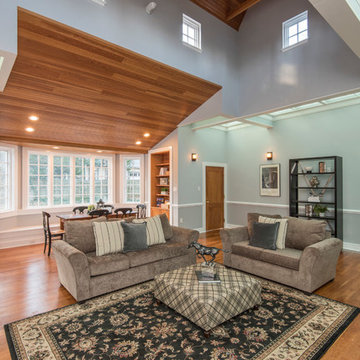
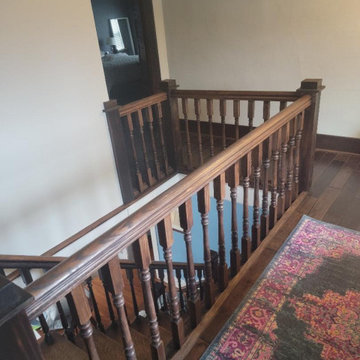
In Wynnewood, PA, we completed a comprehensive home renovation that transformed the entire property. Our services included installing a brand new kitchen with modern cabinets, countertops, and appliances, creating a functional and stylish culinary space. New flooring was laid throughout the home, updating it with durable and attractive materials. A new deck was built to enhance outdoor living and entertainment opportunities. Bathrooms were completely renovated with new fixtures and updated designs, improving both functionality and aesthetics. The entire interior received a fresh coat of paint, revitalizing the home's appearance. We also installed new stairs for improved accessibility and safety. Additionally, the basement was finished to provide additional living space, completing the transformation of this Wynnewood home into a modern and comfortable living environment.
 Envision Web
Stuart Wade, Envision Virtual Tours
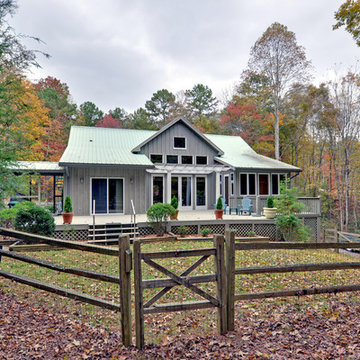
Envision Virtual Tours and High Resolution Photography is your best choice to find just what you are looking for in the Ellijay, Ga. area .Ellijay, Georgia, known as the “Apple Capital” of Georgia, is located between the Ellijay and Cartecay Rivers where they join to make the Coosawattee River and is the county seat of Gilmer County, Georgia. The origin of the city’s name is not certain but thought to be the English derivative of an Indian word(s) meaning “many waters”, “place of green things” or “new ground”. Some histories say it may have been named for an Indian chief.
Inhabited for countless years by the Cherokee people indigenous to the North Georgia, the area was first mentioned as a village and trade center before the onslaught of white settlers inhabited the region. During the 1830’s both white settlers and Indians occupied Ellijay. During the original land lottery in 1832, Martin Scalf acquired the 160 acre lot where the town now stands. In 1833, Clemonds Quinland bought 10 acres from Scalf, retained one acre for himself and donated the rest of the purchase to the County. A plan for twenty town lots, streets and a public square was created and the streets were oriented to allow maximum sunlight exposure to the buildings.
Proceeds from lot sales were used to build a jail and courthouse and pay other city expenses. During this same year, Gilmer County was appropriated $800.00 from the State to build a school, and a three-acre lot was donated for the city cemetery. On December 29, l834, Ellijay was incorporated and designated as the County seat of Gilmer County. By 1837, the town had twenty dwellings, three stores and one attorney. Most of these early buildings were of log construction.
Many roads led to Ellijay by 1849. The population had grown to 150 by 1850 and the town at five stores. Some wood-frame buildings were being constructed at this time and in 1854, a new courthouse was built in the center of the square, replacing the earlier building. The County’s first newspaper was the Ellijay Courier, started in 1875, and during this time period, Ellijay was a stop on the stagecoach line. The railroad bridge over the Cartecay River was completed in 1884 and the town now had rail service.
With the arrival of the railroad and subsequent tracks to White Path, Ellijay began to grow much faster. Many hotels were constructed and land was donated for a depot east of town. More industries, such as a cheese factory and the Shippen Brothers Lumber Mill, located in Ellijay. By 1898, the city had expanded its limits in every direction and now included the depot.
By 1900, all the buildings on the town square were brick. This included the recently completed Hyatt Hotel. Most of the other buildings in town were still of log construction, but new wood-frame buildings were being built. The Shippen Brothers Lumber Company production was expanding and exporting their lumber to Europe. Within the next few decades, this company grew to be one of the largest employers in Ellijay, often with five to six million feet of lumber in the yard at one time.
The population of Ellijay grew to 659 by 1910, and began to acquire many new modern conveniences such as electric lights and power, a telephone company and many new businesses.
Then in 1912, a fire ravaged the city, destroying 23 buildings. As a result, many new buildings were constructed under new and stricter fire and safety guidelines. The population, however, decreased slightly at this time to 632 in 1920.
During the 1920’s the town’s population began to grow again and, by this time, apples were being shipped out of the county and new storage facilities were built. Chickens were also shipped to markets outside of Ellijay and Gilmer County.
From the mid 1930’s to 1950, Ellijay received much assistance from the Federal WPA Programs. The old courthouse was removed from the center of town square and the Hyatt Hotel was remodeled to be the new courthouse. A park was created on the site of the old courthouse and the streets around the square were paved. A new street was built at this time entering town from the northeast. Other new roads, bridges, sidewalks and gutters were constructed to improve the city. A school and gymnasium were also built and other structures improved.
This growth began to impact the city’s infrastructure and in the l950’s and l960’s, a period of upgrading water systems, roads, and power supplies began. New low-rent housing appeared in l960 and a new hospital was built in l957. Georgia Highway 5 was widened in l962, new buildings around the square replaced old ones and some were remodeled. In 1974, the hospital was enlarged.
Currently, Ellijay attracts tourists who love the small-town feel and friendly atmosphere. Hotels and restaurants, unique shops, antiques and art galleries lend their charms to those who visit. A new courthouse constructed to resemble the old one, new streetscaping, family-oriented downtown events and the beautification of the square have stepped up the social and economic activity and have made Ellijay a popular destination.

 Ross Howard Designs
 Hunter Douglas | Duette®
Duette®
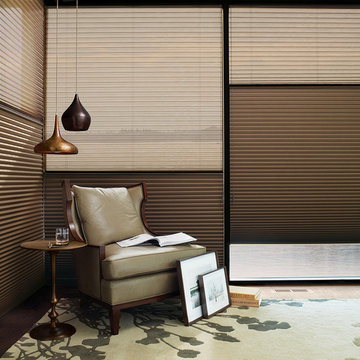
The original single- and double-honeycomb Duette® shades come in multiple cell sizes, a horizontal or Vertiglide™ vertical orientation, and a range of light-control options from sheer to opaque.
Energy Efficiency
COOL IN THE SUMMER, WARM IN THE WINTER
Did you know that up to 50% of a home’s heating and cooling energy can be lost through its windows? That’s why we designed this unique cellular shade that traps air in distinct pockets to help keep your house cool in the summer and warm in the winter.
And while the honeycomb design is praised for its efficiency, its shape and overall aesthetic are nothing short of beautiful.
Double Honeycomb
EVEN GREATER EFFICIENCIES
Our double-honeycomb construction traps air even more efficiently than our single honeycomb by sandwiching two honeycomb cells between your room and the window.
Absorb Sound
REDUCE OUTSIDE NOISE
Improve your room’s acoustics while reducing the intensity of outside sound. It starts at the windows.
The degree of sound control will depend on the fabric you choose, so if this is an important feature to you, be sure to discuss it with your sales expert.
Top-Down/Bottom-Up
PRIVACY WITH A VIEW
The Top-Down/Bottom-Up feature offers a more versatile approach to light control. Open from the top, from the bottom, or find somewhere in-between–for the perfect balance of privacy and light.
Energy Efficiency
COOL IN THE SUMMER, WARM IN THE WINTER
Did you know that up to 50% of a home’s heating and cooling energy can be lost through its windows? That’s why we designed this unique cellular shade that traps air in distinct pockets to help keep your house cool in the summer and warm in the winter.
And while the honeycomb design is praised for its efficiency, its shape and overall aesthetic are nothing short of beautiful.
Double Honeycomb
EVEN GREATER EFFICIENCIES
Our double-honeycomb construction traps air even more efficiently than our single honeycomb by sandwiching two honeycomb cells between your room and the window.
Absorb Sound
REDUCE OUTSIDE NOISE
Improve your room’s acoustics while reducing the intensity of outside sound. It starts at the windows.
The degree of sound control will depend on the fabric you choose, so if this is an important feature to you, be sure to discuss it with your sales expert.
Vertiglide™
FOR LARGE WINDOWS AND SLIDING DOORS
Vertiglide™ offers an exceptional, energy-efficient vertical solution for large expanses of windows and sliding glass doors.
Top-Down/Bottom-Up
PRIVACY WITH A VIEW
The Top-Down/Bottom-Up feature offers a more versatile approach to light control. Open from the top, from the bottom, or find somewhere in-between–for the perfect balance of privacy and light.
UV protection
SUNSCREEN FOR YOUR VALUABLES
Protect your furniture, flooring and artwork from fading with at least 75% protection from harmful UV rays
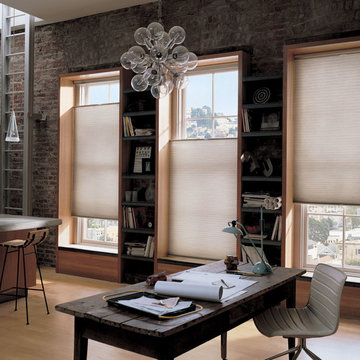 Ross Howard Designs
 Hunter Douglas | Duette®
Duette®
The original single- and double-honeycomb Duette® shades come in multiple cell sizes, a horizontal or Vertiglide™ vertical orientation, and a range of light-control options from sheer to opaque.
Energy Efficiency
COOL IN THE SUMMER, WARM IN THE WINTER
Did you know that up to 50% of a home’s heating and cooling energy can be lost through its windows? That’s why we designed this unique cellular shade that traps air in distinct pockets to help keep your house cool in the summer and warm in the winter.
And while the honeycomb design is praised for its efficiency, its shape and overall aesthetic are nothing short of beautiful.
Double Honeycomb
EVEN GREATER EFFICIENCIES
Our double-honeycomb construction traps air even more efficiently than our single honeycomb by sandwiching two honeycomb cells between your room and the window.
Absorb Sound
REDUCE OUTSIDE NOISE
Improve your room’s acoustics while reducing the intensity of outside sound. It starts at the windows.
The degree of sound control will depend on the fabric you choose, so if this is an important feature to you, be sure to discuss it with your sales expert.
Top-Down/Bottom-Up
PRIVACY WITH A VIEW
The Top-Down/Bottom-Up feature offers a more versatile approach to light control. Open from the top, from the bottom, or find somewhere in-between–for the perfect balance of privacy and light.
Energy Efficiency
COOL IN THE SUMMER, WARM IN THE WINTER
Did you know that up to 50% of a home’s heating and cooling energy can be lost through its windows? That’s why we designed this unique cellular shade that traps air in distinct pockets to help keep your house cool in the summer and warm in the winter.
And while the honeycomb design is praised for its efficiency, its shape and overall aesthetic are nothing short of beautiful.
Double Honeycomb
EVEN GREATER EFFICIENCIES
Our double-honeycomb construction traps air even more efficiently than our single honeycomb by sandwiching two honeycomb cells between your room and the window.
Absorb Sound
REDUCE OUTSIDE NOISE
Improve your room’s acoustics while reducing the intensity of outside sound. It starts at the windows.
The degree of sound control will depend on the fabric you choose, so if this is an important feature to you, be sure to discuss it with your sales expert.
Vertiglide™
FOR LARGE WINDOWS AND SLIDING DOORS
Vertiglide™ offers an exceptional, energy-efficient vertical solution for large expanses of windows and sliding glass doors.
Top-Down/Bottom-Up
PRIVACY WITH A VIEW
The Top-Down/Bottom-Up feature offers a more versatile approach to light control. Open from the top, from the bottom, or find somewhere in-between–for the perfect balance of privacy and light.
UV protection
SUNSCREEN FOR YOUR VALUABLES
Protect your furniture, flooring and artwork from fading with at least 75% protection from harmful UV rays
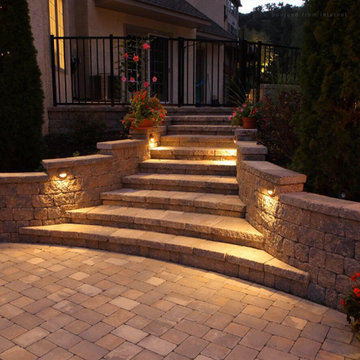
 LEDVANS
Stair lights can enhance safety, making it easier to identify stairs at night and reduce the risk of falling; at the same time, they add a decorative effect, beautifying the space; LED stair lights are energy-saving, environmentally friendly, with a long lifespan, and are simple and practical. Overall, the installation of stair lights not only improves comfort and safety, but also has the advantages of beautifying space, energy efficiency, and environmental protection, making it an ideal lighting choice.
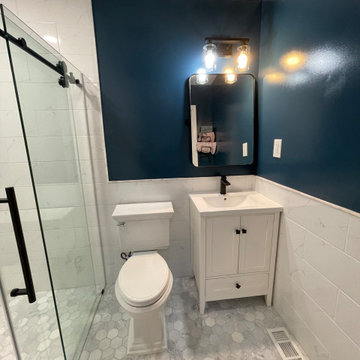
 ESM Construction LLC
This project involved building a full bathroom addition designed for accessibility and safety. The homeowner needed a comfortable bathroom on the main level for an elderly family member. The space includes a curbless walk-in shower with a properly sloped floor to allow water drainage while maintaining a flat entry for easy access.
Grab bars were installed for additional support and safety. The shower walls and ceiling were fully tiled to improve durability and moisture resistance. The project included plumbing installation through the crawl space, electrical work, insulation, drywall, vanity installation, toilet installation, glass sliding shower doors, and tile flooring throughout the entire bathroom.
All work was completed according to code requirements and successfully passed inspection. The final design provides a safe, modern, and functional bathroom space for long-term use.
Sponsored
Columbus, OH
EverHome Improvement & Design
Top Choice for Reliable Tile & Stone | Franklin County, Ohio
 Envision Web
Stuart Wade, Envision Virtual Tours
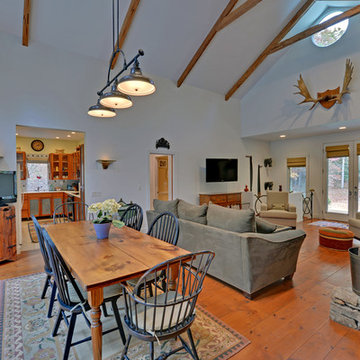
Envision Virtual Tours and High Resolution Photography is your best choice to find just what you are looking for in the Ellijay, Ga. area .Ellijay, Georgia, known as the “Apple Capital” of Georgia, is located between the Ellijay and Cartecay Rivers where they join to make the Coosawattee River and is the county seat of Gilmer County, Georgia. The origin of the city’s name is not certain but thought to be the English derivative of an Indian word(s) meaning “many waters”, “place of green things” or “new ground”. Some histories say it may have been named for an Indian chief.
Inhabited for countless years by the Cherokee people indigenous to the North Georgia, the area was first mentioned as a village and trade center before the onslaught of white settlers inhabited the region. During the 1830’s both white settlers and Indians occupied Ellijay. During the original land lottery in 1832, Martin Scalf acquired the 160 acre lot where the town now stands. In 1833, Clemonds Quinland bought 10 acres from Scalf, retained one acre for himself and donated the rest of the purchase to the County. A plan for twenty town lots, streets and a public square was created and the streets were oriented to allow maximum sunlight exposure to the buildings.
Proceeds from lot sales were used to build a jail and courthouse and pay other city expenses. During this same year, Gilmer County was appropriated $800.00 from the State to build a school, and a three-acre lot was donated for the city cemetery. On December 29, l834, Ellijay was incorporated and designated as the County seat of Gilmer County. By 1837, the town had twenty dwellings, three stores and one attorney. Most of these early buildings were of log construction.
Many roads led to Ellijay by 1849. The population had grown to 150 by 1850 and the town at five stores. Some wood-frame buildings were being constructed at this time and in 1854, a new courthouse was built in the center of the square, replacing the earlier building. The County’s first newspaper was the Ellijay Courier, started in 1875, and during this time period, Ellijay was a stop on the stagecoach line. The railroad bridge over the Cartecay River was completed in 1884 and the town now had rail service.
With the arrival of the railroad and subsequent tracks to White Path, Ellijay began to grow much faster. Many hotels were constructed and land was donated for a depot east of town. More industries, such as a cheese factory and the Shippen Brothers Lumber Mill, located in Ellijay. By 1898, the city had expanded its limits in every direction and now included the depot.
By 1900, all the buildings on the town square were brick. This included the recently completed Hyatt Hotel. Most of the other buildings in town were still of log construction, but new wood-frame buildings were being built. The Shippen Brothers Lumber Company production was expanding and exporting their lumber to Europe. Within the next few decades, this company grew to be one of the largest employers in Ellijay, often with five to six million feet of lumber in the yard at one time.
The population of Ellijay grew to 659 by 1910, and began to acquire many new modern conveniences such as electric lights and power, a telephone company and many new businesses.
Then in 1912, a fire ravaged the city, destroying 23 buildings. As a result, many new buildings were constructed under new and stricter fire and safety guidelines. The population, however, decreased slightly at this time to 632 in 1920.
During the 1920’s the town’s population began to grow again and, by this time, apples were being shipped out of the county and new storage facilities were built. Chickens were also shipped to markets outside of Ellijay and Gilmer County.
From the mid 1930’s to 1950, Ellijay received much assistance from the Federal WPA Programs. The old courthouse was removed from the center of town square and the Hyatt Hotel was remodeled to be the new courthouse. A park was created on the site of the old courthouse and the streets around the square were paved. A new street was built at this time entering town from the northeast. Other new roads, bridges, sidewalks and gutters were constructed to improve the city. A school and gymnasium were also built and other structures improved.
This growth began to impact the city’s infrastructure and in the l950’s and l960’s, a period of upgrading water systems, roads, and power supplies began. New low-rent housing appeared in l960 and a new hospital was built in l957. Georgia Highway 5 was widened in l962, new buildings around the square replaced old ones and some were remodeled. In 1974, the hospital was enlarged.
Currently, Ellijay attracts tourists who love the small-town feel and friendly atmosphere. Hotels and restaurants, unique shops, antiques and art galleries lend their charms to those who visit. A new courthouse constructed to resemble the old one, new streetscaping, family-oriented downtown events and the beautification of the square have stepped up the social and economic activity and have made Ellijay a popular destination.
 Ross Howard Designs
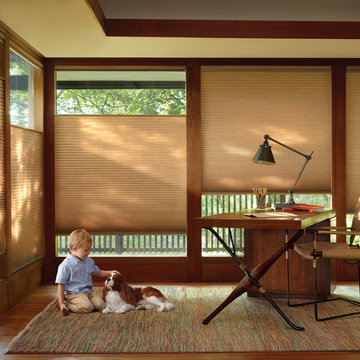
 Hunter Douglas | Duette®
Duette®
The original single- and double-honeycomb Duette® shades come in multiple cell sizes, a horizontal or Vertiglide™ vertical orientation, and a range of light-control options from sheer to opaque.
Energy Efficiency
COOL IN THE SUMMER, WARM IN THE WINTER
Did you know that up to 50% of a home’s heating and cooling energy can be lost through its windows? That’s why we designed this unique cellular shade that traps air in distinct pockets to help keep your house cool in the summer and warm in the winter.
And while the honeycomb design is praised for its efficiency, its shape and overall aesthetic are nothing short of beautiful.
Double Honeycomb
EVEN GREATER EFFICIENCIES
Our double-honeycomb construction traps air even more efficiently than our single honeycomb by sandwiching two honeycomb cells between your room and the window.
Absorb Sound
REDUCE OUTSIDE NOISE
Improve your room’s acoustics while reducing the intensity of outside sound. It starts at the windows.
The degree of sound control will depend on the fabric you choose, so if this is an important feature to you, be sure to discuss it with your sales expert.
Top-Down/Bottom-Up
PRIVACY WITH A VIEW
The Top-Down/Bottom-Up feature offers a more versatile approach to light control. Open from the top, from the bottom, or find somewhere in-between–for the perfect balance of privacy and light.
Energy Efficiency
COOL IN THE SUMMER, WARM IN THE WINTER
Did you know that up to 50% of a home’s heating and cooling energy can be lost through its windows? That’s why we designed this unique cellular shade that traps air in distinct pockets to help keep your house cool in the summer and warm in the winter.
And while the honeycomb design is praised for its efficiency, its shape and overall aesthetic are nothing short of beautiful.
Double Honeycomb
EVEN GREATER EFFICIENCIES
Our double-honeycomb construction traps air even more efficiently than our single honeycomb by sandwiching two honeycomb cells between your room and the window.
Absorb Sound
REDUCE OUTSIDE NOISE
Improve your room’s acoustics while reducing the intensity of outside sound. It starts at the windows.
The degree of sound control will depend on the fabric you choose, so if this is an important feature to you, be sure to discuss it with your sales expert.
Vertiglide™
FOR LARGE WINDOWS AND SLIDING DOORS
Vertiglide™ offers an exceptional, energy-efficient vertical solution for large expanses of windows and sliding glass doors.
Top-Down/Bottom-Up
PRIVACY WITH A VIEW
The Top-Down/Bottom-Up feature offers a more versatile approach to light control. Open from the top, from the bottom, or find somewhere in-between–for the perfect balance of privacy and light.
UV protection
SUNSCREEN FOR YOUR VALUABLES
Protect your furniture, flooring and artwork from fading with at least 75% protection from harmful UV rays
 Parker Landscape Design
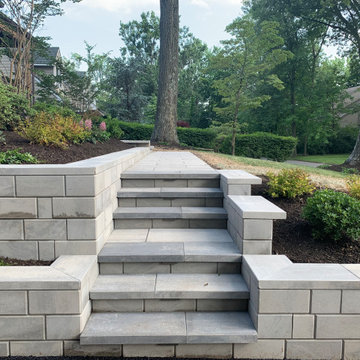
Our customer has a contemporary style home and wanted to introduce that same modern flair to their aesthetic improvements outside. They also wished to improve the resale value of their home by creating more curb appeal. Another important request was to select materials that would stand the test of time and would be low maintenance. We replaced old rotting railroad tie retaining walls and steps with new walls and steps that had a very elegant and sleek feel to them. These walls and steps were life time warrantied and offered a beautiful lighter contrast of color to the home’s dark wood façade. LED lighting was built into the new walls and steps to serve three purposes – provide beauty, provide a safety element and also deter potential intruders.
33