
Search results for "Native growth" in Home Design Ideas
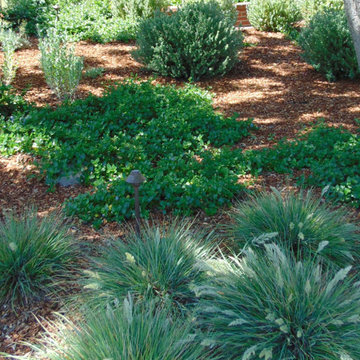
 Taproot Garden Design
Ceanothus griseus horizontalis 'Yankee Point' (Wild Lilac ground cover) PLANT FACTOR = 0.10-0.30
CA NATIVE. Evergreen shrub/groundcover. 3'Tx8'W. Will grow 8’ in three years. Sun or shade. Drought tolerant. Low water needs. Glossy green leaves, prostrate growth and beautiful blue flowers in spring Mar-May. Do not trim Ceanothus Yankee Point too severely as the branches will not recover if they are more than 1/2 inch thick when cut. Deer love to eat this plant.
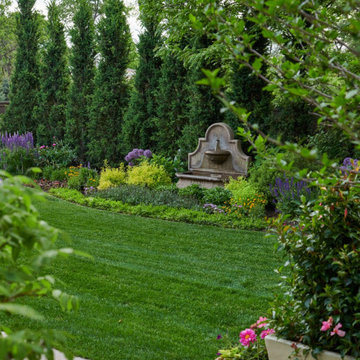
 M A Jaworski Landscape Design
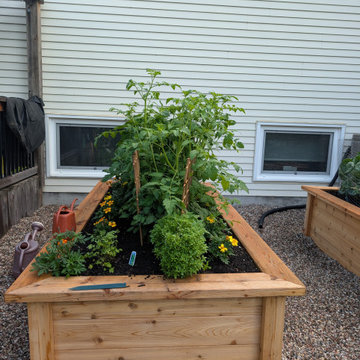
After (mid July): only 3 weeks after planting, there is explosive growth, with tomatoes, herbs and marigolds in this raised bed - all taking off with the fertile planter soil, summer heat and rain. The new landscaping of the backyard was done by Judith Slater and co-workers at the Garden Sorceress.
Find the right local pro for your project
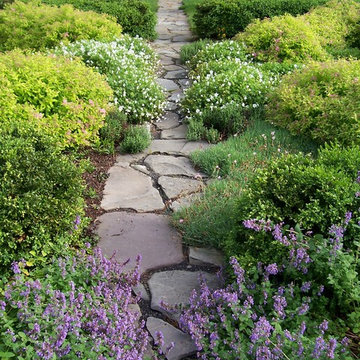
 Dear Garden Associates, Inc.
Many of the plantings have a very lush and somewhat relaxed character. This characteristic is used to contrast and soften the strong bones connecting the garden spaces, the walkways.
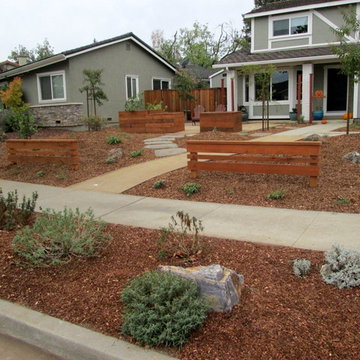 Taproot Garden Design
Patrick & Topaze McCaffery - Taproot Garden Design
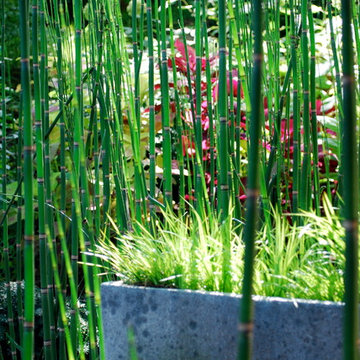
"October 2015: Planting in the Autumn months allows the winter rains to aid in the plants' growth."

 User
UserPhoto Credit:
Corrina See
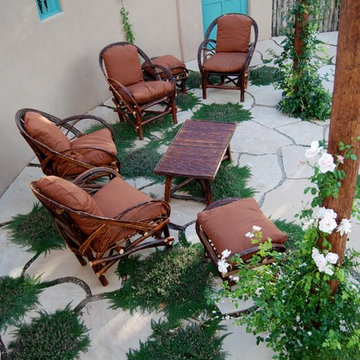
Small tuscan backyard drought-tolerant and full sun patio photo for summer in Albuquerque
Small tuscan backyard drought-tolerant and full sun patio photo for summer in Albuquerque
 Ellen Sousa/Turkey Hill Brook Farm
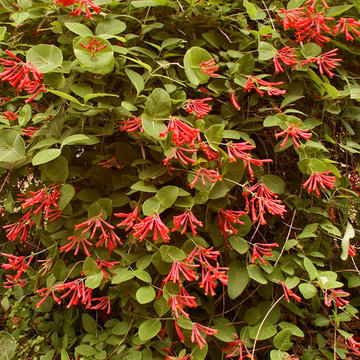
Coral Honeysuckle at Garden in the Woods, the botanic garden of New England Wild Flower Society Photo copyright Ellen Sousa/THBFarm
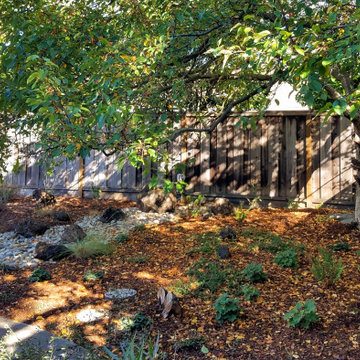
 Earth & Spirit
This shady corner of the backyard lawn conversion is shown here at 9 months of growth beside the dry creek bed and pond-less boulder fountain. The locally native California plants will grow in to create a naturally beautiful, wildlife-friendly, and water-wise garden.
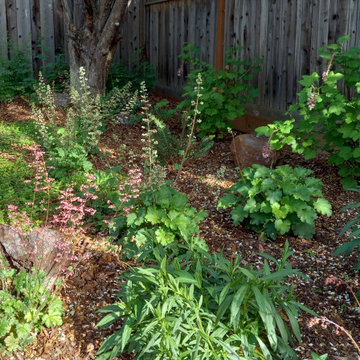 Earth & Spirit
This backyard shade garden, planted beneath the existing mature tree, shows its lush growth of drought-tolerant plants a year after installation. A variety of native California forest and woodland species thrive here in dappled sunlight and create a beautiful and inviting space.
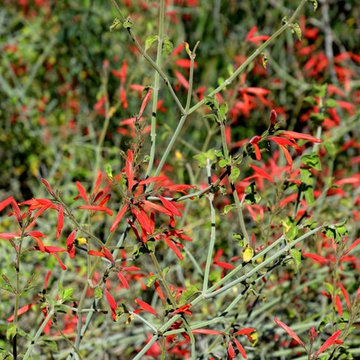

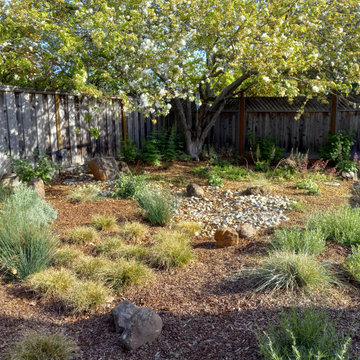 Earth & Spirit
This backyard garden, showcased one year into its spring growth, features a rain garden and dry creek bed. The lawn conversion enhances interest for both wildlife and people while effectively utilizing rainwater. With the use of drought-tolerant native plants, the garden also significantly reduces the water bill.
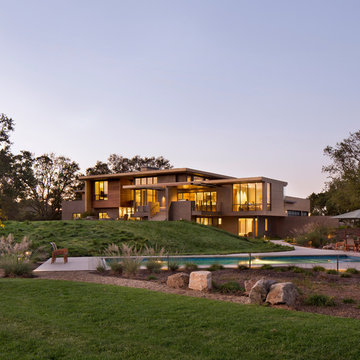
 Tobin Dougherty Architects
This new 6400 s.f. two-story split-level home lifts upward and orients toward unobstructed views of Windy Hill. The deep overhanging flat roof design with a stepped fascia preserves the classic modern lines of the building while incorporating a Zero-Net Energy photovoltaic panel system. From start to finish, the construction is uniformly energy efficient and follows California Build It Green guidelines. Many sustainable finish materials are used on both the interior and exterior, including recycled old growth cedar and pre-fabricated concrete panel siding.
Photo by:
www.bernardandre.com
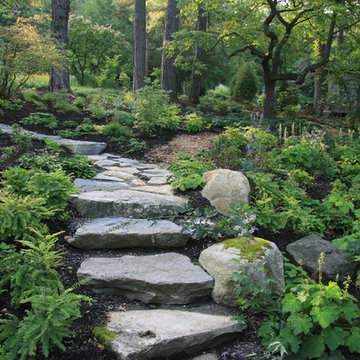
 The Cultural Landscape Foundation
Saturday July 18, 3:30 to 6:00pm | Lakeville
Native Wildflower Meadow and Woodland Garden
Larry Weaner of Larry Weaner Landscape Associates
In the area surrounding Lake Wononskopomuc in northwest Connecticut, two landscapes, each distinct yet inspired by the region’s natural environment, offer insight into the design of native landscapes and the role of the landscape architect in determining the trajectory of site evolution. Once a field of barren turf located along the lake’s northern shoreline, the first site has been transformed into a mature, native meadow, with spectacular diversity and full floral display. The second site, a more recent woodland planting on the lake’s eastern shoreline, supports a landscape in an earlier stage of evolution. While evidence of establishment techniques remain visible, this season marks a distinct moment in the landscape’s advance toward full maturity. Despite their modest size, these landscapes provide a momentous occasion to better understand designed, native landscapes and their growth and evolution. Born in the mind of the designer and bearing his thumbprint, these native landscapes spring from the dance between humans and the patterns and processes of nature. Photos courtesy of Larry Weaner Landscape Associates
 The Aldrich Company - Landscape Design
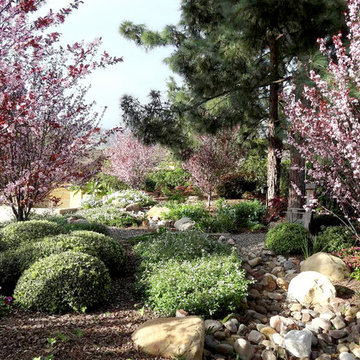
After 4 years of growth, this nature garden is bursting with springtime color. Flowering purple plum draws the eye while soft shrubs edge the dry creek bed and provide food for native lepidoptera.
 Hase Landscape Company
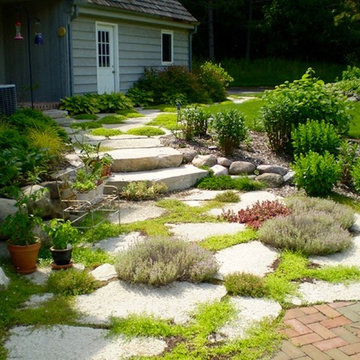
This is an example of a mid-sized traditional partial sun front yard stone landscaping in Milwaukee.
 New Image Landscaping & Tree Services
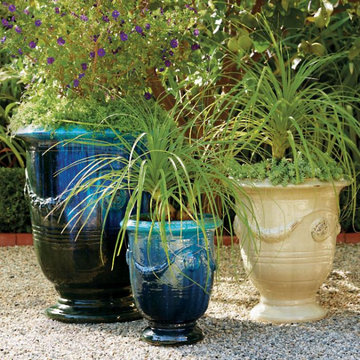
Perhaps one of the trickiest things is planting a large planter with the appropriate amount of plants so that it doesn’t look too crowded or too sparse. When you first put your plants in the pot there should be soil showing in between the different plants. This ensures that the plants and their roots have enough space to grow. If everything is full from day one everything will start to tangle together, stumping growth. Over packing plants into a planter will also increase the risk for poor plant growth and disease.
 C&H Landscaping
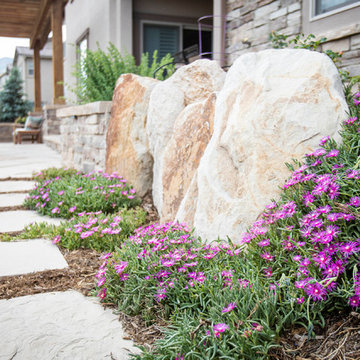
Photo of a mid-sized contemporary drought-tolerant and full sun backyard stone landscaping in Denver with a fire pit for summer.

 FormLA Landscaping
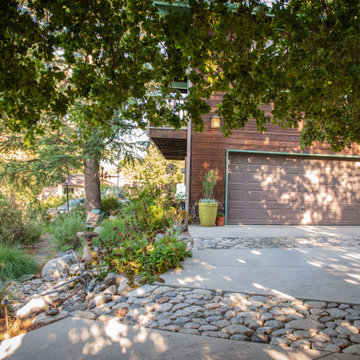
The rock bands traversing the sloped drive do more than direct rainfall into the garden where it can fuel growth and resilience. They offer shallow, fresh water for pollinators and birds. On rainy days, they dance with feathered friends.
7