
Search results for "Native growth" in Home Design Ideas
 Earth & Spirit
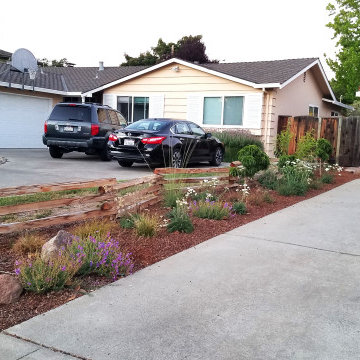
A former grass strip has been transformed into a beautiful and vibrant landscape. Native perennials create a haven for butterflies and bees, while a few dwarf fruit trees toward the back add an element of productivity for the homeowners. The garden’s beauty is showcased in the warm glow of dusk, captured at 9 months of growth.
 Earth & Spirit
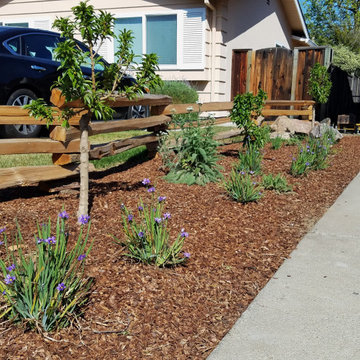
Selecting native plants to border an irrigated lawn requires a thoughtful approach. These plants not only thrive in this environment but also attract pollinators to the strategically placed dwarf fruit trees, which will also benefit from the additional nearby irrigation. This design maximizes water efficiency while supporting a vibrant ecosystem. Photo taken at 3 months of growth.

 Pete Veilleux, East Bay Wilds
Photo by Pete Veilleux, East Bay Wilds.
'Island Pink' yarrow (Achillea millefolium 'Island Pink') with woolly blue curls (Trichostema lanatum).
Find the right local pro for your project

 SALA Architects
The industrious clients came to us with dreams of a new garage structure to provide a home for all of their passions. The design came together around a three car garage with room for a micro-brewery, workshop and bicycle storage – all attached to the house via a new three season porch – and a native prairie landscape and sauna structure on the roof.
Designed by Jody McGuire
Photographed by Corey Gaffer

 Proven Winners
The distinctively puckered, glossy foliage of Pucker Up! red twig dogwood stands out in any garden. Compact growth and bright red stems add to this native's shrub's year-round appeal. 3-4' (1-1.2 m) in height. Full Sun/Part Shade in USDA Zones 3-8

 Barefoot Landscape
Photo of a large mid-century modern drought-tolerant and full sun front yard gravel landscaping in Los Angeles for spring.

 Tom Mannion Landscape Design, Inc.
Green Hakon grass above the wall, Aesculus parviflora (bottle brush buckeye) and Chasmanthium latifolia (Northern oats) below.
Roger Foley Photography, All Rights Reserved
www.foleyfoto.com

 M A Jaworski Landscape Design
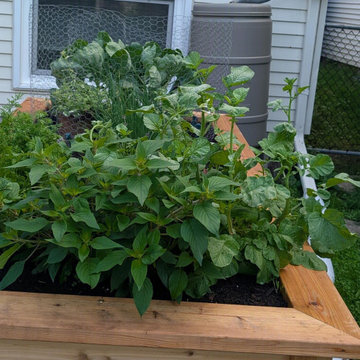
After: in Mid July - only 3 weeks after planting, there is explosive growth of the leaves in the vegetable garden! The soil in the raised beds has been carefully chosen to combine fertility with good drainage. The plants are carefully selected to be disease-resistant as well as delicious-tasting.


 Le jardinet
Autumn fern, (Dryopteris erythrosora) in a woodland setting
Le jardinet
Photo of a traditional landscaping in Seattle.
Photo of a traditional landscaping in Seattle.

 Reynolds Landscape
Old growth fir and native forest set the backdrop to this rugged, rustic, woodsy campfire space. The Montana stone fire pit is the center piece surrounded by a random natural stone patio and massive blue basalt boulder seats.

 FormLA Landscaping
If one plant can save LA on its own, it might be our native oak trees. Dense leathery leaves retain moisture in drought and hold hydration longer in high heat. They provide deep shade to cool a property and are a key tool for creating a fire wise landscape. They are also the sole or preferred habitat for many native birds and other fauna. While this species doesn't bloom, it's leaf growth is every bit as charming as a flower. Photo: Lesly Hall Photography


 Dig Your Garden Landscape Design
A circular concrete retaining wall provides a welcoming sitting area nestled in the lower part of the landscape. Positioned in an ideal spot for the homeowners to enjoy the the stunning water-side views throughout the seasons and at sunset. The ground cover Lotus (Parrot's Beak) was just beginning to cascade down the wall when this photos was taken. Lagoon-side property in the Bel Marin Keys, Novato, CA. Design Eileen Kelly
Photo: Darien Eckberg


 Green Jay Landscape Design
Pollinator garden in full bloom! Who needs a front lawn!?
This incredible amount of growth was over the course of just one growing season! Planting biodynamically and maintaining organically yields powerful results.
Learn more about the process in our Youtube Series:
https://www.youtube.com/watch?v=P5WGb_Rq9d0&index=1&list=PLmatUkAp_Vvbh_OgrLY_6B28qrnFtMZLP
 Rain Garden Nursery LandscapeMakeoverDesignStaging
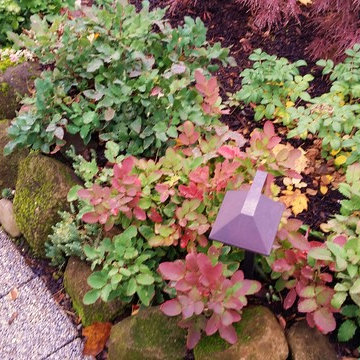
Scott & Catherine Buley, Rain Garden Nursery, LandscapeMakeover.biz, HTT&T. Mahonia repens "creeping Oregon Grape, is a native w flatter growth pattern, and a wonderful muted Fall coloration all year. I've even seen British gardens that use this as an understory to deciduous red twig dogwood. The newer Mid Winter Dogwood and Kelseyi compact forms would also be wonderful and require less maintenance...i.e. less annual twig removal.

 Taproot Garden Design
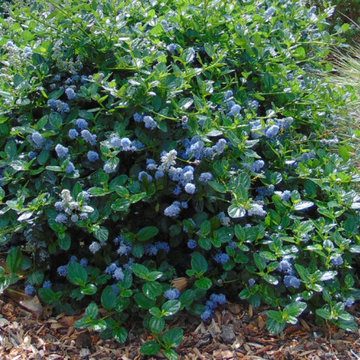
Ceanothus griseus horizontalis 'Yankee Point' (Wild Lilac ground cover) PLANT FACTOR = 0.10-0.30
CA NATIVE. Evergreen shrub/groundcover. 3'Tx8'W. Will grow 8’ in three years. Sun or shade. Drought tolerant. Low water needs. Glossy green leaves, prostrate growth and beautiful blue flowers in spring Mar-May. Do not trim Ceanothus Yankee Point too severely as the branches will not recover if they are more than 1/2 inch thick when cut. Deer love to eat this plant.
6