
Search results for "Organic forms" in Home Design Ideas
 Powell Construction
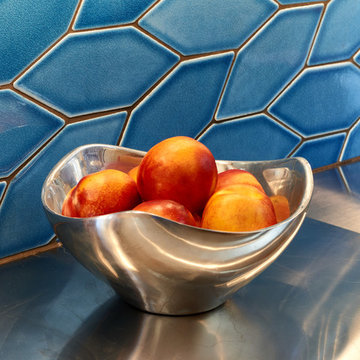
Details: The tiles are handmade Fireclay Tile and have a craze--or crackle--in their glaze upon closer inspection. Each tile is slightly different than the other, revealing its handmade nature. The tile shape is called "Picket" and the pattern is called Braid. The black grout sets off the whiter edges of the tiles, making the unique shape of the tiles stand out.

Rosa californica / California wild rose
Photo: Paula Kate Marmor, via Wikimedia Commons, licensed under Creative Commons Attribution-GNU Free Documentation License


Find the right local pro for your project



 Sunset Western Garden Collection
Tropical Gardenia fragrance on a cold hardy, easy care plant. Jubilation flowers from spring through fall with masses of white blooms. Plant near patios, porches, decks, and other outdoor living areas where the fragrance can be enjoyed.
Features
Feature/Bloom White flowers in spring, reblooming summer to fall
Evergreen or Deciduous evergreen
USDA Zones Hardy to 0°F USDA 7, 8, 9, 10, 11
Sunset Zones 7-9, 12-16, 18-24
Special Features Fall blooming, reblooming, dwarf, attracts birds/butterflies, aromatic
Landscape Use Accent, container, mass planting, slope, hedge
Exposure Full sun to part shade
Bloom Season Spring, summer, fall
Dimension 3-4 ft H x 3-4 ft W
Growth Rate Moderate to fast
Plant Type evergreen
About the Collection
Brought to you by the authority on Western gardening, the Sunset Western Garden Collection is an exclusive plant collection of top performing plants for the Western Gardener.

 New Explode Construction
Contemporary Exterior with Cantilevered Roofline, Steel Accents, and Custom Landscape Design | Chicago Custom Home
This striking exterior sets the tone for a modern custom home built in the heart of Chicago. Featuring a dramatic cantilevered roofline, black steel railings, and expansive glass walls, the architectural profile is bold, dynamic, and unmistakably contemporary. Every line, edge, and elevation was intentionally designed to marry form and function—while creating undeniable curb appeal.
At the base, custom landscaping softens the strong geometry with organic texture. Clean hardscaping and integrated seating offer outdoor gathering zones that extend the livable footprint of the home. Neutral-toned siding and natural wood accents provide warmth to the structure's otherwise minimalist composition, allowing the home to stand out while blending into its urban surroundings.
This exterior is a celebration of precision, proportion, and performance. It reflects New Explode Construction's signature approach—designing homes that are both breathtaking and buildable. Modern doesn't have to feel cold, and this home proves it.



Sponsored
Westerville, OH

Inspired Closets Columbus
Innovative & Creative Custom Closet Designer Servicing Franklin County

 Hold It Contemporary Home
Reflecting a seamless organic shape and timeless form, the Lippa dining table has become a symbol of modernism for over the past 60 years. Before its release, homes were filled with clunky remnants of an industrial age long gone by. But in order to advance into the new world, homes first had to transition from the traditional square table, into a piece that connoted progress. The base and dimensions are true to the original specifications, while the table’s circular white top, and metal tapered base, are carefully lacquered with a scratch and chip resistant finish.
The Lippa Side Chair adds the perfect modern classic touch to any dinning space. Sturdy, easy to clean and lovely to behold, these chairs elevate a meal to whole new levels of enjoyment. Available in an array of colors, the Lippa Chair makes it easy to express your individual style.

 K. Dakin Design Inc.
K. Dakin Design won the 2018 CARE award from the Custom Builder and Remodeler Council of Denver for the reimagination of the landscape around this classic organic-modernist home designed by Charles Haertling. The landscape design is inspired by the original home and it’s materials, especially the distinct, clean lines of the architecture and the natural, stone veneer found on the house and landscape walls. The outlines of garden beds, a small patio and a water feature reiterate the home’s straight walls juxtaposed against rough, irregular stone facades and details. This sensitivity to the architecture is clearly seen in the triangular shapes balanced with curved forms.
The clients, a couple with busy lives, wanted a simple landscape with lawn for their dogs to fetch balls. The amenities they desired were a spa, vegetable beds, fire pit, and a water feature. They wanted to soften the tall, site walls with plant material. All the material, such as the discarded, stone veneer and left-over, flagstone paving was recycled into new edging around garden areas, new flagstone paths, and a water feature. The front entry walk was inspired by a walkway at Gunnar Asplund’s cemetary in Sweden. All plant material, aside from the turf, was low water, native or climate appropriate.


 Zag Built LLC
3House Media
Example of a mid-sized trendy open concept concrete floor and multicolored floor living room design in Denver with gray walls, a metal fireplace and a wall-mounted tv
Example of a mid-sized trendy open concept concrete floor and multicolored floor living room design in Denver with gray walls, a metal fireplace and a wall-mounted tv


 John
Coco coir is a versatile and sustainable growing medium that is gaining popularity among gardeners. Made from the fibrous husk of coconuts, it’s an eco-friendly alternative to peat moss and can greatly enhance the quality of your soil. In gardening, it is often utilized in systems like Coco Coir Hydroponic, where it helps create an efficient water and nutrient delivery system.
What is Coco Coir?
Coco coir is a natural fiber extracted from coconut husks. It has a neutral pH, excellent water retention, and is reusable, making it a favorite among gardeners who prefer organic and sustainable practices. It is available in different forms such as blocks, bricks, or loose coir, each requiring some preparation before use in gardening.
Benefits of Using Coco Coir in Gardening
Coco coir offers several advantages for gardening. Here are the benefits of using coco coir in gardening:
Holds up to 10 times its weight in water, ensuring plants have consistent moisture.
Promotes oxygen flow to plant roots, leading to healthier root systems.
Coco coir is a renewable and eco-friendly alternative to peat moss.
It can be washed, rehydrated, and reused, reducing waste.
Naturally pH neutral, making it suitable for various plants without major adjustments.
Enhances the texture and moisture retention of garden soil.
How to Prepare Coco Coir for Planting
Preparing coco coir for planting involves a few essential steps. First, you need to hydrate the coir block, as it typically comes in a compressed form. Place the block in a large container and add warm water, allowing the block to expand and absorb the water. Once fully expanded, the coir should be fluffed up by breaking it apart with your hands or a tool to ensure it becomes loose and airy. After the coir has been fluffed, it is important to drain any excess water, as overly wet coir can lead to root suffocation. Finally, since coco coir is inert and does not contain nutrients, it’s a good idea to add organic compost or liquid fertilizer to enrich the coir before planting.
Do You Need to Soak Coco Coir Before Planting?
Yes, soaking coco coir before planting is necessary. Since it comes in a compressed form, it needs to be broken down and hydrated for proper use. The soaking process allows the coir to expand and release the fibers, making it usable as a growing medium. After soaking, the coir should be fluffed to ensure the water is evenly distributed. Draining any excess water is crucial because overly wet coir may impede plant root health.
How to Prepare Coco Peat for Planting
Coco peat, a fine, powdery form of coco coir, is highly beneficial for seed starting and improving water retention in soil. To prepare coco peat, it first needs to be hydrated, similar to how you prepare coir blocks. Slowly add water to the peat in a container and allow it to absorb and fluff up. Once hydrated, coco peat can be used on its own or mixed with other growing media such as perlite or vermiculite for added aeration and drainage. It is advisable to check the pH level of your final mix, as coco peat generally has a neutral pH, but adjustments may be necessary depending on the plants being grown.
Can You Use Just Coco Coir for Plants?
Yes, coco coir can be used by itself to grow plants, especially in hydroponic systems or as a seed-starting medium. However, because coco coir does not naturally contain nutrients, you will need to provide regular fertilizer to support plant growth. This makes it particularly suitable for plants grown in controlled environments, such as hydroponics, where nutrient solutions can be carefully managed. In traditional soil-based gardening, mixing coco coir with other organic materials like compost is recommended to provide essential nutrients and improve the overall soil structure.
How to Use Coco Coir in Hydroponics
Coco coir is widely used in hydroponic systems due to its water retention and aeration properties. To use coco coir in hydroponics, it first needs to be soaked and hydrated, as discussed earlier. Once the coir is fully prepared, it can be placed in the hydroponic system. Since coco coir does not contain natural nutrients, you will need to supply a balanced nutrient solution tailored for hydroponic plants. Regular monitoring of water and nutrient levels is essential to prevent nutrient imbalances or root rot. One of the benefits of coco coir in hydroponics is its reusability. After completing a growing cycle, the coir can be washed, rehydrated, and used again in future plantings.
Using Coco Coir as a Soil Amendment
Coco coir is also an excellent soil amendment, as it improves the texture and moisture retention of garden soil. To use coco coir in this way, mix loose coir with your existing garden soil at a ratio of one part coco coir to two parts soil. This will help retain moisture without compacting the soil, improving both water drainage and root growth. For optimal results, you can also add organic compost to the mix, ensuring that the nutrient levels are sufficient for plant growth. Coco coir works particularly well in raised beds, where it helps maintain proper soil structure over time.
Advantages of Using Coco Coir Over Peat Moss
While peat moss has been traditionally used as a growing medium, coco coir offers several advantages over it. Coco coir is a renewable resource, as it is a byproduct of coconut processing, while peat moss is harvested from peat bogs that take centuries to regenerate. Coco coir is also more durable, as it can be reused multiple times without breaking down, while peat moss disintegrates after a single use. Another key benefit is its neutral pH, whereas peat moss is more acidic and may require balancing to meet the needs of specific plants.
Conclusion
Coco coir is a highly versatile and sustainable growing medium that benefits both novice and experienced gardeners alike. Whether you are using it for hydroponics, as a soil amendment, or as a standalone medium for growing plants, knowing how to properly prepare and use it is key to maximizing its benefits. By following the steps detailed above, you can improve water retention, aeration, and overall plant health in your garden, all while contributing to eco-friendly gardening practices.
Sponsored
Columbus, OH

Hope Restoration & General Contracting
Columbus Design-Build, Kitchen & Bath Remodeling, Historic Renovations

 Edge
Whether you’re remodeling, renovating or building new, UFP-Edge Charred Wood shiplap and trim boards will make an understated addition to your interior living space. You’ll welcome its warm, modern look and the conversations it inspires ─all while appreciating its unique charm.
Charred Wood is well-crafted with lumber that has been carefully burnt to highlight its natural beauty and enhance its dignified character. The contrast of its dark-charred top surface and distinct spruce wood grain distinguishes it from any other wood.
 K. Dakin Design Inc.
K. Dakin Design won the 2018 CARE award from the Custom Builder and Remodeler Council of Denver for the reimagination of the landscape around this classic organic-modernist home designed by Charles Haertling. The landscape design is inspired by the original home and it’s materials, especially the distinct, clean lines of the architecture and the natural, stone veneer found on the house and landscape walls. The outlines of garden beds, a small patio and a water feature reiterate the home’s straight walls juxtaposed against rough, irregular stone facades and details. This sensitivity to the architecture is clearly seen in the triangular shapes balanced with curved forms.
The clients, a couple with busy lives, wanted a simple landscape with lawn for their dogs to fetch balls. The amenities they desired were a spa, vegetable beds, fire pit, and a water feature. They wanted to soften the tall, site walls with plant material. All the material, such as the discarded, stone veneer and left-over, flagstone paving was recycled into new edging around garden areas, new flagstone paths, and a water feature. The front entry walk was inspired by a walkway at Gunnar Asplund’s cemetary in Sweden. All plant material, aside from the turf, was low water, native or climate appropriate.
 John West Stoddard & Associates
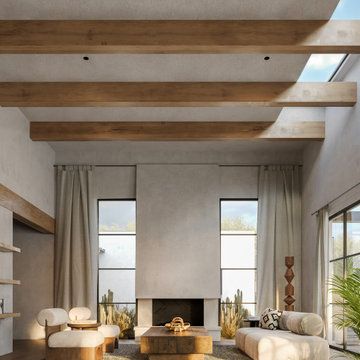
This Southwestern modern residence draws inspiration from the timeless architecture of Santa Fe, New Mexico, reinterpreted through a clean, contemporary lens. Crisp lines, smooth stucco walls, and sculptural parapet roofs establish a quiet, grounded presence while respecting the regional vocabulary of adobe forms. The home is carefully composed as a series of connected volumes, creating a sense of rhythm and shadow across the façade.
Designed for a long corner lot, the layout emphasizes indoor–outdoor living through shaded breezeways, courtyards, and framed views of the landscape. Green roofs and a roof garden soften the architecture while enhancing sustainability, providing usable outdoor space and visual relief from above. An olive garden anchors the site with texture and seasonal change, reinforcing the connection between architecture and desert landscape.
A detached garage maintains the purity of the main residence while helping define outdoor rooms and circulation paths across the site. Together, the massing, materials, and landscape work in harmony to create a modern Southwestern home that feels both rooted in place and distinctly contemporary.

 D.I.G. Landscape
Charleston Home and Design
This is an example of a transitional backyard brick garden path in Charleston for summer.
This is an example of a transitional backyard brick garden path in Charleston for summer.

Sponsored
Westerville, OH
Inspired Closets Columbus
Innovative & Creative Custom Closet Designer Servicing Franklin County
 Ultimate Outdoor Design
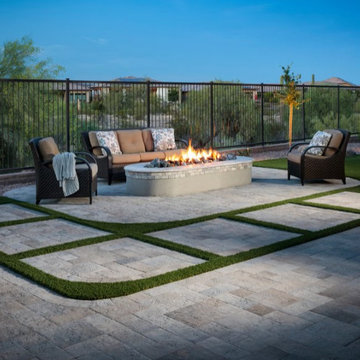
Some materials offer more than function. They give form to comfort and rhythm to space. Travertino Greys brings a refined texture and a neutral palette that feels both grounded and open.
Belgard Travertino Greys is a porcelain paver that echoes the natural beauty of aged travertine stone, reimagined in cool, modern tones. Its smooth, lightly textured surface and versatile format make it perfect for patios, pool decks, and contemporary garden layouts. It offers the elegance of natural stone with the durability and ease of porcelain.
Imagine a twilight gathering around a clean fire feature. The warmth of the flame plays against the cool undertones of the paver. Each step across the grid of soft stone feels measured and intentional. Grass lines break the geometry just enough to make the space feel both curated and organic.
This is not just a surface. It is a quiet stage where design and lifestyle move together, with elegance and ease.
Let’s explore how this material can bring your outdoor story to life.
Schedule your consultation today: 516-522-8249

 The Tile Shop
Illuminate your bathroom space with the twilight aesthetics of an electrifying night sky.
Stabia Blanco ceramic wall tile creates a uniform look, while the crisp white hue offers an immaculately clean look.
Blue Twilight Brick Glass mosaic tile made of small translucent pieces stacked in a classic brick pattern to perfectly mix a sturdy structure and abstract, organic form.
Milky Black polished marble mosaic floor tile each made of a unique work of art in a hexagon-shape in grey, black and white speckling, marbling and striation hues.

 David Trubridge
COR-0600-NAT-ORA - Coral - Bamboo Pendant - 24 - Natural (Side A) - Orange (Side B)
Coral is based on one of the geometric polyhedra that have interested David since he was a boy. The intricate form is made from just one single component repeated 60 times. Originally designed purely as an experiment, it only became a light later when David tried to find a use for it by putting a bulb inside. This was a pivotal moment. What followed was a whole new direction in exploring lighting structures made from minimal shell-like skins which also act as patterned shadow- makers.
122