
Search results for "Populate" in Home Design Ideas
 User
UserPhotos by ©ThompsonPhotographic.com 2019
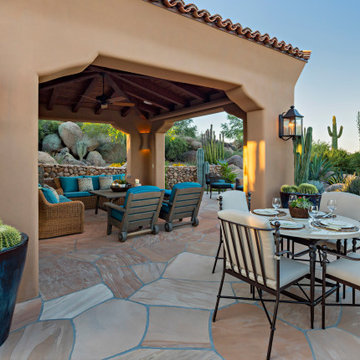
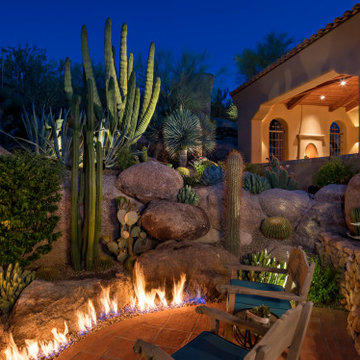
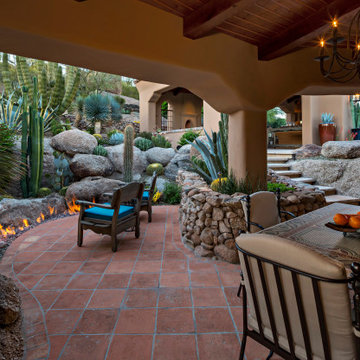
A passion for the Southwest inspires one couple to turn their garden into a vibrant showcase for Sonoran Desert flora.
By Nancy Erdmann | Photography by Steve Thompson
For someone who loves to garden and has done so in many areas of the U.S., taking on the challenge of a rocky, boulder-strewn hillside lot in the Sonoran Desert is something that Carey Bertsch relishes. “I was born in Scotland but grew up in Atlanta, Georgia. My husband, Robin, is from Indiana. We have always loved everything about the Southwest. The sunny, arid climate; the lifestyle; the flora; the fauna—they all resonate with us,” she remarks.
As such, the couple, who are based in Colorado, decided to purchase a part-time residence in Arizona. They found a Santa Fe Territorial-style home that’s tucked into the base of a steep slope in North Scottsdale’s Estancia community. Populated with natural boulder outcroppings, the property’s landscape was rudimentary at best. “But we saw the potential and knew it could be so much more,” recalls Carey. She and her husband lived in the house for several years before making any major changes; they recently completed a total exterior remodel.
 Juxtapose Design Build
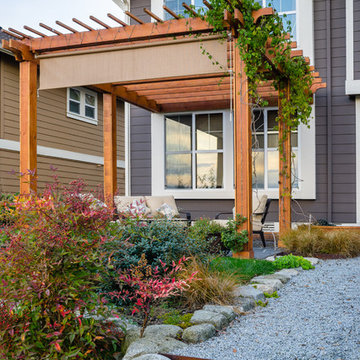
Serpentine dry stacked granite walls celebrate regional materials while transforming this sloping yard into a multilevel extension of home. It features a secluded fire pit that looks out over a striking view of the stormwater pond below and mountains in the distance, activated by the occasional glimpse of local wildlife populations including bald eagles and deer. Two cedar pergolas act as an outdoor extension of home and provide afternoon shade both inside the house and out.
Photography: Louie Jeon Photography
 User
UserPhotos by ©ThompsonPhotographic.com 2019
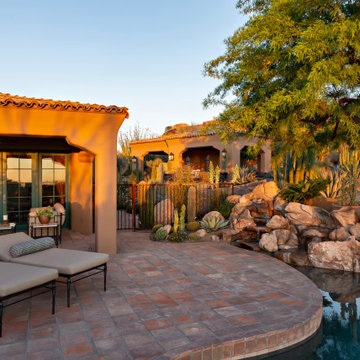
A passion for the Southwest inspires one couple to turn their garden into a vibrant showcase for Sonoran Desert flora.
By Nancy Erdmann | Photography by Steve Thompson
For someone who loves to garden and has done so in many areas of the U.S., taking on the challenge of a rocky, boulder-strewn hillside lot in the Sonoran Desert is something that Carey Bertsch relishes. “I was born in Scotland but grew up in Atlanta, Georgia. My husband, Robin, is from Indiana. We have always loved everything about the Southwest. The sunny, arid climate; the lifestyle; the flora; the fauna—they all resonate with us,” she remarks.
As such, the couple, who are based in Colorado, decided to purchase a part-time residence in Arizona. They found a Santa Fe Territorial-style home that’s tucked into the base of a steep slope in North Scottsdale’s Estancia community. Populated with natural boulder outcroppings, the property’s landscape was rudimentary at best. “But we saw the potential and knew it could be so much more,” recalls Carey. She and her husband lived in the house for several years before making any major changes; they recently completed a total exterior remodel.
Find the right local pro for your project

 User
UserPhotos by ©ThompsonPhotographic.com 2019
A passion for the Southwest inspires one couple to turn their garden into a vibrant showcase for Sonoran Desert flora.
By Nancy Erdmann | Photography by Steve Thompson
For someone who loves to garden and has done so in many areas of the U.S., taking on the challenge of a rocky, boulder-strewn hillside lot in the Sonoran Desert is something that Carey Bertsch relishes. “I was born in Scotland but grew up in Atlanta, Georgia. My husband, Robin, is from Indiana. We have always loved everything about the Southwest. The sunny, arid climate; the lifestyle; the flora; the fauna—they all resonate with us,” she remarks.
As such, the couple, who are based in Colorado, decided to purchase a part-time residence in Arizona. They found a Santa Fe Territorial-style home that’s tucked into the base of a steep slope in North Scottsdale’s Estancia community. Populated with natural boulder outcroppings, the property’s landscape was rudimentary at best. “But we saw the potential and knew it could be so much more,” recalls Carey. She and her husband lived in the house for several years before making any major changes; they recently completed a total exterior remodel.

 Envision Web
Stuart Wade, Envision Virtual Tours
Campbell Cove Lake, Tennessee
Construction was completed in 1963 and originally, the lake was owned and managed strictly for fishing. It has a normal surface area of 71 acres and depths of over 60 feet. It is now owned by Polk County and managed by the Copper Basin Utility District as an area water supply.
Swimming and boating is allowed, however, the use of gasoline powered boat motors is prohibited
Campbell Cove Lake Dam is of earthen construction. The core is homogeneous, earth. The foundation is soil, rock. Its height is 77 feet with a length of 402 feet. Its capacity is 2430 acre feet. Normal storage is 1394 acre feet. It drains an area of 1.84 square miles.
The lake was originally stocked by the Tennessee Game and Fish Commission with large mouth bass, shell crackers, bluegill and channel catfish; the lake also has a healthy population of perch and crappie. Persons fishing must have a valid TN. fishing license.
There is a public boat launching area available for use year round.
 User
UserPhotos by ©ThompsonPhotographic.com 2019
A passion for the Southwest inspires one couple to turn their garden into a vibrant showcase for Sonoran Desert flora.
By Nancy Erdmann | Photography by Steve Thompson
For someone who loves to garden and has done so in many areas of the U.S., taking on the challenge of a rocky, boulder-strewn hillside lot in the Sonoran Desert is something that Carey Bertsch relishes. “I was born in Scotland but grew up in Atlanta, Georgia. My husband, Robin, is from Indiana. We have always loved everything about the Southwest. The sunny, arid climate; the lifestyle; the flora; the fauna—they all resonate with us,” she remarks.
As such, the couple, who are based in Colorado, decided to purchase a part-time residence in Arizona. They found a Santa Fe Territorial-style home that’s tucked into the base of a steep slope in North Scottsdale’s Estancia community. Populated with natural boulder outcroppings, the property’s landscape was rudimentary at best. “But we saw the potential and knew it could be so much more,” recalls Carey. She and her husband lived in the house for several years before making any major changes; they recently completed a total exterior remodel.
 YardDoc
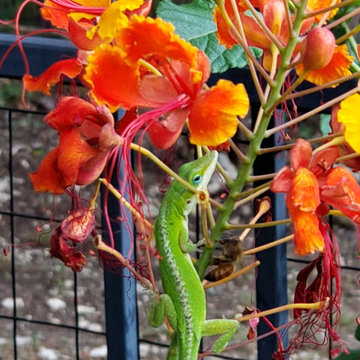
Killing all the insects in your yard is a little like using a sledgehammer to crack a walnut. You want to eliminate harmful or disease-carrying pests such as mosquitoes or cockroaches, but you don’t want to get rid of those insects that help, such as bees and dragonflies. This lizard needs a steady supply of insects to stay healthy. By eating those in your yard, he is keeping the population of all insects in balance. That is vital for the health of your yard and our planet.
 SV Design
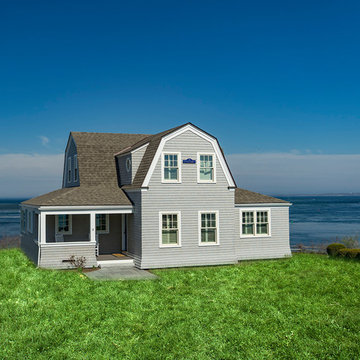
If you were to look up “classic summer cottage” in the dictionary, there should be a picture of this house.
Located in a densely populated community of historic summer cottages, this new gambrel-style home was designed to maintain the beach cottage feel of its predecessor. Due to strict zoning and easement restrictions the new construction had to be designed within the same footprint and volume of its former self. The new design allows for a more open floor plan, more living space, and an almost 180-degree view of the ocean.
Filled with natural light and a palette of colors and materials reminiscent of seashells, this four-bedroom home is the quintessential summer retreat. Glass foldaway doors extend the main living area to a covered porch with gas fireplace. A fully finished basement suite, with walk-out access to a gas grilling patio and the beach, is perfect for guests. The interiors are an artful blend of modern fixtures along with some slightly more traditional materials that are in keeping with the cottage vibe.
© Eric Roth Photography
 User
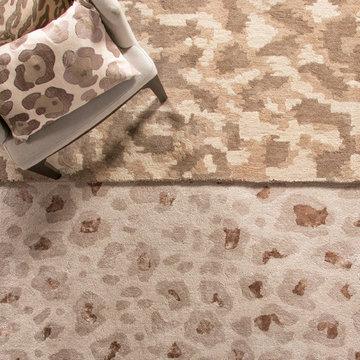
UserPopulations of big cats in the wild are declining at an alarming rate. Bringing awareness to their plight and in celebration of their beauty and the mystery that surrounds our largest feline friends, this Big Cats line of National Geographic rugs is inspired by their magnificent coats of many colors and patterns.
Photo Credits: Lauren Rountree & Jennifer Sligh
 User
UserPhotos by ©ThompsonPhotographic.com 2019
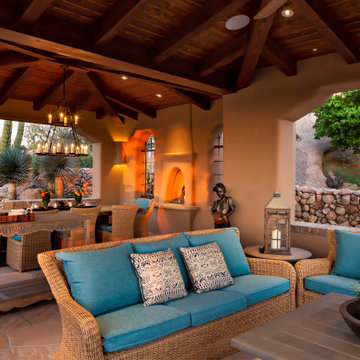
A passion for the Southwest inspires one couple to turn their garden into a vibrant showcase for Sonoran Desert flora.
By Nancy Erdmann | Photography by Steve Thompson
For someone who loves to garden and has done so in many areas of the U.S., taking on the challenge of a rocky, boulder-strewn hillside lot in the Sonoran Desert is something that Carey Bertsch relishes. “I was born in Scotland but grew up in Atlanta, Georgia. My husband, Robin, is from Indiana. We have always loved everything about the Southwest. The sunny, arid climate; the lifestyle; the flora; the fauna—they all resonate with us,” she remarks.
As such, the couple, who are based in Colorado, decided to purchase a part-time residence in Arizona. They found a Santa Fe Territorial-style home that’s tucked into the base of a steep slope in North Scottsdale’s Estancia community. Populated with natural boulder outcroppings, the property’s landscape was rudimentary at best. “But we saw the potential and knew it could be so much more,” recalls Carey. She and her husband lived in the house for several years before making any major changes; they recently completed a total exterior remodel.
 Choate + Hertlein Architects
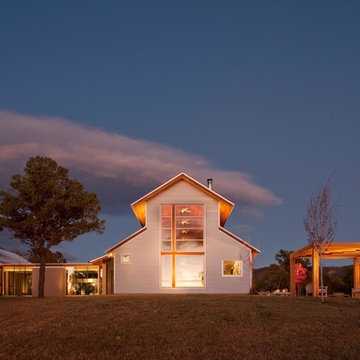
In approaching the task of form-making in this context, the Architect considered the surrounding vernacular architecture. The most distinct structures in the sparsely populated area are agricultural buildings -- barns and sheds. In the initial phase of the project, the living area was therefore conceived as an abstraction of the typical barn form. Alternately, the bedroom wing takes the form of the shed.
Phillip Spears Photographer
 Dale Cohen Designstudio
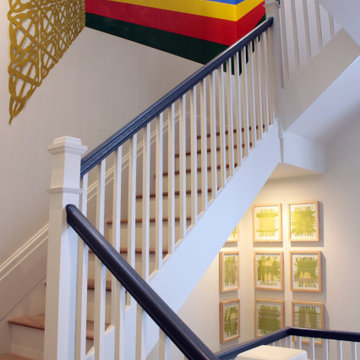
dale cohen designstudio has gathered her favorite artists, designers and purveyors in an installation at the Sag Harbor architectural landmark The Watchcase Project by Cape Advisors. Populating a Watchcase Townhouse with vibrant visual practitioners, Dale has composed a series of rooms that speak to the exquisite quality of space, light, and scale in the Watchcase Project. She has selected a group of artists mostly from the East End.
She has responded to the rooms, staircases, and walls by applying kinetic color and imagery with a contemporary take. And Dale recruited Annie Coggan and Caleb Crawford to do their own room they’ve named the Melville Room. They gathered a series of their work, a practice called Didactic Decorative Objects and inspired by the Sag Harbor Whaling Museum. Researching the work of Herman Melville, who speaks of Sag Harbor is his epic Moby Dick.
The art installation is accompanied by design greats, FritzHansen, Vitra, vintage Knoll and Swedish design company Overman, contemporary and vintage rugs by Doris Leslie Blau, mohair rug by Sacco, fabrics by Fischbacher for Stark and Knoll Luxe, and pillows from Maharam, all to make a dynamic conversation in a domestic setting.
This is not typical beach-house decor.
 Craftsman's Choice Inc.
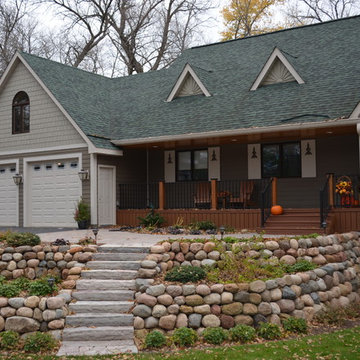
These Lino Lakes homeowners decided it was time to update their lake home. The local woodpecker population was not happy with Craftsman's Choice when we pulled off the existing cedar siding and replaced it with James Hardie fiber cement siding. We installed 6" Timberbark lap siding, Monterey Taupe straight edge shakes, with cobblestone trim. We also made them custom James Hardie shutters with a pine tree cutout.
 Craftsman's Choice Inc.
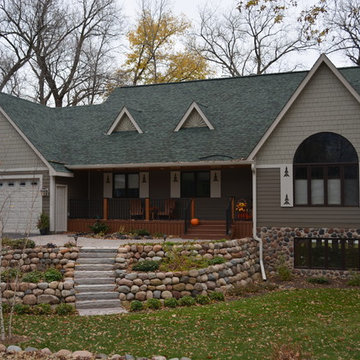
These Lino Lakes homeowners decided it was time to update their lake home. The local woodpecker population was not happy with Craftsman's Choice when we pulled off the existing cedar siding and replaced it with James Hardie fiber cement siding. We installed 6" Timberbark lap siding, Monterey Taupe straight edge shakes, with cobblestone trim. We also made them custom James Hardie shutters with a pine tree cutout.
 Lisa Houck Art
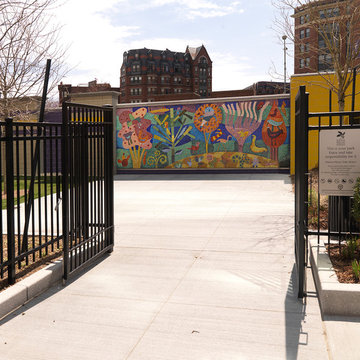
A Friendly Flock Touches Down
The inspiration for the mosaic murals in Frieda Garcia Park in Boston came from children’s artwork. I held art classes with children from the community at Ellis Memorial and United South End Settlements. The young students created beautiful prints, drawings and collages of birds that I used to populate the magical landscapes for the park. The final design was translated into a glass mosaic by Unicorn Art Studio.
 Envision Web
Stuart Wade, Envision Virtual Tours
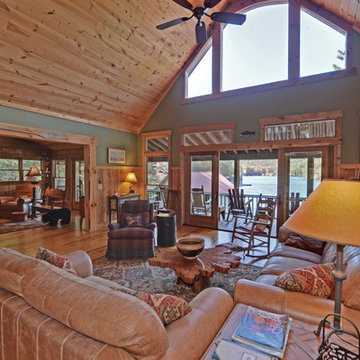
Envision Virtual Tours and High Resolution Photography is your best choice to find just what you are looking for in the Lake Burton Area . Knowing the areas and resources of Lake Burton is our specialty
Lake Burton is a 2,775 acre man-made lake with 62 miles of shoreline located in the northeastern corner of Georgia in Rabun County. It is the first lake in a five-lake series called the Tallulah River Watershed that follows the original course of the Tallulah River. The series of lakes starts with Lake Burton as the northernmost lake followed by Lake Seed, Lake Rabun, Lake Tallulah Falls and the eastern arm of Lake Tugalo (the western arm is formed by the Chattooga River. The lakes are owned and operated by the Georgia Power Company to generate hydroelectric energy for Georgia's largest city, Atlanta. At one time these lakes were the largest producers of electricity in the state of Georgia. Now, they only provide peak power supply.
The lake was built in a deep valley located along a 10 mile section of the Tallulah River. The Lake Burton Dam was closed on December 22, 1919 and the lake started to fill. The dam is a gravity concrete dam, with a height of 128 feet and a span of 1,100 feet. The spillway is equipped with eight gates 22 feet wide by 6.6 feet high. The total capacity at an elevation of 1,866.6 feet is 108,000 acre-ft, of which 106,000 acre-ft is usable storage. The generating capacity of the dam is 6,120 kilowatts (two units).Lake Burton is the highest Georgia Power lake in Georgia.
Lake Burton gets its named from the town of Burton, which was the second largest town in Rabun County with a population of approximately 200 but now lies below the lake's surface. The town (and the lake) was named after local prominent citizen Jeremiah Burton and was situated along the road from Clayton, Georgia to the Nacoochee Valley. Andrew Jackson Ritchie served as the postmaster for the area for several years. Gold was first discovered in Rabun County where Dicks Creek and the Tallulah River come together and was the reason for the town's founding in the early 1800s.
The Lake Burton Fish Hatchery and Moccasin Creek State Park are located on the western side of the lake. Lake Burton is home to several species of fish, including Spotted Bass, Largemouth Bass, White Bass, Black Crappie, Bluegill, Redear Sunfish, White Catfish, Walleye, Brown Trout, Rainbow Trout, and Yellow Perch.
The residents of Lake Burton are a mix of permanent residents and seasonal vacationers who together make-up the Lake Burton Civic Association, a local organization who goal is to maintain the lake through volunteer clean-ups and other such events. Let a Lake Burton resident and expert show you the way
The Lake Burton Civic Association is an active homeowners association for residents of the Lake Burton area and sponsors many events throughout the year such as:
burton, custom, envision, georgia, lake, mountain, nc, north, photography, web, western, Lake Burton, Lake Rabun, Seed Lake,Virtual Tours.
 Integrity Tree Care & Grounds Maintenance
Facts About ButterfliesDifferent Types Of Butterflies And Butterfly Facts
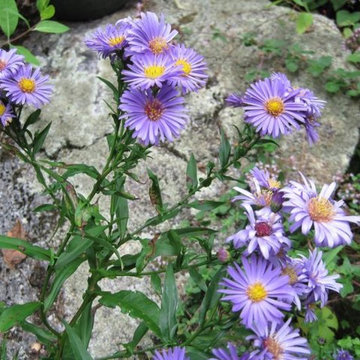
Natural butterfly habitats have been destroyed or affected by construction of housing and shopping developments, as well as by the use of pesticides and other chemicals. You can provide a suitable butterfly habitat that will help fortify the butterfly population, and as an added bonus, the habitat will bring you enjoyment in watching beautiful butterflies in your yard.
The butterfly habitat should be relatively sunny (5-6 hours per day) and out of the wind. Butterflies can get their required nutrients and minerals from a mud puddle in a sunny area. A successful butterfly habitat will contain the plants favored by both caterpillars and butterflies. This means that you should include plants like Queen Anne’s Lace, violets, marigolds, and maybe even milkweed for the caterpillars to eat, since they are able to chew their food. In particular, monarch caterpillars eat milkweed because it makes them an unpleasant-tasting meal to predators. For the butterflies, which are able to suck and are unable to chew, you should include nectar plants with different colors of flowers, such as zinnias, lilacs, and the butterfly bush.
Butterfly habitats should last all summer, meaning that you should select plants that bloom at different times so that something is always blooming. You might be able to take inspiration in your planting selections from a butterfly garden or inside a butterfly house if you are lucky to live close enough to one of these carefully planned attractions. Often, landscapers and nursery employees will be able to advise you as to what possible additions to your butterfly habitat will grow well in your area.
Copyright © Facts About Butterflies | All Rights Reserved.
Content provided and copywritten by http://factsaboutbutterflies.net
 Modern Habitat
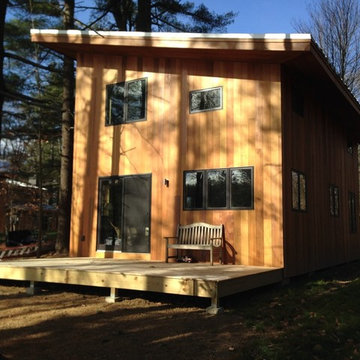
Positioned a short walk from the main house, the Bunk House has 3 bedrooms, a small kitchen, half bath (assuming use of the outdoor shower at the main house) and a small living area adjacent a water facing deck with a sliding door.
The bunk house deliberately is purposed as a 3 season structure with open uninsulated walls reminiscent of the lake front "camps" that still populate the lake. A wood stove, provides adequate heat in shoulder seasons or cold summer days.
 Organise Space
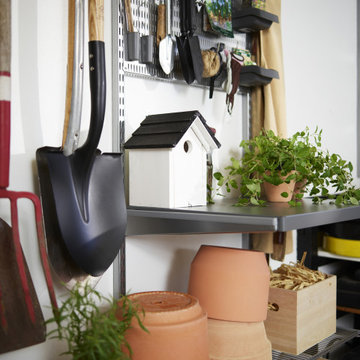
Elfa make a variety of shelves and book ends all based on their classic 1960's modular shelving designs.
We have reverse engineered all the main Elfa components on our CAD system, we start by building an accurate 3D model of your space the we can quickly populate it with our Elfa component models. We offer a complete design, supply and install service and often supplement the Elfa range with bespoke parts.
14