
Search results for "Tree trunks" in Home Design Ideas

 Carawan Architecture
Mark Singer Photography
This is an example of a large mediterranean backyard formal garden in Los Angeles.
This is an example of a large mediterranean backyard formal garden in Los Angeles.



Find the right local pro for your project

 Craig Reynolds Landscape Architecture
Barry FitzGerald
Inspiration for a large tropical full sun front yard landscaping in Miami.
Inspiration for a large tropical full sun front yard landscaping in Miami.
 Conner & Buck
Susan Teare Photography
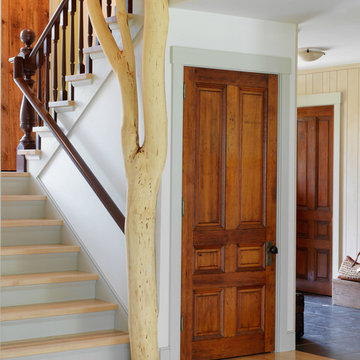
The main stairway opening has a tree trunk support for the timbered floor structure in the living area. Floors and treads are maple, and the handrail and banister as well as interior doors are salvaged.

 Robin Gannon Interiors
Historical meets traditional in this Lexington inn's 22 room update/remodel. Robin oversaw the project entirely, from interior architecture to choosing the butter knives in the Inn’s restaurant. Named twice to Travel + Leisure’s “Top 100 Hotels in the World”, the project’s standout interior design continue to help earn the Inn and its upscale restaurant international accolades.
Photo credit: Michael J. Lee Photography

 BCI Custom Homes
Inspiration for a mid-sized farmhouse formal and open concept medium tone wood floor and brown floor living room remodel in Austin with beige walls, a standard fireplace, a stone fireplace and a wall-mounted tv


 Angela Wells Interior Design
Great room - huge contemporary travertine floor great room idea with brown walls

 TASOS KOKORIS AIA, LEED AP
Master Bedroom - Photo: Tim Lee Photography
Bedroom - large rustic master medium tone wood floor and brown floor bedroom idea in New York with brown walls and no fireplace
Bedroom - large rustic master medium tone wood floor and brown floor bedroom idea in New York with brown walls and no fireplace

 Dennis Lee Furniture
Inspiration for a mid-sized contemporary formal and open concept ceramic tile and beige floor living room remodel with white walls, no fireplace and no tv
 ID.ology Interiors & Design
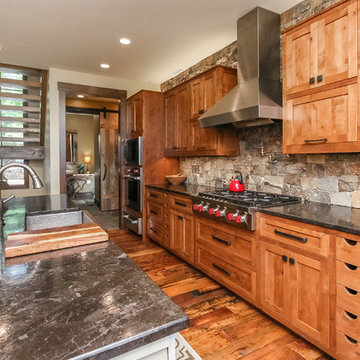
Example of a mid-sized arts and crafts galley medium tone wood floor eat-in kitchen design with shaker cabinets, medium tone wood cabinets, granite countertops, beige backsplash, stone tile backsplash, stainless steel appliances and an island

 Pamela Hope Designs
Inspiration for a large transitional master gray tile, white tile and ceramic tile porcelain tile freestanding bathtub remodel in Houston with shaker cabinets, beige cabinets, beige walls, an undermount sink and quartzite countertops

 Eggers Architecture, Inc.
Master bath with custom shower doors and surround. His and her vanity on opposing sides of shower and soaking tub. View from master bedroom. Doors on sides are to his and her toilet rooms
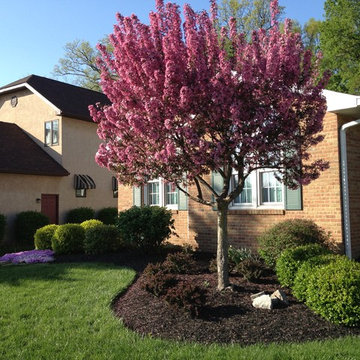



 Nathan Taylor for Obelisk Home
Global Image Creations, Jeremy Mason McGraw
Inspiration for a small transitional light wood floor foyer remodel in St Louis with white walls
Inspiration for a small transitional light wood floor foyer remodel in St Louis with white walls
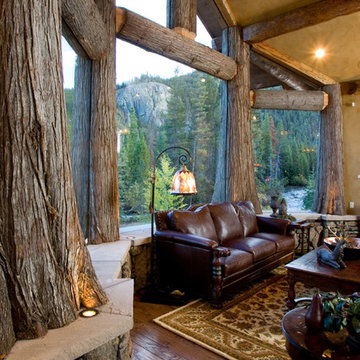

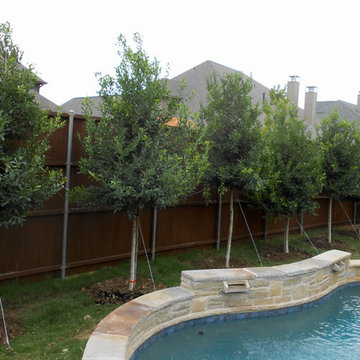
 Treeland Nursery
Treeform Eagleston Hollies planted and provided by Treeland Nursery
Photo of a small traditional full sun backyard formal garden in Dallas.
Photo of a small traditional full sun backyard formal garden in Dallas.
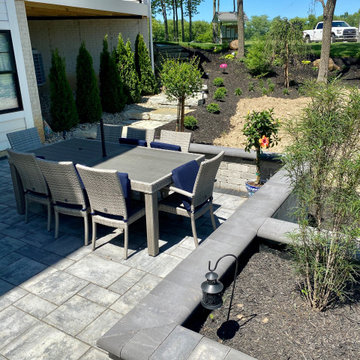
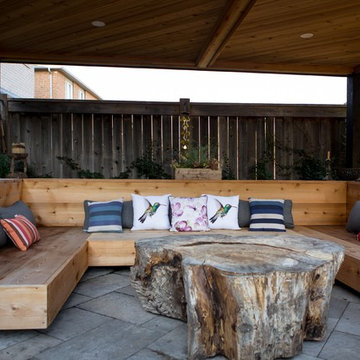
 The Garden Wizard
Example of a mid-sized arts and crafts backyard concrete paver patio design in Toronto with a gazebo
 Five Star Tree Care
Most trees have leaves that will change colours every time the seasons change. This means that you may see changes three to four times a year depending on where you live. However, they will typically retain some measure of green colouring on their leaves until fall rolls around.
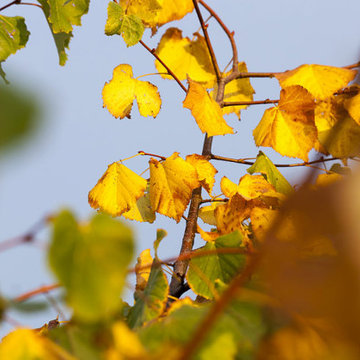
During the fall season, trees explode with bright reds, oranges, and vibrant yellows. This is a natural part of their growth and hibernation process. However, if you see these colours in the offseason, it may be a sign that there is a problem. Below, Five Star Tree Services discusses why your leaves may be yellow during the summer and what you can do about it.
Should Leaves Turn Yellow in the Summer?
If your trees have yellow leaves in the summer, it is a sign that it is suffering from disease, or having a problem with its growth cycle. Having your trees inspected periodically by a trained professional will help you catch problems early. If your trees already have yellow leaves in the offseason, they can identify the cause and suggest a solution. When diagnosed early, suggested treatments can help save the tree. Keep reading for some common causes of yellowing leaves.
Improper Watering
One of the most common reasons trees start to develop yellow leaves in the summer is due to dehydration. Checking the soil moisture levels will help determine if your trees are getting enough water. Hydration is important all year long, but especially crucial during the hot summer months. If there are dry areas around your tree trunk, it is a good idea to partake in deep root watering to help keep your trees healthy and well-watered. Make sure that you don’t overwater your trees because flooding their roots can also be unhealthy.
Lacking Nutrition
Just like people, trees need to get the right blend of nutrients in order to remain healthy. If your tree has yellow leaves in the summer and is also getting enough water, chances are it is not getting the nutrients it needs from the soil. If soil testing shows low levels of nutrients, it is a good idea to schedule a deep root fertilization treatment to adjust the levels. In many instances, correcting the soil will help you save the tree.
Insect or Pest Infestation
Yellow summer leaves are also a sign that a tree has been infested with pests. Some pest is only active in the summer. Some of the most common are:
Emerald Ash Borer
Asian Long-Horned Beetle
Yellownecked Caterpillar
Ash Flower Gall
Bronze Birch Borer
Apple-and-Thorn Skeletonizer
Eastern Tent Caterpillar
Birch Leafminer
Fall Webworm
Gypsy Moth
And many others
The first thing you should do is call an arborist to have the tree inspected. They will be able to identify the root of the problem and formulate a solution to treat the pest infestation. This will help you get rid of the bugs once and for all and save your tree in the process.
How We Can Help
If you have noticed that one of your trees have begun to develop yellow leaves, give Five Star Tree Services a call as soon as possible. We have been providing tree care services in Toronto for over 10 years. Our skilled arborist would be more than happy to evaluate your tree and suggest a solution to treat the problem, so don’t wait. Contact us at (416) 990-3355 today!
 Five Star Tree Care
There are a few reasons why it is critical that your trees have a regular schedule for pruning and maintenance. Pruning helps trees to maintain a tree’s health as well as form it to a pleasing aesthetic shape. Furthermore, pests and diseases are also controlled by regular pruning and care. When pruning is properly performed, your trees will be healthy and attractive all year long. Five Star Tree Services has put together a list of seven things you should keep in mind regarding your tree pruning.
Tree Inspection
Before any tree pruning job, the tree should be properly inspected. This will allow you or our tree care service team to determine which branches should be cut. It will also allow any diseases or pests to be identified and dealt with.
Remove Dead, Weak & Crossed Branches
Dead and weak branches are a hazard to your property and those who happen to walk or lounge under the tree. They also suck vital nutrients away from healthy branches and the tree trunk. Removing them will prevent accidents and allow your tree to thrive. Crossed branches can also cause problems later down the line. They affect the airflow to the crown and can also prevent sunlight from passing through the tree.
Pay Attention to Spacing
It’s important to pay attention to branch spacing when pruning your tree. Lateral branches should be spaced evenly, especially when pruning trees that have yet to mature.
Follow the Basic Pruning Rules
It’s important that the 1/4th and 1/3rd rules of pruning are followed. This means that you should never cut more than a third of the total height of the tree. This length is measured from the bottom up. You should also only cut 1/4th or less of a tree’s crown when you prune at any one time.
Get Your Tools Ready
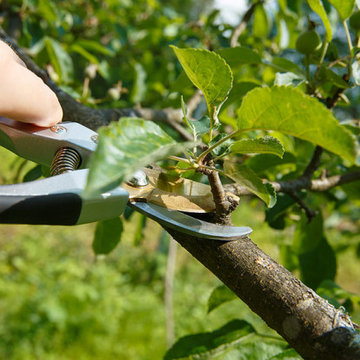
The tools you use to prune should be ready well before you make the first cut. You should start your project equipped with a pole pruner, pruning saws, hedge shears, loppers, and pruning shears. They also need to be properly sharpened before you start your pruning project. Each of these tools will allow you to reach different parts of the tree and prune them in a safe manner. If your tools are dull, they can damage the tree or even cause accidents when you attempt to cut.
Prune on Schedule
There are schedules for pruning that should be followed according to the type of tree you are caring for. Summer blooming trees should be pruned in early spring while evergreens and hedges should be taken care of in the early part of summer. Fruit-bearing trees should be pruned late in winter ahead of the frost. If there is damage to your tree, it doesn’t matter what time of year it may be, correct the problem as soon as possible.
Avoid Protecting Post-Pruning
Pruning leaves behind wounds, but they will heal. Though they may be unsightly for a while, the marks will heal and return back to its natural beauty. Don’t paint the pruning wounds to protect the tree, it actually has no effect on decay prevention. Painting may even trigger diseases or encourage pests to take up residence.
How We Can Help
Tree pruning is a complication job, but with our tips, you can do it right. It is always a good idea to leave the job to the professionals here at Five Star Tree Services instead. Our Toronto tree care experts have the tools, experience, and skills to get the job done right the first time. Get in touch with us at (416) 990-3355 today for more information.
14