
Search results for "Vital elements" in Home Design Ideas

 Soucie Horner, Ltd.
From its English-style conservatory to its wealth of French doors, this impressive family home - at once stately, yet welcoming - ushers the vitality of its premiere urban setting into historically-inspired interiors. Here, soaring ceilings, inlaid floors, and marble-wrapped, walnut-paneled, and mirror-clad walls honor the luxurious traditions of classic European interior architecture. Naturally, symmetry is its muse, evinced through a striking collection of fine furnishings, splendid rugs, art, and accessories - augmented, all, by unexpectedly fresh bursts of color and playfully retro silhouettes. Formal without intimidation -or apology- it personifies the very finest in gracious city living.
Photos by Nathan Kirkman http://nathankirkman.com/

 Darling Residential Architecture and Design
The massive granite boulder at the North end of the pool was actually the starting point of the design for the entire project. Ron walked the lot in it's natural state and felt placing the pool at the base of this impressive upside down pyramid granite boulder was vital to the feel and flow of every other element of this home. The owners agreed and now, tucked deep into the natural boulder pile the pool is so private most people on the golf course never realize it's there.

 Amy Krane Color Consulting
Walls are Benjamin Moore Sweet Celadon. Southwestern accents with the wooden bench and artwork.
Inspiration for a transitional hallway remodel in New York
Inspiration for a transitional hallway remodel in New York
Find the right local pro for your project

 User
UserThe Clients contacted Cecil Baker + Partners to reconfigure and remodel the top floor of a prominent Philadelphia high-rise into an urban pied-a-terre. The forty-five story apartment building, overlooking Washington Square Park and its surrounding neighborhoods, provided a modern shell for this truly contemporary renovation. Originally configured as three penthouse units, the 8,700 sf interior, as well as 2,500 square feet of terrace space, was to become a single residence with sweeping views of the city in all directions.
The Client’s mission was to create a city home for collecting and displaying contemporary glass crafts. Their stated desire was to cast an urban home that was, in itself, a gallery. While they enjoy a very vital family life, this home was targeted to their urban activities - entertainment being a central element.
The living areas are designed to be open and to flow into each other, with pockets of secondary functions. At large social events, guests feel free to access all areas of the penthouse, including the master bedroom suite. A main gallery was created in order to house unique, travelling art shows.
Stemming from their desire to entertain, the penthouse was built around the need for elaborate food preparation. Cooking would be visible from several entertainment areas with a “show” kitchen, provided for their renowned chef. Secondary preparation and cleaning facilities were tucked away.
The architects crafted a distinctive residence that is framed around the gallery experience, while also incorporating softer residential moments. Cecil Baker + Partners embraced every element of the new penthouse design beyond those normally associated with an architect’s sphere, from all material selections, furniture selections, furniture design, and art placement.
Barry Halkin and Todd Mason Photography

 BuyTile
Beestone tiles provide a neutral, warm color palette in an authentic duplication of the style of Belgian Blue Stone. This series is a simple, natural solution for the latest architectural and interior design trends. The visual impact is very much thanks to the material. The surface is alive with and animated by contemporary colors and shades. Tones range from white to black to enhance surfaces with details reminiscent of stone, a very vital element. The lapatto finish purposefully contains some small unpolished areas
 Pro-Painting & Drywall, Inc.
PRO-PAINTING & DRYWALL, INC
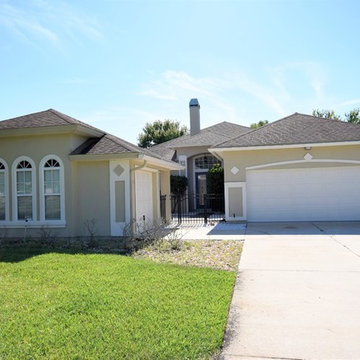
EXTERIOR HOUSE PAINTING
Exterior painting is a job that requires you do everything by the book. Your home's paint plays a vital role in protecting it from the elements, so doing a cut rate job means you're effectively putting your home at risk. Pro-Painting & Drywall will do a professional job so that you can be certain that your exterior painting project will hold up in good fashion for years to come.
Call today for an appointment 904-731-6471
 Pro-Painting & Drywall, Inc.
PRO-PAINTING & DRYWALL, INC
EXTERIOR HOUSE PAINTING
Exterior painting is a job that requires you do everything by the book. Your home's paint plays a vital role in protecting it from the elements, so doing a cut rate job means you're effectively putting your home at risk. Pro-Painting & Drywall will do a professional job so that you can be certain that your exterior painting project will hold up in good fashion for years to come.
Call today for an appointment 904-731-6471
Sponsored
Columbus, OH

Wannemacher Interiors
Customized Award-Winning Interior Design Solutions in Franklin Cnty OH
 Pro-Painting & Drywall, Inc.
PRO-PAINTING & DRYWALL, INC
EXTERIOR HOUSE PAINTING
Exterior painting is a job that requires you do everything by the book. Your home's paint plays a vital role in protecting it from the elements, so doing a cut rate job means you're effectively putting your home at risk. Pro-Painting & Drywall will do a professional job so that you can be certain that your exterior painting project will hold up in good fashion for years to come.
Call today for an appointment 904-731-6471
 MAKHNO studio
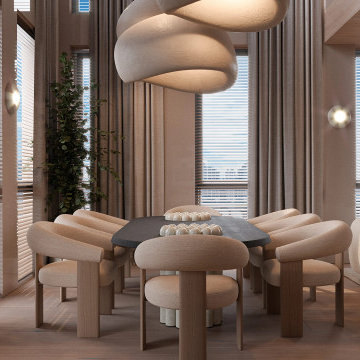
This serene living space combines modern and organic elements to create a harmonious ambiance. Sculptural light fixtures resembling stones float above a minimalistic dining table surrounded by plush, curved chairs, enhancing the room's soft, inviting feel. The use of natural wood for the flooring and furniture, along with tall, slim windows dressed in light drapes, introduces a refreshing, light-filled atmosphere. The integration of indoor plants adds a touch of vitality, making the space feel alive and connected to nature.
 BuyTile
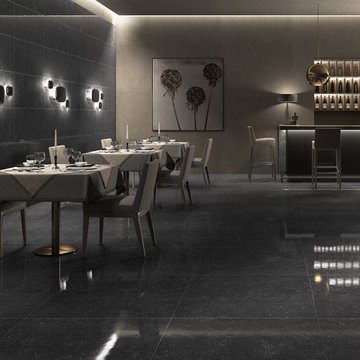
Beestone tiles provide a neutral, warm color palette in an authentic duplication of the style of Belgian Blue Stone. This series is a simple, natural solution for the latest architectural and interior design trends. The visual impact is very much thanks to the material. The surface is alive with and animated by contemporary colors and shades. Tones range from white to black to enhance surfaces with details reminiscent of stone, a very vital element. The lapatto finish purposefully contains some small unpolished areas
 User
UserThe Clients contacted Cecil Baker + Partners to reconfigure and remodel the top floor of a prominent Philadelphia high-rise into an urban pied-a-terre. The forty-five story apartment building, overlooking Washington Square Park and its surrounding neighborhoods, provided a modern shell for this truly contemporary renovation. Originally configured as three penthouse units, the 8,700 sf interior, as well as 2,500 square feet of terrace space, was to become a single residence with sweeping views of the city in all directions.
The Client’s mission was to create a city home for collecting and displaying contemporary glass crafts. Their stated desire was to cast an urban home that was, in itself, a gallery. While they enjoy a very vital family life, this home was targeted to their urban activities - entertainment being a central element.
The living areas are designed to be open and to flow into each other, with pockets of secondary functions. At large social events, guests feel free to access all areas of the penthouse, including the master bedroom suite. A main gallery was created in order to house unique, travelling art shows.
Stemming from their desire to entertain, the penthouse was built around the need for elaborate food preparation. Cooking would be visible from several entertainment areas with a “show” kitchen, provided for their renowned chef. Secondary preparation and cleaning facilities were tucked away.
The architects crafted a distinctive residence that is framed around the gallery experience, while also incorporating softer residential moments. Cecil Baker + Partners embraced every element of the new penthouse design beyond those normally associated with an architect’s sphere, from all material selections, furniture selections, furniture design, and art placement.
Barry Halkin and Todd Mason Photography
 User
UserThe Clients contacted Cecil Baker + Partners to reconfigure and remodel the top floor of a prominent Philadelphia high-rise into an urban pied-a-terre. The forty-five story apartment building, overlooking Washington Square Park and its surrounding neighborhoods, provided a modern shell for this truly contemporary renovation. Originally configured as three penthouse units, the 8,700 sf interior, as well as 2,500 square feet of terrace space, was to become a single residence with sweeping views of the city in all directions.
The Client’s mission was to create a city home for collecting and displaying contemporary glass crafts. Their stated desire was to cast an urban home that was, in itself, a gallery. While they enjoy a very vital family life, this home was targeted to their urban activities - entertainment being a central element.
The living areas are designed to be open and to flow into each other, with pockets of secondary functions. At large social events, guests feel free to access all areas of the penthouse, including the master bedroom suite. A main gallery was created in order to house unique, travelling art shows.
Stemming from their desire to entertain, the penthouse was built around the need for elaborate food preparation. Cooking would be visible from several entertainment areas with a “show” kitchen, provided for their renowned chef. Secondary preparation and cleaning facilities were tucked away.
The architects crafted a distinctive residence that is framed around the gallery experience, while also incorporating softer residential moments. Cecil Baker + Partners embraced every element of the new penthouse design beyond those normally associated with an architect’s sphere, from all material selections, furniture selections, furniture design, and art placement.
Barry Halkin and Todd Mason Photography
 AMEK Custom Builders
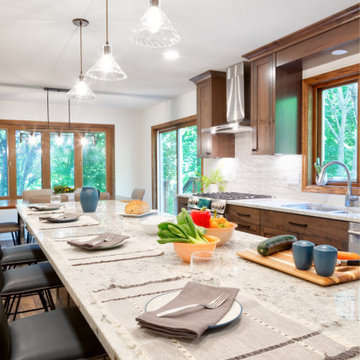
Lighting is a vital element to remodeling project. A patio door was added which increases the natural light throughout the main level. In addition, pendant lighting and under-cabinet lights increase options for task-related jobs.
Sponsored
Columbus, OH

Trish Takacs Design
Award Winning & Highly Skilled Kitchen & Bath Designer in Columbus

 Pretorius Studio
The project is a series of mural panels painted in the artist’s studio and installed on all walls of a dining room. The imagery is of soft landscape with classical architectural elements, loosely based on an Arcadian 18th century French wallpaper scenic.
The murals are painted in grisaille, a traditional technique which uses a monochromatic palette of grey to create depth. In this case the artist used the soft painterly style of Fragonard and Boucher to create the lush landscape in the same grey palette. The freshness and vitality of the brushwork distinguishes these murals from printed wall covering. Silver leaf detailing on the pilasters adds a luminous effect.
This project won an Acanthus Award for excellence from the Institute of Classical Architecture and Art in 2014.

 Studio41 Home Design Showroom
Harmony of heart and mind | The bathroom collection combines unique design with a highly sensual water experience, at low consumption. Axor Starck Organic also guarantees responsible use of the vital element of water. This is born by a revolutionary control concept and numerous functional and ecological qualities. The collection, from renowned designer Philippe Starck, therefore appeals to both heart and intellect in equal measure. It also blends in harmoniously with a variety of style worlds. | Available at www.shopstudio41.com
 Studio41 Home Design Showroom
Harmony of heart and mind | The bathroom collection combines unique design with a highly sensual water experience, at low consumption. Axor Starck Organic also guarantees responsible use of the vital element of water. This is born by a revolutionary control concept and numerous functional and ecological qualities. The collection, from renowned designer Philippe Starck, therefore appeals to both heart and intellect in equal measure. It also blends in harmoniously with a variety of style worlds. | Available at www.shopstudio41.com
 User
UserThe Clients contacted Cecil Baker + Partners to reconfigure and remodel the top floor of a prominent Philadelphia high-rise into an urban pied-a-terre. The forty-five story apartment building, overlooking Washington Square Park and its surrounding neighborhoods, provided a modern shell for this truly contemporary renovation. Originally configured as three penthouse units, the 8,700 sf interior, as well as 2,500 square feet of terrace space, was to become a single residence with sweeping views of the city in all directions.
The Client’s mission was to create a city home for collecting and displaying contemporary glass crafts. Their stated desire was to cast an urban home that was, in itself, a gallery. While they enjoy a very vital family life, this home was targeted to their urban activities - entertainment being a central element.
The living areas are designed to be open and to flow into each other, with pockets of secondary functions. At large social events, guests feel free to access all areas of the penthouse, including the master bedroom suite. A main gallery was created in order to house unique, travelling art shows.
Stemming from their desire to entertain, the penthouse was built around the need for elaborate food preparation. Cooking would be visible from several entertainment areas with a “show” kitchen, provided for their renowned chef. Secondary preparation and cleaning facilities were tucked away.
The architects crafted a distinctive residence that is framed around the gallery experience, while also incorporating softer residential moments. Cecil Baker + Partners embraced every element of the new penthouse design beyond those normally associated with an architect’s sphere, from all material selections, furniture selections, furniture design, and art placement.
Barry Halkin and Todd Mason Photography
 AMEK Custom Builders
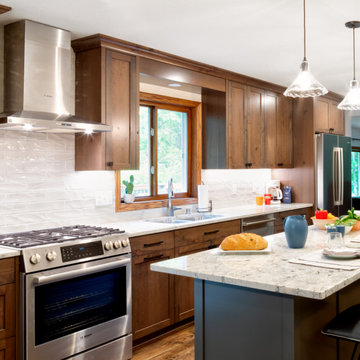
Our Eden Prairie homeowners are enjoying having a large island for food preparation and entertaining. The placement of the island is important to give a balanced look.On the far end, the pedestal leg allows for a total of 6 chairs at the island. Lighting is a vital element to any remodeling project. Pendant lighting and under-cabinet lights increase options for task-related jobs.
 Stonesculpt
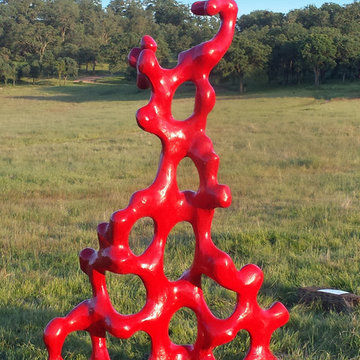
Firebird,
While I’m a classically trained master stone carver, as an artist and sculptor I work in a variety of materials to express my conceptually driven ideas in novel sculptural form, experimenting with texture, materials, color, or interactive elements. I try to realize the potential of art as my unique, vital contribution to society or your home.

 Guggenheim Architecture + Design Studio
With sweeping views of the Willamette river and Mt. Hood, this Atwater Place condo was designed with a balance of minimalism and livability in mind. A complete kitchen remodel brought a dark interior kitchen to the light and a full furnishings package welcomed Los Angeles transplants home to their new modern and bright residence. Our clients, a retired camera operator for both feature films and television and a producer/production manager on numerous television series including Weeds and The Middle, relocated from their traditionally-styled LA bungalow to Portland in the Summer of 2014. The couple sought a design departure from their long-term California residence and a fresh start for their new life in the South Waterfront.
With only two pieces of sentimental furniture and a handful of artwork included in the plan, we set out to create a comfortable and clean-lined furnishings package complimenting the broad southeast views. Organically shaped upholstery pieces juxtaposed with angular steel and wood tables create a soft balance in the open floor plan. Several custom pieces, including a dining table designed by our studio and a custom hand-blown glass chandelier crafted by Scott Schiesel with Lightlite compliment timeless pieces from Knoll, Herman Miller, and B&B Italia.
The kitchen is designed to reflect light and create brilliance in a space that is otherwise naturally dark. A material balance of stainless steel, back painted glass, quartz composite, lacquer, and mirror all play their part in creating a vibrant cooking environment. We collectively decided to forgo the traditional island pendant for a linear commercial fixture that provides tremendous light to the prep surface and creates an unexpected architectural element. The mirrored prep island creates the illusion of open space while concealing casework and wine storage on the working side of the kitchen.
It is worth noting that this project was designed and installed almost entirely while our clients were still living in LA and wrapping up professional obligations and selling their home. This afforded us the tremendous opportunity to send our clients to showrooms not available in Portland to view key pieces before final specification. Textiles and finish samples were approved via mail and communication took place over e-mail, telephone, and an occasional office visit. This unique process lead to a successful result and a beautifully balanced living environment.
Josh Partee Photography
3