
Search results for "Vulnerabilities" in Home Design Ideas



 Donald Pell - Gardens
This is an example of a mid-sized farmhouse full sun side yard landscaping in Philadelphia.

 DCS Industries, LLC
BEFORE PHOTOS - The fences were rusted to the core as a result of sprinklers hitting them day after day and exposure to the elements. The rusted fences had become both unsightly and unsafe, as they were more vulnerable to being breached by intruders.
Find the right local pro for your project

 Noelle Johnson Landscape Consulting
Mammillaria microcarpa cactus
Design ideas for a landscaping in Other.
Design ideas for a landscaping in Other.
 SabaRehman Abdulrehman
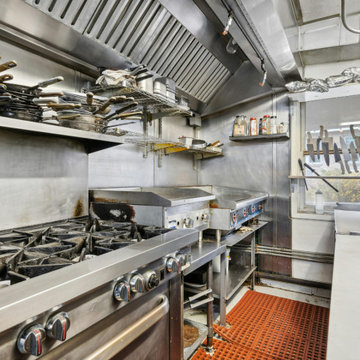
Phoenix's food scene is vibrant and thriving, but also one of the most closely watched in the country. Health inspectors in Maricopa County are strict, and customers expect spotless dining spaces.
To stay competitive, restaurant owners and food vendors must stay on top of evolving health codes, sanitation protocols, and food safety benchmarks. That starts with a firm grip on restaurant cleaning safety standards. Ignoring sanitation rules risks more than bad reviews. It invites citations, customer complaints, and operational shutdowns.
Whether you're operating a food truck or a restaurant, following these Phoenix cleaning standards helps you stay compliant, pass health inspections, and build customer trust.
Importance of a Clean Phoenix Restaurant that Follows Food Health and Safety Standards
The restaurant industry in Phoenix operates under strict oversight. The Maricopa County Environmental Services Department conducts regular inspections, and violations can result in fines or closures. In this climate, restaurant cleaning is not just a hygiene standard. It is a business-critical measure.
Proper food handling and establishment cleaning protocols reduce the risk of foodborne illnesses, control pests, protect equipment, and keep your staff safe. Inconsistent practices, on the other hand, can quickly become liabilities.
Start With the Food Code
Phoenix food vendors must comply with the 2017 FDA Food Code as adopted by Maricopa County. This includes rules on:
- Sanitizing food-contact surfaces after each use
- Maintaining proper water temperatures for dishwashing
- Cleaning restrooms frequently and keeping them stocked
- Storing cleaning chemicals away from prep areas
- Daily: Wipe prep tables, mop floors, clean grills, sanitize cutting boards
- Weekly: Deep clean kitchen hoods, polish cooking equipment, disinfect drains
- Monthly: Check pest control measures, clean freezer coils, and inspect HVAC filters
- Using the right sanitizers and PPE
- Logging cleaning times and who performed the task
- Identifying signs of mold, grease buildup, or rodent activity
- Conducting thorough surface cleaning to ensure all food-contact surfaces are sanitized regularly
- Food-safe and non-corrosive
- Effective against norovirus, salmonella, and E. coli
- Clearly labeled and stored in original containers
- Seal gaps around doors and pipes
- Store dry goods in sealed, elevated containers
- Keep outdoor waste bins locked and distanced from entry points
- Record cleaning completion in real time
- Alert managers when tasks are missed
- Keep a historical record for inspections
- Is certified and understands the Arizona food codes
- Provides documented service reports
- Offers customized cleaning plans
- Offers flexible scheduling around your operating hours
- Cross-contamination prevention: Regularly clean food prep surfaces and tools, and use separate equipment for raw meats, vegetables, and ready-to-eat foods. Proper cleaning prevents any contact with food that could lead to cross-contamination and affects food quality.
- Temperature monitoring: While not directly related to cleaning, maintaining proper food temperature is essential. Hot foods should be stored above 140°F, and cold foods below 40°F. Regularly monitor temperatures and clean temperature gauges to ensure accuracy.
- Proper storage: Use clean storage containers and shelving for food storage, keeping items off the floor. Ensure all food is sealed and labeled to avoid contamination risks and comply with food safety standards.


 SPACE interior ARCHITECTURE
Meagan Lucy Photography
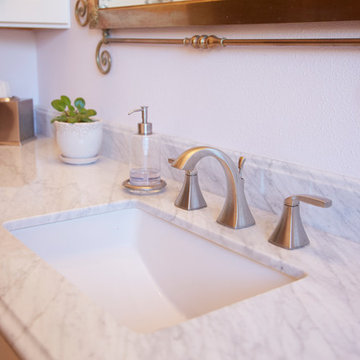
Drop-in bathtub - mid-sized eclectic beige tile and glass tile ceramic tile drop-in bathtub idea in Sacramento with shaker cabinets, white cabinets, a one-piece toilet, white walls, an undermount sink and marble countertops
Drop-in bathtub - mid-sized eclectic beige tile and glass tile ceramic tile drop-in bathtub idea in Sacramento with shaker cabinets, white cabinets, a one-piece toilet, white walls, an undermount sink and marble countertops

 Axis Mundi Design
What started as a humorous riff on a podiatrist client’s plastic anatomical foot model becomes a contemporary contemplation on the theme of vanity, which has occupied artists from the Netherlandish painters of the 16th and 17th centuries right through to Marilyn Minter, whose work revels in the seamy, dirty underbelly of the fashion world. The flayed rawness of bones exposes the transience and vulnerability of human existence, which is emphasized by the fact that it is also a cheap plastic simulacrum of the real thing. Slipping this ugliness into a glamorous stiletto with rhinestone-encrusted silver straps spotlights how futile—and in this case painfully deforming—are our attempts to dress up the inescapable truth. This glitz-over-guts sculpture is as barbed as it is humorous.
Concept: John Beckmann
Image: Jessica Marvin
Photography: Jeffrey Hornstein
© 2012 Axis Mundi Design LLC

 Lindus Construction/Midwest LeafGuard
Timberline® UHD with Dual Shadow Line Lifetime Roofing Shingles were utilized for this Western WI roofing project. Our team also removed the home’s unnecessary antenna, took down the chimney to below the roof line, and framed and built a new peak to eliminate a small flat section of roofing that was vulnerable to leaking.

 Painting in Partnership, Inc.
We just repainted a Victorian house, Circa 1885, for a new client in Chicago. When you see a house of this size and this level of detail, a question comes to mind: How often do you want to have to repaint a house like this? The answer is simple: The least often possible! The related question is: What can you do to extend the life of a paint job?
Depending on its size, its level of detail and the condition of its coatings and substrates, a Painted Lady’s paint job can cost between $20,000 and $50,000, sometimes even more. Because of its clapboard and extensive trim and millwork, a Victorian house is especially vulnerable to deterioration. Before having us start the painting project, the owners spent about $8,000 on carpentry repair work to the house. To minimize the future cost of carpentry repairs and prolong the longevity of the paint job, we recommend what we call “Maintenance Painting” to our clients. What does maintenance painting entail?
Maintenance painting consists of doing a close inspection of the coatings of a house, every couple of years. What do we look for: signs of failure in the caulking and coatings. When the coating or caulking starts to crack, it is an entry point to moisture, which gets trapped, rots the wood and causes paint failure. Once caulk starts to fail, the deterioration of the substrate and coatings accelerates rapidly. This is why early detection is critical to maintain the integrity of the paint job. We then do caulk and coating maintenance on those spots we detected. When we notice the beginning signs of wood rot, we also do epoxy restoration in those areas.
A homeowner needs the assistance of a dedicated painting and decorating contractor in order execute this periodic maintenance. The challenge is two-fold. One, owners are typically unaware of the importance of coating maintenance. Two, painting contractors do not seem to recognize the opportunity of offering this service to their clients. So, these expensive paint jobs are allowed to deteriorate, which adds to the future cost of the repaints.
The kind of coating maintenance we are talking about can cost between $500 and $1,500 every two years. The money saved in avoiding expensive carpentry repairs alone more than justifies coating maintenance. Our clients who own historic Victorian home or other “Period” homes in the Chicago area really appreciate this additional service we offer them.


 ZeroEnergy Design
Eric Roth Photography
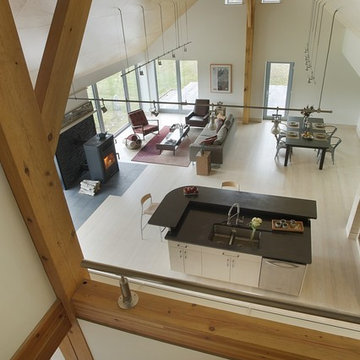
Example of a mid-sized country open concept light wood floor living room design in Boston with white walls and no tv
Example of a mid-sized country open concept light wood floor living room design in Boston with white walls and no tv

 Pristine Interiors
bathroom floor, beige, cornices & moldings, custom cabinets, elegant antique, luxury interior, modern classics
Inspiration for a timeless white floor and double-sink drop-in bathtub remodel in Dallas with recessed-panel cabinets, gray cabinets, beige walls, an undermount sink, white countertops and a built-in vanity
Inspiration for a timeless white floor and double-sink drop-in bathtub remodel in Dallas with recessed-panel cabinets, gray cabinets, beige walls, an undermount sink, white countertops and a built-in vanity

 Knoll Landscape Design Miami
Landscape Designer Brent Knoll
Knoll Landscape Design
Hummingbird and Butterfly Garden
monarch butterfly nectaring on red salvia
Example of an island style home design design in Miami
Example of an island style home design design in Miami

 safe ZOnea
Staging a home for sale or for a major transition is a strange in-between state. You are still living in the space, but you are also preparing it to impress strangers, support showings, and remain functional until the final move-out day. That tension between “home” and “product” is where storage quietly becomes one of your smartest tools. Used well, storage lets you reduce clutter, protect important items, and create the kind of rooms that photograph beautifully and feel calm when buyers walk through the door.
A staged move is rarely just about shifting boxes from one address to another. It is about managing timing, presentation, and stress at the same time. When storage is built into the plan from day one, the entire process feels less rushed and more strategic. Rooms open up gradually, essentials stay accessible, and you never feel like you are drowning in half-packed chaos. Understanding how to use storage as a staging partner, not just a place to dump excess stuff, is what turns a messy transition into a controlled, professional-looking move.
Why Storage Is the Backbone of Every Staged Move
Visual space is emotional space. When every surface is covered, and every corner is full, buyers feel crowded before they have even evaluated the layout. Storage gives you a way to pull back without making drastic decisions about what to keep or donate. Seasonal décor, bulky furniture, duplicate items, archives, and personal collections can be moved out early, so the home reads cleaner and more open while still feeling lived-in. That balance between warmth and simplicity is exactly what good staging tries to achieve.
In more complex situations, such as live-work properties or home offices, storage becomes even more important. You may need to keep a business running while also presenting a polished environment to viewers. Partnering with local movers in Boston makes it easier to shift equipment, files, and nonessential pieces into storage in phases, so work can continue while the visible areas of the property stay controlled and presentable.
How Staging and Storage Work Together to Control Visual Impact
Staging works best when every object in a room has a clear purpose. A sofa frames a conversation. A table suggests gathering. A lamp softens the mood. Everything else that is not essential to that story competes for attention. Storage supports staging by giving you a clean staging bench off-site, where nonessential items can wait without being constantly shuffled between rooms or piled into overstuffed closets.
The art lies in deciding what stays and what goes. Family photos, extensive collections, excess seating, and rarely used appliances often move into storage first. What remains should be enough to show scale, comfort, and function without revealing the full weight of daily life. Commercial properties go through a similar filtering process. Extra desks, surplus equipment, outdated signage, and inactive files often move out early so the active workspace feels lean, efficient, and future-ready before a relocation supported by commercial movers takes place.
Strategic Timing of Storage before the Actual Move
The worst time to think about storage is when boxes are already stacked in the hallway. In a staged move, storage decisions ideally begin as soon as you know the property will be listed or the space will be transitioned. That might be a month or more before the main moving date. Starting early gives you time to sort, label, and prioritize instead of throwing things together in a panic.
An early storage phase also helps you test how the home feels with less in it. You may discover that removing a few large pieces transforms a cramped room into an open, inviting space. For commercial spaces, early storage lets operations continue with fewer interruptions. Departments can send nonessential items out in waves. When the main relocation comes, much of the excess is already safely stored, and what remains is easier for a commercial movers Boston team to handle with speed and care.
The Emotional Psychology behind Letting Storage Hold Your Belongings
Letting belongings leave the house ahead of you can feel unsettling. There is always a quiet fear that once something is out of sight, it will be forgotten, damaged, or harder to reclaim. That is why some people resist using storage even when they know it would make the staging process easier. Acknowledging that emotion instead of dismissing it helps you plan more honestly and avoids last-minute regret.
The reality is that good storage is not a black hole; it is a temporary pause. When items are packed thoughtfully, labeled clearly, and placed in an environment you trust, they become easier to manage than when they are tucked into random cupboards or stacked in spare rooms. For many people, living with fewer visible possessions during staging actually reduces tension. The home feels lighter and easier to maintain. Businesses notice the same effect when storage removes outdated equipment and clutter from the floor. The workspace looks more focused, and staff can concentrate on current tasks instead of navigating around accumulated history.
Protecting Assets While They Live in Storage
Sending belongings into storage is only a good idea if they come back in the same or better condition. That is where quality control matters. Furniture, textiles, electronics, files, and artwork each have different vulnerabilities. Moisture, temperature swings, dust, and rough handling can all damage them in ways that only become obvious later. Choosing the right type of storage and packing accordingly is central to the genius of using storage as part of a staged move rather than as a desperate overflow container.
Climate-controlled units, padded wrapping, elevated pallets, careful stacking, and clearly marked boxes all reduce risk. The goal is to handle items fewer times, not more. When storage is integrated into the move plan, belongings can travel directly from the home to storage and later from storage to the new address with minimal extra movement. Many owners coordinate those transfers through a well trusted movers in Boston, so the same team that moves items out early also manages their final delivery, preserving continuity and accountability.
How Storage Reduces Risk during Multi-Phase Moves
Few staged moves happen in a single clean step. There are often gaps between listing and selling, between selling and closing, between closing and final move-out. If renovations, inspections, or office reconfigurations are involved, the timeline becomes even more layered. Storage absorbs those gaps, so you are not forced to live among towers of boxes or stack equipment in hallways waiting for the next phase.
By treating storage as a flexible middle ground, you can move things out gradually while still having access when needed. For example, archived files can go first, followed by seasonal décor, then surplus furniture. As each stage ends, fewer items remain to be shifted on the final date. This phased approach reduces the risk of rushed, late-night packing sessions, careless stacking, and damaged items. It also makes it easier for commercial moving crews to work efficiently because they are handling a manageable volume of goods at each phase rather than everything at once.
Using Storage to Maintain Clean Show-Ready Conditions
One of the hardest parts of staging is keeping the property consistently show-ready. Every viewing becomes its own small event. Floors need to be cleared, surfaces wiped, and personal items tucked away. When too many belongings remain in the home, each showing takes a heavy amount of effort. Storage cuts that workload dramatically by taking nonessentials completely off the stage.
With fewer items to move and hide, maintaining a neutral, inviting look becomes much more realistic. You are not scrambling to stuff things into closets or push items under the bed. Instead, the home sits closer to show condition all the time, and the final touches before a viewing are minimal. In commercial environments, using storage helps maintain a professional appearance for clients and staff, even while the space is being prepared for a larger transition. Active tools and furniture stay in play, while inactive pieces quietly support the future from storage.
Storage as a Strategic Tool in Business Relocation Planning
For businesses, storage is more than a convenience; it is part of risk management. Office relocations and staged commercial moves have to juggle lease deadlines, equipment deliveries, IT cutovers, and staffing realities. Trying to shift everything in one move often results in downtime, lost files, and strained teams. Storage turns the move into a series of controlled steps instead of a single disruptive jump.
Unused furniture, archived documents, and non-critical inventory can be moved into storage weeks ahead of the main relocation. As the new space becomes ready, items can move out of storage and directly into position. This reduces double-handling and keeps the old and new locations from filling with half-unpacked material. A business that coordinates these flows with professional commercial movers in Boston usually experiences smoother transitions, because storage is treated as a working part of the operational plan rather than a leftover problem.
The Hidden Cost Benefits of Proper Storage Planning
On paper, storage looks like an extra expense. In reality, poorly managed moves cost far more. When everything is rushed into boxes at the last minute, items are damaged, misplaced, or transported multiple times. Extra labor hours, emergency packing supplies, replacement furniture, and extended timelines quickly outweigh the cost of well-used storage. Staging without storage also tends to keep homes and offices crowded longer, which can hurt impressions and, in the case of a sale, influence offers.
When storage is integrated from the beginning, you minimize waste. You handle items fewer times, you know where things are, and you avoid paying people to shift the same objects repeatedly. Staged homes that look better often sell faster or draw stronger interest, which helps recover investment on the back end. Businesses benefit from less downtime, safer handling of equipment, and predictable work schedules. Those gains are why many clients prefer partnering with a commercial moving company in Boston that understands storage as a cost-control tool, not just a place to park overflow.
Conclusion
The true genius of using storage during a staged home move is that it quietly rewrites the rules of transition. Instead of treating space as something that must absorb every box and belonging until the last possible moment, you treat storage as a flexible extension of the home or office. This shift in thinking opens rooms, clears sightlines, and makes every phase of the move more intentional. Staging becomes easier, maintenance becomes lighter, and the stress of living in a half-moved environment drops noticeably. When storage is chosen carefully, used early, and coordinated with the overall moving plan, it protects both physical assets and emotional energy. Buyers and visitors see a calm, collected space. You experience a less chaotic path from “here” to “there.” Whether you are selling a home, repositioning a business, or managing a complex phased relocation, storage can turn a disruptive event into a managed, almost elegant process.
For people who want that level of control and care during a staged move, Stairhopper movers have built a strong reputation by treating storage, timing, and transport as parts of one connected strategy. Their team is known for listening closely, planning around real-life constraints, and moving both residential and commercial clients through transitions with calm, steady execution. They approach every project as a partnership, aligning storage use, staging needs, and final delivery so that what matters most arrives safely, on schedule, and with as little disruption as possible.
Frequently Asked Questions
Q1. When should I arrange storage for a staged home move?
Ideally, four to six weeks before listing or transition, so clearing, packing, and staging can happen gradually without rushed decisions or last-minute stress.
Q2. Is climate-controlled storage necessary for staged moves?
It is highly recommended for wood furniture, electronics, artwork, and documents, since temperature and humidity swings can quietly damage materials over time.
Q3. How does storage help keep a home show-ready?
By moving nonessential items off-site, daily tidying becomes simpler, and each room can stay closer to a staged condition between viewings or inspections.
Q4. Can storage reduce the length of the final moving day?
Yes. When many items are moved into storage in advance, the final moving day focuses on essentials, which shortens timelines and reduces physical and mental strain.
Q5. Is storage useful for short-term business relocations?
Even in short relocations, storage helps prevent overcrowded offices and allows departments to move in phases without interrupting everyday operations.
Q6. How do I decide what should go into storage first?
Start with rarely used items, seasonal décor, surplus furniture, and archived materials, then work toward pieces that are visually distracting or make rooms feel cramped.
Q7. Will using storage make it harder to find things later?
Not if packing and labeling are done carefully. Clear categories, room-based labels, and simple inventories make stored items easier to locate than when scattered at home.
Q8. Does storage still make sense if my move happens in one day?
Yes, because staging and preparation begin well before that day. Storage keeps the home functional and attractive during the weeks leading up to the final move.
 Lindus Construction/Midwest LeafGuard
Timberline® UHD with Dual Shadow Line Lifetime Roofing Shingles were utilized for this Western WI roofing project. Our team also removed the home’s unnecessary antenna, took down the chimney to below the roof line, and framed and built a new peak to eliminate a small flat section of roofing that was vulnerable to leaking.

 Field Architecture
The Ubuntu Center provides pediatric HIV testing and treatment, counseling, education, and community empowerment. The design is focused on de-stigmatization and normalization of HIV testing and treatment. It provides access to a state-of-the-art facility in a beleaguered post-apartheid community. The design is a model for sustainable development that begins with environment and extends to the preservation of life.
Funded globally and operated locally, Ubuntu reflects a world defined by unprecedented global connection and the resurgence of local, community based organization. Ubuntu center brings state of the art services to vulnerable children by providing centrally located, free and accessible social services in a single facility. It comprises a multi-purpose hall for education, concerts and shelter when needed; an empowerment wing with career guidance and computer centre, and a fully equipped Pediatric HIV /TB testing and counseling clinic with 47,691 people reached through community HIV prevention outreach. Ubuntu’s organic rooftop garden, together with Ubuntu’s neighborhood gardens feed 2,245 students daily. It provides a timely and practical template for sustainability on a societal as well as an environmental level. Ubuntu has been adopted by the US President’s Emergency Plan for AIDS relief (PEPFAR), and has become a model of success for the Clinton Global initiative, the Kresge foundation, and countless individual supporters.

 Atlantic Breeze Storm Shutters, Inc.
Enjoy incredibly effective hurricane protection and the convenience of an electronically controlled or manually operated rolling hurricane screen system. Protecting you, your family and your home even when you are not there, this highly innovative and advanced design is like having a bulletproof vest for the vulnerable openings of your home. Additionally, the Storm Catcher Rolling Screen can cover large openings while the cutting-edge mesh structure filters in light, allowing you to see out. Our Rolling screens shade, shield and protect beautifully.

 James Greene
? Landmark PRO Roof Replacement – Dublin, OH
Installed by Terra Firma Construction LLC Built to last. Designed to endure.
This Dublin home received a full roofing upgrade using CertainTeed Landmark PRO shingles, chosen for their enhanced durability, bold dimensional look, and superior weather resistance. The homeowner selected the Weathered Wood — a timeless choice that complements the home’s natural tones and architectural style.
? Scope of Work:
Complete tear-off of aging asphalt shingles
Installation of CertainTeed’s Integrity Roof System®, including waterproof underlayment, starter strips, ridge vent, and hip/ridge caps
Precision flashing around chimneys, valleys, and penetrations
Ice & water shield applied in vulnerable zones
Final walkthrough with the homeowner to ensure satisfaction and craftsmanship
?️ Why Landmark PRO?
Thicker shingle design for added protection and curb appeal
Max Def color technology for deeper, richer tones
Lifetime limited warranty backed by CertainTeed
Terra Firma workmanship guarantee for peace of mind
This roof is built to handle Ohio’s toughest seasons — from lake-effect snow to summer heat — while elevating the home’s aesthetic and resale value.
 User
UserSuch a beautiful flower on the pink dogwood. Delicate and interesting in shape these large and impressive blooms would never be suspected in the tight buds prior to Spring. Plant in a sunny location and protect the bark from being damaged during landscaping. Watch for insects and disease as they are very vulnerable. Photo by Lauran Corson
6