Software
Houzz Logo Print
tmbell

How to hire a contractor? Should I hire a contractor?

12 years ago
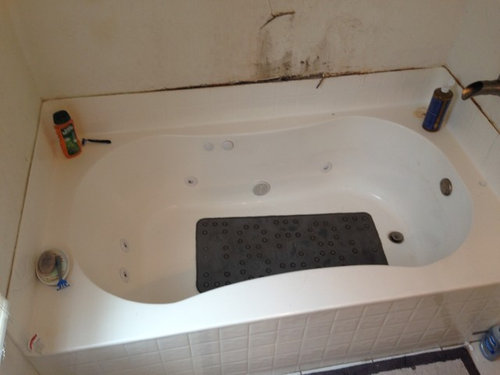
So there are several projects that I"m going to need done around my house. While we are saving money and may end up getting a loan, I've been debating if I should hire a contractor.

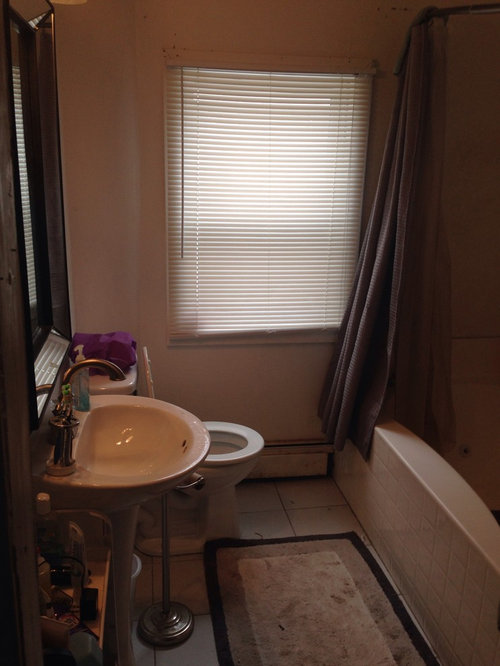
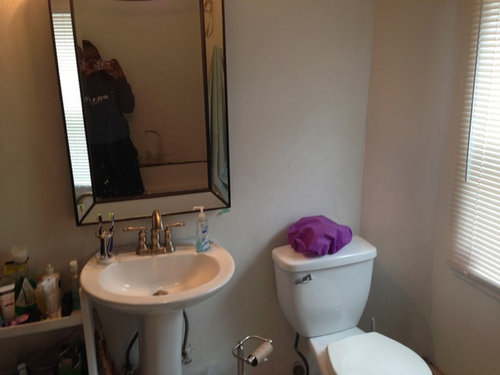
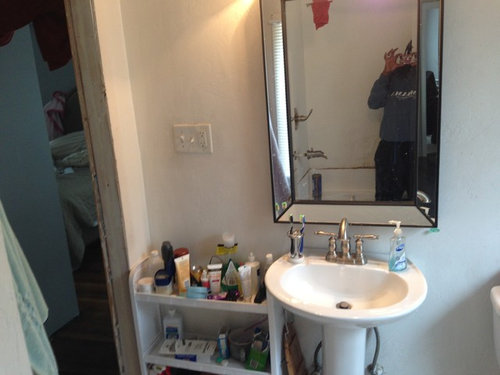
The main project is my main bathroom. it would need to be re-sheetrocked, new tub, vanity and toilet and completely tiled. There are several steps to each project, could I just handle them myself, i.e. tear down the exisiting sheetrock, hire a plumber if needed, hire a sheetrock person, hire my own tile person.


Thoughts/suggestions etc.

Comments (15)

  • 12 years ago
    Okay Bert Construction - thank you for the advice! If I were to hire..sayyy Oh YOU..what would you charge to handle this job? What exactly would a contractor do in this situation that would be different than what I would be doing as listed aboce? Would a contractor be able to get me a good price on a Kohler bubble jet tub, lol!
  • PRO
    12 years ago
    I would probably charge 15-20% of the project costs for my time and overhead and profit. I would do a cost plus contract which means cost of work, labor and material, plus the 15-20%.
    Some plumbing subs can get a better deal on high priced fixtures but no idea of how much.
  • 12 years ago
    Definitely hire a contractor. I used Home Advisor and did NOT like their referrals. I then joined Angie's list and will let you know how that works. Have questions. ask for references, make sure that their state insurance licenses are up to date. I talked to at least 3 contractors for every job I did. Pain in the butt, maybe, but so many people are taken advantage of!
  • PRO
    12 years ago
    This is one of those deals where you could do tear-out but if it's more than a one-out-one-in scenario and if you live somewhere where inspections are required, hire a reputable licensed and insured contractor.

    Anybody can rip down sheetrock...right?;-)
  • PRO
    12 years ago
    Tiffany,
    The following is copied and pasted from a short article I posted on our blog "Remodeling University" a while ago (can be found here: http://www.megabuilders.com/blog/page/2/).
    It seems to address your question. I hope you find it valuable. Best of luck with your remodeling project!

    “do I really need a general contractor on my project?”
    Well, in my opinion, the answer depends on your particular circumstances.
    Generally speaking, the more complex your project is and the larger it is, the more a competent general contractor is needed. Many homeowners might not be aware of it, but being an owner-builder is a viable option for many remodeling projects. That category (owner-builder) is also recognized by the city for the purpose of securing permits.
    As an owner-builder, you act as the GC (general contractor). So let’s say that you live in Los Angeles and Kitchen remodeling is what you are considering. You might decide to do the demolition yourself, have an electrician take care of the electrical work, a handy man patch the walls, you’ll do the painting, the Home Depot would supply and install the cabinets and a friend of yours would install the tile counters. Is that a legitimate approach? It sure is…providing;
    Here are some of the challenges you should be aware of:
    1. Like for anything else, for this too there is a learning curve. Even if you are a very fast learner, chances are that you’ll have a few missteps the ‘first time out’.
    2. Design knowhow: the more complex the project, the more critical the design would be. Unless there is a design professional on your team, yours would be a hit-n-miss experience.
    3. Code and construction knowhow: Someone on your team needs to be knowledgeable in the various codes pertaining to your project and in the best sequencing for your particular work.
    4. Competent supervision: while a layperson can review finish work and judge it satisfactory (or not), the same does not hold true for ‘rough’ work. As a layperson, can you tell if the plumbing is run correctly, the wires properly sized, the drywall legally nailed, etc?
    5. Availability: will you be able to be on site to see that things are done as agreed to or as needed? Was the gravel base placed before the driveway was poured? Was the second coat of paint applied? Were the old pipes abandoned and new ones ran in the wall? Unless you are – A. On site to supervise and note all these things, short cuts are certain to take place and B. Even if you are at home to supervise, do you know enough about construction’s ‘best practices’ to be able to effectively supervise?
    None of it is ‘rocket science’. Truly. But there is enough complexity in today’s homes that you need to consider your options; if you have a basic project that does not involve multiple trades, is not too complex and the overall scope and budget are small, I think you can take it on yourself, should you be so inclined. Just take the time needed to educate yourself (endless resources are available online) and stay on top of everyone. If, on the other hand, the home remodeling you are considering is complex, involves structural work, requires design and/or is broad in scope and budget, I strongly recommend that you team with a competent, professional and experienced general contractor. Without a doubt, that would be in your best bet.
    Happy remodeling!
  • 12 years ago
    One of the things you see a lot of if you follow Houzz for very long are situations exactly like yours where something unexpected happened. Contractors are used to the unexpected. Homeowners are baffled.
  • PRO
    12 years ago
    Tiffany,

    Higher a reputable remodeling contractor, he will manage and oversee everything and he will finish the job fast and efficient... He will bring qualified professionals who specialize in its own field and it will be money well spent and all you have to do is enjoy it for years to come.

    Good luck.
  • 12 years ago
    If you have a full time job, or several children below the age where they can help you, or both, hire a contractor. A bathroom is not a room you can live without for long and the duration of your project will more than double in DIY. Follow younghouselove.com for what kinds of tools it takes, what kinds of work it is okay to do in house and know that some smaller contractors will work with you as you describe.

    One concern I have when I look at this wall is the black in the damaged and open drywall. If you are dealing with any mold in your wall, you need a contractor. That is not for DIY.
  • 12 years ago
    Thank you everyone for the advice! I'm thinking I will need to hire a GC mostly because I want it done correctly the first time, I can't afford a lot of lag time (it's my main bath) and I'm worried about what the previous owner did behind the walls!
  • PRO
    11 years ago
    For Tiffany B, if you really meant that you would rip out sheet rock, and put new sheet rock in around this tub pictured, then hire a contractor. New Construction often uses sheet rock around a tub or shower, because it is cheaper, and it passes code. But, it does not withstand the test of time.

    We know, in our business, that new homes are prime candidates for showers after 10 years, because of sheet rock.

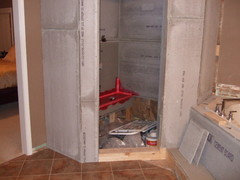
    A Remodeler will put in Cement Board, and then tile, because it is not affected by water. It will last at least twice as long.

    Good Luck.
    Brad
    Remodelitkc.com
  • 10 years ago

    You need to state where you live. In certain states, every tiny step taken has to be approved by the city in which you live, even for a bathroom. I didn't like Home Advisor or Angie's List. Be careful, and know as much as you can about the people you hire.

  • 10 years ago
    Did you finish your bathroom. We have a similar layout as yours and are trying to fit a tub and shower into room..7' wide x 8' long. We will hire a contractor after reading the advice you received. Can you post pictures?
  • PRO
    10 years ago

    Hello Bohnm

    these are small dimensions for a tub, and shower, because of plumbing standards. A standard size for a tub is 5 feet, and that is the smallest. I would look to see if you could steal space from adjoining rooms to make the bathroom bigger.

    Times have changed and people now prefer "bigger" bathrooms.

    If you cannot steal space, consider a combination shower/tub design. It is wise to acknowledge limitations and work within them.

  • PRO
    10 years ago

    This article may be helpful:


    As noted before, the subject of how to choose the best contractor for your project is of critical importance. It is probably the most important decision you’ll have to make with regards to any substantial remodeling adventure. It is also a subject that is impossible to cover adequately in a single blog post. So here is the second installment;

    Beyond the brouhaha of a sales pitch and independent of the appeal of low, or too-good-to-be-true quotes, an alert homeowner can find clues and tell-tale indications relating to the remodeling companies being considered. The challenge, of course, is to ignore the pull of the ‘great’ low quote or the charisma of the persuasive salesperson long enough to be able to objectively evaluate these criteria.

    1. Contract: educate yourself about what a complete and proper Home Improvement Contract should contain (in California, use the CSLB website). Ask the contractor for all his contract papers and compare to what’s required. You will often find remarkable shortfalls in what the contractor’s contract looks like to what it needs to be. Note that these state-mandated contract elements are there to protect you, the consumer.
    2. Payment Schedule: Never, ever work with anyone that requires substantial sums ‘with commencement’ of anything (unless you are ordering a custom item, like cabinets). A good Payment Schedule is hinged upon Completion of stages of work, not commencement of them.
    3. Success leaves clues: if the contractor is indeed professional, experienced and competent and has been doing this for a time – what does he have to show for it? Did he receive any awards? Any positive media recognition? Talk is cheap – the proof is what you need to look for.
    4. The scope of Work: how detailed and complete is the Scope of Work? You should be worried if it's not. Did you hear the sentence “don’t worry about it” once too often? Worry about it.
    5. Portfolio of work: well, first many construction companies in Los Angeles (and I’m certain, elsewhere) don’t have a portfolio of their work, but may be doing great work. If you did not look through a portfolio ask and go look at projects (recommended at any event). The point here is about those who do show you a nice portfolio. Are these pictures of projects these contractors actually did or are these pictures off the internet, manufacturer’s brochures and so forth? A keen observer should be able to tell.
    6. Deposit amount: are you being asked for an unreasonably high amount up front? That’s a big red-flag. In California, the deposit cannot exceed $1000 or 10%, whichever IS LESS!

    These are just some quick examples of indications you might be heading into troubled waters. Remember that in remodeling the amounts involved are relatively large and the ‘entry threshold of membership’ is very low (it doesn’t take much to present oneself as a contractor or even to procure a license to be one). Together, these two factors are a recipe for trouble.

    A proactively cautious homeowner that is diligent and careful about any hiring decision will likely end up fairing better with regards to the project than those owners that are not.

    Happy remodeling!


    You can find more here: http://www.megabuilders.com/blog/category/hiring-and-selecting-general-construction-contractors/