Software
Houzz Logo Print
forgetmenot3939

Digging out a vegetable garden

16 years ago

I have a vegetable garden that has been in use for the past 20 years and the top foot of soil is wonderful. However, there is a layer of clay under the topsoil that not only keeps water from draining through but also retards the root growth of my plants. I have tried to till the soil with a mechanical tiller but it never seems to do anything with the clay. I have decided to remove the topsoil and dig out the clay entirely.

Using this project as an opportunity to perfect the soil, I was looking for pointers on what I should refill the garden with. Should I add a layer of sand or gravel at the bottom to help with drainage? Thanks for all of your help!

Comments (18)

  • 16 years ago

    My garden soil had the same situation a few years ago. I dug the top soil (about 1 ft deep) and piled it on one side of the trench. Then used a fork to loosen up about 1 ft of the clay exposed after the top soil was removed. For the 2nd trench, I dug the top soil and filled the 1st trench on top of the now-loosened clay. and so on. After this so called "double-digging", I don't normally water my garden because the vegetable's roots can go much deeper and the soil can hold more water.

    Also I blended mulch into the clay before filling the top-soil back.

  • 16 years ago

    A lttle bit of clay is good too. If I were you I wouldn't remove all of it and mix some of it with whatever you are going to add. 100% compost/organic mater will have too much air in it and will not retain moisture long enough. Also hair-like roots can get nutrient from clay mixture better than 100% organic. I have amended my clay soil (Georgia red clay) with all kinds of organic mater and have not removed anything. After 2 years my garden soil is excellent.

  • 16 years ago

    What measures you take may be dictated by the size of the garden. I amended ["resurected"] the soil on my city lot, which was a layer of DG followed by a layer of clay, through double-digging. It sounds like a lot of work, but not as much as removing all the clay. If you have a huge garden, this method might not be practicle.

    But I promise that if you make friends with the clay, it will reward you by turning into a very fertile soil.[NOT overnight -- see double dig]

  • 16 years ago

    When I hd planted some grass, my ground was like clay. A gardener told me to use Gypsum. It helps break down the clay to make it more managable. I don't know if it will help in the garden though. May want to ask a professional.

  • 16 years ago

    I double-dug a garden bed. It was an enormous amount of work. When I had the clay subsoil exposed, I scratched in some sulfur and some humic shale ore. The theory was that the humic acids would help denature the clay.

    Here is a link that might be useful: Huma-green humic shale ore

  • 16 years ago

    It was said:
    "A gardener told me to use Gypsum. It helps break down the clay to make it more managable."

    Widely believed but true ONLY IF the poor drainage of the clay soil is due to excess sodium.

  • 16 years ago

    You have to be careful to avoid creating a "bath tub" effect, whereby you have removed the natural structure, filled it in with well draining soil, but have created a basin. I think you will find that you will be compounding drainage problems instead of curing them.

    Try double digging as opposed to replacing the soil altogether. Getting organic matter into that clay will (eventually) transform it into a clay-loam. If you need help, plant a generous amount of deep rooting cover crops like rye grass. The tap roots on rye grass are very deep and very adept at "tilling" the soil.

    Besides, clay is a good thing. The cation exchange properties of clay means it is very good at holding nutrients which can be easily leached out of sandy soil.

    I say work with what you have, rather than trying to make it something it is not.

    Michael

  • 16 years ago

    You have convinced me! I looked into double digging but was concerned that the clay might be deeper than I could loosen and I would continue to have a drainage issue.

    Michael: rye grass or cereal rye?

  • 16 years ago

    Your clay soil beneath - sounds like a description of a good deal of our region's problem.

    One of the "quick" ways to overcome the problem - is to grow in containers. Although for many of us, the containers have become larger and larger - as our desires or needs dictate.

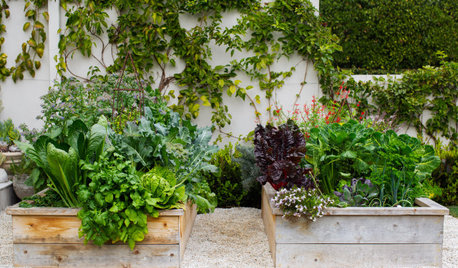
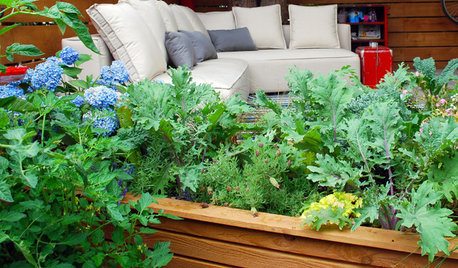
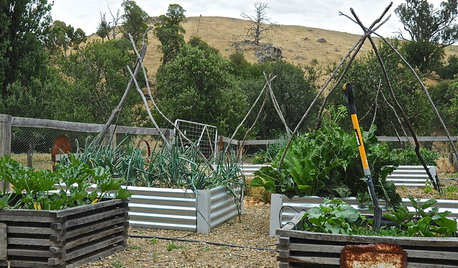
    Box growing has become quite popular. My particular type is made out of 1 x 6 inch cedar board boxes that are doubled, cut into 3 ft. width x 6 ft. length sizes - now have 9 in all. The soil inside is 12 inches deep, and sits on top of ground (top soil over clay subsoil). As you can see that provides a growing depth space of at least 18 to 24 inches deep before hitting clay.

    This method has proven to be very easy for folks - like me -with limited physical strength - who are eager to garden without waiting for amendments to take their natural course.

    I grow most of our veggies that way, except for potato, and cooking onions - which we use a lot of and would require more space. But it is a great alternative if you only want a few fresh veggies each day. Also it helps to be able to have a longer growing time - temperature wise, as it is not necessary to grow all at once to take advantage of the climate in which you live.

    Also, introducing lots and lots of compost and manure to your soil - and let the worms and micro-herd dig deep mixing your soil for you. (may take awhile).

    Just my 2 c's.

    bejay

  • 16 years ago

    Either rye grass or cereal rye. Cereal rye is more effective, but more difficult to manage without power equipment.

  • 16 years ago

    how about converting to raised garden bed save all the digging and no need to bother with the sub soil.

    len

    Here is a link that might be useful: lens garden page

  • 16 years ago

    If you are willing to take part of the garden and grow alfalfa for 12 months I believe the roots will have enough time to grow down quite deep and break up / mix with the clay soil. I would also recommend that you contact your local County Extension Service and bounce these ideas off them and see what they recommend for your specific local conditions ( They may ask you to get a soil test done also, this would help you to see what you actually have in terms of structure, nutrients and pH also )

  • 16 years ago

    As far as double digging hundreds of sqft of hard clay, do it if you are younger than 40 and badly need the exercise. Use the sharpest spade money can buy. However, I recommend a jackhammer, and two people, one handling the machine, the other with a shovel pushing aside the large chunks. You have to use a jackhammer clay tip, which is basically a wide blade, almost a spade.

    Have a load of organic material nearby, but not wood chips, which last many years under clay. Leaves, garden clippings, and manure will be fine. You need, probably, 5 to 10 lbs of material per square foot. Refill the bed with a mixture of soil and organic material

    But frankly, I'd prefer to build a raised bed, or even sacrifice a year to plant a deep rooted cover crop. double digging is seldom an effective use of labor.

  • 16 years ago

    A little bit of everything advised here, will probably work OVER YEARS. Depends on how large the garden. As glib said, depends on your age, need for exercise,etc. Depends on the depth of your pocketbook. Depends on your ability to do a little this year and a little next, and so on.[does everything have to be done this season?] In my 40s I dug a 6x30ft drainage ditch through DG,& red clay[from he**] from my back yard to the front. That clay became the binder in my dry-laid upper terrace walls. Parts of other beds were subjected to double-dig treatment, 'till I think the whole yard - except for fruit tree plots -- have been double-dug several time. Now, 30 years later, that red clay and DG have morphed into chocolate brown loamy soil.

  • 16 years ago

    To me, double digging clay by itself is not going to do much good. UNLESS, in the process you mix in lots of amendments like compost, leaf mold, any kind on organic material, horse manure, mushroom compost, top soil.

    When you do the above, automaticall you will have some sort of raised garden. So you should plan to enclose that garden with lumber or other means.

    I am not just preaching this. I have done it. In addition to double digging I have also screened the soil to get rid of stones bigger than an almond. I have terraced beds though , because my garden area is sloped.
    Of course, I should mention that I have a small garden, less than 400 sq-ft.
    Even that took me months to prepare from native GA red clay.

  • 16 years ago

    I have very sticky, dense clay soil. If I were you (and in this case, I am.), I would remove the good top soil as you originally planned, then use a sharp spade to break the underlying clay. Work when the soil is reasonably soft, but not soaking wet. Use the weight of your body to push the spade in as deeply as you can, hopefully all the way down (give or take another foot), then pull back to break up the subsoil. My neighbors call this Donna's shovel dance. You just balance on the shovel and wiggle the handle back and forth to work it down deep. I break it every six inches or so over the entire area.

    THEN add 3 to 5 inches of manure, compost, peat moss, or soil conditioner (any or a combination of) over the top of the broken clay and till that in. A mini tiller will do it if you do a good job of breaking the clay.

    Scoop back in your good top soil, add some kind of organic matter to the bed regularly, and you'll have beautiful soil from now on.

    This is time consuming, but not overly strenuous, because you don't have to lift that heavy stuff. While you're doing it, keep telling yourself that you only have to do it once. :)

  • 16 years ago

    I don't recommend burying anything under the topsoil except for the humic shale I mentioned above. Organic material won't get a chance to decompose naturally when it's buried. The humic ore will dissolve into the soil as-is.

    I used a broadfork to loosen the subsoil/clay when I double dug a bed. Remove the topsoil in a trench wide enough for the broadfork, dig out some subsoil to make room to dislodge the rest with the broadfork, then broadfork the subsoil to loosen it. Scratch in sulfur and lots of humic acid, then dig a new row wide enough for the broadfork, shifting the topsoil onto the newly amended subsoil.

    I did bury sod between the subsoil and the topsoil. It was an easy way to get rid of the sod. I'll bet I can dig down and find that sod still there, pretty much intact.

  • 16 years ago

    thank you for all of the posts.

    The garden is only 300sq ft and is already raised but only 6 inches. I have considered just going higher and adding more soil but that seems like covering up the problem instead of fixing it. I like the idea of removing the topsoil, then loosening and amending the clay underneath and then returning the topsoil. How deep will organic material stop decomposing naturally?