Software
Houzz Logo Print
never_give_up

Growing peppers up north

17 years ago

I have tried for the past 3 years to grow peppers. Each year I have had great success with the jalapenos, but the bell and banana peppers were pathetic. All the plants came from the local green houses and were tried in 3 different spots in the garden, but with the same results. Lots of jalapenos and few to none of the rest.

There are some varieties in the Vesseys catalog that state that they perform well in short season areas and/or cooler areas or that matures in about 65 days. Has anyone tried any of these varieties in my climate?

Socrates, Carmen, Gypsy, Fat 'n Sassy, Purple Star.

I thought that I would cover the ground with black plastic and use tomato cages wrapped in plastic when I first put them out.

Any suggestions that you are willing to give me would be greatly appreciated. It would help us so much to get more in the freezer this year.

Comments (59)

  • 17 years ago
    last modified: 11 years ago

    Like some others here, I've had a lot more success growing peppers in containers than in the ground, so you might try that. I may give it another shot this year, though.

  • 17 years ago
    last modified: 11 years ago

    I'll second the recommendation for Revolution. I grew both it, and King of the North last year. Revolution way outperformed King of the North, though I got several ripes ones from King of the North too.

    Bonnie

  • 17 years ago
    last modified: 11 years ago

    Thanks everybody, I think peppers will be one of my major experiments this year. I checked out Revolution and it looks like a good one for me. I wish that the companies would allow you to get one package of seeds in a regular envelope. The shipping kills. But considering how much the plants at the nursery cost the last 3 years to get nothing from them I guess it is cheap.

    I think I will take all your suggestions and try them in different sections of the garden and in containers and see what happens.

    Looking at the directions on how to start them, it looks like I need to find one of those heating mats to go under the seedlings. Our house is way to cold to start them any other way.

    Thanks again.

  • 17 years ago
    last modified: 11 years ago

    Off the Territorial Seed Webpage:

    CULTURE: Using a sterile seedling mix sow seeds 1/2 inch deep 8-10 weeks before your last frost. Optimum soil temperature for germination is 70-85F. Days to emergence are 8-25 days. Germination rates may be erratic if soil is allowed to dry out. Once the seedlings have 2 sets of true leaves, they can be up-potted to a 3-inch pot, and grown at 70°F during the day and 60°F during the night. Make sure the seedlings have plenty of light, and give them an organic liquid fertilizer solution, such as 2-1-1 Earth Juice Grow fertilizer. Remember strong transplants perform best and will give highest yields. Peppers grow very slowly, or not at all, in cold soils, so resist the temptation to plant outside too early. The timing for transplanting is perfect when the plants are just starting to become root bound, the garden soil has warmed to at least 60°F, and the nighttime temperatures remain above 50°F. Transplant peppers outside 2-3 weeks after tomatoes, typically the first half of June. The bed should be rich and well supplied with nitrogen, such as blood meal, fish bone meal, or composted chicken manure. This helps the plants make vigorous vegetative growth for their first 6 weeks in the garden. At planting time, use about 1/2 cup of nitrogen fertilizer side dressed below and around each plant. Set the plants 12-18 inches apart in rows 24-30 inches apart. When the plants start to flower, side dress 1/2 cup of complete fertilizer around each plant. As an option, consider using Black or Silver Mulch in the pepper bed. Also covering the plant with a floating row cover such as Reemay or Gro-therm can be especially helpful in early plantings. Be mindful of high daytime temperatures as the season progresses, as even heat loving vegetables such as peppers can get too hot. Remember to keep peppers uniformly moist throughout the growing season and you'll be enjoying the explosion of color, flavor, and heat that peppers offer.
    INSECTS/DISEASES: Most insects and diseases that attack tomatoes will also affect peppers. Liquid Rotenone-Pyrethrin or a floating row cover will effectively eliminate insect pests if used early in the season. Whenever possible use disease-resistant varieties and proper sanitation in the garden. If you have experienced disease problems with either tomatoes or peppers, don't plant in the same spot for 2 seasons and rotate with a green manure crop.
    HARVEST: Fruit set after late August usually will not fully develop or ripen. Peppers are generally fully ripe and have the most flavor and vitamins when they turn red, yellow, purple, or orange. They can be kept in good condition for at least 40 days at 32°F and 95% relative humidity.

  • 17 years ago
    last modified: 11 years ago

    Thanks violet sky, you just read my mind! I was looking around for a heat mat and wondering what size pots to start with and when to transplant, what kind of fertilizer, etc. Lots of questions answered.

    I wondered if the row cover would prevent pollination, but found some posts saying that they are self pollinating. I would like to learn to save seeds to save money. I have only saved pole bean seeds so far and hope to expand that part too. So much to learn, so little time.

  • 17 years ago
    last modified: 11 years ago

    In 2008 I lucked out when I spotted a small ad for heirloom tomato and pepper plants that a local gardener was selling. The great deal was they were priced and sold as individual plants. Carmen was one of the varieties I tried and it was wonderful. They grew in a new garden planted almost against the house, which is painted white. I think a deer got one of the other pepper plants but didn't touch the others. Now there is crushed stone behind the bed/against the house for drainage. I think this will help even more. I always use fish emulsion when I transplant. I'm not sure but I think I saw the ad in our state farmers weekly bulletin published by the Dept of Agriculture. You might also check local farmers markets for plant seller rather than growing from seed if you want to try a lot of varieties. I have never had such wonderful, flavorful peppers. I don't think I will bother with regular bell peppers.

  • 17 years ago
    last modified: 11 years ago

    never-give-up, sorry I didn't reply sooner. As to the deer munching my pepper plants, I didn't do anything after they had been munched, I had pretty much written them off for the year. At planting time I had mixed fertilizer in the bottom of the hole ( being sure the rootball wasn't touching any of it), They got watered with the rest of the garden. I had intended to pull them out but didn't get back to them until they had started regrowth. At that point I decided to just leave them and see what happened.

  • 17 years ago
    last modified: 11 years ago

    defrost49 I hadn't thought of the farmers market for plants. We have a small one here that I haven't checked out for a year or 2 because we have been trying to grow our own vegetables. I'll check that out in the spring. Thank you.

    hostaholic2 it is good to know of another vegetable that can stage a come back if you give it a chance.

  • 17 years ago
    last modified: 11 years ago

    I had problems with yields in my organic garden with peppers. I now put almost all of my peppers in containers of 5-14 gallon. Total of 33 plants last year that I kept, and I gave away over 120 gallons of chili peppers of various types. You can "push" almost all of the chilipepper varieties with organics, and don't believe what folks tell you, organics can and do work in containers. I also used both black, green and white containers with no apparent problems due to heat absorbtion in the black containers. The secret is to start your mix a couple weeks to a few months before you plant so the microlife gets a head start. You can find my mix in the pepper site, organic site. The mix is only good for one season in a container, but man oh man how the garden rocks when your leftover soil and rootballs are mixed into the garden!! Have fun. Experiment! Don't believe everything you hear from everyone. Everyone grows different and finds what works best for them!!

    TiMoTeO

  • 17 years ago
    last modified: 11 years ago

    Hello! I've finally started having great success with peppers here in Poconos with seed from Tomato Growers Supply, Johnny's and Territorial. My faves for toughness and production are hybrids New Ace, Ariane, Spanish Spice, but the seeds are just too expensive. so for last few years I've been growing just open-pollinated, California wonders, Antohi, Ancho 101, Mulato Isleno (delicious!!) I grow them with IRT perforated plastic.

  • 17 years ago
    last modified: 11 years ago

    Zone 4 here and it is good to know that peppers like warmth, don't even think of planting them otuside until night time temps are 50 or above....too many people plant peppers before it's warm enough...they don't like cold wet feet, will sit and die....wait patiently and when they have the warmth they will grow well for you. I have no problem getting ripe peppers last year even with our cold wet spring that ran into summer. Can't tell you much more important info than that. Good luck.

  • 17 years ago
    last modified: 11 years ago

    I have to agree with the pot people. Last year, I ran out of room in the garden, so some I planted in pots. What a difference! All the varieties in the pots grew way better and had a much higher production than the ones in the ground. The pots were not overly large either. I got my hand on a bunch of those pots that look ceramic, but are made of foam for a good price.
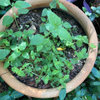
    Here's a pic of Salsa Delight with a lot of peppers. I had already picked a bunch too!
    {{gwi:22607}}
    Remy

  • 17 years ago
    last modified: 11 years ago

    Nice! Containers produce faster results, and yield way more. If I was in the south, I would use gardens for chili's due to a longer grow season, but still have some in containers for the early yields. i had some mature peppers in June, and by July 20th, all of my plants were producing mature peppers. TiMo

  • 17 years ago
    last modified: 11 years ago

    Nice looking pepper plants remy!! I will definitely put some in pots.

    I don't know what I was doing wrong but I couldn't find your soil mix rootdoctor. Would you mind linking it?

    Do you all use special soil mixtures/fertilizers etc. when you grow in pots?

    Thank you everyone for the information.

  • 17 years ago
    last modified: 11 years ago

    I grow alot of peppers and I have to totally disagree with the plants in pots producing more and having faster results. It just depends on what type of soil you have and how you fertilize them. The 150 pepper plants I had in pots in 2007 were 1/3 the size of the 350+ pepper plants I had in my garden in 2008. For one to say that they produce faster and produce more fruits as a rule of thumb is not true but it certainly may have in your backyard.

  • 17 years ago
    last modified: 11 years ago

    thepodpiper,
    I'm sorry you misread me. I wasn't saying it was a rule of thumb. I said I agreed with the others in this thread who said they have had better results with pots. I've been vegetable gardening at this home for a long time now and have never been truly satisfied with my pepper (and eggplant) results. I think the cool temps and heavy clay are a bad combo for them in the ground here. I have amended my soil every year and I still consider it heavy clay. Other crops like tomatoes, beans, the cabbage family, etc. grow absolutely fine, some amazingly well. Anyway the difference between my pepper plants and eggplants in pots and the ones in the ground last year was quite dramatic. Out where you are there may be less of a difference.
    Remy

  • 17 years ago
    last modified: 11 years ago

    Much of the problem with northern pepoper growing can be alleviated by both warming soil and protecting plants from cold nights. Even if you transplant cole crops early, hold off transplanting peppers for a few more weeks until both the soil and air are warmer. You can warm the soil more by using black plastic mulch and then after you transplant you can use a row cover to mellow the air temperature around the plants for a few weeks. Getting the plants off to a good start after transplanting is critical to plant performance, regardless of variety. I grow over 30 different varieties of hot and sweet types and they all need similar care.

    Extend your fall harvest season with row covers too. Often you can protect mature plants from frost for another month by simply covering the plants.

  • 17 years ago
    last modified: 11 years ago

    I was going to get a heating mat until I did some more reading about their reliability . On this one post especially. Do you think this would work instead? I have a small room with radiant floor heat with tile. We keep it at 65 degrees. What if I made a small green house like structure and used a light bulb to raise the temperature higher to what peppers need.

  • 17 years ago
    last modified: 11 years ago

    I have never had a problem with heat mats. I don't even use a thermostat. I use the hydrofarm brand. Not really recommending them above any other brand as Hydrofarm is the only brand I have ever used. No failures after years of use.

  • 17 years ago
    last modified: 11 years ago

    Same here. I have 4 Hydrofarm mats that are now 6 or 7 years old and no problems with them whatsoever - still heating right along.

    The failures discussed in the post linked above are far more likely to be from incorrect care and use than any failure on the part of the product.

    What if I made a small green house like structure and used a light bulb to raise the temperature higher to what peppers need.

    Sure, you can give it a try but the results will likely be less then the results of using a heat mat.

    Dave

  • 17 years ago
    last modified: 11 years ago

    My Bad Remy, I should have read more closely.

    Dale

  • 17 years ago
    last modified: 11 years ago

    Dale,
    No problem : )
    Remy

  • 17 years ago
    last modified: 11 years ago

    Thank you guys, I am headed out to get one this afternoon.
    We are hip deep in snow and the temps have been below zero with the wind chill. I need something to give me hope.lol

  • 17 years ago
    last modified: 11 years ago

    Thanks everybody for your suggestions. I got a hot mat and a seed starting kit. Now I need to figure out the best place to set it up and make some sort of contraption to hang the grow lights on.

    Do you folks use something special under your heat mats so they don't burn out like the ones in the above link?

    I have a choice of starting them in the little room with radiant floor heat which is kept at 65 or the rest of the house with forced hot air which gets turned down to 60 at night. Seems like the little room has more even heat so that MIGHT be the best place.

    I read on a couple of posts that a small fan for air circulation is helpful. Do you do that?

    Thanks for all your help, ideas and plant recommendations. They will definately be out there in the gardens this year.

  • 17 years ago
    last modified: 11 years ago

    NGU,

    My heat mats are on a wood table with plastic over it. I do nothing to 'protect' them what so ever.

    A fan can be helpful, mainly to blow the stems gently which simulates outside conditions. The idea is to get the stems thicker and stronger to transplant better. Having said that I generally don't use a fan. Makes me have to water the seedlings more often ;)

  • 17 years ago
    last modified: 11 years ago

    Thanks justaguy. In combination with experimenting with everybodys tips I think I will try some peppers in the lasagna beds. I had luck with winter squash, cauliflower, cabbage and pumpkins last year in those beds. A volunteer tomato came up late in the season and gave me quite a few cherry tomatoes too. They all produced so well I put in 2 more beds last fall.

    As always, I really appreciate all your help and appreciate having this place to come to when when I need answers and even when I just need a fix. lol

  • 17 years ago
    last modified: 11 years ago

    The only thing I can come up with for a place to start the peppers is to use 2 adjustable sawhorses and attach 2 double 4 foot lights underneath them and set the seed trays under them. The floor has radiant heat. The rooms temperature is usually set at 65 and when it drops 3 degrees the heat kicks back on.

    Do you think that it would be ok to set the seed tray and mat on the floor (where the floor is heated) or raise them up? I was thinking maybe inverted flats that canned good come in at the store. Also is a room temperature of 65 high enough with the mat?

    Thank you.

  • 17 years ago
    last modified: 11 years ago

    I think that would work fine.

    Give them the heated mat to germinate, then after they germinate you can take it away.

    The slightly cooler temperatures actually slow down growth a little bit, which is a good thing - so they don't get "leggy" before you set them out.

  • 17 years ago
    last modified: 11 years ago

    Thank you jwstell42. My Cooperative Extension agent said I can start them in a couple of days. Can't wait to get something growing!

  • 17 years ago
    last modified: 11 years ago

    About 1/4 of the seeds have sprouted. At what point do I remove the clear dome? Should I prop it open?

    Thank you.

  • 17 years ago
    last modified: 11 years ago

    I tend to be a diyer. Years ago I built a seed germination box for my peppers, mostly from stuff I already had around the basement. Fits a standard flat, powered by a 15 watt bulb, keeps it about 82 degrees. I usually start multiple seeds in each cell.

    {{gwi:22608}}

    {{gwi:22609}}

    {{gwi:22610}}

  • 17 years ago
    last modified: 11 years ago

    kkfromnj Great contraption! What did you use for the white box that holds the light?

  • 17 years ago
    last modified: 11 years ago

    You know those aluminum rolls the siding guys use? I had some left over from when I changed the attic windows. Bent it by hand, its a little crude. As long as the bottom is non-combustible, Id think it would be OK to use just about anything. If you had to buy the materials, really wouldnt be cost justified but should last forever as long as you change the bulb. The bulb was all I had to buy.

  • 17 years ago
    last modified: 11 years ago

    You sound like our kind of person! We love making craptastic stuff from discarded or left over bits and pieces of stuff.

    Over half the peppers are up. Yippee.

  • 17 years ago
    last modified: 11 years ago

    Yeah, we sound a lot a like. My peppers aren't up yet, soon

  • 17 years ago
    last modified: 11 years ago

    I can't find any information on when and how much to fertilize the pepper seedlings. Or even if I should?

    Also I have 2-3-1 fish and seaweed fertilizer, do you think that ok to use?

    What do YOU do? Thank you.

  • 17 years ago
    last modified: 11 years ago

    I was for years in zone 5 but as of last year moved to zone 4a. Because of time I purchased Hungarian yellow wax at a greenhouse, grew like the dickens and was the first thing in the garden to fruit. Over the years I have grown jalepenos , Hungarian yellow wax, piquin, giant marconi all with good success. I started my seed for piquin, tam jalepeno, and a new one pasilla bajeo on the 16th of march and all the tams and most of the rest are up. I don't use a mat (to cheap) and some times it does take longer but never had problems. I use pro-mix and don't do anything special other than a couple nice big shovels of well rotted manure in the bottom of the hole when they're transplanted out. I don't put plastic anywhere near my garden, seems to defeat the whole point of trying to be organic and self-sufficient. I have had good luck mulching my garden with pine shavings (available for cheap money if you have a saw mill near buy) to conserve moisture and suppress weeds as well as keeping the acid up where toms and peppers like it. One of the biggest factors for northern gardeners is not to plant out to soon. Make sure your soil temp is a steady 50 deg. for most and preferably 65-70 for peppers and eggplant. This will help lessen set-back at transplant and put your plants miles ahead of the neighbors who were planting three or four weeks ahead of you. There have been years where I planted in July because the soil was so wet and cold and had tomatoes in August! If you are serious about saving true seed, consider bagging and hand pollination of your peppers. All you need is some bridal veil, twist-ties, a small paint brush, and patience. As for deer, nothing short of a piece of lead is 100% effective, but I have had good luck with urine and blood meal. Pee around your garden! Invite the boys over for Saturday baseball and have them pee around your garden. The more, the merrier. Also blood meal works good and adds nitrogen, if you need it. Deer have good noses. Hope this helps. Oh, I have read that King of the North is a BIG bell type that does well up here as well as Aconcagua but have no experience with them. If I can find this thread again in september I'll post how my pasillo bajeo did. Happy gardening.

  • 17 years ago
    last modified: 11 years ago

    One thing that I do when planting peppers is to place a gallon milk jug upside down over the top of the plants. This keeps critters of them and also warms the air and soil to get the plants going earlier. I have a problem watering so I then turn the milk jug upside down and use it to water more directly to the plant.

  • 17 years ago
    last modified: 11 years ago

    Thank you anoid1 and ohiogrower for your thoughts and ideas.

    I was really amazed at how quickly things sprout on the heat mat.

    Can't wait to try everyones suggestions!

  • 17 years ago
    last modified: 11 years ago

    Hi never-give up. Well my tams are now about ready for transplant, the pasilla bejeo are coming on strong and the piquins will soon follow. I finally got my order from Pinetree that I sent two months ago so today I planted sweet banana and Corno di Toro. I soaked them over night in water. I'm hoping this will speed up their germination and they'll be able to catch up. I ordered most of my seeds from Baker Creek and a new place in Quebec called Solana seeds. I didn't know how fast/dependable Solana would be so the real important stuff I got from Pinetree seeing as they're only about 45 miles away. Fooled me! Solana's order was here in less than two weeks and Baker the day after that. Solana has a really interesting selection of open polinated varieties. This is the second year I have had problems with Pinetree. Baker has always been dependable. While I was at it I transplanted my tomatoes into 3in. pots as they were ready. They look so happy now with their bushy little heads just above the soil. Happy gardening.

  • 17 years ago
    last modified: 11 years ago

    anoid1 I have never heard of some of the varieties of peppers you are growing. Piquin, Giant Marconi, Tam jalepeno, Pasilla Bajeo, Corno di Toro. Are they hot peppers?

    I don't think that I can save seed of any of the varieties I am trying this year as they are hybrids. If I can figure out how to grow them here, saving seed will be the next step.

    When the roots start showing is it a good idea to transplant the peppers into bigger pots? Should I be careful not to disturb the roots or do they not mind being transplanted?

    Should I give them a light fertilizer if I transplant into a bigger pot? I have Neptune's Harvest 2-3-1 Fish & Seaweed fertilizer.

    Happy Gardening to you too!

  • 17 years ago
    last modified: 11 years ago

    I had my best peppers last year,the difference, growing them in my raised bed in my greenhouse!
    Lola

  • 17 years ago
    last modified: 11 years ago

    Hello everyone its been months (the whole winter) since I posted anything or even visited glad to be back here for more knowledge to learn and give what I can anyhow I must be crazy having started a few things already when the frost date is May 18th . My peppers are in the house on my south facing picture window but I have beef steak tomatos , peas and some sunflowers in the ground already . I guess its my anticipation to prevent what happened last year ...everything was still growing up until november so I ended up with low crops small vegetables and dead crops too . I'm going to take my chances and hopefully I'm not the only crazy one out there starting much too early .Temperatures are running about 32F or 0c to 55F or 15c lol

  • 17 years ago
    last modified: 11 years ago

    Hi never-give-up. Piquin/tampiquin/chiltepin peppers are among the oldest and the hottest peppers grown. They are about 1/2 in. long x 1/4 wide and depending on the type round/blunt/pointed. If you put one in your mouth, believe me, you'll never do it again. I grew a couple bushes ( they're about 2 ft. tall, 16 in. wide and bushy) 20 years ago. I fill 4 cup jars with dried peppers and gave baggies full away to some brave friends all from 2 plants. I have been using them, a couple at a time, in soups and stews, curries, and chili since and am almost out, so time to grow some more. Birds like them so you have to keep an eye out ( they're called bird peppers sometimes). Tam jalapeno are about 1/5 as hot as a regular jalapeno, otherwise they are the same. I like to stuff them with fresh herbs and cream cheese and two bites and gone. I've never grown pasillo bajio before, but from what I've read they are 1/5-1/10 as hot as a jalapeno. They are a chili type pepper, about 6-8 in. long, all twisty and wrinkled, and turn burgundy/brown when fully ripe. They have a smokey flavor and are used raw, cooked, or dried for use in mole. As I like my peppers raw or dry some for cooking they sound interesting and I cant wait to try some on the grill. The giant marconi is kinda like a cross between a cubanelle and a bell. Longer and more tapered than a bell but just as blocky and meaty. It is a sweet pepper. The corno di toro ( bull's horn) is long and tapered, not quite as big at the shoulders, has kinda a twist to it like a bull's horn and meaty. It is a sweet pepper also. Commercial growers start their seed in flats, sprinkling seed on a bed of soil, then covering with a 1/4 in. or so more. When the first true leaves show they "prick" them, lift them with a thin spatula deal and transplant them into cell packs. Many home gardeners do the same. I did it for years. Today lots of BIG commercial growers use plug trays and then sell them as plugs (7/8 in. around 2 1/2-3 in. deep) for the green house or nursery to plant out to larger pots. I have noticed in recent years many more tomatoes and peppers sold by greenhouses in 6 pack. Hence you really don't need to transplant if you don't want to. I like to repot my tomatoes because I can bury most of the plant and it will root and when I plant out I'll have a nice big healthy root ball to boost it's growth. I'll strip most of the bottom leaves and bury it a foot or more deep. So that said, unless they are seriously pot bound, if a greenhouse can grow supper peppers in a six pack so can you. You must try different things and find what works/is comfortable for you. I will watch my peppers and may or may not repot. Depends how they look and whether the spring is going to be long and cold and wet or if it warms up fast and stays that way. Also if you're thinking of planting some in containers save yourself the hassle and extra transplant shock and just repot to the container when they're ready. If it gets cold and crappy you can always move the container inside. A little bit of fish/kelp fertilizer won't hurt. As most growing mediums contain nutrients you probably don't need to but 1/4-1/2 the regular dose periodically will supply some trace elements. The most important thing for all flowering and fruiting plants is phosphorus. It promotes strong roots, flowers and ergo, fruit. potassium is next. It promotes strong, healthy stalks, disease resistance, and helps the plant use available nitrogen. Nitrogen is good but too much makes all leaf and no fruit or flower. The best thing you can do is test your garden soil. Buy a cheap multi use soil test kit and test spring and fall. "Most" vegetables prefer slightly acid soil, potatoes are one exception. Beans don't like too much nitrogen (they make their own) . If your soil needs phosphorus, a handfull of bone meal worked into the soil around the base of the plant will provide a natural, slow release source all summer. If you don't mind "not quite organic" methods, shultz's Tomato Expert can be used on all your vegies, from seedlings, right up to harvest. Hope this helps. Happy gardening.

  • 17 years ago
    last modified: 11 years ago

    For those with deer, try planting hot peppers facing the direction the deer tend to come from. A deer apparently got one of our hot Thai pepper plants one year, and none of our pepper plants have ever been touched since.

  • 17 years ago
    last modified: 11 years ago

    Never, I can tell you that radiant floors do work quite well to pop seeds, though you may want to turn your floor up for a short time. We have only floors for heat, so they are at about 90 degrees. With a typical seed-tray of about two inches deep, the seed gets to be probably about 80 degrees, which germinates it right quick.

    This year though, I've been keeping my trays on top of the boiler which has been working pretty good too. Just put my peppers on there yesterday.

  • 17 years ago
    last modified: 11 years ago

    anoid1 thank you very much for your very detailed answer. I have never had mild hot peppers and some of your varieties look very interesting. If I have better luck growing them this year some of those will be on the list for next year.

    eibren your method for thwarting deer is too funny, after fighting with the darn things it would give some satisfaction too.

    pnbrown I have been amazed at how quickly things sprout in there. Way quicker that the seed packets say!

    Thanks again all.

  • 17 years ago
    last modified: 11 years ago

    I searched everyones posts and couldn't find the size of the pots you all use, except for half barrels.

    So far all I have been able to scrounge up for free pots are 2.25 gallon black ones. Does anyone know if that big enough to grow peppers in?

  • 17 years ago
    last modified: 11 years ago

    Hi all,

    I'd love to know what size pot works best for people as well. I have had mixed results when using pots - sometimes awesome production, sometimes not so much - but I'm wondering if the answer is to use bigger pots or if a better soil mix will make more of a difference. Thanks.

    - Chris

  • 17 years ago
    last modified: 11 years ago

    Bump