Software
Houzz Logo Print
salem_girl

weeds!

16 years ago

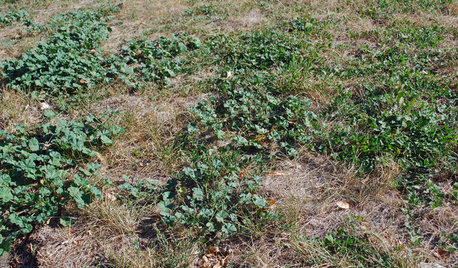
So last year I threw in the trowel so to speak. I gave up, I walked away with the tomato cages and pea trellises still standing. They "soil" was webbed with weeds and I was just plain beaten.

I have a 4'x25' raised garden. I started about 4-5 years ago with bagged compost and soil and filled it. (Yes pricey) The first year I had more zucchinis than I could give away. The tomatoes were great and I loved it! So a weed or two visited and I pulled them, but an amount that I would call relaxing.

I've been adding more compost and soil bags every year as the soil sinks or gets pulled out with the weeds or goes wherever pricey soil disappears to. I know I get wind coming down the hill towards the garden so seeds my be hitching a ride that way, or maybe from the bagged compost, but not almost nothing grows well. I pull and pull and pull, hoe and yank and pull some more. This is a regular weekend thing and if I miss a weekend...well I guess thats what happened this year and I couldn't get my foothold back. They won.

I have not covered it in plastic or hay since its touching the soil that I like. I've been afraid of lawn clippings in case that's where they come from! Maybe I'm a mulch-o-phobe I'm on the cusp of another growing season and getting itchy for digging again, but as I pulled out of the driveway to head to work this morning with the brown weeds finally showing though from the melted snow, I felt my heart sink.

What do I do????

Thawed and panicking,

Kellie

Comments (20)

  • 16 years ago
    last modified: 11 years ago

    Well, you may need to get over some of your phobias and do some of the things you said you weren't comfortable doing.

    It is my opinion that mulching of some form, augmented by hand labor and/or herbicide use, really is the only way to keep a garden weed free long-term, unless you have unlimited time and physical labor/stamina to do it all by hand.

    Personally, I use a LOT of black plastic, as well as all of the leaves (oak leaves are the best, IMO) that I can get my hands on. Last fall, I gathered over 500 bags of leaves from the curbsides in my neighborhood and used these to deep mulch as many of my gardens as possible.

    Black plastic does a bang-up job of keeping weeds down. That is one option.

    The second option is to deep mulch with a CLEAN mulch of some type -- not something like hay that is already full of weeds seeds (some hay is, some isn't, depends a lot on the individual field and how many mature weed seeds were in it when it was cut). Six to eight inches of mulch will keep out the vast majority of weeds.

    However, if you have a lot of established, perennial weeds like quackgrass, dock, sorrel, sow thistle, etc., you will still need to kill these first, since they'll come up through almost anything. An herbicide would be the best way.

    I guess an alternative might be to get some type of small electric or 2 cycle gas engine tiller along the lines of a Mantis, that you can use to cultivate all the time in, around, and between the plants, at least until they fill in so much that they crowd out the vast majority of the weeds.

    I have close to an acre under actual cultivation in various beds. I agree that if you let the weeds get the best of you, you are sunk, at least for that year. The time to get a handle on this problem is right now, BEFORE they get away from you.

    Good luck.

  • 16 years ago
    last modified: 11 years ago

    My community garden plot has a terrible weed problem as well. My strategy this year is going to be to use the tiller early and aggressively. Then I am going to put down a heavy spreading of corn meal gluten. We'll see if that helps control the weeds this year.

  • 16 years ago
    last modified: 11 years ago

    SG

    I sympathize a LOT! But you just can't let it get to you entirely.

    denninmi has the right idea. Mulching with either black plastic and planting through Xes cut in the mulch or with leaves or straw or hay is the way to go. Really, I'm with you. I hate weeding, particularly if it gets to be overwhelming.

    rmontcal also has a good idea and that's to spread corn meal GLUTEN heavily over the garden. It functions as a pre-emergent herbicide that's organic. You can research it to check it out.

    But after that, I'd definitely recommend a mulch of plastic or straw or hay. A plug here for mulching with hay (cheaper than weed-free straw). If the hay has weeds, the weeds are easy enough to pull out of the hay. I've done it many times over the years, and it is not overwhelming like weeds that take over when you have bare earth. The hay is usually moist and weed roots don't have much to cling to. I just toss the weeds on top of the hay.

    I like hay because it becomes organic compost as it disintegrates. It's good for two or three years if you pile it high enough.

    If you can't get hay quickly, you can put down black plastic once you've added the goodies you want to the soil. Landscape fabric is probably better since you want it to breathe, let in oxygen and water for the health of your plants. That's a cheap way to go, and believe me, you'll thank yourself later.

    There's also another possibility, depending on how aesthetically-pleasing you want the garden to be. Carpet companies, or those who lay carpet, often have to remove old carpeting and dispose of it when they put down new. If you can get hold of some of this old carpet and a good carpet knife, you can cut it into strips for your garden pathways and even the spaces between plants. I think I've recall that the top of the carpet should be put face-down and walk on the underside of it. However, that might just be to not have baby blue or other colored patches in your garden area!

    If you can do that, I think it also lasts a couple of years if not longer depending on the material and how worn it is.

  • 16 years ago
    last modified: 11 years ago

    A 4x25' bed really shouldn't be that much of a bother unless (and this is where it gets controversial) you have intensive planting. With more space between the plants, and with the plants planted in 4' rows, weeding is not the chore it needs to be. With my very sharp (and I mean shave with it sharp) swoe, or weeding hoe, I can weed a 4x25' bed in about 7-10 minutes...maybe 15 if I'm working at a leisurely pace. You see, the swoe glides just under the surface of the soil and cuts off any weed that has come up, even tough ones like nightshade vines or thistles. Dandelions are a breeze: they pop out of the soil with no effort at all.

    Now, all of this shallow cultivation brings more weed seeds to surface right? Right. But if you keep at it, just 10 minutes every other day, then the plants will eventually outgrow the weeds and shade the ground quite effectively.

    Now, on the other hand, if you have gone the intensive checkerboard approach, then yeah, you'll be on your hands and knees pulling weeds. In that case, I would advise that you look into mulch and hope the slugs don't pick up your garden and walk away with it.

    Michael

  • 16 years ago
    last modified: 11 years ago

    Micheal- Yes, the reason for the skinny length was to take advantage of being able to reach in from both sides and "square foot garden". There are some exceptions when a plant calls for 18" spacing. I don't do the twine to line everything out, but I certainly don't have a garden I walk through.

    I will read up on corn meal gluten. As for the mulching, and Everyone- I know this sounds stupid, but do I do that right after I plant the seeds(how would the seeds survive?)or after the plants are coming up? My only experience has been as a little girl using grass clippings and my mom bought established plants from the local nursery and she had a lasagna garden. It's fairly easy to get in around those!

    Thanks for the help. I really appreciate it!

  • 16 years ago
    last modified: 11 years ago

    I'm curious to know what kind of weeds you're getting?

    Regardless, I'd use black plastic to try to get the weed seeds to sprout and then die from lack of light.

    My problems with weeds comes mostly from rhizomes. I'll need to surround my beds with a barrier to keep the rhizomes out.

  • 16 years ago
    last modified: 11 years ago

    Ones I'm sure of:
    Lambsquarters (comes out easy, but I get 100's every week)
    Spiky or "prickly" weed (Easy to weed)
    Dandelion (Mostly behind the garden and catchable)
    Prickly lettuce (Generally grows right behind the garden)
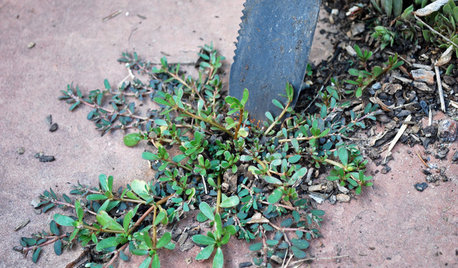
    Purslane (Just can't get it all...evil roots)
    Crabgrass (By mid-summer, this is a pain)

    I'm sure I have more, but this is the lions share. Lambsquarter, purslane and crabgrass are the bulk and the purslane is horrible. I think there's a Charolette's Web of roots under my garden and I pick it clean before I put seeds in.

  • 16 years ago
    last modified: 11 years ago

    salem girl,

    You can eat the lambsquarters, purslane, and dandelion. Not that I have. :) But, it is another solution.

  • 16 years ago
    last modified: 11 years ago

    I'd rather stick to tomatoes!! I'll hit the local garden center this weekend and see what I can find.

  • 16 years ago
    last modified: 11 years ago

    I had lots of weed problems last year...everywhere but my vegetable garden beds. I had two beds last year about 4' x 12' each. I dug them up in the spring, added lots of manure, but what I did differently than the other beds was to plant alyssum all through the vegetables.

    Getting a late start, I got a couple of flats on sale and transplanted them. I put them between the tomatoes, the cabbage, the beans, everything. I also added some other flowers here and there and along the edges of the bed. The alyssum was beautiful, attracted beneficial insects (the main reason I planted them) and kept the weeds down. Every other garden space was a fight, but my two vegetable beds had very few weeds the entire summer.

    I don't use poisons, so more alyssum this year :)

  • 16 years ago
    last modified: 11 years ago

    Hmm..that's interesting. When did you put them in? Sounds like at least June. These die out when frost comes and don't come back right?

  • 16 years ago
    last modified: 11 years ago

    I planted everything in June (new garden and got a late start) but if you have alyssum in any of your perennial beds, they usually reseed and you can transplant some of your own into the annual beds. You can plant them early, from seed, but I like the instant gratification :)

  • 16 years ago
    last modified: 11 years ago

    I spend MUCH more time keeping my gardens clean/weed free in the fall after everything has been harvested. That way, there's no "mulch" to protect the weed seeds & they're mostly frozen out by the time the spring planting time comes along.

    I had a flower bed that got beyond being able to keep the grasses & weeds out. After completely re-doing the bed two separate times, I gave up. I gave all my perennials away...and, it's now a veggie garden, practically weed free.

    I garden as organically as possible, but...in that bed I had to use weed killer & left it sit w/o planting anything for a solid year. Sometimes, ya just GOTTA use chemicals. I do spray weed killer all around the bottom of my raised beds, before I plant anything.

    I agree with Oak leaves being THE BEST mulch around.

  • 16 years ago
    last modified: 11 years ago

    The very old gardeners saying:

    MULCH IT! MULCH IT! MULCH IT!

    After you plant(toms, pepps, etc ) mulch them with things like
    pine straw, leaves, ..that you know do not have seeds in them.
    After those plants take off who cares some tiny weeds grow around
    them. Actually it is good to have them, they keep the ground cool
    in the dog days of summer. Some gardener even plant things like
    clovers betwwen their plants. So not all weeds are created equal.

  • 16 years ago
    last modified: 11 years ago

    I feel your pain about the purslane! When we bought our home four years ago, the garden area hadn't been planted for at least 10 years, possible 20. The husband, who was the gardener, had passed away 10 years before we bought the place and had been ill for several years before he passed. Anyway, that first year, it was as if I woke up a decade's worth of purslane seeds, along their pent-up aggression :) Yeah, I had a little pig weed here and a little lambs quarter there, but nothing like the purslane "ground cover."

    So those first couple years were bad. As others already have said, though, mulch is your friend. In cooler areas, if using an organic mulch like grass clippings, shredded leaves, cardboard, etc., it's better to wait for the soil to have warmed before applying the mulch. The organic mulches will insulate the ground and slow down the spring warm up.

    I'm thinking of trying plastic this year to get a jump on the season. I'm working out how to arrange it so I can remove it by about July and do as Cyrus mentioned - plant a smother crop of clover or possibly buckwheat.

    Best of luck!

  • 16 years ago
    last modified: 11 years ago

    I could think up endless gardener's woe poems involving purslane. It might be a plan on a rainy day. :)

    I just got back from the store with black landscape fabric. They did not have plastic. Do I till under all the remains from last year or do I pull everything, then till? I usually pull, but I thought I'd ask while I'm here. I plan on mulching OVER the fabric once the tomato and pepper plants go in in June.

  • 16 years ago
    last modified: 11 years ago

    salem girl, If there were no diseased plants, I would just till it all under.
    If you purchased the landscape fabric that you can see through, you will want a very heavy layer of mulch on top. If any light gets through at all, the weeds will grow.

    Don

  • 16 years ago
    last modified: 11 years ago

    NEWSPAPER and STRAW,,,,or NEWSPAPER and SHREDDED LEAVES !!!
    Lay the paper down in big pieces between the rows. It works for me every year. I usually put 2 layers of paper down and then straw, or pine shavings on top to cover and hold down the paper. As you are laying the paper down, wet it with the hose so that it doesn't blow away while you are trying to keep it in place to cover it. I rarely have to pull a weed.

  • 16 years ago
    last modified: 11 years ago

    Every load of hay or straw will be different, with varying amounts of seeds. If you have any chickens, dump your straw or hay into their pen and let them pick through it -- they'll find nearly all the seeds. Then gather it up and put it on the garden.

    When your plants are small, just put down enough mulch to cover the soil. The best stuff is straw that has been run through a shredder! As the plants grow, add more. If you make the mulch thick enough, even if weed seeds sprout from moisture and/or warmth, they won't get enough light to thrive. The rest of them will rot.

    Pull or till: till annual weeds that haven't gone to seed. Dig and pull crabgrass and other things that spread by roots. Tilling plants like that will just cause them to multiply.

    When I moved to the PNW, everyone gave me the same exceptionally crappy piece of advice: don't mulch tomatoes because the sunlight heats the ground so they grow better. WHAT A PILE OF RUBBISH! All that does is stress them: too much water, then too dry, too much water, then too dry. It wasn't working, so I mulched them with at least 6" of leaves, weeds, straw, hay, whatever, and had my best tomatoes ever. Now I always mulch. Always.

    In fall, take the time to put your garden to bed. Clean it up, moisten it if it hasn't rained recently, then spread some mulch (anything), then cover with a couple layers of cardboard and hold it down with some rocks or bricks. Drift out there occasionally during the winter and see how things are going. Where the rocks/bricks sit on the cardboard, the cardboard will rot first. You may have to add a few more pieces to cover the holes, and put the rocks/bricks back down. When spring comes, remove the cardboard and rocks, rake off any leftover mulch, and start planting. If you want to warm up part of it, put down your black plastic or landscape fabric and hold that down with rocks (it's just temporary). A little work in fall really prevents having to do a lot in spring.

    Also, consider collecting some cardboard and laying it down around the bed and covering it with a good layer of bark or something. Many weeds grow in the paths and then creep into the beds.

    One of the best tips I ever got was to go to a discount builder's supply and get cheap asphalt roofing shingles, and put them around the edges of my beds. Use a lever to raise the bed edges and tuck the edge of the shingles under them, let them back down. I use them everywhere now, keep finding places. There are usually 22-26 36"x12" shingles per bundle, which is 60 ft or more total length. I get twice as much out of them because I bend them in half lengthwise until they break (letting them sit in the sun helps with this), so I get over 120 ft of length. Most common are the 3-tab shingles, so I just break off the tabs (I call that 'half') and use those on the curved beds, overlapping the edges.

    Put an ad on FreeCycle or Craigslist, asking for leftover bundles of shingles. I have a place near me that sells new packaged shingles for $5 per bundle, so check your area.

    One of the biggest things in dealing with weeds is not to let them go to seed.

    Sue

  • 16 years ago
    last modified: 11 years ago

    Great, Thanks everyone!!