Software
Houzz Logo Print
llm226

Mittleider method is labor intensive

13 years ago

This is a labor intensive chemical way to garden. I would like to add a much easier way to get great soil and organic produce:
The Marvel Method
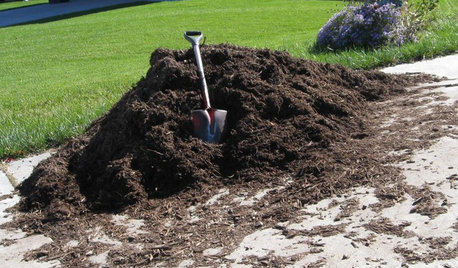
In the fall: dig a trench in your garden bed and put all your prunings, old plants, clippings, dropped fruit from trees,especially apples, collect what you can from neighbors and fill each trench, let it dry in the sun and it will be half it's height, throw a little dirt on it to keep it from blowing around.
Add some manure: goat and chicken are best because it doesn't have weed seed. Horse, cow, elephant, any vegetarian animal.( Meat eating animals carry the same diseases that people can get).
Throw some more dirt on top from the sides. You should have about a 1-2 foot mound. Cover with grass clippings, or pine needles, leaves, straw, anything that will keep the soil from exposure to the sun. If leaves are your top layer, lay some bird netting over it so it doesn't blow around.
Forget about it for the winter.
In the spring, don't till. Just move the top layer to the side, and plant in the dirt.
You will have great healthy plants and few weeds. Pick you weeds the first month of planting, sprinkle crushed egg shell around your plants to prevent slug and snail.
Do this each year and you will have amazing soil from the first year and beautiful organic fruit and vegetables.

Comments (17)

  • 13 years ago

    "Meat eating animals carry the same diseases that people can get). "

    Do you have some evidence for that broad claim? I'm pretty sure it is just about totally incorrect - and I assume by meat-eating animals you are mostly referring to housecats and dogs (which live in constant contact with humans), not alligators or panthers - while it is well known that most major infectious human diseases originated from livestock (herbivorous animals).

  • 13 years ago

    I have done that, burying mostly fall leaves in the garden. The following spring , the earthworms would havs a feast and converted all that into worm casting.

  • 13 years ago

    Your method sounds good, that's pretty much what I want to start doing this summer - composting in the garden bed (hoping to get a nice population of worms!).

    Chickens are meat eaters by the way ;)

  • 13 years ago

    In my climate, if I put clipping in the soil in the fall, it would all be there in the Spring, looking the same as the day i cut it.

    Your post has nothing to do with the Mittleider method, so the subject was deceptive.If you want to post your own 'method,' say so. And adding manure to the soil in the fall is not a 'method.' It's standard gardening.

  • 13 years ago

    I thank you, my garden thanks you and my dogs thank you for this post. I had a basket of over 2 dozen eggs in my kitchen. The hens had been hiding this nest and I did not know for how long. So they were destined to feed the dogs. I headed straight for the kitchen to cook up a dozen for the 2 great pyreneese dogs for breakfast. All those shells and more will be headed to the garden before nightfall to ward off slugs. Thanks a bunch.

  • 13 years ago

    I note the OP lives in Thailand where many gardening methods are very different than those practiced in the US. What works for him and his "method" - which is far from new anyway - in his climate wouldn't work for many here.

    Sheet Composting (aka composting in place, aka Lasagna gardening) has been around for eons and is discussed in great detail over on the Composting forum here. But to be effective it requires a very diverse mix of ingredients (just one doesn't work and can cause problems) and most importantly, a climate that supports rapid decomposition.

    Dave

    Here is a link that might be useful: Sheet composting discussions

  • 13 years ago

    Just to give you a little background in hopes that you don't prematurely judge me too harshly.
    We are organic farmers in the states for 23 years with 40 years of practical experience.
    I teach classes on all aspects of gardening, healthy eating and living a self reliant lifestyle by producing all that we need on the farm.
    We are living in Thailand for 18 months to teach the Thai people some of these methods.
    These 'suggestions' have been utilized for over 20 years with much 'tweaking' and test trials to see what works for gardening areas with the least amount of back breaking work.
    We have lived all over the world and all ends of the United States gardening and teaching.
    I won't try to convince you that this is a good method, I suggest only, and let you decide for yourself.

  • 13 years ago

    And where did you live that meat-eating animals were notably bearers of human pathogens vs herbivorous ones?

  • 13 years ago

    This sounds closer to the way I have been gardening recently. I find it useful to learn about many ways of doing things and get an overall idea of what works well, rather than focus too much on specific details. I agree that if the resources are available and circumstances permit then sheet/trench composting improves the soil and there is little to no need for additional fertilizer or pesticide. Also, if you mulch, stake, trellis, invest the time initially, then you can have a relatively maintenance free garden where pretty much all that needs to be done is water and harvest.

    This post was edited by art_1 on Sun, May 26, 13 at 21:49

  • 13 years ago

    While I commend you for your work in Thailand and I agree about the labor intensive nature of Mittleider, it isn't as if it is the only alternative to successful gardening.

    Indeed it has many problems associated with it and just as with what you call your method, it has limited climatological applicability (as mentioned in my previous post).

    However my primary objection is the implication that this is some sort of "new method", developed by you, and one apparently destined to bear your name. When in truth it has existed and been practiced by many for many decades.

    That doesn't mean it isn't useful or effective or shouldn't be taught to others. Merely that the so-called "Marvel Method" is actually nothing more than sheet composting and is nothing new.

    Dave

  • 13 years ago

    "We are living in Thailand for 18 months to teach the Thai people some of these methods. " I really feel that comes across as astonishingly arrogant.. "The Thai people" manage pretty well already.

    BTW this 'method' is what British gardeners have traditionally done for their runner beans for years. My Grandfather always had a bean trench open all through the winter to receive composting material.

    And in my experience egg shells have no effect at all on slugs or snails if you live in a real gastropod climate. Note the eggshells around this hosta. Useless.

  • 13 years ago

    "see what works for gardening areas with the least amount of back breaking work."

    I'm all for that, and am always trying to reduce labor per unit of output. Digging trenches, IME, is not light work however, depending on the subsoil conditions. Even in the easiest stuff in the world, most likely, central florida sand, digging many feet of trench is work.

    I know nothing about soil and climate and suitable crops in the tropics (and I'm not sure why someone who did all their gardening in north america would know either). What I have learned here in the moist mid-latitudes with cool acidic soils is that the most important thing is to amend with calcium carbonate so as to change the weed suite. The grass weeds cannot be controlled easily whereas the fertility weeds that come with more balanced ph and sufficient calcium in the soil are much easier to deal with.

    For example today I was skimming a cover of chickweed off quite shallowly and easily with a shovel, then a quick loosening of the soil with the spade and plant beans. Quick and easy. Then I ran into a patch of grassy weed cover and it was much more labor, and as well most of the root mass is left in the soil to re-grow. Spring weeds in fertile soil like chickweed and henbit are very shallow-rooted.

  • 13 years ago

    All gardeners learn from each other. There are no experts when it comes to gardening but good educated guessers. We all learn from each other and what works for one may not for another. Climate, soil, weather and local vegetation. If it works for you no one has the right to say it is wrong. I always thought gardeners were caring people did not waste their time condemning another gardeners efforts. I know I have killed a lot of plants that others have had great success with and I have grown things others cannot. So let up and the condemnation of others, PLEASE.

  • 13 years ago

    "I always thought gardeners were caring people did not waste their time condemning another gardeners efforts."

    There is a place for criticism and method critique in the world.

    If not, we would let a whole world of destructive, useless, or exploitative methods/products take over the world of gardening.

    There's an entire cottage industry of "just add this and it's magic" products out there...from the over-simplified Miracle-Gro soil commercials, to the huge amount of extremely overpriced organic "magic serum" products on the market.

    There doesn't seem to be a case salesmanship going on here as far as snagging money from people's pockets, but a little back/forth on method critique is adding to the discussion rather than avoiding the issue.

  • 13 years ago

    Wally, I sure disagree with you, there are experts IME. In gardening as well as anything else.

    Maybe the point is that within any given climate/soil paradigm still there are many successful ways to produce food crops. So that someone might be expert in a particular way of achieving that doesn't mean there aren't other ways.

    This also means that an expert who moves from one climate to another often reverts back to neophyte status. For example, the florida forum gets constant threads from people who are expert gardeners in the mid-latitudes but find they are lost in the florida climate and soil. This makes me wonder about the possibility of a mid-latitude expert being an advisor to multigenerational tropical gardeners. My guess is that the expert in that case is learning a lot more than teaching.

  • 13 years ago

    I agree with others, that this is not anything new. Theme and variations on composting.....

    In regards to teaching other cultures, aren't we really saying - "hey that load of chemicals we sold you on in the 40's and 50's (60's.....70's)......we were wrong - bad idea - back to composting, back to natural methods"

    if you think about anyone growing food for themselves, without the aid of garbage collection! - they are going to compost somehow.....