Software
Houzz Logo Print
jimster_gw

Specialized Gardens

19 years ago

Have you thought about planting a specialized garden? By that I mean a garden with a special focus or theme, not the general type most of us grow which includes a little of most every common vegetable. Maybe a few of us already have done this. I've thought about it but haven't followed through yet.

How about posting your thoughts with one specialized garden idea per post. Post as many as you wish. I'll start with a couple of examples.

Jim

Comments (30)

  • 19 years ago
    last modified: 11 years ago

    For several years I've thought about planting a three sisters garden, in the manner of the native American Indians. It would contain three vegetables:

    1) Tall growing corn, up to ten feet or so.

    2) Pole beans which would use the corn stalks for support.

    3) Winter squash to ramble about the corn and shade out weeds.

    There are many factors involved in growing a three sisters garden. I would try to make it very authentic. I would have to give up many of my usual crops because space is limited and I wouldn't be able to do my regular garden and the three sisters at the same time.

    Jim

  • 19 years ago
    last modified: 11 years ago

    I'm sure many have done this already. It's a pretty obvious idea and can be done in a small space. The idea is to make a garden which will provide an abundance of great salads all summer long. It would include:

    Lettuces

    Mizuna

    Tomatoes

    Basil

    Cucumber

    Scallions

    And many more.

    Jim

  • 19 years ago
    last modified: 11 years ago

    I have what I call and 'Italian' garden at my back door:

    Oregano
    Basil
    Thyme
    Italian parsley

    Great for any type of Italian sauce.

  • 19 years ago
    last modified: 11 years ago

    There's a book out called "How to Grow a Pizza." I think that's the title. It's about growing the components of a pizza: tomatoes, garlic, onions, spinach, basil, etc. I've got several of the components, but not the whole thing. But I've thought about doing something like that.

    That would be one heck of a yummy pizza.

  • 19 years ago
    last modified: 11 years ago

    Jim, i just learned about the three sisters garden this year with my 10 year olds 4th grade native american indian unit. it is really a great idea to try, but i tried growing pumpkins in between my corn last year and the corn didn't grow, the pumpkins didn't grow, it was a disaster so i doubt i could add pole beans climbing up the corn as well. good luck if you try it. i plant gardens much as i grocery shop- hungry, i plant anything and everything that looks tasty, interesting or completely off the wall. i think a garden should be as appealing to the eye as it is to the stomach. i will never have a themed garden unless my theme is everything that grows in the sun. i am completely unable to limit myself. i personally love to look at themed gardens though. we have a park called Harkness where i live that is an old mansion from the early 1900's and the have many themed gardens for flowers. one is a cutting garden which is almost always my favorite. that is one i may try someday, but then again i cut bouquets from any flower in bloom in my yard so again, why limit myself to one area. there is also an oriental sunken garden which is really neat. there is a chinese ..something... garden, it is huge with many specialized gardens although none are veggie. sarah

  • 19 years ago
    last modified: 11 years ago

    how about a "medicine garden" of medicinal herbs? - laura in pa

  • 19 years ago
    last modified: 11 years ago

    Hi Jim, how's your sand doing?

    I guess the specialized garden has to contain plants well-adapted to one's conditions. For instance, the three sisters has never worked for me, and I suspect won't for you either, because corn does not thrive on most of the cape. After many attempts at corn I've given up (but if you get better results, I'd sure like to know about it!).

  • 19 years ago
    last modified: 11 years ago

    PNBrown...

    It's all in how far you're willing to go to get corn to grow. My mom lives in Alaska - Zone 2 and she gets corn to grow. She first starts it inside for 2-3 months, then puts down black plastic to heat the soil before transplanting them. She covers the row with thick clear plastic and gets one or two meals of corn a summer. WAY too much work for me when I lived there, but those couple meals are REALLY good!

  • 19 years ago
    last modified: 11 years ago

    But in alaska, during that short season, the other conditions may be very good: high-fertility soil, no insect pests due to the extreme winter cold, etc.

    Where Jim and I are, there is a host of strikes against corn-culture: poorly suited soil, extended cold spring weather (probably colder here in late May than in many z2's), severe insect pest pressure (thanks to prevailing winds from LI ag), and a host of animal pests for if and when any corn manages to mature. Even the full-time professionals around here find it very difficult and most that I know don't grow it.

  • 19 years ago
    last modified: 11 years ago

    I've thought about growing what I call a "Dr Seuss" garden. Growing all the usual vegetables in all but the typical sizes and colors. I haven't quite committed to doing that yet, but every year I try a few different plants. This year I'm trying Burpee's Red Lightning Tomatoes and Bright Lights Swiss chard. I know its not much of a departure from the norm, but just a little out of the ordinary.

    But how about trying: Red Noodle pole beans, Dragon tongue bush beans, Golden beets, Veronica (Romanesco) broccoli, Arrowhead Cabbage, Cheddar or Graffiti cauliflower, Lemon cukes, some fun Chinese eggplants, there's all different lettuces, peppers, tomatoes gourds and squashes to play with.

  • 19 years ago
    last modified: 11 years ago

    pnbrown,

    I'm surprised to hear that. The small amount of experience I and my friends have had with corn has been successful. And history tells of the Pilgrims robbing the Indians' cache of corn at Corn Hill in what is now Truro. So it is possible to grow it here.

    BTW, it appears I will finally be successful with parsnips. Hooray! How are yours doing? Very well I imagine.

    booberry,

    That is a very fun idea for a garden. And the results should provide just as good food as an ordinary garden, perfect accompaniments to green eggs and ham. If you want to do it next year, let's brainstorm here and come up with a list of very interesting veggies.

    Jim

  • 19 years ago
    last modified: 11 years ago

    My family has always liked the 'Salsa Garden'. Tomatoes, peppers, onions, and cilantro. It can be big or small. Our is usually small...just for family and friends.

  • 19 years ago
    last modified: 11 years ago

    Folks in the north may be interested in "Painted Mountain Corn". This is a 30 year project to collect ancient corn lines (most modern lines originate from a narrow population) and adapt them to northern climates. I am a salad guy; I have not tried this; but I came across it on my web journeys.

    You may also wish to google "painted mountain flour corn"

    Here is a link that might be useful: Painted Mountain Corn

  • 19 years ago
    last modified: 11 years ago

    Phbrown - I guess I never thought of those factors. There are some pests (cutworms are terrible) but the soil is good, just chilly!

    I'm growing some "Chocolate Pepper's" that I got from Lowes this spring. I have one growing - I can't wait to taste if there is a difference or not. It would be a good addition to a "Dr Seuss" garden!

  • 19 years ago
    last modified: 11 years ago

    brandi,

    It sounds as if you are hoping those peppers will taste like chocolate. Good in a fondue maybe?

    Jim

  • 19 years ago
    last modified: 11 years ago

    Brandi, I have looked at the chocolate peppers. They are suppose to do well in my area from what I've read. I got a late start to my garden this year and couldn't find seedlings of chocolate peppers in my area. Good for your Lowes for having something a little out of the ordinary (mine did not).

    There's always next year.

  • 19 years ago
    last modified: 11 years ago

    They say when the settlers first came, the soil on the cape and islands was fabulous. Clear-cutting had it's predictable results. And a hundred years of pesticide use hadn't created super-bugs, nor was LI cleared and commercially farmed. The prevailing winds were probably the same though!

    Could be that none of this has anything to do with why corn does so poorly here. I think it does, though there are probably other micro-factors.

  • 19 years ago
    last modified: 11 years ago

    Jim - if that's the case forget a lawn, just chocolate peppers as far as the eye can see!!

  • 19 years ago
    last modified: 11 years ago

    "...when the settlers first came, the soil on the cape and islands was fabulous."

    Now you mention it, that was part of the story. There were no dunes out at the tip of the Cape until the forest was cut down and the topsoil blew away. Under that was nothing but a big pile of sand. But I still visualize making a three sisters garden and I think the corn will work out in the location I have in mind. It's good that you warned me of possible difficulties.

    If boo does her Dr. Suess garden, I may have to make a road trip to see it. And Brandi's chocolate lawn too.

    Jim

  • 19 years ago
    last modified: 11 years ago

    I know this has been posted on the vegetable forum before, but this might help with a "three sisters" garden. It's a good read.

    Here is a link that might be useful: Buffalo Bird Woman's Garden

  • 19 years ago
    last modified: 11 years ago

    For lack of a better name, it's going to be called my "gotta have that or I'll go nuts" garden -- the fresh herbs I need for chicken and goose stuffing (sage, rosemary, thyme), basil for tomatoes with fresh mozarella and olive oil, garlic for well, almost everything but particularly sauteeing fresh green beans in olive oil, asparagus because IT'S ASPARAGUS COMING UP OUT OF THE GROUND and not $5 a pound, and I wish I had better luck with onions... Maybe I planted the sets wrong, or something... That's my special garden!

  • 19 years ago
    last modified: 11 years ago

    Dr. Suess Gardening is what got me into this hobby in the first place. I LOVE things that are out of the norm. Due to my infatuation with seed catalogs, I start all my veggies from seed rather than buying transplants. It is a lot of work, but I love my funny colored eggplants and tomatoes. I do stick with orange carrots though. Maybe not next year!

  • 19 years ago
    last modified: 11 years ago

    Farmer at Heart's idea is one I've been mulling over too.

    As Farmer at Heart says, there would be some overlap with the Dr. Suess garden. We're kids at heart too.

    I think I will begin a list (I'm a great one for making lists) of candidates for such a garden. Suggestions are welcome.

    Im thinking of oddities in terms of how they look. I would not grow any "normal" thing. Even without normal vegetables, I suspect there would be plenty to eat from this garden. So there would be no sacrifice in that respect. I am guessing it might even uncover one or two new favorites.

    Jim

    Here is a link that might be useful: Cucuzza

  • 19 years ago
    last modified: 11 years ago

    Only one idea per post??? Jim, yer killin' me here! ;-) I'll link together a few that are closely related.

    I can't imagine devoting my entire garden to any one theme; it would exclude too much, and life's too short. There _is_ a main theme in my garden - the preservation & trial of as many vegetables as possible, and the production of seed. Because of this, I grow many more varieties than I would otherwise need & more plants of them, and 90% of the varieties change from year to year.

    But I do plan projects & experiments each year, as part of the overall garden... I'll list a few of them in this & following posts.

    - Whatever theme you might choose for a vegetable garden, try this. List the _types_ of vegetable that you wish to grow each year (paste & slicing tomatoes, sweet peppers, hot peppers, snap beans, greens, herbs, root crops, etc.). Grow at least one of each type each year, but change the varieties as you change your theme.

    - Pick a country, or region, or period in history. This year, I am growing cowpeas, yardlongs, eggplant, and green gram (mung beans) from the Philippines, as well as a good selection of other Asian vegetables. Another post above mentioned an Italian garden. Pinetree Garden Seeds lists some vegetable varieties by their nation of origin, which could be a good place to start. There are also websites that are country-specific, such as Seeds of Italy.

    Some try to re-create gardens of the past (say, a 1900 garden) which can be quite a challenge; even more so if the period chosen is for another country. Those varieties can be hard to find... but the search for them, in itself, can be rewarding. You meet some great people that way, and learn a lot about the history of our food supply.

    Do you realize that for a long time, the U.S. government was the main source of crop seed?

  • 19 years ago
    last modified: 11 years ago

    Another possible theme could be planting a garden for a particular purpose, such as the Salsa Garden proposed by DMA6. Last year I grew a pickling garden, with cucumbers, Mexican sour gherkin, West India gherkin, martynia, podding radishes, garlic, and dill. There could be others, such as a chili garden, soup garden, or salad garden.

    You could also experiment with vegetables for a particular application... the best chili bean, the best soup pea, the best tomato for sauce, cucumber for pickling, snap bean for freezing, garlic with the longest storage life... the possibilities are limited only by space & imagination. I have several long-running projects of this nature, such as the search for good shell bean varieties, and the testing of high-nutrition soybeans for their quality as edamame. If you choose to do this type of project:

    - Grow as many varieties as you can find, and/or have space for... but grow the minimum number of each required to test them. You might only need one tomato plant of each for sandwiches, but several if you intend to make a batch of sauce or salsa. Chili beans or soup peas would require more plants to get enough seed to test.
    - Lacking space, you could spread the project out over several years... but keep in mind, if the varieties are grown under different conditions, it will be hard to compare their relative merit.
    - Test them, record your results, choose the best variety to regrow... then move on to another project. Of course, don't forget to share your results with us here on GW ;-).

    The prospect of testing, say, 50 different tomatoes would appear to be costly... which it would be if they were obtained commercially. But if you obtain small lots of seed through SASE swaps from the Tomato Forum, it might only cost you a roll of stamps.

    If you do such testing year-by-year (even on a small scale) the quality of your garden produce will continue to improve, and you will have found varieties that are uniquely suited to your uses & tastes.

  • 19 years ago
    last modified: 11 years ago

    The last "theme" I will discuss is that of experimentation; testing various products & techniques, and using the garden to increase your knowledge. This may be the sole function of your garden one year, or it could be incorporated into your existing plans... which is generally the method that I use.

    - As regards a theme, you might try a vertical garden; planting pole beans, trellising squash & cukes, choosing indeterminate tomatoes & staking them - in short, going up, not out. It might involve a search to find the varieties that perform best with this culture, but in the end, it could reduce problems with rodents or soil-borne disease. And for those with limited space, this could prove to be highly productive, especially if used in conjunction with raised beds. I have found that extensive use of trellising cuts down on wind, and creates a warm micro-climate in the center of the garden (where I plant my heat-lovers).

    - Even if you grow the same varieties each year, experiment with different plant spacings. Starting with spacing that is obviously crowded, gradually increase the spacing. The other end of the row should be over-spaced. Observe the spacing that yields well without stunting, which would be the optimal spacing for the variety with your soil & conditions... and record it. You might find (as many have) that the seed-packet recommendations are wrong for you, sometimes very wrong.

    - Try planting crops traditionally grown in rows, on a grid instead, or with wide rows. Square-footers already know this technique; but you don't need raised beds to do it. Like the example above, each variety will have its optimal plant spacing - you just need to find it.

    - Experiment with fertilizers (whether chemical, organic, or foliar), inoculants, or treatments. Don't take the industries claims for granted - find out for yourself.

    Several years ago, I tested a biological treatment that was supposed to promote better root development, and stronger plants. I tested it with corn, tomatoes, beans, cukes, okra - nearly every species in my garden, treated versus untreated. The result was no observable difference with any of them.

    This year, I am testing legume inoculants for beans, runner beans, cowpeas, garbanzos, green gram (mung beans) and soy beans; equal rows, treated versus untreated. I hope to determine whether annual applications of these rather costly preparations produces a measurable improvement.

    Try digging a hole, filling half-full of compost or manure, filling it in, and planting a tomato or hill of squash above it. Place the same plant(s) in another location, with the same quantity of manure/compost applied to the surface around the plant; and a third location with no special treatment. Weigh the yield from each plant for comparison.

    - Try different techniques. I have observed what appears to be a higher yield from the peppers that were grown under cover, for seed saving - so this year, I will be growing equal numbers of two varieties (both caged & uncaged) to compare their yield. Those in climates with blistering heat might perform similar experiments, but with shade cloth to reduce temps around the plants.

    There is plenty of anecdotal material out there on how to be a better gardener; from various garden industries, books & literature, and other gardeners - self included. Much of that info is erroneous, or at best, unproven. Take it all with a grain of salt, until they have been tested & proven in your own garden. Just be sure to follow scientific method (use a control for comparison) and share your results with your fellow gardeners on GW!

  • 19 years ago
    last modified: 11 years ago

    I'm far, far to disorganized for any of that, though it sounds great. I just love to watch stuff grow and have things to eat.

  • 19 years ago
    last modified: 11 years ago

    zeedman,

    You've presented a wealth of good ideas. Many of them are very appealing to me.

    Thanks.

    Jim

  • 19 years ago
    last modified: 11 years ago

    I'm also doing the 'Dr Seuss' type garden. My sons have LOVED picking out the veggies from the seeds catalouges. One of his favorites are the purple dragon carrots **SO SWEET*, and purple beans too. For those of you with kids, I HIGHLY recommend it. They actually WANT to eat their veggies!

    **Plus it's way fun for me too!**

  • 19 years ago
    last modified: 11 years ago

    There is a nice seed medley available from Whatcom seeds. The combo is called a 'science garden.' You get one pack each of Venus flytrap, Telegraph plant, and Sensitive plant.

    Although I wouldn't plant them in a garden outside, it is a wonderful idea to put together 'sciencey' plants in combination like this!

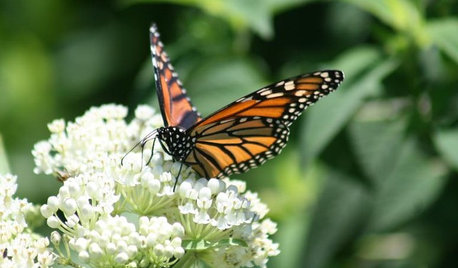
    A science garden theme could be expanded. Some vegetables like purple cabbage make a dye that works as a pH indicator. Other plants, like milkweed, reliably illustrate succession of insects every year (aphids followed by assassin beetles followed by ladybugs followed by monarchs.) In fact, milkweed had a variety of uses like producing latex - an independent science theme. Legumes make root nodules, illustrating symniosis between plants and bacteria. Some flowers open at different times of day, and these could be included.

    Here is a link that might be useful: Whatcom science garden pack