Software
Houzz Logo Print
shellva

sheet composting the corn stalks

19 years ago

Hello Everyone,

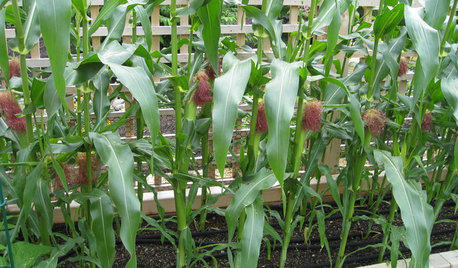
The corn section of my garden was at the end of its days. Yesterday was beautiful weather for working out in the garden so I decided to clean that section up.

After removing any edible corn I lopped off the stalks and let them fall where they were. Many of the stalks were still very green. I then sprinkled them with some alfalfa meal and coffee grounds then watered. Next I dumped a thick layer of leaves mixed with pine needles saved from last fall. They weren't broken down much since they had been saved in plastic lawn bags. I sprinkled more alfalfa meal on top of all this and watered again.

I didn't pull up the corn stalks so the roots are still down there. I don't plan on tilling this area as I am trying the no till approach for awhile.

Corn will be planted in this area again next year as it is the best location for this particular crop. As I was cutting down the corn I was surprised at how few weeds were growing with the corn. I did pull up the few I came across.

Also, I am a bit concerned about the corn ear worms. Just about ever ear had them. I left the corn that was too far gone, squished as many corn worms as I came across but I'm certain I didn't get them all so they are still in there.

Does what I've done sound okay? Should I do any thing else? I've thought about getting really large sheets of cardboard and covering the area with them and then putting straw on top to hide the "ugly" of the cardboard. I'd LOVE to be able to get my hand on some cheap burlap but haven't found a source for free or really cheap.

I'd appreciate hearing any thoughts or ideas on what I've done. Yeah, I'm looking for validation I guess. I've never had this much success before! I certainly have never gotten to the point of figuring out how to put the corn bed to bed for the winter!

Thanks.

Michelle

Comments (10)

  • 19 years ago

    Michelle,

    There may be a lot of live corn borers in the corn stalks in the form of the worms or pupa. Corn borers may be a problem next year.

    Corn ear worms are pretty much a given. I have never raised corn without trouble from them. The moths fly in from anywhere to lay eggs on the silks. It's debatable whether "bug zappers" help or hurt. They have to attract the moths to kill them. A daily bath with a Bacillus thuringiensis (BT) containing spray from silking season onward can help keep them at bay.

    I think corn stalks should be shredded and put into a hot compost pile.

    MM

  • 19 years ago

    I plant a very huge corn patch (picked 10 wheelbarrows-full this year). This is what I do to prepare mine for the next year (I also plant in the same place every year - because most of my garden is corn!). I let the stalks stand until they are dried out (yes, it looks messy, but I'm in the country so it's not as big a deal for me as it may be for some). When they are good and dry (usually October), I mow them with my riding mower, chopping them up and leaving them in place for the next year. When spring comes, the soil is ready to be tilled and prepared for the new crop.

    As for earworm, the only way I've ever been successful at keeping them under control is to spray. If you are a no-spray gardener, then you may just have to put up with earworm. BT didn't control them for me - I tried 2 years in a row with little success. Sevin, sprayed at every-other-day intervals onto the silks right after they emerge will control your worms. You can stop the spray when the silks dry and turn brown. It may also be possible to control the number of worms by planting at just the right time. My first planting never needs spraying - I time it so it is ripe at the end of July. Successive plantings always require the spray. I'm not sure if this would be as successful for urban gardeners - because I am in a rural area, it may be that the moths are more drawn to the many acres of field corn in our area for the first generation of worms. Field corn is usually at least a couple of weeks ahead of my corn in tasseling and silking.

  • 19 years ago

    I also am doing no-till & plan on tossing plant residue onto the paths & lawn mow it then put on beds or into compost pile. May take a long time to break down the stalks. Without tilling you will have a lot less weeds. I leave roots in ground also. Good luck

  • 19 years ago

    I chop up the green stalks right after harvest...8 plantings. I cut them up in 12 inch pieces with hand shears [a sharp hoe will work too]. After a short while when I have 3 or 4 plantings level and cut up some, I run the riding mower over them and shred them. By fall they are nearly rotted already. It is important to shred them early while there is lots of hot rotting weather.

    I don't know about the pine needles.....they may be a bit inhibitive.

    As far as ear worms go, I don't have them until the last couple of plantings.

  • 19 years ago

    I never recycle (compost) tomato, corn or pumpkin plants. Too much risk with pests & diseases... they all end up in a trash bag for pickup. Corn I cut about a foot above the ground for stalk drying, then go back and yank what's left.

    Mark

  • 19 years ago

    We haven't had enough problem with them to bother about. But I've heard that one can put a few drops of mineral oil on the silks, when the corn is just forming. This is supposed to prevent ear worms. Anyone tried this before?

    George
    Tahlequah, OK

  • 19 years ago

    Pine needles take long time for biodegrading.It comes in the way of small tiller - cultivator.They are slightly acidic too.

  • 19 years ago

    I did try the mineral oil approach this year. It did indeed keep the ear worms under control (fewer than 10% had them), but the ears did not get pollinated all the way to the end. I don't know if I put too much oil on them or applied it at the wrong time or what. For my second crop, I decided to go without the mineral oil and the ear worms went crazy. I did get much better pollination, but when the worms ruin the last inch or so of the ear, you still end up with the same amount of edible corn as when you apply the mineral oil and don't get good pollination. I wonder how many chemicals are used on the corn in the stores b/c they are full ears and don't have the worm problems.

  • 19 years ago

    Thanks everyone for your input. In one season of growing corn I also noticed what several of you have mentioned about the corn ear worms. They don't seem to be a problem with the first batch but my last planting was loaded with them.

    I will give the BT a try next year. If that doesn't seem to work then I will gladly forego the later plantings. As a family, we like corn, we don't LOVE corn.

    Today I talked to a friend who has an elderly neighbor that has been gardening for decades. I asked her what he does with the spent corn stalks and she said he chops them down, chops them up and leaves them on the garden so I feel better about what I've done. I didn't chop them up but I would think that 8 months in my climate with an already heavily ammended soil should have enough microbes to handle the job. Hope so anyway as it's too late to do otherwise without a lot of labor.

    Keep your comments on your methods for doing things coming. I love hearing how others tend their gardens!

  • 19 years ago

    I'm really into this no-till gardening too and have had great success with it. Now I wonder why I ever tilled before? Poor earthworms!

    Thing that seems to help me the most with my no-tilling is to get out and claim a new space many months ahead, smoother it with whatever I've got and leave it (oh, I irrigate here, so it gets water.) When I am ready to plant, I pull back the "whatever" and I've got lovely, loamy soil with earthworms! Love that part.

    One caution to you, I had dreadful luck with pine needles. Tried composting them once and they just wouldn't break down. Learned they have a waxy coating which inhibits their demise. Sounds like you are prepared for this already however.

    Good luck, fun to hear your path. --Kate