Software
Houzz Logo Print
beeman_gardener

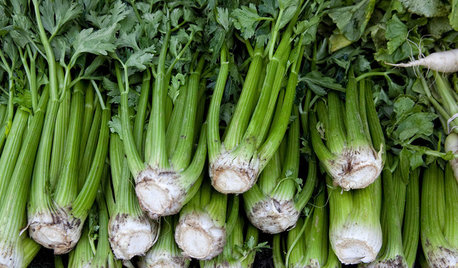
Celery

16 years ago

This is the third year I've tried to grow celery. What a waste of time? A lot of TLC wasted on a load of compost, as that's all it's good for.

Stringy, strong flavoured, enough to knock your head off, spindly and tough.

I recently found out there are two types, cooking and salad. Obviously I am growing the cooking variety.

Please. Does anyone know where I can get seeds for the salad variety?

Comments (10)

  • 16 years ago

    I've never heard of salad vs. cooking celery. There is regular celery and there is the original herb type called cutting celery. But, all of the common ones like Utah, Golden Self Blanch or Red Venture are all capable of being tender.

    The main thing is NEVER let it dry out and NEVER grow it in poor soil. Celery loves tons of water and very rich soil high in fertility. It's one crop that would definitely benefit from drip irrigation on a regular schedule.

  • 16 years ago

    Yes yes yes... This stuff should be grown in a bog if you have one handy or a pond. I have tried it two years in a row and even with a ton of mulch and the wettest summer on record, mine still looks like it will be very tough. I'm going to try it again until i get it right. Celery (Organic) is not cheap and the fungicide they put on "regular" celery (most of it) isn't the nicest of things...so its one thing i spend money on (vs buying the regular). I need to figure out how to grow it. Celery is a must in all my soups i make.

  • 16 years ago

    Celery is something that grows here very well from fresh sown seed. Also, if you could master the art of blanching, that would make the crisp celery that you find in most markets.

    Personally, our use for celery is an occasional stalk for potato, tuna or other mixed mayo-based salads, or minced fine in fresh vegetable salads, and of course, in soups.

    I purchased some Utah (improved) many years ago. Because we didn't use a lot, it went to seed in my garden. Since that time, I have never started any new ones from purchased seeds.

    My thinking is - that one of the reasons it does so well - is that it grows on freshly dropped seeds (granted we have no freezes here). I also like to allow plants to set seeds, because it attracts small wasps that are predators of much worse garden pests, and the seeds are great when dried, and used in cooking - great especially in seasonings and sauces.

    Oh yes - they do like lots of water - but perhaps someone can instruct you on the "art" of blanching. I just use mine a-la-carte. That will produce the crispiness that you might be looking for.

    Just my 2 c's.

    Bejay

  • 16 years ago

    Since the original post I've heard from Joshua Philpot from Johnny's Seeds with the following information, posted here to clear up a couple of points.

    Following is a breakdown of
    what we offer:

    Stalk Celery:
    -What most people think of when they think "celery."
    -The stalks are thick and rich with moisture.
    -Most often used as a vegetable in soups, salads, and as a
    dipping vegetable.
    -Johnnys currently offers:
    -647G (Tango)
    -2607P (Conquistador pelleted)

    Cutting Celery:
    -Used much like cilantro or parsley to flavor dishes and salads.
    -The leaves are the main constituent and are favored over the
    stalks for culinary purpose.
    -Johnnys currently offers:
    -2974 (Par-Cel)
    -922 (Cutting Celery)

    CELERIAC (Celery Root):
    -The above ground 'root-like' ball is used and has almost no
    fibers but with full celery flavor.
    -Johnny's currently offers:
    -245 (Brilliant)

    You can use all the parts of any of these three catagories of "Apium
    graveolens." However, certain ones were bred for certain purposes and
    are, therefore, best for only one of them.

    I invite you to visit our website at www.johnnyseeds.com to check out
    pictures that might help detail this explanation.

    Best answer I have had to date, at least they didn't try to blame it on the lack of gardening skills, like others have done.

  • 16 years ago

    I planted some Ventura celery this year.

    While I definitely did not keep it "boggy" in regards to water, it did have rich soil to grow in and there may have been times that the soil dried out.

    After well over 100+ days, I finally cut it all done. It seemed that the flavor was very syrup-like with a hint of sugar. The celery was pretty crisp - but was also stringy and lacked water content.

    I'm going to give it another go next year - but based upon needing "boggy" conditions, I may try to grow it in five-gallon buckets without holes in the bottom. I don't know if this will cause the roots to rot though since they will be sitting in water continuously.

    Here is a link that might be useful: BsnTech Gardening Blog

  • 16 years ago

    bsntech-

    I did some research into how its grown on a large scale, and it sounds like its basically grown in MUCK. I think i'll also try a different approach, but i do want to figure it out. I have no lack of water here.

  • 16 years ago

    Similar experience as Bejay's here, with a couple of twists. We planted Utah tall from seed, it took a while to grow, but it finally did. We had to move, so we transplanted it. The transplanted celery then seeded, and now celery is one of our 'weeds'. We never buy celery at the store, but cannot use all that grows, a lot of it gets composted.

    They grow small stalks, with an intense flavor that is wonderful in soups, salads, so on. It would not be good for 'ants in a log'.

    I live in a desert, so I am surprised at the comments on water. We water, but stingily, water is scarce here. Perhaps Utah tall is adapted for less water?

    A friend sent seeds for celeriac, I am looking forward to trying some of that too.

  • 16 years ago

    I grew up near the "Muck-lands" of Oswego County, where celery was a big crop. Rich, moist soil is a requirement for the stalk type of celery. I would think a self watering container environment like an EarthBox would be an interesting test to see how it would develop.

    Candidly, home growing celery and onions are a relatively lower priority for me, if I would have to take away garden space from tomatoes, peppers, and cucumbers as the taste difference with store-bought is significant. Then again, maybe I've never tasted a big difference in home grown celery......

    Raybo

  • 16 years ago

    I always grow my own celery and only one year it was nasty enough to not have been worth the effort. I only cut it when I need it and find that the outer stalks here are always tough and nasty but there are always larger, more tender and juicy stalks toward the interior of the plant nearer the heart. I live in zone 6. I also grow Utah and it's been a good one for our area. I also seldom irrigate.

    What surprised me was that I also do local historical research and the old county history books always went into great detail on the natural resources and industries of the area and our county was a large producer of celery. Who'd a thunk?

  • 15 years ago

    I started mine from seed at the end of February but I think that may even be a bit late. It will sit on top of my Cable box and expect germination of 36 seeds within 10-12 days. (A lid on top of the seed tray till germination) I'll put it under florescent lighting and will expect medium sized perfect transplants for the middle of May and harvest for the end of August and September. Seaweed and Fish Emulsion and LOTS of water just like everyone has said and you will be the envy of everyone because New Englanders don't think you can grow celery. You most certainly can......My Best, Mark