Software
Houzz Logo Print
jim_9999

Benlate/Benomyl

15 years ago

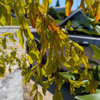
I've been following this group for several years now, never posted, but always learning a lot. I have a small backyard orchard consisting of 65 various fruit trees. The orchards weak point has always been brown rot and leaf spot on cherry trees, I'm trying to prevent this from spreading through the entire orchard. I'm not a pro by any stretch but I am registered in the state of PA to apply herbicides & pesticides on private property.

Here's my question....a couple weeks ago a local farmers wife contacted me about going through her dead husbands barn. She said I could have whatever I wanted. Got lots of good stuff including his pretty big supply of orchard chemicals & sprayers. All different types, some I'm familiar with others I've never heard of & I'm sure have been discontinued. One chemical is Benlate/Benomyl SP, about 40 -50 lbs of it; this would last me about 900 years. The label says it's rated for cherry brown rot and leaf spot. Anyone have any experience with this? Searched the web & this forum for info but not much out there. I'm aware it was discontinued in 1991 and there were a lot of lawsuits regarding some of it's negative aspects but it all seems pretty much geared toward things that don't apply to me or my orchard, it seemed to work good but was discontinued because of the lawsuits.

Would it be a good chemical to control my brown rot & leaf spot or should I dispose of it?

Comments (18)

  • 15 years ago

    You found Gold keep it I come pick up save you trouble dealing with it lol. The passed Gent probably bought a big supply to last rest his life then some after heard it was going to be suspender a lot people did that. Yes it will work on brown rot better anything on market.

  • 15 years ago

    I remember the benomyl lawsuit issue from when I worked in the garden center. The product was alleged to have been contaminated with an herbicide, and damaged or killed a lot of crops, primarily ornamental crops. IIRC, the possibly contaminated product was produced for about an 18 month period in 1989 through early 1991. The cost of litigation was what made DuPont yank the product.

    Check the packaging and see if you can get an idea of when it was made. You might want to avoid lots made in that period, if you can tell, or at least use them carefully and in a limited manor. IIRC, it was never proven that the product was actually contaminated or defective, but better safe than sorry.

  • 15 years ago

    Thanks! Somewhere in the back of my mind something told me that Benlate was good stuff, that's why out of all the chemicals I found that I asked about this one. The old guy always had a fabulous orchard! Never seemed to ever have any of the disease & pest problems I always have. He was old school, taught me a lot.

    Can't wait to try the Benlate, luckily most of the bags & boxes of it still have the data sheet attached. From my rough calculations I'm going to use 1/2 teaspoon per gallon, I easily have enough to last me 500 years +/- 100 years.

    Lots of Ferbam in the guys supply, about 100 lbs of it. Imidan also, about 100 lbs. All different types of herbicides & pesticides, most banned anymore :) The guy had a lot of chemicals because he had a good size orchard, several acres, not including his crops. What may have been one or two seasons worth of chemicals to him are several life times worth to me.

    Lastly....sorry, no I'm not selling any or giving any away!! LOL

  • 15 years ago

    Ferbam on CAR

    Here is a link that might be useful: A Link from good old boys

  • 15 years ago

    Gator, thanks for the link! Looks like Ferbam is another good chemical. Going to spend some time this week thinking and evaluating what I received and adjust my spray program accordingly. Going to spend the day today cutting down a beautiful 15 year old Van cherry tree that has a bad case of brown rot and leaf spot before it infects the rest of my trees.

    I'm thankful the old farmers wife thought of me and didn't dispose of everything. Guess it pays to be nice to people and be there for them when they need something. I was never a great friend of the old man but always stopped by to help whenever I saw him doing something in the barn or fields.

  • 15 years ago

    You did get rate from Jellyman post right Ferbam.

  • 15 years ago

    Gator, yes I did, also read how he mixes it...good info. Thanks!

    Seems like I can eliminate a lot of my current chemicals, substitute Ferbam & Benlate and get better results. From reading the Benlate data sheet Benlate is not to be used alone in a spray program. It is to be used only in combination with or alternating with a nonbenzimadzole fungicide, I'm guessing this is to eliminate disease resistance. Shouldn't be a problem as Benomyl is the only benzimadzole product I have.....although I have to verify that.

    Lots of different adjuvants & surfactants in the stuff I got. All kinds of spreaders, stickers, drift retardants, water wetters, defoamers etc...Going to take a a couple weeks to digest what I received and how to use them....if at all. I'm sure some of these chemicals don't apply to orchard crops.

  • 15 years ago

    Interesting thread.

    Jim,

    Not trying to play the pesticide police, or trying to admonish you. Mainly an FYI post for anyone selling to the public. Chemicals that are no longer registered with the EPA are not considered legal to use.

    My understanding is that in the past the EPA would let farmers use up all inventories of a discontinued pesticide. However, farmers started stocking up on pesticides that were close to losing their registration, so they could continue to use the product for a long time (i.e. "lifetime supply"). The EPA got wise to this practice, so now for a pesticide that is losing its registration, the EPA sets a date for it's last allowable use.

    You should know that if you are caught using pesticides that have lost their registration, you will probably lose your applicator's license.

    All that said, it looks like Benomyl is very similar to Topsin M (same FRAC group and chemical class) which explains why it is recommended to be tank mixed with another fungicide. Topsin used to be a very effective brown rot fungicide, but is highly susc. to resistance development. Generally resistance isn't an issue for homegrowers, but in the case of Topsin, most of the Monilinia strains are resistant to it and so it may not be effective even for some homeowners.

  • 15 years ago

    olpea, thanks for the reply. I wasn't aware of the "last allowable use date", nice to know, although I did know about selling them. Selling any of the chemicals I received isn't my intent.

    I'm sure the old farmer I got them from was stockpiling "lifetime" supplies of most of the chemicals that worked for him in the past. He had way too many chemicals stockpiled for them to be anything but "lifetime" supplies.

    Getting these chemicals made me feel like I hit the mother lode. Imagine walking into a barn's storage room and finding 100's of chemicals in "lifetime quantities" and then someone telling you to take whatever you want...for free!! I'm not really sure yet of the extent of what I have, going to take me a while to inventory and research these chemicals.

    Question about resistance: if a product is taken off the market wouldn't the resistance of a specific fungus strain be diminished over time? Kinda like when kids used to get measles & mumps vaccinations years ago, the vaccinations stopped and measles & mumps are on the rise again.

  • 15 years ago

    I'd say you did really well, and definitely worth the time it took to haul it home. Congrats.

  • 15 years ago

    Not to rain on your parade but, I hope you are able to use your motherload because it could be very expensive to rid yourself of the stuff if you ever decide not to use it and don't want it around. I'd prefer you put it to the good use it was intended for.

    If memory serves me correctly on the following (50/50 or less chance) I think there was a stink about Benlate and/or Benomyl in FL strawberry production in the 90s and one or both got banned except for in limited circumstances. I'll try and contact a friend still there who would know the answer to that thought.

  • 15 years ago

    Michael, I don't envision ever having the problem of getting rid of these chemicals during my lifetime & believe me they will be put to good use. Storage is no problem, I have a barn bigger than I will ever need, the chemicals although there is a lot don't take up much room at all. Nobody will ever say anything about me having them because nobody knows I have them and there is nobody near me to see me spraying and question me.

    This might sound callous...I'm a single guy with no living family, I'm the last one. When I'm gone my house (log cabin w/35 acres) & everything I own goes to the state...the state is my beneficiary. Everything will be the states problem, they will get more than enough money from the proceeds of my estate to cover any expenses associated with chemical removal & disposal.

  • 15 years ago

    "Question about resistance: if a product is taken off the market wouldn't the resistance of a specific fungus strain be diminished over time?"

    Jim,

    I think that's a fair conclusion for some resistance issues. However, fungi resistant to benzimidazole products (Benlate, Topsin M) keep their resistance for prolonged periods (even if use is discontinued). The article I Googled below touches on the same info.

    The problem is that since it's a one gene mutation, resistance is what they call qualitative and has great staying power once established.

    As the article mentions, there is a problem of cross resistance with benzimidazole products, so that if the fungi are resistant to Topsin, they will also be resistant to Benlate.

    I'm not trying to say that Benlate will have no effect on your brown rot problem, I'm just saying it may not be quite the cracker jack of a fungicide you're hoping for. It really depends on whether or not you've got a resistant strain. You can google Monilinia resistance to Topsin and should get an idea of resistance issues. Spray guides seem to make a point of its widespread resistance to Topsin.

    Unlike fungi with quantitative resistance, a fungus with qualitative resistance will not respond to a higher dose. In other words, increasing the rate of Topsin-Benlate will not increase performance of the product if you have a resistant strain of Monilinia.

    I've no personal experience with Topsin M because it's always recommended to tank mix Topsin with a "multi-site" protectant fungicide (for resistance issues). If I have to spray a protectant fungicide anyway, I generally don't have the need to mix something with it.

    None of my business, but don't forget there's one woman in this world for every man. A good wife would probably put your estate to better use than the State.

    Heard a Country & Western song the other day, "Tequila Makes Her Clothes Fall Off"; that's not the kind of woman I'm talking about.

    Here is a link that might be useful: Benzimidazole management strategy

  • 15 years ago

    olpea, good article you linked to although it does bring up another question:

    "Alternative fungicides are available and these have sometimes become predominant where benzimidazoles were used intensively in the past. Where resistance has developed or threatens to develop against some of the alternative products, particularly dicarboximides, benzimidazoles can be reconsidered for tactical use, particularly where benzimidazole resistant strains are not common."

    It seems that disease resistance occurs across a good portion of the fungicide line of products. Disease resistance and alternative chemicals may be a problem with commercial growers but for the backyard orchardist how are we to combat this disease resistance or to even know if our area has developed a resistance? In PA our resource for knowledge is Penn State, they really aren't that concerned with the backyard guy, they are concerned with commercial operations. Because there is disease resistance in one area does that mean that us backyard guys have to discontinue our use of an expensive chemical? Discontinuing a chemicals use may be an option for the commercial growers but it isn't a very cost effective option for us backyard guys.

    These decisions to discontinue a chemical are made by the EPA and chemical companies. Sometimes I wonder if a decision isn't motivated by money. Example: A chemical works against a orchard fungus, the chemical companies do a study and tell everyone that the chemical that has been working doesn't work anymore for whatever reason. The recommendation is to discontinue that chemical and now buy one or two different chemicals that will work better. The cycle goes on & on.

    I'm not trying to sound cynical but I have a jaded view of govt agencies and large companies. Sometimes decisions are motivated by profit. I'm not saying that is the case here with regard to chemicals and disease resistance but the potential for govt/company abuse is there. Remember that a lot of these studies are govt funded at the request of a company/university. A specific outcome is usually hoped for before the study begins and it would be very easy to move a studies outcome toward the desired outcome. Profit motivated.

    I'm not speaking about this from a cynical point of view but rather as a person with 30+ years of govt service. Ive seen how these things work.

  • 15 years ago

    Jim, I'm glad to hear you have a good place to store the stuff. The problems in FL had to do with the herbicide contamination and crops sprayed with Benlate that were being exported to Canada. Canada had a zero residual tolerance for Benlate and some produce was showing up with trace amounts, guess you won't be shipping any of your produce north of the border.

  • 15 years ago

    Michael, thanks for the info. LOL No not shipping anything to Canada LOL

  • 15 years ago

    Because there is disease resistance in one area does that mean that us backyard guys have to discontinue our use of an expensive chemical?"

    Jim,

    In most cases I don't think backyard orchardists have to be too concerned about resistance. I base this on a few things.

    First I've never heard of a backyard orchardist causing resistance in his/her own orchard.

    Second, some homeowners chemicals don't have any limits to the amount of times they can be used per season, whereas commercial chemicals always have season limits. I think part of the reason for this is the recognition that there is low risk for a homeowner causing a resistance issue.

    Third, I've read that the lower the size of the planting the less risk there is to pest resistance problems. In treating large areas, there is naturally a larger pest population to control. With larger pest numbers comes an increasing probability one of the samples will either have mutated or genetically expressed a gene/genes that make them resistant to the pesticide.

    All that said, I think resistance risk is greater in what we are talking about here. The difference is that I don't think a homeowner is likely to cause resistance with benzimidazole but resistance may already be there. Benzimidazole is supposed to cause long term resistance that doesn't readily mutate back to its non-resistant state. That would mean if at some point Monilinia were treated extensively with a benzimidazole product in your area it may not respond to your Benlate.

    "These decisions to discontinue a chemical are made by the EPA and chemical companies. Sometimes I wonder if a decision isn't motivated by money."

    I won't deny people in gov't are sometimes bought off, but I don't think that's the case here.

    It costs roughly $100 million to register a new pesticide with the EPA. That does not count actual development costs of coming up with the new chemical (I was told by a Bayer rep that for every couple hundred chemicals they synthesize only one is finally chosen to try to register with the EPA.) Nor does it count marketing and other costs.

    Chemical manufacturers want to sell that chemical as long as possible to recoup those large initial costs. If it still works they want to sell it, because they will have buyers. A case in point is Guthion. It was developed in the 60s. It is slated for removal in 2015, I believe. Because it is so effective, both growers and the manufacturer are fighting it's removal.

  • 10 years ago
    last modified: 10 years ago

    Jim_9999

    I know this post is rather old; however, if you are still alive I have an idea for you. You mentioned that when you die all you have will go to the State. Don't do that. Why not make out a will and leave it to a charity or better yet a college or university? If you live in NE PA, I am sure the Agriculture Dept., at Penn State would love to have a 35 acre farm and orchard.

0