Software
Houzz Logo Print
lavender_lass

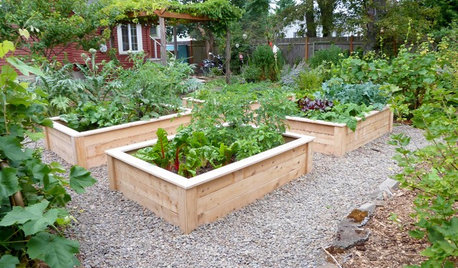
Rows, beds, or raised garden?

15 years ago

I'm just curious...what style works best for you? Are you a vegetable grown in rows, kind of gardener? Beds laid out, with paths between them? Or do you prefer raised or container gardens?

I was brought up with a row garden approach, but I have discovered I love beds with paths. It's easier to access, for one thing. We have clay, which means mud in the spring, so the grass paths don't sink. In the summer, they allow me to walk through the garden without stepping on the beds.

Raised beds are very functional, but mine are just even with the grass. It's easy to change the layout as needed and the grass is great for visiting nieces and nephews. Much softer, with the occasional stumble.

So what type of gardener are you? Do you love what you have...or have you ever thought about changing?

Comments (20)

  • 15 years ago

    I grew up with rows and level gardens. Then I discovered ridged rows because of some heavy spring rains. This helped along with drainage channels.
    Then I started adding sand and peat moss [local bog] to areas and making raised beds 6 to 12 feet wide without edging. These have narrow paths without grass between them.

    Other areas are still fairly flat and these are great for sweet corn, sweetpotatoes, and flowers.

    I like all of my rows and beds.

  • 15 years ago

    If you're in Z4 in WA, then you might find raised beds work best for you, as they heat up faster in spring and it is easier to control soil quality and temperature to extend the season. They do dry out faster though.

    Dan

  • 15 years ago

    I have 4' by 8' beds with 3' paths between. When I was a kid our garden had rows, but then I learned about the square foot method, which is supposed to be a more efficient use of space, so I adopted that for my own garden.

    Though actually I wonder if it really is more efficent. I once calculated the square footage of path vs. bed in my garden and figured out it's still about half path (I guess I could have made the paths 2' instead of 3', but wide paths are so nice). Having plants in blocks rather than rows might have other advantages (shading out weeds, for instance), and it looks nice.

    I wish I could have grass in my paths, but our grass here (Bermuda grass) is too invasive and threatens to overrun the beds all the time. I'm contantly trying to kill it. I'm mulching my beds, but my garden was recently lawn, so there's still a lot of work to be done on it.

    My beds are level with the ground, mostly. I have rocks around them, and digging and adding compost raises them up a little, but I haven't really built raised beds with imported soil. Doing raised beds would probably be the recommended way to garden here, since we have very rocky clay soil, but I'm too poor to spend a bunch of money on building materials (and I rent, so I probably shouldn't be building structures that are too permenent). So I just use the soil I have, digging up rocks and putting them around the beds as I go.

  • 15 years ago

    we use raised beds you still have paths, and tend to plant randomly other than in rows, helps us not have to worry too much about rotational growing.

    len

    Here is a link that might be useful: lens garden page

  • 15 years ago

    Whatever keeps you motivated ,is the best method.
    I have found that as I age, I no longer wish to be bent over for hours on end. Most of my beds are two foot tall, but a few are 1' tall and a few are 6 to 8 inches tall

    {{gwi:43309}}

    {{gwi:9527}}

    {{gwi:12768}}

    {{gwi:132871}}

    {{gwi:31558}}

    {{gwi:43295}}

    {{gwi:43293}}

    {{gwi:12772}}

    {{gwi:8599}}

    {{gwi:12770}}

    {{gwi:17440}}

    {{gwi:9531}}

  • 15 years ago

    I'm a big fan of raised ridges for all my berries. Raspberries, blackberries, blueberries and strawberries as well as melons. Like Wayne, I experienced some drainage problems that caught me by surprise. We moved to this location about 5 years ago which is in the Spokane, Wa area about 2 miles from the Idaho border. The soil is rocky and gravelly, part of the aftermath of the big megafloods when the glacial age ice dams in Montana broke and tried to relocate us to the Pacific Ocean.
    Two winters ago we set a record for snowfall, over 8 ft., last winter, the 3d warmest and wettest on record, this November we set a snowfall record for November, over 24 inches. Last winter we had weeks or months of rain then the ground froze and we had another month of rain and the frozen ground didn't allow for drainage. I had ponds in my lawn, out side riding arena, horse pasture and of course a lot of areas that I had rows of berries and a recently planted row of grapes. The only thing not effected was my raised ridge where I had worked a lot of organic matter into the soil and with a rake created the ridge in an attempt to raise some blueberries.
    This is starting to get a little wordy, I'll try to shorten it up. In gardening I think we have to try to prepare for the unexpected. I have spent a lot of time this summer elevating the rows of berries up off the ground, my five young grape plants died back to the ground but some how new shoots managed to push out. When I accumulate more organic matter I'm going to think about how to dig them up and get them raised up. Probably won't experience those weather conditions here again in my lifetime but I want to be ready if it does occur. I have become quit fond of going out in the garden and yard and grazing on a large variety of items that would appoach $8 to $10 a pound in the grocery store. Main vegetable garden is still in rows, although with the huge amounts of leaves, horse manure, shavings/horse manure combination and compost I can see with the naked eye that that area is steadily being raised also.

    Here is a link that might be useful: case for raised ridges

  • 15 years ago

    It really depends on where you live. In Florida our "soil" is sand. It has low fertility and water retention. We also have killer nematodes in the soil. Raised beds are good for things that aren't sensitive to nematodes. Containers are best for nematode sensitive plants. Now when I lived in southeast Ohio we had excellent soil and planting right in the earth worked fine.

  • 15 years ago

    My knees are bad so all the small things are in raised beds, about 2 1/2 ft high. Care and weeding is so much easier.

    Sprawlers are on the ground in blocks, on black plastic mulch to warm the ground.

    Weeds are no problem in the aisles between the raised beds. I just mow them. Keep them short so they can't set seeds and their root system helps to hold the mud together in the winter.

  • 15 years ago

    Due to a horrific gopher population during spring/summer/fall we HAVE to have raised beds with wire underneath.
    The only thing I have grown outside the boxes that has survived is corn.
    The beds also give me definition and an area to see what I can grow in that area.
    The raised beds are rather expensive to create, but once they are established, I just add a ton of home made compost/leaves each year and a sprinkle of organic fertilizer and some calcium carbonate and I'm good to go!
    I have 7 beds of varying size and add or repair about 1 per year. The first bed (10 years ago) needs new wire which means digging it out (Done last year) and re-wiring it this winter.
    Since I have the raised beds, I'm looking into more of the square foot type of gardening. Nancy

  • 15 years ago

    I use a wide row approach for most of my vegetables. The rows are approx 30". The benefits are better use of the garden space (less paths) and supposedly the plants will shade out the weeds.

    Paths are plain old dirt.

  • 15 years ago

    As I have plenty of room I now do beds. Some raised some flat, almost all bordered for easy weed control. I have a lot of the creeping kinds of weeds and a border keeps it easy to trim. I have a riding mower and have wide paths of grass/weeds. All plantings are square foot or short cross rows this helps me with cultivation and weed control.

    Curt

  • 15 years ago

    {{gwi:132873}}

    I've learned I can amend and grow large perennial things (trees and shrubs) in our clay successfully. But when it comes to small annuals and vegetables I go raised beds all the way. Plus, my new garden is on a grade, so I've had to do some terracing.

    What I don't understand is how all those tiny slugs still make their way across the sharp, fine rock paths to get to my bok choi. Grrrr...

  • 15 years ago

    I am enjoying the photos from Jonhuges and loribee. Great gardens!!

    I have raised wooden beds. We have a clay/loam soil and I thought the raised bed would be an advantage. They aren't treated and they don't last too long. I switched to a thicker wood the last time we made them and they have held up for 4 years so far and look like they have a lot of life left in them.

    I tried a cement block bed once as an experiment but I took it out after one season. I found it to get too hot around the edges and I just prefer the look of the wood I guess.

    I made 4x4 ft beds which are easy to work in, and look nice, but I wish I had made them a little larger. maybe 4x6 or 3x 6. I have a small yard, so I wanted something that was proportional.

    I really enjoy raised beds, but if I had a lot of property and I was going to grow a LOT of vegetables, I might do some of both.

  • 15 years ago

    Raised beds... ideal for the little kiddies, as it's easy for them to figure out where they can walk, especially when seedlings are small. It's definitely saved my vegetables from certain destruction by oblivious toddlers =)

  • 15 years ago

    I liked raised beds when I lived in New England and my Dad uses them in western PA, but here in the NC Sandhills we found that they used way too much water and produced poorer yields despite the better quality of the soil.

    Since keeping this sand moist enough for plant growth is key here, I plant in slightly sunken blocks with everything but the actual spots the seeds are planted in heavily mulched.

    Don't be afraid to experiment in search of better results.

  • 15 years ago

    I agree- great pics! Love all the stuff growing in the cinder blocks--no wasted space. I grew up with long single rows. Got hooked on square foot, then just wide rows. Depends on where I have lived and what was available. Now I am renting again and will do one raised bed at this house and wide rows and sq. foot at community garden. Moved from high desert to midwest and need to get re-aclimated!

  • 15 years ago

    Great pictures and thank you for all the responses!

    My mom was trying the raised block beds, until the yellow jackets started nesting in them. She got stung a few times and developed a bad reaction...so the blocks are going away this spring! They sure look pretty in the pictures, though and would be great, if she wasn't allergic.

    Bosal- I think I live about thirty minutes south of you (five miles from Idaho) but our soil is all clay. I've seen the gravel, though, when visiting friends in Spokane Valley.

    During the last four years, we've set the record for 3rd snowiest winter ever, 1st snowiest winter ever, a light winter, and as you said, most snow in November on record. I'm thinking the snow is not going away anytime soon, but then, we're at a higher elevation, so I think we ALWAYS get more snow. We average at least 10 degrees colder, than Spokane.

    We haven't had any problem with blueberries, but it's colder here, so grapes may be a challenge. What kind are you growing? My mom has two concords and two seedless concords (planted last spring) that have to be moved, due to the yellow jackets. Any tips for giving them a little more protection in the winter?

    We are fortunate that our land has a gentle slope down to the creek, so most of the property drains fairly well. Otherwise, it would be a huge mess in the spring...especially with all this clay! Everything not in grass, is mud in the early spring! :)

  • 15 years ago

    If you're in the Selkirks you should get sun in the winter, and I definitely recommend block beds, esp with a south slope. I'm in Z5 and grow throughout the winter due to our intense sun and the block beds on the south side of the house insulate the soil so it doesn't freeze through. Yellowjackets are easy to keep away, and there was one nest right by my peppers last season and they didn't bother me a bit while keeping some critters at bay.

    {{gwi:14058}}

    I actually have to shade the coldframe in late winter as the sun heats it up too much:

    {{gwi:132874}}

    Dan

  • 15 years ago

    If you click on the link, you can see 4 pictures of my garden take in mid spring last year. Click on a picture, and it is enlarged. I love my raised beds on a hillside. I keep the (3') paths mulched heavily with pinestraw. The one challenge is keeping them watered well in my heat. I added peat moss to all of them last fall and am hoping that will help.

    I particularly like the raised beds because I like to plant and harvest continually. For my summer garden, I use 3 beds each for tomatoes, beans, and squash. I plant 1 bed each in early spring, then a month later, I plant another 3, and a month later, another 3. As the first beds are harvested, I pull out the plants and replant. Here in Mississippi our growing season is so long that I can get two, or even three summer crops in my beds, plus fall/winter crops. Having 9 beds makes crop rotations easier too.

    Here is a link that might be useful: My garden

  • 15 years ago

    Donna- Beautiful garden! I've always liked your design and the arbor and bench are so pretty :)

Sponsored
Peabody Landscape Group
Average rating: 3.5 out of 5 stars8 Reviews
Columbus' Reliable Landscape Design & Contracting