Software
Houzz Logo Print
shear_stupidity

I didn't put it there...

13 years ago

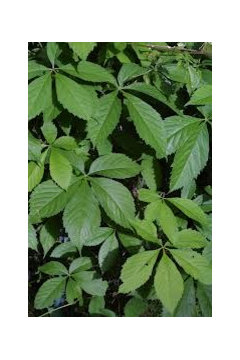
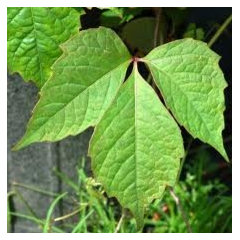
I found this growing under my Arborvitae. Zone 9b Central Florida. Any ideas?

{{gwi:158411}}

Comments (22)

  • 13 years ago

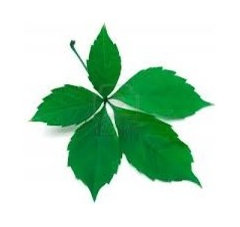
    It's Virginia Creeper, Parthenocissus quinquefolia.

    Here is a link that might be useful: Parthenocissus

  • 13 years ago

    Ooh! Yes it is!
    I love it! I'm keeping it! (Just not there)

    Thanks, Carol!

  • 13 years ago

    i can send you about 60 thousand that the birds drop for me every years..

    why in the world would you keep it???

    ken

  • 13 years ago

    Whaddaya' mean, "why?" Behold!

    Besides, the link Carol sent says, in part, "P. quinquefolia can be used as a shading vine for buildings on masonry walls. Because the vine, like its relative Parthenocissus tricuspidata (Boston ivy), adheres to the surface by disks rather than penetrating roots, it will not harm the masonry but will keep a building cooler by shading the wall surface during the summer, saving money on air conditioning," and "It has gained the Royal Horticultural Society's Award of Garden Merit."

  • 13 years ago

    Great Native, perfect for birds and at least one species of hummingbird moth.

  • 13 years ago

    Handle with care...the sap in Virginia creeper vines contains oxalate crystals, which can irritate the skin. You can get a nasty, painful skin rash. It doesn't bother some people.

  • 13 years ago

    It is a beautiful and very vigorous native plant. In the right place it is very nice. Keeping it to that place might provide the challenge though!

    I personally have never known anyone to react to virginia creeper though I have read that a rash is possible with contact. You may appreciate an article I wrote on my blog a month a two back about the three vines I find here - poison ivy, grape vine, and virginia creeper. Unless you know what to look for, confusing one for the other in winter can be easy and potentially irritating, at least to your skin! I linked in the article below.

    FataMorgana

    Here is a link that might be useful: PI, VC, and Grape article

  • 13 years ago

    It doesn't bother MOST people. It is worth mentioning, so that those who are very sensitive can handle with care.

    Ken, some tropical and semi-tropical locations are in very short supply of plants that provide fall color. Virginia Creeper is valued for that purpose.

  • 13 years ago

    Thanks for the heads up, rhizo. I usually do all my gardening bare-handed. I've never had a problem with any of the many things that are supposed to be irritants, but you never know when the tide will change.

    Great article, FataMorgana. I'm not sure I've ever seen poison Ivy (or poison oak, or poison sumac) before. Great blog in general. I wandered around a bit. Nice!

    I'm considering putting it in a pot and letting it grow on the fence for a season, then cutting it back in spring so it can start all over again.

    Wish me luck!

  • 13 years ago

    What you see in the picture is all there is, so I'm hoping I can get it all without much trouble.
    And now I'm DEFINITELY keeping it rooted in a pot.

  • 13 years ago

    Parthenocissus quinquifolia does not have an AGM according to the February 2013 list. Furthermore, it is on Schedule 9 of the Wildlife and Countryside Act ie it is illegal to dump or plant it in the wild. But it is non-native here. Under control in gardens it is a useful plant.

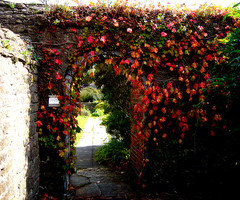
    BTW the top picture shows Parthenocissus tricuspidata , Boston ivy, not Virginia Creeper.

  • 13 years ago

    Re: AGM, Wikipedia has lied to me again. Huff.

    Re: Boston Ivy, I'm not sure you're correct. searched both types of vine and found this:

    "Boston ivy's leaf may be compound on young plants but, in such cases, it will display three leaflets. Once mature, Boston ivy bears a simple, not a compound leaf." Another site goes on to say that Virginia Creeper is a native plant of eastern North America, while Boston Ivy has naturalized in the central and north-eastern United States and in Ontario, while I'm in Florida.

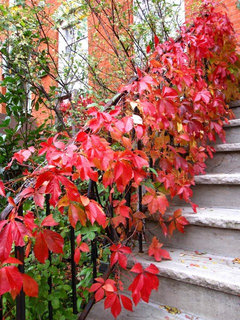
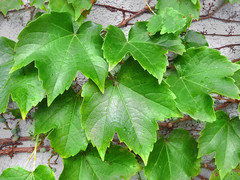
    Here are some images of Virginia Creeper.

    And here are pictures of Boston Ivy. One young, one mature:

  • 13 years ago

    This is a great plant in the right location, but I echo fatamorgana's warning about it's resilience if it ever needs to be moved. So, getting it in a good spot before it becomes well established is especially important with this vine. Here are a few other considerations:

    • It will thrive in full shade, but needs sun to get the (any?) great fall color.

    • Not sure how high it will grow, but have seen it top the roof of a 4-story apartment building... and it climbs aggressively.

    • Earlier post about it not harming masonry is correct, but it will mess up paint on the wooden frieze board or soffit found at the top of many brick walls. Well established vine can climb over six feet in less than a week, so have to keep after it every 3 or 4 days during the peak growing season if it's climbing on masonry under wood trim.

    .

  • 13 years ago

    Thank you for the input, bostedo.

    And oftlog, nvm. I'll just pull it out. With gloves on.

  • 13 years ago

    OK shear_stupidity. My opinion is still that no.1 is Boston Ivy. If you don't agree that's your prerogative.

  • 13 years ago

    Ok, flora_uk. I'm not just saying I disagree with you. I am quoting two reputable websites and backing up what they're saying with pictures that ~show~ what they're referring to. Is there some reason that you still believe, in spite of the above photos and explanations, that this is Boston Ivy?

    (Edited to add: I'm referring to the picture of what is growing in my yard)

    This post was edited by shear_stupidity on Wed, Mar 13, 13 at 15:31

  • 13 years ago

    I suspect flora is referring to the top image in the second set of images you posted. The stuff growing on the archway looks to be boston ivy. You may be arguing over the identity of plants in different images.

  • 13 years ago

    You may be right, perhaps we are referring to different images.
    But I'm not fighting, in spite of the fact that flora got tetchy.

  • 13 years ago

    shear_stupidity. You misinterpret my response. I was merely trying to ensure you should be able to correctly id your pictures. Maybe we were talking at cross purposes. I was and am referring to the photo of the gate in the wall. That plant IMO is definitely Boston Ivy. You showed pictures of two different Parthenocissus sp. as reasons to keep Virginia creeper. That's all I was drawing attention to. Explaining that an id is incorrect is not fighting, although in this instance it would clearly have been less hassle to let it go.

  • 13 years ago

    Ok, now I understand.

    That picture of the ivy on the wall was mis-identified on one of the websites I was looking at.

    Sorry for the confusion.

  • 13 years ago

    No problem. Google images is full of wrongly labelled pictures.