Software
Houzz Logo Print
michman_gw

Green Giant Screen Planted

19 years ago

I planted a 300' row of Green Giants from Botany Shop. I ordered 60 18"-24", qt. pots. They arrived in good shape. I waited for a hot spell to wane and last weekend they went into the ground. I tilled a 5' bed as deep as I could go, about 9" with a tractor tiller, then mixed in a little finished compost. My soil is grey clay, with about 6" topsoil/clay mixture. This area was in alfalha the last couple years. This bed was sprayed with roundup several times before planting, in-between tills. I planted on June 30th. I know many of you will think it is to hot to plant these now, but I figure if they are irrigated, and mulched well, they will survive. I planted them 5' apart. I used Dripworks T-Tape, with 1/2 gph emitters every 8". This is my first time using T-Tape, what an awesome, user freindly way of irrigating. I ran 320' of 5/8" garden hose to the middle of the row, and connected the filter and 10psi regulator. I used full-flow manifolds, which is important since I was close to maxing out my gph of the T-Tape run. I ran 240 gph at the end of the hose run, and the tape should pull about 225. I still want to measure an emitter to see exactly how much water flows from one of them. I am getting evergreen mulch from the Ann Arbor Materials Recovery Facility. At $10 cy, it's a great deal. I figure it will take 14 yards to do the bed up right, with 3-4". I'm still 7 yds short, but I can mulch around each plant real well till I can get some more. They are out of it right now, and almost out of wood mulch altogether. That is where I get my compost, $20 yd, another fantastic deal if you want quantity and quality stuff for your garden. I hope to post some pics soon, maybe this weekend.

Comments (28)

  • 19 years ago
    last modified: 11 years ago

    frankly .... with the drip tape... mulch is not necessary ... but really helps ....

    i have pure yellow MI sand .. and used drip tape.. and started with botany shop 6 inchers ... in 2000 ... they are nearing 10 feet .. no losses ...

    be careful with city mulch/compost ... if properly aged ... it is wonderful .. if too active.. you can have a nitrogen problem ...

    the best way to find out what the tape is doing is to run it.. then go slice a hole and see how the water pattern develops in your soil .... in my sand .. they are tear drop pattern so even if it looks like it isn't spreading near the top .. it spreads in the root zone ...

    i have heard in clay it can be the opposite pattern .. lets call it a balloon ... where it spreads on the surface ... but not in the root zone.. perhaps your tilling will bring you better results ....

    i use tape with 12 inch spacing... its probably cheaper than 8 ... for trees ... i run my water for about 4 to 6 hours to get the patterns to overlap .... mostly on hosta ...

    you biggest concern is that water gets to the ENTIRE root zone.... only by using a hand trowel and exploring the root zone ... can you understand when that is achieved ... we will not be able to give you a magic formula for such ...

    one last thought .... sounds like you have a big yard .... i paid an irrigation guy to slice in some supply lines around my yard .... so that i only need 75 feet of hose from any spigot i installed ... he did the slicing.. and showed me how to do one spigot.. and away i went... i think of it like a cemetery.. with spigots popping up ... it may or may not be a wise investment for you ...

    where are you in MI ... obviously somewhere near AA .... if you are interested ... perhaps a visit to Tecumseh would be beneficial .... email me through my members page...

    good luck

    ken

  • 19 years ago
    last modified: 11 years ago

    Michman, the way I see it, if you wait to plant them, they are sitting in little dinky pots. These pots are probably black,,,,and hot! So no, there is no good reason not to plant potted nursery stock right now. Ya done good.

    +oM

  • 19 years ago
    last modified: 11 years ago

    Ken,
    I'm just west of Britton on M50. I checked the water pattern a couple days ago, and it looks pretty even. The reason I went with 8 is to ensure a more uniform pattern of water in the ground. The mulch also keeps the clay from forming a thin crust on top which causes water to run off of it a while before it breaks down. We have 7 acres, 5 in hay, until we decide what to do with the rest of it. I ran some yard spigots in my Ma's yard last year for her 70th bday. She really liked them, and she waters alot more now, and her plants thank her too. Yard spigots for us is a project down the list for now. I'll email you.

    Wis,
    The pots were in morning sun and afternon shade. The root systems were very well developed. I was impressed, since I believe these are grown from cuttings. That is something I would like to try once these mature, and I will be retired by then.

  • 19 years ago
    last modified: 11 years ago

    Mich, you sound like you're more aware than some folks about issues like pots heating up in the sun. But more generally, and for anyone reading this, potted and balled-and-burlapped stock can be planted pretty much any time the ground is workable.

    +oM

  • 19 years ago
    last modified: 11 years ago

    Thanks for the encouraging words, Wis. That's what a buddy of mine up in Ann Arbor says. He just planted a 16' Tri-color beech a couple weeks ago, and it's doing fine. I think a strong wind would be the biggest problem prior to the GG getting established.
    2 years ago I planted a grove of 24, 6' single trunk river birch, and haven't lost a one. For those I just puched holes with my post hole digger and stuck em in the ground. I believe the mulch and the siteing them in a low spot made it easy. I only watered them by hand a couple times.

  • 19 years ago
    last modified: 11 years ago

    michman, you certainly have done a good job with your trees. They should reward you nicely for all your efforts.

    One thing to be aware of, if they get too much water when young their roots will rot. When this happens they usually begin to turn brown. But will die if after that you let them dry out for too long. It is easiest if you from the very beginning make certain the rootball stayes just barely moist, but never soggy. Clay soil is much more difficult to control the moisture drainage properly. So if the planting row dips or slopes in any way be sure to check the moisture at all of any different elevations the row of trees are planted in.

    Consider also, that if they receive lots of sun in the winter and/or winter winds. The leaves will stress and turn a brownish burgundy. As long as the trees are watered properly and not over or under watered, they should begin to green back up once warm days and nights arrive again.

    In the next few years, if they do not seem to be growing as well, consider giving them some slow release, non-burning fertilizer like Osmokote. My 7 foot tall Thuja Green Giant's new top growth seems to grow-in more fully when I give them Osmokote feedings. I planted mine just over three years ago in the fall. I had purchased then as one gallon pot sized and at that time they were from 12-18 inches tall with good branching. Mine are planted on a slightly sloping clay soil and I only started giving them Osmokote this Spring. If I had been feeding them Osmokote earlier or had added compost to the planting bed, they would have grown 3 more feet and filled out much more than mine are now. So the compost in your bed might make your trees grow faster than mine did if the soil in their bed does not stay frozen for very long in the winter.
    As your trees grow if for any reason some of their fan shaped needles brown and fall off, do not cut the branch off at the trunk. If you do that another branch will not regrow in its place. If you leave the bare branch, as the tree recovers from what ever made its needles brown, the tree should evenually produce new green needles on those bare branches that you let remain on the tree.

    Remember, that if you want to prune the tree at all, simply remember to only cut away part of a branch unless you want a bare spot on the trunk in that area. If you want a bare spot on the trunk in that area then go ahead and make your pruning cut near the trunk.

  • 19 years ago
    last modified: 11 years ago

    Thanks Kat for the pruning tips. I can control the water that I put there, and have checked at several spots to check even watering. What mother nature throws at them is a different story, just hope for the best and control factors you have power over. I put a tsp of Osmokote into the surronding soil of the rootball when planted. I will put 1 more tsp onto the surface around each one before I toss on the remaining mulch. Botany Shop says to put 2 in the hole. I'm sure this can only help the little ones. Thanks again Kat.

  • 19 years ago
    last modified: 11 years ago

    These GG are on an exposed site. Should I run a bulap screen the first winter on the west or east side or both?

  • 19 years ago
    last modified: 11 years ago

    Your zone 5 winters are much different than my zone 6b/7a winters in OK, so I do not know if you should try to copy my tree's situation or not. I will describe what works the best here, just in case it will give you some ideas for what might work with your trees.

    My 9 GGS are growing on the north side of a 6 foot tall privacy fence, which is the neighbor's and runs along, 5 feet away, from their tall and long two story brick house's side wall. Toward the west there is full summer sun exposure for the western end of the row of my GGs. but since in the winter the afternoon sun shines from the southwestern sky, the south neighbor's house provides a little shade on sunny winter afternoons.

    During, both winter and summer from the eastern end of the row, my GGs, they get morning shade.

    My GGs never turn bronzy brown in the winter due to the fact that they get the right anount of shelter from winter winds and direct sun.

    Due to the planting bed having a fair amount of builder's sand on top of the heavy clay subsoil, I also hand watered mine with a hose almost every summer day and at least every three to four winter days for the first two and a half years. That was due to extended drought periods we experienced during that time.

    In zone 5 though, the sun's rays probably are not as strong as ours here in Ok. Therefore, it is possible that your trees would need more eastern sun exposure than mine get.

    I will give you another example just in case my GGS' situation was too confusing to visualize. My friend has a row of 9 GGs planted along the South side of her 9 foot tall privacy fence. Her trees receive full southern, eastern, and western exposure. This floods them with way too much winter sun exposure. Then adding to that her row of GGS progress downward in elevation, toward the East as her clay soil yard was originally graded to drain toward the North east. This causes the eastern end of her row of GGS to sit in too much soggy soil for too long of times. Several have rotted and she has replaced them and tried to water the ones at that end less. The ones farther up on the slope sometimes suffered from not enough moisture, and especially in the winter.

    All of her trees have, so far, grown very slowly. At first planting, her trees were slightly taller than mine, and she planted hers in the Spring following the Fall when I planted mine. Even though her trees have been planted only 6 months later than mine were planted, her trees are only about 4 feet tall right now. while mine are a little over 7 feet tall right now.

    That is the difference in growth rate with these trees if one gives them too much stress with too much moisture followed by too little moisture and not adequate drainage; plus by exposing them with too much winter sun and wind exposure.

    My friend's trees have turned bronzy brown every winter but they also, always begin to green back up once the days and nights warm up.

    Adding to the stuggling rootballs, the slower growth of her trees may also be due to the fact that while they are bronzy brown they do not grow much in the winter. Where my trees that stay green seem to grow year round. My trees still have the normal faster Spring and Fall growth, But as long as they are not stressed from excessive summer heat and drought they keep growing. Same thing with mild winters; mine continue to grow and only slow down for the few short and sporatic weeks when our winter temps dip below freezing.

    Maybe someone in your area will post better advice on how to specifically care for your trees in your area.

    One good thing about the GG trees, is that the larger they grow and if they are well established the better they can handle poorly draining clay soil.

  • 19 years ago
    last modified: 11 years ago

    Thanks for taking the time to post Kat. It sounds like your GG are doing well.
    My GG came from the Botany Shop staked. I left them in when planted and pushed the stakes down into firmer soil after a good watering.
    It's windy and 92 deg. right now, but they are holding up good except for a couple which came untied. My row has a gentle slope to it. The center is the high point and slopes slightly on each end, north-south.
    I read that most don't think you should fertilize GG. I wonder if a fertilizer injector for the drip tape would help them out. I would wait til next spring to do that, if it would be of benefit to them.
    I've still got plenty of time to figure out about the winter protection options. What about anti-dessicant spray? Would that alone be enough?

  • 19 years ago
    last modified: 11 years ago

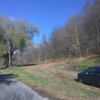
    Here is the GG screen at 5' spacing. The neighbors house is to our west.
    {{gwi:403230}}

    This is a fairly representative example of the 62 GG's received from the Botany Shop. 2 weekends of work and $800 went into this planting. I did everything I could do to make sure they take.
    {{gwi:403232}}

  • 19 years ago
    last modified: 11 years ago

    Good photos.

    The photo seems to reveal a gradual slope on the side just west of your tree's bed. That is very good to help the clay soil in the area to drain properly. It still will be good to check several times throughout the year to make certain that the sloping of both the north and south ends of the row does not cause the lowest elevation trees to suffer from too long of periods of soggy soil. I do not see any thing in the photo which is likely to cause that problem but still check them often this first year just to be sure.

    Since they are not broadleaf evergreens, I do not know how the GG trees should be expected to react when anti-dessicant spray is used on them. In my area we usually only use the anti-dessicant spray on broadleaf evergreens. Yet, since the fan shaped leaves of the GGS do not have as fine of needles as seen on a lot of other conifers, the GGs might benefit by the use of that spray.

    Since your trees get full sun, and full wind exposure year round, they may adjust to those conditions Okay; especially if, they are not stressed by too dry or too wet of soil conditions. The healthier their roots become this growing season, the better they will be able to withstand the upcoming winter conditions. You might not have much problem at all with them, especially if your winters are mostly overcast sky conditions. Also, if your winters do not have warm and cold cycles which repeat regularly throughout the season, that should prove to be even better for your trees.

    At any rate, if you do see them turning a bronzy brown color over the winter period, be patient; once the spring temps rise enough that the night temps no longer dip to freezing you should be encouraged to see the trees beginning to green back up.

    You did good to put so much effort into enriching the planting bed and installing a good watering system. The money you spent to accomplish all that should prove to be a good investment that you will see as your trees prosper.

    For the first year, do not worry about feeding them for top growth. Focus more on helping them establish a good root system. And be confident that in their slow growth times they are still developing stronger and broader trunks and branchings. Once you start seeing that they have put on a foot or more new top growth, if it is thin, then consider feeding them with Osmokote. I waited till my trees had about four feet of thin top growth before I started doing that, but since your growing season is probably shorter than mine, your trees should do better if you start giving them the Osmokote feedings as early as next spring.

    I plan to give my GGs another dose of Osmokote in early September, but that is only due to the fact that we generally do not start getting week-long periods of temps dropping to freezing and below before late December, and in some years not until January.

  • 19 years ago
    last modified: 11 years ago

    We can get some harsh winters here Kat. Last year we thought we might get out of winter real easy, then about Feb. we got hit with 3 weeks of no more than 15 deg. and sustained lows near 0. If we can avoid stretches like that this winter, they should be good to go after that. Thanks for you input Kat.

  • 19 years ago
    last modified: 11 years ago

    HEY!!!

    i am in raisin twsp ... 3 miles south of tecumseh .... about 12 minutes past hidden lakes ....

    is it worth your while to travel the whole 15 miles to come for a visit???

    i am a stay at home dad ... here 24/7/365 or so it seems ...

    lets make a date.. and talk about GG's and conifers ... and hosta if you want ...

    email direct from my members page.. use my email.. not the GW link ...

    ken

  • 19 years ago
    last modified: 11 years ago

    Michman, your trees would have a better root systen by this coming winter, if you had been able to plant them in early Spring this year. Since they were not planted until early summer, it will be best to give them a non-burning, slow release root feeding fertilizer. If you cannot find a slow release type then instead, once every week over a five week period apply a liquid form root feeder on top of the soil that is over and just around each GG's rootball.

    After that let the resulting, stronger root systems increase your trees fullness, and the natural, full sun they will receive to produce the food in the leaves and in the better formed roots that should then be better able to store-up for latter growth and in preparation for what the tree will encounter in your upcoming winter freeze times.

    I do not know if you can depend on your up-coming winter to follow the same pattern as last year. At least for us, here in the southern plains states, the weather pattern we have encountered for the last several years broke earlier this spring, and there is evidence to suggest our upcoming winter pattern will be different also.

  • 19 years ago
    last modified: 11 years ago

    Michman, today while researching as much as I could find about the Patmore green ash tree cultivar I was surprised to find mixed in with that information an expert's advice about winter evergreen care in Zone 4/5.

    In that report it was noted that evergreens with a western exposure in those zones very commonly experience winter kill. Those evergreens later drop the dead needles and leaf back out in mid spring.

    He reported to avoid the problem, simply apply a product like wilt-pruf on the folliage just prior to the first winter freeze, and again as soon as the temps rise above freezing.

    I guess that confirms your idea of using that kind of treatment later in the year to help your recently planted GGs.

  • 19 years ago
    last modified: 11 years ago

    Thanks Kat. Do you think it has to be re-applied every time temps rise above freezing?

  • 19 years ago
    last modified: 11 years ago

    The answer to that question will depend on how long your freezing periods last. The wilt pruf type product you purchase, certainly should have instructions on how long it should be effective in your area.

    Concerning the expert instructions, which I reported; first consider the weather patterns in your area. Once the cold temps arrive later in the year, don't they last for fairly long periods by being reinforced with extra shots of cold when the winter pattern canadian and Artic cold fronts drop into the area?

    Maybe others in your area, who use the wilt pruf type products, will have a better answer to your question. I think the expert I reported, who advised to reapply the product was a North Dakota Hort. He stated that their USDA zone 4 climate in recent years has moderated enough from what seems to be global warming affects, so that they have been experiencing USDA zone 5 temp. patterns.

    Isn't that similar to your reported climatic ranges? If so, it seems reasonable for you to take his advice at face value.

    Still, if you are not confident on how to interpret the instructions, check with some of your local county extention agents, or some of your state, universities' Hort. department experts.

  • 19 years ago
    last modified: 11 years ago

    how fast do these little guys grow?

  • 19 years ago
    last modified: 11 years ago

    I'll give the local office a call this week. I have asked them questions before and the answers I received I could have gotten from the local 5th grade biology class. Could of just been one of those days. I'd hate to see the farmers get advice from her. I'll give them a shot though.

    The green giants are the fastest growing arborvitae, about 2'-4' per year, depending on soil, etc. I don't expect any growth the rest of this summer. Growth should start next year.

  • 19 years ago
    last modified: 11 years ago

    it took mine about three years to get a move one ....

    six inch tall with peat pot the first year ... on irrigation

    10 inch tall the second year ... on irrigation

    16 to 18 inches tall the third year ... they almost doubled each year but you have to be realistic when comparing greenhouse growth rates with ma nature ...

    skip ahead 3 more years.. and i am getting 2 to 4 feet ...

    i swear these things grow from the day the soil thaws .. until it refreezes ... and therefore need water much sooner.. and much later during its growing season ... which can become problematic with drip hose that might freeze and split ....

    i will be home alone.. paroled from the family on sunday 7/15 .... it might be worth the 20 minute drive to come talk and see some GG .. email me

    ken in tecumseh ...

  • 19 years ago
    last modified: 11 years ago

    Mix in some native trees to randomize that planting. In 10 years if lighting strikes one of those or just dies for some other reason you will have a gap there that everyone will notice. Not to mention plantings look like that tell future prospective home buyers: "There's something on the other side of this you don't want to see"

    Keep it unmowed. Let stuff come up there.
    You'll thank me later.

  • 19 years ago
    last modified: 11 years ago

    I sent you an email Ken.

  • 19 years ago
    last modified: 11 years ago

    Michman, your GGs will only need at the most six feet of the soil west of their trunks.

    That means you might have enough room just west of them, without causing a problem for the drive, to plant some 'Fastigaita English Hornbeam trees along with other narrow growing hardwoods. There are even some narrow growing Oak cultivars. Another tree that might be an interesting hardwood to plant is the Perrotia persica (SP) tree, I think they are also sometimes called Ironwood trees.

    It may take a little time to recover from your already expended investments toward getting your GGS to establish and grow well. But between now and that time you could begin to research and find the trees you would like to plant. You also could plant the rest of these newly planned trees in stages. Maybe all of one cultivar at a time out of all those which you previously decided on planting. Maybe space out the planting times over the next couple years; taking advantage each time of your just past freeze dates and the just at the end of Summer heat days.

    I suggest beginning on the west side of the trees, because sheltering them from the afternoon summer heat and winter sun is one of the better things you could do for the GGS while they are still so young.

    After all that, on the east side as long as you leave 6 feet from the trunk of the GG trees you could plan some nice groupings of many different cultivars of spring and summer blooming dwarf shrubs and smallish ornamental trees planted in drifts. None of them would need to be evergreen, since your GGS should provide the needed evergreen background for your favorite, part sun loving, deciduous trees and shurbs arranged in drifts.

    If you do not want to plant ornamental shrubs and trees on the east side of your GGs. You could also consider adding another row of GGs 7=9 feet in front of the first row, only with the trees staggered so they are not planted directly in front of the GGs in the first row you planted. In reality, since anything you would plant west of the GGs will take longer to grow, the second staggered row of GGS would actually provide, in about half the time, the privacy you are seeking.

    If you did choose to go with a second row of GGS, then simply add interest on the east side with some season long blooming plants. There are even some types of season long blooming plants which will die in the winter and return in the spring and offer summer blooming till frost.

    Also, as far as the wilt pruf usage, if you do not feel you can trust the advice you get from your county agent, maybe contact the company who makes the product you choose and see how they suggest you use their product in the micro climate where you planted your row of GGs.

  • 19 years ago
    last modified: 11 years ago

    Thanks again Kat. I do not plan to put anything on the west (neighbor side). I may put in some flowering and evergreen shrubs along with some medium size conifers that will contrast with the dark green of the GG. This won't be done for a year or two.

  • 19 years ago
    last modified: 11 years ago

    Yes, waiting several years before you choose what to plant is a good idea. Other wise, this fall you could begin to plant a few things. That way they will have the benefit of becoming established and given extra water at the same time your GGs will need that extra attention.

    In order to spread the work and expense out, once you start planting, simply plant all of the same kind of shrubs in your plan at the same time and in the preplanned spot where they will fit into your overall plan.

    If you do choose to plant a few of the items this fall, then over the next 6 weeks; during the summer heating period, could be a good time to research and come up with such a plan that shows what you what you want to plant into drifts; where also, you will be planting those drifts inorder for the overall affect, once they reach maturity, to please you.

  • 19 years ago
    last modified: 11 years ago

    Thanks again Kat. I think that will be the plan. It's waaayyy toooo hot right now!

  • 19 years ago
    last modified: 11 years ago

    In the 90s with heat indexes of 100 here. but cooler temps and fall rains are due to arrive in only 6 weeks or less.