Software
Houzz Logo Print
someonesomewhere_gw

potted magnolia grandiflora

18 years ago

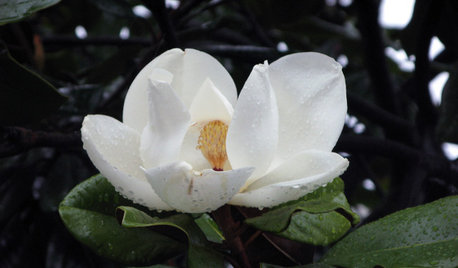
I purchased a potted magnolia grandiflora a few weeks ago. It was in full sun at the store and the leaves were beautiful. So, when I brought it home, I placed it in full sun (still in the pot). Now, some of the leaves are turning brown/crispy. I water it once a week. How often should I water it and what fertilizer is recommended? Also, should I take it out of the full sun where it gets more than 6 hours of sun?

Comments (11)

  • 18 years ago

    In a pot, in full sun, it may need to be watered daily, maybe even twice daily (which is what it got in the nursery, I am sure), depending on how hot/windy it gets during the day. If it is in afternoon shade, it may need less watering than in afternoon/all day sun. As the roots grow, and fill the pot, it will need more water - more roots = less soil to hold water. If it is in a decorative pot, or the black-plastic growers pot is hidden from the sun, it will need less water than if the black pot is baked in the sun. As you can tell, it boils down to a clear - It depends - for how often to water, since it depends on a lot of factors. Sticking a finger into the pot and seeing if it is moist down an inch or so will tell you for sure if you need to water, but in general, every other day without fail, and maybe the daily or twice daily routine - it depends on the size of the pot, the extent of root growth, the heat of the sun, the temperature, amount of wind, etc., etc.. In any case, when you do water, water WELL, so the growing medium is soaked. If it has dried out, soaking the entire pot in a bucket for 20-40 minutes might not be a bad idea - the water may just run off otherwise.

    When you do plant it, you may still need to water it daily for several days, then gradually cut back on watering, but rely on a finger testing the soil, not on a schedule to water. Mulch well, as widely as possible, no deeper than 4", and no mulch in the inch or so next to the trunk.

    I would wait to fertilize until the magnolia is growing well again, and then use a mild, slow release one.

  • 18 years ago

    Agree completely with above posting. Grandifloras are native to areas get a lot of annual precipitation (year round). All mine are in the ground but they can do quite well in containers as well. Watering once a day during the warmer months is not unreasonable depending on a number of factors (see above posting). Full sun all day is no problem. Make sure your container is large enough. Do you intend to keep the plant/tree containerized or eventually plant it in the ground? If you keep it containerized make sure your pot is big enough. These all want to be really big and wide trees (even the so-called "dwarfs").--A larger container also has the advantage of going longer without a watering. Be careful if/when transplanting, magnolias can be transplanted but they can resent it more than other trees. I like to feed with a high acid fertilizer (Miracid) as they are really acid loving. Good luck!

  • 18 years ago

    I have had this happen with some nursery purchases of various plants. In some cases, I suspect the problem may be root damage due to excessive heat caused by direct sunlight on the black nursery pot. In nurseries, pots are often placed close together, so the pots are shaded by adjacent pots. When we bring them home, we place them in a solitary position in the full sun, and the soil bakes.

    I resolve this by putting the nursery container inside a larger, decorative one (a "cache" pot), or I surround the nursery container , to the TOP, with a loose, airy mulch.

    Cheers!

  • 18 years ago

    I water my potted plants 1-2x/day now because it is so hot here in Central Florida. They are bone dry every morning, for sure.

    But I did have a question regarding magnolia care. I bought two of them last June, about 9 feet tall at the time, they are growing really well, but I was disappointed that the flowering time was very short. I thought they bloomed through the summer.

    Can you tell me what I should do for fertilizing them. I did Miracle Gro start-up(the liquid) at the beginning but not sure what I should be doing on a monthly basis.

    thanks! teeka

  • 18 years ago

    Well, I have wondered about that flowering myself. Most of my
    varieties seem to flower in June (pretty much the whole month). I tend to get few if any additional flowers after early July. My Victorias flowered abundantly all July, but I think that might have been because I planted them this past May (we'll see what they do after they become established next year). I do have a Little Gem though that has been flowering thoughout the season and still has a number of developing flower buds. I have read that Little Gems will flower less heavily but over a longer period of time (months as opposed to weeks). So, perhaps it has to do with the cultivar (variety). I use Miracid fertilizer on all my acid-lovers (azaleas, rhodies, magnolia, camelia, etc.).
    I also put down Hollytone (early Spring and late Fall). Good luck!

  • 18 years ago

    Magnolias take time to flower for long periods. Have patience. Some will, with time, flower over a longer period than others. Do you know if yours are selected cultivars, or seed-grown specimens? For instance, 'Little Gem' is noted for the length of time it will flower over the summer, although mine isn't yet (5 years in the ground) large/old enough to have a major display at any one time. My 'Bracken's Brown Beauty' and another whose name I have lost were planted 4 and 3 years ago, and flower much less and less often, despite being, as they should be, taller.

    I wouldn't bother to feed them, as long as they are growing in decent soil, well watered and mulched. If your soil is VERY alkiline, then I might do something to alter the longterm pH (mostly a losing proposition, over time, but it can, laboriously, be done), but most Magnolias are accepting of slightly acid-to-neutral soil. You can give them a light feeding of a fertilizer for acid-loving plants (hollies, azaleas, rhodies, etc. - Holly-Tone is a good one) in the late fall, if you really need to do something, or if your soil is very poor. BUT, magnolias grow in the wild in varied locations with varied soil, and usually do fine.

  • 18 years ago

    In a hot climate with inadequate watering a large portion of the roots may get baked inside a pot. As the roots go, so goes the top.

    If a plant is facing one way in the nursery and it gets turned the other way, two sides of the root system may get cooked. The basic prevailing method with production of container plants is to pot in a very coarse highly aerated mixture and then pour on tons of water. Plants brought home that do not continue to receive ample irrigation may deteriorate rapidly. Likewise much stock offered at retail outlets is pretty sad, due to them also not keeping up the same intensive watering regimes the growers who produced the plants were using.

  • 18 years ago

    and don't think it's a specific cultivar.

    The flowers are absolutely huge and stunning,but,yup, only in June it seems.

    I will go ahead and fertilize in fall and see what it does next spring.

    thanks for help in this area, even though not related to original post!

    teeka

  • 5 years ago

    What is the recommended dimension of a pot for magnolia meant for outside? I have little Gem espaliered I need to screen utilities...and want to get the right size pot as this will be permanent idea. Thank you...hope someone is still connected to this post!

  • 5 years ago

    didnt you have your own post last week.. and we suggested that no pot is forever ...


    it is suggested that you up-pot size by size.. you dont put a relatively small plant in a huge pot and let it sit in that pot forever ... not only do you end up with very bad circling roots ... especially with trees .. but media has a useful life ... it breaksdown .. and eventually leads to watering issues ....


    ken

  • 5 years ago

    Ken said exactly what I would have :-) No tree in a container is a permanent thing. Up-potting as ken suggests is typical when the plant is young/small but even once it gets to your desired size, you will need to routinely unpot it, replace or refresh the soil and prune the roots.

    So the size container you will ultimately need hinges on two factors: 1) the size you need the tree to attain to achieve the purpose you intend; and 2) how easy it will be for you to manage the tree in that container for the required maintenance. Large trees in heavy containers are very difficult to work with.