Software
Houzz Logo Print
arktrees

Root Pruning To Save An Established Tree

17 years ago

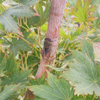
I unfortunately have to root prune an already established tree. We bought a Fire Dragon Shantung Maple two years ago and planted it within two days. First summer it behaved as expected and grew about what I expected for the first year. This summer I noticed some oddities in growth, and caliper increase was not as you would expect, and seemed to be restricted on one side. So I went to brushing back the topsoil a few days ago, and sadly there are a number of crossing/circling roots immediately around the trunk just below the soil line (did not dig deeper but will when I prune). The seedling upon which the Fire Dragon was grafted, apparently was left in those 4"X4" tree tubes too long. I had checked the rootball when planted, and made some precautionary cuts when planted from the larger container, but could not see into the center where the seedling has been originally grown. This I now know is a problem.

So now I must prune away as many of these problem roots as I can, to attempt to save a uncommon tree. My current plan is to prune away the smaller roots as close to the trunk as possible, along with choosing what appears to be the most viable root (preferable the larger roots) where crossing, along with removing at least one circling root. The part I'm not as sure about is when the best time to do so. We are well past peak heat stress of summer moving into early fall. If I prune now, then the tree will have a longer time to regenerate roots before summer. However if I wait till leaf drop, then there will be even less water stress, along with more nutrient stores for regrowth. I have also considered pruning the worst now, and then pruning more after leaf fall, or next spring. I just not sure as sure of my judgment on this as I would like.

I'm hoping some of you that have professional experience can provide constructive criticism, as experience can't be replaced. There certainly risk to the tree doing so, however I believe the risk is much greater to do nothing.

Thanks in advance,

Arktrees

Comments (11)

  • 17 years ago

    Sorry!

    First, get out of the experience only the wisdom that is in it, and nothing more. IF this was a B&B, now you know the issue with B&B. If in a can, hopefully you will spread the roots next time.

    So. I presume you have some 90º roots. They must go. This is a sticking problem often, as well as a liner problem. This is a difficult situation and I'm sure everyone will have their input. Here's my 2¢: you can't do this all at once. Do some now and some later. Circling roots now, some of the 90º now. Then let it recover. I'd also get some straw and do a thick mat for mulch and lay it down in the evening after a hot day in Indian Summer (if we get one this year).

    Dan

  • 17 years ago

    Thanks for you impute Dan. When I planted it, it was in a #7 or #10 container (don't remember which), and did look for circling roots etc, and cut those that were circling in the larger container. These are roots that were interior, hidden in the center. The roots in the larger container weren't bad, so I foolishly took that as having always been handled properly, since it was all from a single small grower. Won't make that mistake again.

    Anyway, the ideal of managing the worst now, makes sense. Thanks for your $0.02.

    Arktrees

  • 17 years ago

    {{gwi:441971}}

    and

    {{gwi:441973}}

  • 17 years ago

    just planted 2 years ago ... from a max 10 gal.. and it looks like a 6 inch caliper??? are my eyes deceiving me???? or did i read this wrong???

    and you didnt notice them them...

    that is some pretty aggressive growth.. but then.. IT IS A MAPLE ...

    does the soil freeze??? if not.. then i would presume root growth goes for most of the winter ....

    i would cut one big one.. and 2 smaller ones.. and then watch what the rest do ... for the next year.. and re-think it all next year .... i would do the one that is starting to wrap ...

    as far as i am concerned... ITS A MAPLE .... you could probably.. with proper timing.. and a backhoe ... dig up and redo the whole thing.. and still have a tree that survives .... they are NOT foo foo trees ...

    so just do what you gotta do .. and dont worry about it all that much.. but dont go crazy ....

    trust me.. it has roots half way to the neighbors house already.. and a little pruning shouldnt make all that much a difference...

    perhaps ... pure speculation .. you bought a very big tree.. in a relatively small pot .... we often suggest.. that small stock... will outgrow bigger stock in a 5 or 10 year time frame ....so next time.. save a few bucks.. buy smaller.. the result being less root problems.. and other things .... sometimes.. instant gratification does NOT pay off ... and IMHO ... barring an unlimited budget... trees are one of those things ...

    good luck

    ken

  • 17 years ago

    Thanks Ken, I know Maples aren't your thing. I do appreciate the input. But yes two years ago, and the pictures are pretty close. The tree was about 4-5 feet, and less than 1 inch caliper and really pretty small overall size at the time we got it. It has grown about 2 feet each year, and really added caliper the first summer. It is now about 2" caliper (6" off the ground)and about 8-9 feet tall.

    I do think this is survivable for the tree. Just got to be smart about the best way to handle it.

    Arktrees

  • 17 years ago

    hey ... trees are trees... i love them all .. and will help with any of them ..

    i just lack respect for a bunch of them.. due to my hosta mania... lol ..

    all i try to do.. is let peeps know.. so they can make a decision based on reality...

    BTW... your maple.. surely shows why you cant really expect to plant anything under it ... and expect it the thrive... it just isnt going to be bothered with getting those roots down into the ground...

    ken

  • 17 years ago

    Shantung maple is a pretty tough tree. I'm growing several dozens of them from seeds and I had this very crooked SM that I tried to straightened out but broke it in half. I took it out of 5g Rootmaker container and threw it on the garden bed. Guess what? It's still alive and thriving despite the whole root system exposed since late spring!

    I suppose you could try and dig it up during dormant season to do major pruning but I don't know that'd work. Have you contacted the grower about it?

    I had the same problem with Fire Dragon and I root pruned a big one that was wrapped around the trunk. I think I did that during late summer last year and it didn't seem to cause any stress. I did that with other several shantung maples as well. I may have to check on another one as it didn't seem to perform as well as others. I had to deal with oak trees as well. I think oaks are worse from what I've seen.

    The ones I'm growing are grown in the rootmaker containers and have much better root system. Would be nice if all growers switched to them.

    By the way, shantung maple does not appear to have aggressive shallow root system like silver, red or norway. I checked out 25 ft shantung maple at Metro Maple and didn't find them. Trident maple doesn't appear to have agressive root system either. I've seen various of azaleas growing around them as well. Just letting everybody know that.

  • 17 years ago

    With maples it's a matter of size. Most kinds are not problems in the garden because they do not grow as big as the silver, sugar, Norway etc. maples that can be oppressive.

    I'd dig the deformed tree up when leafless, wash the soil off and do what I could to get it straightened out. I'd try to straighten roots rather than cut them. If there are too many circling roots right at the base of the stem, that cannot be straightened then I would just throw the tree away rather than cut most of the roots off.

    Rootbound stock of all kinds of trees and shrubs is pandemic here. Camellias sent from California may have such bad deformities that they look like have a turnip or other root crop at the base. You often do not have to pull the potting medium back to see this.

  • 17 years ago

    Lou,
    Thanks for the personal experience. Sounds as though you've had plenty of the same experience. I have tried to contact the grower, but have gotten no reply. This tree came from the same place as yours. The seedlings that FD is being grafted onto, are apparently being left in the "tree tubes" too long. Maybe as much as a year to long from the looks of things. I do think the tree will survive if i address this now. My summer climate is not nearly as harsh as yours in most years, and that will help. Part of the reason for me starting this thread is to help those that may encounter this in the future.

    I want to make clear that there is nothing wrong with the cultivar, and species itself as far as I'm concerned. I have very much liked the tree. This is not a cultivar/species problem, it is a cultural problem.

    Thanks again,
    Arktrees

  • 17 years ago

    Arktrees,

    I am going to dig up the worst looking FD (out of 4 FDs) and see what the root system is like. I likely will plant a regular SM that I grew from a seed. It's 7 feet tall and it's 1.5 years old so I'm not going to miss much by replacing this FD with same height SM. It's growing in Root Trapper bag so it should have very nice root system and should get established rather quickly for next year. Honestly, I think bright yellow fall color is cool.

    I may have a dwarf or semi-dwarf shantung maple grown from seed. it's maybe 18 inches after 1.5 years. It had red fall color last year so I'm curious to see if it'd repeat this fall.

    Do what you can with offending roots and just enjoy it. My first one planted in spring of 2006 as 5 feet tall in 7g container is now maybe 14 feet tall and 10-12 feet wide. It didn't grow at all during 2006 so all of the growing started from spring of 2007 till now. Did you fertilize at all?

    Lou

  • 17 years ago

    Lou,
    I would be very interested in seeing the state of the roots for the tree you dig up. So if you are of the mind, post pictures of what you find. The first Sugar Maple I planted did not survive, so when I replaced it, I took the dead plant and cleaned the roots as an educational experience. Having this stump, and a good deal of research online about ornamental tree production taught me allot about what to expect from my new plantings. Particularly in respect to most trees in containers are containerized, and not grown in that container. Meaning, they are field grow, bare root harvested, most roots removed, then planted in a container, then given a growing season to recover before being shipped out that fall or early the nest spring. This was absolutely the case with the tree that did not survive. This solved allot of my questions as to why I was seeing the pattern that I was from previous years growth. Namely why the current years growth was so much less than previous years. Also taught me that the replacement will not behave normally for at least 2-3 years if not more.

    As for my own tree, I do believe it can be saved. The ground rarely freezes very deeply, or for a prolonged period, so it will have time to recover some before spring. Visually overall the tree looks good, but I recognized problems due to a pause in growth when it should not have, growth rate did not increase this year over last, growing leaflets paused turned black before growth again resumed after a few weeks, oddities in the trunk etc., and just did not grow as much as it should have. Fertilizer is not a problem, as the lawn gets what it needs, and it does not show any sign of nutrient stress, and I do I keep the grass away from the tree. I have also been working to improve the soil, and now beginning to find a small population of earthworms, along with some fungi appearing after rain. All of which tells me I'm making progress with the soil and it's ecology. I don't expect it to grow as fast here as for you in north Texas, but I'm sure it can do better than it did. It's nice to know what yours have done from a personal experience, it gives me a measuring stick to to speak.

    Anyway, I for one would appreciate hearing what is happening with yours particularly since they are from the same grower. Hope your others turn out to your liking. Also if you seedly does not change, and is consistent in a variety of environments, you just may have something worth developing.

    Arktrees