Software
Houzz Logo Print
rav22

Arborvitae Problem

17 years ago

I have planted 43 arborvitaes about 3moths ago and they are turning brown from inside out and bottom up (yellow to brown to rusty looking). I applied 3 in 1 disease control about 2 weeks ago and their condition continues to deteriorate. Is there anything else that I can do? Thanks!

Comments (25)

  • 17 years ago

    More than likely it's a water problem. As in either too much or not enough.

    Any water you apply must go directly into the original rootball.

    And I hope you pre-moistened the ground before you planted.

  • 17 years ago

    interior browning is normal.. increased by transplant ...

    without a picture .... its hard to tell between that which is normal.. or abnormal ...

    the disease control was improper .... as noted.. its either normal.. or a water issue ....

    but a picture would tell much more ...

    it was not to your advantage that you planted trees/conifers in july ....

    ken

  • 17 years ago

    Clean out the dead tissue, spray again (immediately) and put your plants on a spray schedule next year... and mulch.

    That's all you can do. I'm working together with an Arb just with the same symptoms as yours.

    Be sure you remove the spent tissue to a bucket or elsewhere so it's not on the ground below the plants.

    Dax

  • 17 years ago

    if he cant get a pic.. i want to see a pic of yours dax ....

    what is the diagnosis of the insect that is causing the damage ... that requires chemical interdiction????

    and how are you so sure he should also be using chemicals????

    was yours planted 3 months ago ???

    i know you know your stuff to the max.. but recommending chemicals with little or no information other than some browning.. really isnt a basis to keep poisoning mother earth ...

    i have no fear of chemicals... when used properly .. according to instructions.. based on a positive ID of a pest that requires such ... but the facts provided do not relay such ....

    and ... having had my first frost the other day in my z5.. i have no clue why anyone in z5 would be using chemicals at this time of year ....

    ken

  • 17 years ago

    Agree with Ken. So far, given the info we have, sounds like it very well could be normal interior foliage die-off. Arbs and other conies do this every year.

    +oM

  • 17 years ago

    Ken and Tom,

    What is happening (not all doesn't matter) is humidity from the ground is rising and causing fungal problems. It's consistent.

    The wind here has been vigorous. I'll show you a photo of my arb if you still don't believe me. I can also show you powdery mildew on an Oak where the same thing is happening if you wish.

    That is what I see in this thread without a photo from the peep.

    Dax

  • 17 years ago

    dax

    i have no doubt in your diagnosis .. of your plant... in your garden ...

    i am just cautioning the use of chemicals on the facts provided ... if they can prove they need chemicals.. i would not have any problem with them using them ...

    but from the info provided.. it most likely is normal interior browning.. increased by recent transplant.. for which chemicals would simply be an insult to mother earth ...

    ken

  • 17 years ago

    This won't go anywhere Ken. Something needs to be done to save those plants and I believe *you* would spray them on the information provided and at the minimum you'd remove all the dead tissue.

    Transplant shock occurs throughout a plant and not just at the base. It seems obvious to me. Then again, maybe I have a little more experience than you. I spent two years of my life diagnosing trees and shrubs and treating or not, them as well, I worked at nurseries for a total of 5 or more years. And, I can guarantee I read every bottle in the nurseries. At one point, I was in charge of bagged goods and chemicals. Again, the information provided seems consistent to me, sorry.

    Good luck person above.

    Dax

  • 17 years ago

    The fungus progressed from the bottom up:

    Now the whole plant is screwed up -- it'll recover.........

    No mulch yet....I give good advice though!

    Same with my Oak:
    Quercus robur 'Pendula'

    There's no difference at all, it's all Fungus no matter how you look at it.

    Sure I could be wrong......
    We could also talk about this until we're both blue in the face without photos..........

    Later my brother Ken,

    Dax

  • 17 years ago

    Chemical application sans a correct diagnosis is the problem both Ken and I are alluding to here. OP can't just "spray something" without at least, a pretty good idea what the target organism is.

    I got into this biz in 1975. I've been a certified arborist since '89. I received a promotion (From arborist) to Horticulturist in '90. And even before any of that, I was a fan and frequenter of "cedar swamps" in my area. In all this time, I have never seen nor heard of a fungal problem on arbs. Not saying it's impossible. I am saying it is an extreme rarity at best. In nature, this species inhabits wet areas.

    But I digress. OP, please don't spray chems indiscriminatly. Far too much of that already goes on.

    +oM

  • 17 years ago

    My pictures are to help. This person doesn't even care anymore it could be said. They probably forgot altogether about the post here.

    And I agree, my knowledge is limited and I came off too "smart." I apologize Ken.

    Later,

    Dax

  • 17 years ago

    vigorous debate never bothers me dax.. so dont give that another thought...

    just dont call me a poopy head.. or anything worse.. and we will be all set ...

    sorry about your arb ... but if it were me... i would put it out of my misery .... is it anything so rare that the burn pile wouldnt be an improvement...???

    ken

  • 17 years ago

    "sorry about your arb ... but if it were me... i would put it out of my misery .... is it anything so rare that the burn pile wouldnt be an improvement...???"

    ....and arb foliage and branches crackle and pop so nicely in a fire! Just watch for holes in your socks afterward;^)

    +oM

  • 17 years ago

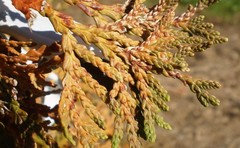
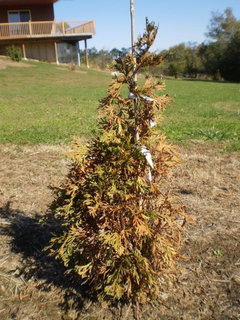
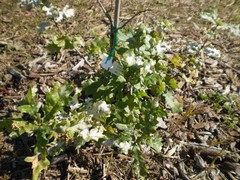
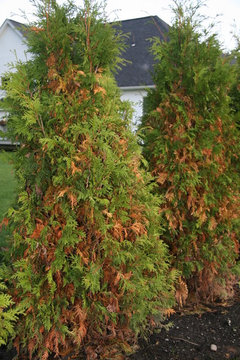
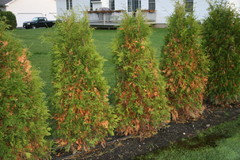
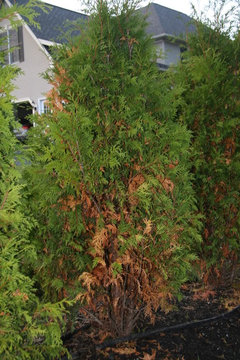
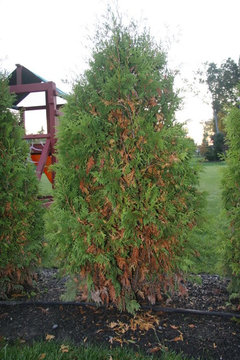
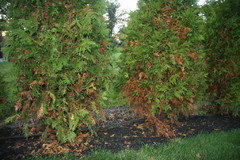
    Thanks everyone! I appreciate your input. Here are some pictures of my arbs.

  • 17 years ago

    Bagworms.

    Dax

  • 17 years ago

    rav- To me it looks like simple transplant shock and normal browning as old foliage is replaced by new. If you look closely and can see a fungus, take Dax's advice, if you can't see any fungus, simply clean out the dead, discard it, and let them go. Thuja are very resilient, and hard to kill. It looks like you have done everything properly, nice planting job and it looks as though they are mulched. If not, let they dry out some before putting mulch down. I personally don't like black mulch, assuming that's what you have down, because I think it gets much hotter than a natural or brown mulch. Just my opinion though, no scientific backing to it that I know of.

    Now, I DO see a HUGE problem right now. There is STANDING water in pic 2. Unless it has been raining heavily in your area since we don't know where you live, there shouldn't be standing water. You are either watering them TOO MUCH, or if it is rain, DON'T water for a long time, prob. not till next summer now or even never again after this point. I'm not a huge fan of watering, and try to let everything go after their first year in the ground at most. Just let mother nature dictate watering. If you water every weds. and you got 2" of rain Tues. night, DON'T water because your schedule says water on Weds! Only when the ground is dry. It's easier to kill a plant with too much care than from neglect. NEVER use a watering schedule come hell or high water, no pun intended.

    I killed some a couple of years ago by planting them in a low area and they were in standing water most of the fall and spring, and frozen into a clay cauldron full of water all winter. The ones on higher ground were fine, but in the low area, all were dead that spring. That's what it looks like could be part of your problem to me, standing water, over watering.

    Let them dry out, clean out the dead stuff, and forget about them till next spring. ONLY water if it is VERY VERY VERY dry between now and ground freeze.

    Good Luck

    Eliot

  • 17 years ago

    Dax- Good call, you can see them in a couple of the pics. Left side in pic 1.

    Rav- They should be done doing damage for the year, pull them out and dip them in soapy water to kill them and throw them out. Spray the bushes in the spring with an insecticide to kill the larvae. I can't think of the name at the moment, Dax would be able to tell you though. I think spraying them with a soapy water will work too, but not 100% sure.

    You DO need to let them dry out though, or you WILL kill them. When the ground gets dry 4-5" down, thats when you want to water them and ONLY until established. For Thuja, it doesn't take long. Next year they should be free range unless it's VERY VERY dry.

    Good Luck

    Eliot

  • 17 years ago

    it looks like there is a drip or weep line...

    when in use.. have you verified how deeply you are watering ....

    i would rather you water to one foot deep [insuring water throughout the root mass] ... once a month ...

    than say 15 mins every other day.. never really penetrating more than an inch down ...

    learning how water moves thru your soil.. and how to apply to the plants benefit.. is key to success ... and we cant help all that much.. you have to do it in your garden.. in your soil.. with your setup ... i can list the variables.. but i cant give you a specific answer ...

    with all the water/rain recently.. i doubt you will figure that out.. until everything dries next summer ...

    conifers ... especially transplants.. need water throughout the entire root zone for the first 2 years ... so as to generate the new roots which will allow them to become free range in the 3 year ...

    the browning is a reaction to the transplant.. and perhaps increased by insufficient water .. or too much.. or the clay soil and how it moved the water provided..

    regardless as noted.. they look pretty good ... brush out the brown.. and you will be surprised how good they actually look ....

    you would be better off beginning to worry about heavy snow storms or ice storms... lol ... might want to tie them up .... link below for what it is worth ...

    i dont see any bagworm

    ken

    Here is a link that might be useful: link

  • 17 years ago

    I see Cocoons. I didn't even look before. The symptoms were there and I replied very quickly just seeing the plants.

    Don't worry about fertilizer until next spring prior to the plants beginning to grow. Plain old 10-10-10 or anything near this formula is more than fine.

    Bagwoms can be destroyed with horticultural oil or stronger chemicals. Now...... remove the cocoons and next year spray when you see (any) emerge. June I believe. Do a web search.

    Chow .. .. Dax

  • 16 years ago

    Just curious - I've been researching arborvitae because we have to replace ours - but aren't these planted too close together?

  • 16 years ago

    No, they are not planted too close to each other. They can always grow out with their roots rather stay in the line they were planted in. I've seen them planted even closer with no ill effects. Timely water is the key.
    What you see, is response to a limited root system from what the trees originally had before they were dug up. They look as if they should be doing fine by now.
    Any update?

  • 16 years ago

    The main problem is watering to much, but it could also be soil conditions. What i suggest is to buy some rich topsoil and put half a bag on each tree then get on a schedule to water them 1-2 times a week in the early morning or late afternoon.

    i hope this helps

    The Arborvitae is a great and beautiful tree. It is great for Privacy and wind breaking tree lines.

    a great company with great deals

    Beautiful Tree Lines
    6' Arborvitae's - $59.00 (limited time special)

    Includes:
    Installation- (No Charge)
    Delivery - (No Charge)

    Beautiful & Bushy
    Bagged & Bur Lapped
    Nursery Grown Trees

    Seasonal Special
    While supplies last only

    fast growing cedar evergreen tree

    Rob
    772-626-3332
    www.LowcostTrees.com

    How many trees do i need ?
    The amount of trees are decided by a few things
    # How many feet you will be covering
    # What size trees you purchase
    # The amount of time you are willing to wait for privacy

    For Immediate Privacy:
    # 4' Leyland = 2' wide
    # 5'or 6' Arborvitae = 3' wide
    # 7' or 8' Arborvitae = 3 1/2' wide
    # 8',9' or 10' Arborvitae = 4' wide

    *If you are willing to wait 2 years add 1/2'
    *If you are willing to wait 3-5 years add 1'
    *If you are willing to wait longer you may space trees up to 6'

    Here is a link that might be useful: Lowcost Cedar Trees

  • 5 years ago

    11 years later I have the exact same problem so I was curious as to the fate of these Thuja.. did they make it?

  • 5 years ago

    might you not get further.. by starting your own post.. adding all the facts.. including big city location .. and a couple pix ...


    and let us try to figure out if you have the same problem???


    ken

Sponsored
Mary Shipley Interiors
Average rating: 4.8 out of 5 stars34 Reviews
Columbus OH Premier Interior Designer 10x Best of Houzz