

Taiwania cryptomerioides
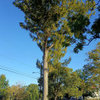
This is one of the best overall conifers for our climate. This was a tiny seedling this spring and now it is almost 1 m tall. Seed from the Taiwan Forest Research Institute.

Comments (27)
 13 years ago
That is a nice looking specimen. Apparently they grow reasonably well in Seattle - at least, there used to be some of them at the arboretum and they could very well still be there alive and well. I got one from Forestfarm in 1998 or something. It was cutting grown and developed as a big long branch. It is still crawling slowly along the ground and never developed an upright leader.
Related Professionals
Cleveland Landscape Architects & Landscape Designers · San Diego Landscape Architects & Landscape Designers · Boise Landscape Architects & Landscape Designers · Bozeman Landscape Architects & Landscape Designers · Victoria Landscape Architects & Landscape Designers · Bemidji Landscape Contractors · Jamestown Landscape Contractors · Allentown Landscape Contractors · Concord Landscape Contractors · Baltimore Home Builders · Longview Home Builders · Clarksburg Home Builders · Salinas Home Builders · North Platte Home Builders · Pullman Home Builders 13 years ago
Gosh, I'm possibly being a foolish reductivist but if it grows so well for you in FL, it concerns me whether it could every really be hardy this far north. (of course, I wouldn't apply the same rule to plant from North America, since our climate is far more continental, in the sense used by horticulturalists, than SE Asia)
In any case, pictures of the mature forms in Taiwan are quite luscious and I had to try it. IIRC there's the thought the form Camellia Forest has (flodsiana?) might be a bit hardier.- 13 years ago
We are growing taiwania and it does very well in central va. One is south facing with a brick wall behind it but the other is in a mixed conifer border and seems quite content.
- 13 years ago
are there sources for this plant in the southeast? Georgia or South Carolina? thank you
- 13 years ago
Like Baldcypress and Dawn Redwood, it appears to be hardier than its origin would suggest. Does OK in Britain, though slow from lack of summer heat.
This one in southern Switzerland, quite a good size (about 20m tall), with adult foliage and coning:
Resin

- 13 years ago
Nikki,
We got ours from Archtrees.com in North Carolina in '06 and again in '07. We also grow Taiwania flousiana which we got from the same nursery. - 13 years ago
Coniferjoy, where was that photo taken? Is that your specimen? Very nice pics all.
- 13 years ago
Ian, the pic of the blue one was taken in 2010 during the British- and Dutch Conifer Societies fieldtrip in Belgium and France.
This specimen is at the Chevreloup Arboretum in France.Here is a link that might be useful: Arboretum de Chevreloup
- 13 years ago
Wish I had room for one of these but they do get rather large in time. As for sources in the SE, check out Camellia Forest Nursery. Not sure if they have them listed in their current catalog but I know they had quite a few they were propagating from cuttings the last time I was up there late this summer.
- 13 years ago
See these photos has rekindled my desire to growth Taiwania from seed.
I think I will start again the search for seeds.They are many years that I control a fine specimen in the Botanical Garden Borromeo on Isola Madre on Lake Maggiore. Zone 7a.
The gardeners have told me that he never produced cones, it seems that the only specimen in Europe that produces cones is that of the Dusseldorf Botanical Garden.
The photos are from September 25, 2011, I've taken on Isola Madre and in the last two we see the bluish color of the leaves.


The next picture was taken a month before at the Botanical Garden of Geneva.

Completely misses the bluish color. The gardener is convinced that it is a specimen obtained from cuttings of non-apical branch.
Lake Maggiore is located at the foot of the Alps and the winters are quite rigid. Temperatures of - 15 C occurred several times.
But the Lake Maggiore, near the Lake of Lugano, in Swizerland, where he probably was photographed Taiwania of pineresin, benefit from the effect of the mass of water that increases by 5 to 10 C the temperature on the islands and along the shores.
During the past February, at my house, which is located about 15 km the crow flies,
from Isola Madre, the temperature has remained for 5 days at -17 C. The winter was exceptionally cold and late but on the island the minimum night temperature is not fallen below -7.Sorry for the boring numbers but maybe it can help you better understand the hardness of Taiwania.
This year during my visits in August and October, I could see that the plant has not suffered and is in great shape instead were damaged some Brugmansia and Dicksonia australis.
- 13 years ago
Good heavens. Isola Madre is more like zone 9, not 7a. Colletia, Butia, Washingtonia, tree ferns, Amaryllis belladonna, heck Bougainvillea grow there unprotected. The gardeners told me the typical winter low was -4C. That's zone 9. On the similarly situated Brissago, there are many proteas, aloes, Anigozanthos, a large Phoenix canariensis, citrus, etc. Even an Araucaria heterophylla!
A lot of people don't understand how to apply the USDA zones system to the rest of the world (apparently even a # of people who live here don't even understand how they work) and the Lake Maggiore area is one of the most incorrect places in the world to make a comparison because the typical seasonal minimum (i.e., the "zone" temp) is barely below the average winter lows. Only a few other nominally temperate climates are similar in this respect: parts of Japan, etc.
So, thanks for the pictures...but let's leave the determination of USDA zone hardiness to less unique climates.
This post was edited by davidrt28 on Thu, Dec 6, 12 at 0:22
- 13 years ago
From Good Ole JC Raulston:
Uncommon woody plants which demonstrated no damage at 2F:
Abelia chinensis - deciduous flowering shrub from Asia.
Bischofia polycarpa - deciduous shade tree from Asia.
Callicarpa kwangtungensis - deciduous fruiting shrub from Asia.
Camptotheca acuminata - deciduous tree from Asia (Morris Arboretum germplasm source only - others killed).
. .
. Cupressus chengiana, duclouxiana, lusitanica, macnabiana, macrocarpa - conifer trees.
. .
. Fokienia hodgsinii - conifer tree from Asia.
. .
. Keteeleria davidiana - conifer tree from Asia.
. .
. Pinus kwangtungensis, pinea, quadrifolia, yunnanensis - conifer trees.
. .
. Taiwania cryptomerioides - conifer tree from Asia.Here is a link that might be useful: http://www.ncsu.edu/jcraulstonarboretum/publications/newsletters/ncsu_arboretum_newsletters/News26_95-10.html
- 13 years ago
Thank you davidrt28 for your clarification.
The English is not my language and I am not able to use it properly.
I wanted to make it clear that we should not blindly follow the instructions of the maps showing climate zones
As you quite rightly pointed out the islands of the lake have a much milder climate of the surrounding regions
I share your opinion that the climatic conditions indicated on the maps should be taken with prudence and you should always inform observing what grows in gardens and parks as close as possible to where you want to try to grow our plants.
I hope I was clear and have not worsened the confusion that often exists on this topic.
- 9 years ago
I apologize for the late question, salicaceae, I've been reading this just now.
I see you did get seeds from Taiwan Forest Research Institute, I tried looking on their website but couldn't find if they're still selling them or not. Since I'd prefer getting them from the source rather than from one of the online sellers, is there any way you'd suggest to go after this? Do I have to ask them thru the university I'm in or something institutional like that?
Thank you - 9 years agolast modified: 9 years ago
" Do I have to ask them thru the university I'm in or something institutional like that?"
Professor Jason's postings are very scant these days so I will move the thread along by replying.
Yes, state-organized academic institutions only exchange material with other state-organized or certified non-profit academic or public institutions.* It's kind of similar to the way you can't buy a pet red panda from a zoo LOL. If they sold to the public, they would clearly have a stated policy to that effect and probably a online website to sell the seeds. I'm not going to go look up their website, but if it isn't in English, and you translate it from Chinese...and there's no "seeds for sale" link, they probably aren't for sale. ;-)
Any state or national-level sales to the public of such forestry-related items would be extremely unusual, except in the case of US state forestry offices selling tree seedlings to the public.
(* and in a case involving Longwood I alluded to a few years ago, they can find out these sort of exchanges are far more trouble than they are worth)
- 9 years ago
I've twice had success growing Taiwania from the seeds at Sheffields. They seem to germinate decently (a fair amount of cone remnants and vacant seeds), although last year I struggled making the leap from germination to actually growing. I had two 4-6 inch seedlings by fall. The bigger one died unexpectedly before I could get it planted, but the other survived the winter in the ground and has grown some this year. This year, I managed to get about 15 seeds to germinate, and I just got them in some potting soil, so here's hoping I get a few more going.
- 5 months agolast modified: 5 months ago
I only bump when absolutely necessary. I can't find the other thread where I talk about raising 4 or 5 from Sheffield seeds. But as with 'pakersuga', and I think someone else, these seedlings unexpectedly die very easily. I've now lost my final one. 3 showed signs of root rot...2 very early on IIRC, another died in the winter before last so a huge mistake to try it, it might have been the only really vigorous one, and one died a month or so ago, apparently just from the indignity of being put outside a little early and having to weather grueling frosts of 29F! The 'Chinese form' of Japanese cedar, variously referred to as Cryptomeria 'sinensis' or 'fortunei' - which is ironically probably the most Taiwania looking Cryptomeria - was always right next to it when they were in pots, getting the same care and watering, is doing just fine and already putting out new growth.
The one from a now closed nursery down south is doing fine. So I'll going to count myself lucky for having one and give up on these drama queens.
[Further coincidence that occurred to a bit later: the fussiness of these Taiwania seedlings reminds me of the issues with Cryptomeria 'Elegans' in non-maritime climates. Plants, or a small population of them, that seem to go into a slow death spiral due to a dislike of some climactic factor, versus the overnight root rot death you can see with something like Rhododendron 'Capistrano' around here. Or, if you want to instead compare a batch of seedlings, South African Proteas. A whole flat of which would literally keel over dead a couple days after the summer heat and humidity started.]


UpperBayGardener (zone 7)