Software
Houzz Logo Print
fernsk

Herb choices for small garden plot

18 years ago

Hi all

I am trying to design a small garden plot in my tiny back yard and would like to encorporate some annual herbs. I have already designed a larger semi circular bed with 3 rose bushes, lupins, a lily, globe flower, thyme and a gorgeous Jack Frost brunera[?] tucked under the shade of a Cherry bush. Last year I plopped a tomato plant and several peppers and some petunias into empty spots.

My ambition for this year is to develope a 3 x 7 ft rectangle beside me back step into a nice garden area. I am planning on growing 1 or 2 cucumber, tomato & pepper plants in the space - using a trellis to go verticle.

Does anyone have suggestions of herbs that would do well with those 3 vegetables? I was thinking of basil but was also wondering about traditional low growing plants like violas or small marigolds to border the area - violas and marigolds are herbs right? Are there other nice herbs that would go here? For looks, taste and plant production.

Thanks

Fern

Comments (20)

  • 18 years ago
    last modified: 11 years ago

    Just my kinda question, and I have to watch I don't make my reply too long! I'm a herb person, you see, with a herb-only garden, which at the moment (it's summer here) is in glorious flower. I count veges as herbs.

    And you do realise that the main section of my entire back-yard garden isn't much bigger than the patch you plan to allocate to herbs?? You can fit a lot in that space - especially if you plan on treating them all as annuals. For instance, rosemary can get very large, but if it's going to die in winter, size doesn't matter much, does it? I applaud your idea of 'going vertical' - it's the only way in a small space.

    Let's start with companion planting:

    Cucumber:

    plant with Beans, Chives, Corn, Jerusalem Artichoke, Peas, Radish, Sunflower, Tomato.

    DO NOT PLANT WITH: Potatoes, or aromatic herbs (sadly, most of them!)

    Tomatoes:

    Plant with:
    Asparagus, Basil, Beans, Bergamot, Borage, Carrots, Celeriac, Celery, Chives, Cucumber, Foxglove, French Marigold, Garlic, Gooseberry, Grape, Hyssop, Lovage, Marjoram, Mint, Nasturtium, Onion, Parsley, Parsnip, Peas, Stinging nettle, Rose, Sage, Turnip

    DO NOT PLANT WITH:
    Apricot, Beetroot, Broccoli, Brussels sprouts, Cabbage, Cauliflower, Corn, Dill, Fennel, Kohlrabi, Mustard, Potato, Rosemary

    Capsicum (what you call peppers) - this includes chillies:

    Plant with:
    Basil, Carrot, Lovage, Marjoram, Okra, Parsnip, Tomatoes

    DO NOT PLANT WITH:
    Fennel, Kohlrabi, Onion

    For the purposes of companion planting, remember than 'onion' will include any members of the onion family, including garlic, chives, leeks etc. So if you see 'leeks', remember, no relatives nearby.

    As for eating your herbs and veges together, here's how it goes:

    Cucumber:
    Goes well with: Basil, Chervil, Chives, Dill, Garlic, Mint, Parsley, Rosemary

    Tomatoes:
    Basil, Bay, Celery Seed, Chervil, Chives, Coriander, Dill, Garlic, Lovage, Marjoram, Oregano, Parsley, Rosemary, Sage, Savory, Tarragon, Thyme

    Capsicum (in this case, 'bell pepper):
    Chives, Coriander, Garlic, Marjoram, Oregano, Thyme

    Not all the herbs mentioned are annuals. Most, in fact, are perennials, but that's a bonus, isn't it? You can always grow some herbs in pots nearby - for instance, I'd never recommend planting mint in the garden, because it takes over. Oregano tends to do the same, but is less rampant.

    Why not go through the list I've given you, select a few probables and possibles, then get back and ask about particular ones you've put on a short list - you see, not all herbs like the same conditions - some like it hot and sunny, others like moist and shady, and so forth. It would take forever and a day to go through all these at one sitting.

    I see you are in Canada, which by my reckoning is cold, with a short season. I think you'll be battling with most of the popular culinary herbs (many of which are the 'Mediterranean' herbs, because that's where most of them come from). I suggest you erect a sort of 'tent' over your garden patch, covering it with clear plastic. This will create a mini-hothouse, which will help create a warmer mini-climate for such herbs as need the heat, and will extend their life for you. I'd start on it fairly soon, either getting your seeds started, or starting to buy the plants and keeping them warm and sheltered while they are young.

    If you choose marigolds, make sure they are Calendula spp, NOT Tagetes. The latter are not edible. Violas do best in partial shade, Calendula likes full sun. In Canada's wishy-washy sun (as opposed to my subtropical sun, which is fierce!), they might both do OK together.

    I think you can't really go past the following herbs:
    basil (great for attracting bees); chives; parsley; chervil; tarragon, thyme, lemon balm (it's a mint!); mint; oregano; rosemary; sage.

    For flowery herbs go for borage (cucumber flavour); roses; calendula, nasturtium (train upwards); violets.

    I think you should always have something 'lemony' in a herb garden. Lemon savory gives a nice lemon-pepper flavour; and lemon balm grows like a weed. Even a lemon-scented geranium gives a good lemon flavour, and is easy to grow from cuttings. Why not think about lemon verbena for a lemonier-than-lemon flavour?

    Speaking of geraniums (the herby ones are actually pelargoniums), they are very useful because they come in a large range of flavours - carrot, rose, lemon, cinnamon, nutmeg, coconut, peppermint, just to name a few. Useful as substitutes for the real thing.

    And now I stop to draw breath. Once started on herbs, I tend to be loquacious!

  • 18 years ago
    last modified: 11 years ago

    There you go again, Ms Ducks, being spot-on, sensible, thorough, creative and chock-full of real information. That book-in-the-making of yours should be a treasure. You and I have similar climates, I think, so I take much heart from your successes - especially as I haven't been out in the garden for the past month. I have a nearly vertical garden, as it's on a mountain at more than 45 degree angle, little direct sun but fierce when it's there, and I've created terraces and little patches of soil to plant in scattered here and there on the solid rock. Spring is on it's way here, and whatever survived the rare frost we had last week should be happy and growing in about three weeks.
    The idea about training nasturtiums upward intrigues me.....
    Batya

  • 18 years ago
    last modified: 11 years ago

    Batya - thanks for the compliment! Please call me Daisy!

    Nasturtiums are glorious when trained upwards - actually they don't need much training, they do it by themselves if they have something to hang onto. The loveliest fence/divide between houses I ever saw was a derelict wire fence covered with nasturtiums - it went the entire length of the divide and was about 2 metres tall. It was gaspingly, stunningly, magnificently beautiful. So much better than wooden palings, and far prettier (and less work) than a normal hedge. My nasturtiums grow up against a brick wall, with a plastic trellis as support, and it has begun to climb an old tomato frame as well. Gives a new dimension to the garden. (I should add that nasturtium grows like a weed in my subtropical climate and threatens to become an environmental thug.)

    Fernsk, re the Tagetes. If you can't get the real French Tarragon, get Tagetes lucida, the Winter Tarragon, or Mexican Marigold Mint, the flowers of which are pretty - and edible, along with the leaves. It's the only one I can grow in my climate, and it's a very fair substitute for the real thing. It dies down in winter and comes back each spring.

  • 18 years ago
    last modified: 11 years ago

    In addition to what has already been said...

    If you make sure your plant combinations include some plants (like calendula and others) that bloom at the same times as your tomatoes, peppers, and cucumbers it will help make sure to attract pollinators and so your veggies will surely get pollinated. Good pollination is key for a good harvest. I always make sure I have flowering plants interspersed or around the borders of my vegetable beds.

    Many of the herbs mentioned do bloom, some albeit in the second year. Those that are annual or more annual in nature will be more likely to oblige you with blooms the first year.

    FataMorgana

  • 18 years ago
    last modified: 11 years ago

    There is a nice book out there called Square Foot Gardening. Suggest you check it out..

  • 18 years ago
    last modified: 11 years ago

    Wow - thanks for all the information. To give you a better idea of my "growing conditions", this bed is situated against the townhouse facing south with lots of direct sun from about 9:00-6:00 in the evening - May through September - there is a 6 ft fence surrounding the 17 x 17.5 ft backyard [all the townhouses have their own private backyard which is really nice - for pets, gardens and privacy] and a concrete path and circular patio are directly in front of the bed - so during the summer it might be classed as a mediterannean microclimate. I have had success with cucumbers in that area in the past and last year I did grow a tomato plant there that was quite prolific. I just want to make it into a unified space that looks nice & is productive.

    As to herbs - some mint [ginger mint] springs up in the existing bed but I've kind of come to enjoy it and since I actually use it it doesn't get out of control. I've tried to grow basil before without a lot of success and would like to do it again - I think that I will stick with the "lettuce leaf basil" - it has been the one that grew the best for me in the past - Thai basil seems to not appreciate my efforts. I love chives but am afraid of them - how does a person keep them from taking over the entire area and then jumping into a neighbours yard? I was wondering about Lemon Balm vs. Lemon verbena - what is the difference and which would be the most compact plant?

    I didn't know there were so many options with Marigolds - I haven't really seen alot other than the regular ones in the bedding plants here - I'll have to look closer for calendulas - I like the sound of that...

    I would like to include "salad" type plants - I have a small "square ft" that gets afternoon shade for lettuce on the West side of my yard. I was thinking of using the "flowers" [marigolds, violas...] to create a "wall" around the veggies & herbs.

    I also plan on putting 2 herb containers together but was saving that for another post.

    Oh I'm getting excited - it is great to think of gardening and preparing the space in April/May today it is -24C and this mornings windchill was -40

    Thanks again I really appreciate your help

    Fern

  • 18 years ago
    last modified: 11 years ago

    I know Daisy's writing her books, but I C&P most all the instructions she writes here..... I'm not waiting for the printed version. ;-)

  • 18 years ago
    last modified: 11 years ago

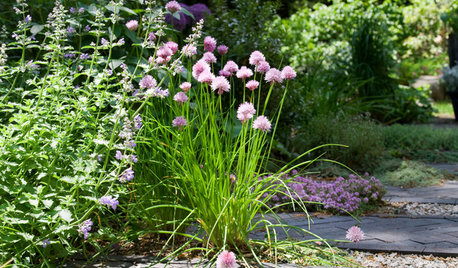
    I find chives very well behaved. I've never had a problem with them self-seeding, though they flower prolifically. They make a very attractive border. Ditto garlic chives, although they'll get bigger.

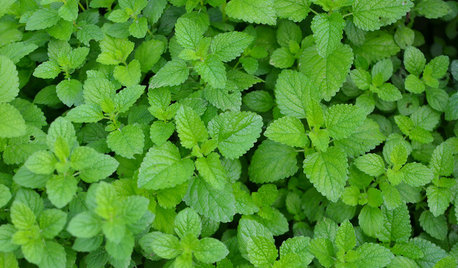
    It's the lemon balm you need to worry about! It's a close relative of mint. The flavour of lemon balm and lemon verbena are quite different, though both are lemon-y. Lemon verbena is a small shrub, quite an untidy, gangly thing which dies down to nothing in winter (I prune mine back to soil level), but comes back every spring. I regard lemon balm as a groundcover, but keep mine firmly under control in a pot. Lemon verbena likes full sun and not much water; lemon balm prefers partial shade (at least in a hot climate), and moist soil.

    You want something quick to grow for salads? Try some of the Asian greens, like bok choy, choy sum, mizuna, kangkong etc. They are good raw in salads, or cooked in stirfries etc, and if you sit and watch them grow, you won't get bored. Of course, there are other greens like lettuce or spinach that are quick-growing. You could also check out things like chicory or French Sorrel - or even something like purslane (pretty flowers), or peas (you can eat the leaves, too), or see if you can find a Mushroom Plant (Rungia klossii) whose leaves taste of mushroom - nice raw or cooked. Also look for Warrigal Greens (New Zealand Spinach). Don't forget Rocket (Arugula) whose name suits it well, and which is great in salads.

    Warning in advance: when you think of herb containers, think 'one plant per pot'. You have to be so careful to put plants together that like the same conditions, and which one won't take over all the others (one always will!), that these combination containers just don't work in the long-term. Aside from the fact that most herbs are bigger than most people realise!

    Minus 24C!! And here was I thinking that 6C was a bitterly cold night! About the coldest it ever gets, here. I don't think I was cut out to be an Eskimo, somehow.

  • 18 years ago
    last modified: 11 years ago

    Try both the winter and summer types of savory. The winter should live over but the summer is an annual. The winter will attract the bumblers.

    Since your area faces south the light should be intense. I was shocked to learn several years ago that the furthur you get from the equator the longer the days are in summer. In late summer you could plant some of the new leaf lettuce like Merlot. The leaves look like the wine. Several of the more formal gardens in this area did displays of various lettuces, both leaf and romaine.

    You could try some of the alpine strawberries that are sold as seeds. The packets state will reseed themselves but I have never had any luck.

  • 18 years ago
    last modified: 11 years ago

    Before my entire library got thrown out when I wasn't looking (an old trauma), I had John Jeavon's Square Foot Gardening, too. It was a fantastic guide, and I always check out used book gardening sections in the hopes of finding a copy. I also often C&P Daisy's advice! I have tried growing lemon verbena (we call it Louisa) many times, and it's died every single time. I put it in pots, and move it around to different places where I think it would be happy, but so far, no luck. Same with any and all basil. I have so little large spaces for full sun that most of what I grow on purpose (not the wild stuff which, this being the Mediterranean, is rather a lot)I have to choose very carefully. I'm a Chicago native, and grew up with weather like -20F, but now if we get a frost here in Haifa it happens once every 4-5 years, and it took me years to relearn how to garden. But the vertical nasturtiums are a delightful idea - I'll let y'all know.......Batya

  • 18 years ago
    last modified: 11 years ago

    Batya,
    Thats exactly what I said in my reply above..

  • 18 years ago
    last modified: 11 years ago

    I know that many of my plant experiences don't match the rules --- must be California. Lemon Verbena is another example. I'd tried to grow LV just about everywhere in the yard... nada. A few years ago I was given two LV "sticks". I tossed them in the ground kinda opposite each other figuring they wouldn't make it through the summer anyway. Of course, with no expectations on my part, they both grew... the one in dry, sunny soil is OK and suffers in July; the one next to the standpipe, in constantly moist soil, thrives and didn't even bother to lose it's leaves this winter. Go figger'!

  • 18 years ago
    last modified: 11 years ago

    Concerning lemon verbena the plant will lose its leaves and the branches become very brittle. Too many people, myself included, throw the plant away before it greens up. The green up comes in late June here, early mid-summer.

    I normally purchase at least one plant each spring. Last year I could not get it planted and placed in growers sleeve on top of a window box along with thyme and rosemary. When I finally had time the roots of all of the plants had grown through the holes in the bottom of the sleeves and spread through out the box. I left them there and had the finest lemon verbena I have ever grown. It grew to be about 3 ft tall with lots of branching. The thyme and rosemary also grew very. I brought the window box in and believe I have lost the plants but I am going to try the experiment again this year in various types of containers.

  • 18 years ago
    last modified: 11 years ago

    To add to what Daisy offered for your salad bowl:

    you should include lettuces of all sorts - the leaf lettuces produce faster than head lettuces. Lettuce is also very cold tolerant and is one of the early things for the garden bed.

    kales - This too is a cold tolerant green. In fact, better tasting after being frosted. I don't fill a bowl with kale but finely sliced and sprinkled on a salad adds flavor and 'leafy green' goodness.

    Also beets, cold hardy and nice for greens. And beet's cousin chard is also nice in a salad in small amounts. Pretty plants for the garden too. Turnip greens are tasty too as well as the roots.

    Corn salad and miner's lettuce are some uncommon cold tolerant greens as well. My corn salad is still nicely green in an open garden bed where the temps here are 12 degrees F currently.

    I tried to offer up some plants that would do well or at least better in the cool, short season I suspect you have. With any of the salad items, just plant a tiny amount. See if you like it, see how it grows. Greens are not like corn or flowering plants that require enough of it in order to have good pollination and harvest. Test them out and plant more of what you like next year.

    And before anyone gets too crazy that I wasn't talking about herbs, veggies are herbs in their own rights and have powerful health benefits. I agree with Hippocrates, Let your food be your medicine and your medicine be your food.

    FataMorgana

  • 18 years ago
    last modified: 11 years ago

    Once again I think that I'm getting overwhelmed with all the herbs and nice veggies that could be included - so many choices so little space. I've peaked through the squarefoot forum and am not sure how to encorporate it in my amount of space other than a "square here and there". I like the idea of Asian greens & also the beets - I LOVE beets & have grown swiss chard in the past. Last year I added some "bright lights swiss chard" in my "Rose garden" - it looked pretty and also tasted good.

    The weather in the late spring/early summer can be challenging sometimes temperatures in the high 70sF with possiblities of frost and then in July and August it reaches the high 90s at times.

    Thank you all for your ideas and if I could bug you some more...

    Question - what is corn salad?

    Herbs in pots: I see pretty pictures of 3 or 4 different herbs in pots but you suggest just one - how big of a pot would work for 3 or 4? I have 3 containers - 2 are 18 inches diameter and about 24 inches tall 1 is 24 inches diameter and about 30 inches tall. If I choose herbs that require similar light and water can they be combined in that size of pot?

    Design... how do can I fit alot of plants in my small space and still have it look nice? The rose garden space is more of a "cottage garden look". Square foot gardening has happened within the "rose garden" by including a pepper plant, tomato plant and swiss chard among the flowers. Is a "potager" the correct way to go with what I want to do in the bed against the townhouse?

    Thanks again

    Fern

  • 18 years ago
    last modified: 11 years ago

    Sounds like you are overwhelmed and confused. Don't be. All gardening is a matter of 'playing it by ear', so have fun and don't get bogged down with science! You'll learn as you go. That's half the fun.

    (1) Corn salad is a 'green', often called Lamb's Lettuce. See the link below.

    (2) These are fairly small pots, each of which will nicely fit a mature-sized parsley plant, or 3-4 smallish lettuce. Garden centres like to suck people in by planting out multiple-herb mini gardens, but you should regard them as something for gift-giving and for the short-term only. Nothing to stop you trying, however! For many people, plants in pots is the only way to go. Just don't expect miracles.

    (3) Design? Does it really matter? You can try to go all formal, with tall plants and the back and groundcovers in the front if you want; or you can do the cottage-garden thing and just jumble everything together willy-nilly; in a small garden bed like the one you're planning, it honestly won't matter a jot. It'll end up beautiful, no matter how you arrange it. But you're not going to end up with everything mathematically arranged like the French formal gardens, nicely manicured. Most herbs aren't like that - let's be brutally honest - most herbs are weeds! The important thing is to be able to reach whatever you want. That shouldn't be a problem for you in such a small area.

    I suggest you just put plants wherever you like them to be. If the plants aren't happy, you can always move them (well, most of them, anyway!). Herbs aren't quite as fussy as people where they go, in general.

    I agree wholeheartedly with FataMorgana: veges are herbs. Most of them have medicinal properties. But that's another topic.

    Here is a link that might be useful: corn salad

  • 18 years ago
    last modified: 11 years ago

    Sorry to contribute to the overwhelming! Daisy is right. It is your garden and do what makes you happy and meets your needs. Hodge-podge or formal, it's totally your choice and it needs to please no one but you. I would only suggest to have a small space dedicated in the garden to some experimenting each year. I've been vegetable and flower gardening since I was a kid and I find new things all the time that I'm glad I found. For example, I tried golden purslane a few years back and loved it. It is more upright and has larger leaves than common purslane. It is tasty enough that it is one of my "garden snacks" - things that never reach the kitchen and are munched while doing garden work. :)

    If you are experimenting, a very nice place to get inexpensive quality seed is from Pinetree Seeds. Most of their normal seed packets range from $0.85 to $1.25 US. I included a link to them below.

    Enjoy!

    FataMorgana

    Here is a link that might be useful: Pinetree Seeds

  • 18 years ago
    last modified: 11 years ago

    Try something I have seen on PBS that they call staging. Turn pots, buckets, or anything to give height in an area then start puting your pots on top. The shortest could go on the top, like thyme, where it can be reached. The bigger pots in front covering up the lifters. Any space that you can still see the lifters put a decorative object or as plants grow train some to trail.

  • 18 years ago
    last modified: 11 years ago

    Hi all

    Please don't get me wrong and please don't be sorry for "contributing to overwhelming" - at this point of the cold snowy winter being oveerwhelmed by gardening choices is great - it gives me more information to research - plant pictures to pour over - more re-laying out plans on graph paper and more time spent imagining garden designs. Oh and I love the "staging / lifters" concept. Really and truly thanks for all the ideas and possibilities that you are all sharing. Sometimes especially with plant choices I get stuck on the "familiar" - herbs = basil, mints, parsley, sage, rosemary and thyme [I know quoting from Scarborough Fair]. I enjoy having a chance to expland my horizons

    Fern

  • 18 years ago
    last modified: 11 years ago

    Go to your nursery, select the plants you want, bring them home and put the pots onto the garden bed. Stand back, imagine the plants full-grown, and then plant them out. Simple! Leftovers can go into pots.