Software
Houzz Logo Print
bcskye

Butter Beans?

18 years ago

DH loves butter beans and I'd love to plant some to can this coming season. Is there any particular type of bean to plant or what? I have to admit I know nothing about these. I love limas, but he doesn't. I've read that they are the same thing. Are they the same but cooked or put up differently? I read some about them in the bean and legume forum, but didn't really come up with a clear cut answer. Help!

Comments (27)

  • 18 years ago

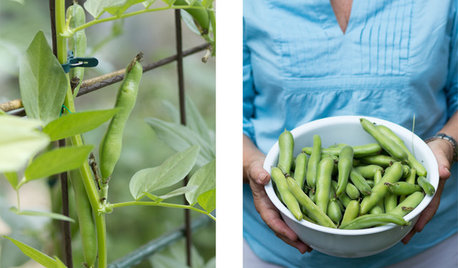
    I grow Limas, mostly Fordhook type. I like to allow them to remain on the plants a little longer. Last years, I left a bit too long and the beans were quite big, yellow color and dryer than limas usually are. The pods also show this Most of the lima crop ripens at the same time, with a smaller harvest soon afterwards. You would have to plant these very early, as Z5 is pushing the maturity time to the edge, as they don't usually ripen for harvest until the beginning of September here in Z6. Unlike peas, limas don't mind heat. I use a bean innoculent when planting them. Yes, butter beans are very mature limas. In fact, I pulled out most of the larger yellow color limas and blanched and froze the smaller green ones. The larger yellow ones were pickled, in a sweet vinegar brine with a little bit of pickling spices added. I have yet to try them, but I would expect they would be great even added to a bean salad with chickpeas and string bean types.

  • 18 years ago

    I initiated a "What is a Southern Butter Bean" question on the Bean Forum. Link is below.

    When I went to my local (North Carolina) Southern States store (agricultural and farming supplies) they sold me Speckled Dixie Butterpea, and also have White Dixie Butterpea. They are described as a bush Lima bean that is fat, nearly round, 75 days to maturity with 3 or 4 small beans per pod, much smaller than the common Fordhook Lima. Down here they are cooked like all day long so they are tender and have made a thickened "juice" not watery like a Lima if cooked the same way. I haven't grown them yet (this season I will) but I did buy some frozen from a local grower. They do have to be cooked stovetop a long time,where I usually just steam Lima's, so there must be something about making the "juice" that makes them tasty. They do taste differently overall than Lima beans. Butter is always stirred in before serving so perhaps that is how they got their name. I did add a little salt at the end of cooking to boost the flavor. I am anxious for the season to start so I can experiment with cooking them fresh. If you don't like Lima's since they look like baby Lima's, then think of them as Butterpeas.

    Nancy

    Here is a link that might be useful: Butter Beans

  • 18 years ago

    My limas/butters are also very firm unless they are cooked along while. As with a green onion, or scallion the term is different in different parts of the country. My very mature limas/butter beans, look exactly like the ones that are in glass jars in stores, as well as the type you see in some been
    salads.

  • 18 years ago

    Is hubby from the south? ;) Down here butter beans and lima beans are seen as two distinct varieties and have very different tastes. But it is regional thing.

    In the south, butter beans are of the Sieva (small bean) side of the bean family - Dixie and Henderson are 2 of the varieties you can easily find seeds for and they are small and round. On the other hand, limas like Fordhook are from a different side of the family, flat shaped, larger, and not nearly as popular in the south (no offense Ken ;). But go to the northeast or to England and it is just the reverse.

    To further confuse the issue, vendors often call butter bean seeds "butter peas" as Nancy said above. So if it is true southern butter beans he wants, buy Dixie White Butter Peas. Vermont Bean Company carries them as do many feed and farm stores.

    Dave

  • 18 years ago

    beans, peas, its all in a big pod.. VT bean and seed does have some really fun stuff. Try the red noodle if you get a chance.

  • 18 years ago

    Thanks everyone! Learned a lot from you. DH was born in Sacramento,CA, but was brought up a few first years in KY and the rest of his life in central IN. His parents were from KY. I was born in IN and raised all over the place because I was an Air Force brat. The butterbeans we're both use to are the canned ones that look like limas only they are usually tanish colored, larger, in a thicker broth and we don't add butter to them. They aren't as firm as the limas nor green.

    Ken, I think you are right in that they are the same thing only differing in time of harvest.

    Nancy, I saw your "Southern Butter Bean" post in the bean forum. That was one of the things that threw me off because what I'm used to as being called a butter bean would be larger than what you're describing.

    Dave, I read somewhere, maybe in the bean forum, that Henderson and Fordhook were what you grow to get butter beans. I will check out the Dixie White Butterpea. I really do like regular green limas and I think that has been bred into me from my NA heritage.

    I had decided to grow some different types of beans this year and one I will try is the Florida Butter Speckled Pole Lima Bean. Also planning to put in some Anasazi beans and possibly the yard long beans. What are the red noodle like, Ken? I forgot about the VT bean and seed company. Have to check them out, but do give me more info on the red noodle and any other beans all of you are particularly fond of.

    Thanks again for all the wonderful information.

  • 18 years ago

    Red noodles are just that. Narrower than a reguular string bean, but red color on he outside and, grow to about 3 feet long. I was picking them every 3-4 days. There are usually tw per stem and both mature the same. Once in a while a few will get tangled in my netting, and tart to crul, but thats what makes them so interesting. I got the red noodles from Johnnys 2 years ago. They freeze well, their color changes when cooked and they have nice flavor. Sold in some gourmet resturants.

    Here is a link that might be useful: Red noodle beans

  • 18 years ago

    Red Noodle beans are a variety of yard long beans. Yard longs are of the genus Vigna, as are cowpeas (e.g. black eye peas), whereas common beans (i.e. Kentucky Wonder) are of genus Phaseolus. There are several other genera of beans used for food (e.g. limas, soy, runners) and countless varieties of each. To make is especially confusing, there are numerous common names for each genus.

    Beans are a much more varied vegetable than I first imagined. Beans have become a fascinating (as well as tasty) specialty to me. Fortunately, a half dozen or so truly expert bean afficionados hang out on the Bean Forum. I am amazed at the extent of their knowledge. They are friendly and more than willing to provide accurate information.

    Jim

  • 18 years ago

    BTW, yard long beans are much more common in Chinese cooking than American cuisine. They are usually stir fried with another ingredient or ingredients such as ground pork, garlic and hot bean paste as flavoring.

    Pick them before they attain their maximum length.

    Jim

  • 18 years ago

    Thanks guys. I got my Red Noodle Bean seeds today and am looking forward to trying them out. They do sound good. I'm hoping to plant several varieties of beans this year. The older gentleman that I share my garden with always plants regular bush green beans, but I'm going to try some limas, the Red Noodle, some purple podded beans, some Roma style, Anasazi and whatever catches my eye. We will share all of them. I love beans and will be keeping a close eye on the Bean Forum.

  • 18 years ago

    The red noodles are pole type, so put up a few posts (6 foot tall!) and string some wire or open netting across the poles. Limas, even though they are dscribed as a bush bean, they are quite tall. Mine were growing against a 4 foot tall wire trellis, and reached the top quite easily. The limas take the whole summer to mature, and about 80% are all ripe at once. Most grow down near the soil however. Pick the pods when they are big, green, and thick. Once they lighten up to a tan color, the beans inside are yellow and a bit tougher and drier. My most favorite for freezing is a yellow wax bean. These have a far better flavor when frozen and cooked in the microwave. Compared to the dozen or so varieties of green (and even purple) beans I have grown, I still come back to the bush type wax yellow beans. The 12 bushes I had, yielded almost 5 gallon sized zip bags for the freezer.
    I use a bean innoculent when planting the seeds, it has helped boost the crop greatly, and I use it for peas too.

  • 18 years ago

    I highly suggest the runner cannellini bean.

    Though not a lima, they're a type of large white bean that looks like a large white lima. They have a slight butter taste to them and a smooth interior texture.

    The runner version available in most places is a different/smoother texture than a regular bush cannellini bean (such as most of the canned kind of cannellinis in supermarkets).

    They're an outstanding dried bean and that's where they really shine. They get huge, the skins get a little loose, and they soak the flavor of almost anything you cook them with.

    Around some parts of the south these are the beans people refer to as "butter beans," but it also refers to types of field/crowder peas in some areas (as mentioned above) and no telling what other names in other areas.

  • 18 years ago

    By the way...the runner cannellini is a fat/round-ish bean when its fresh. It still holds good flavor and it's smooth, but it's when the its dried then rehydrated while cooking that it gets a more lima-looking flattened shape (and an overall larger bean size as a result).

  • 18 years ago

    Thanks for the tip on runner cannellini. I like cannellini very much and did not know about the runner type. OMG, where am I going to find room to grow all these beans!?!?

    Another common (phaseolus) pole bean which could almost pass as a butter bean is Tarbais. It's a French bean and makes a large white seed that looks a little like a fat lima. Tarbais a good bean which is favored for making cassoulet. I think cannellini would be fine for cassoulet as well.

    Jim

  • 18 years ago

    nc-crn, thanks for cluing me in on the runner cannellini bean. I'd never heard of it before although I am familiar with the regular cannellini.

    jimster, thank you for suggesting the Tarbais. I might have to try them as well.

    I have plenty of room here to try anything I want - nooks and crannies all over my 21 acres, but DH will want to know why in the world I'm planting so many beans for just the two of us. My regular garden area is normally half an acre give or take, but I'm experimenting with a lot of varieties of tomatoes and beans this year so may have to use a few nooks and crannies as well.

  • 18 years ago

    With all that land, I would hope you have planted some fruit trees, blueberry bushes and other permenent things. I have about 2000 sq ft of garden space alone, and on the outer perimeer its all blueberry bushes and fruit trees. Beans are nice, but for me most are not very good due to high potassium levels (I can forget about tomatoes!!). I stopped growing limas for that reason. on the other pan waxed beans and peas are just great.

  • 18 years ago

    "I have plenty of room here to try anything I want..."

    Thanks a LOT. Just keep rubbing it in. :-)

    Jim

  • 18 years ago

    Jim,
    I bet most of that land is full or trees, bad bushes, swampy, and nasty stuff like poison ivy and oak. Maybe thats a good way to look at someone who has lots of land..

    Ever seen a possum come out in the daytime?

  • 18 years ago

    Thanks, Ken. That is a comforting thought. LOL

    No. I have never seen a possum moving about in daytime. I hope you don't have a major problem with it.

    Jim

  • 18 years ago

    Ken, I have persimmon trees, autumn olive trees/shrubs, tons of blackberries, wild grapes, sassafrass trees and sumac for indian lemonade. Every fruit tree I've ever planted has gotten eaten by deer, mowed by John Deere or Case or just flat died. I've given up on them. I do have an arbor with concord grapes, but have yet to get anything out of them. Have an ancient tart green apple tree up front and hope to get some strawberries and blueberries in this year.

    Sorry Jim, I'm not trying to rub it in. Back in '85 when we bought this place I had great dreams of growing everything under the sun plus having a stocked lake. Well, due to DH's having a ton of health problems since then as well as being a caretaker for him, my mother and my aunt, my dreams got dashed. At least for the past couple of years, with the help of a wonderful older gentleman down the road who has a nice tractor with plow and disc plus a great rototiller, he and I have had a pretty nice garden. Both his wife and I do a lot of freezing and canning. I want to expand it this year.

    By the way, I have a wooded perimeter, the big woods in the back (including hickory trees and a natural clearing for friend's camping and cook outs), several potential pond sites with springs, and the rest is now beautiful grass where it use to be overgrown farm fields. It is and has been a lot of work, though. I spend one heck of a lot of time on the J.D. mowing.

    DH has never encouraged my veggie & fruit gardening and wants to sell the place now and become RVers with a small place in a warmer locale. Yuk! :( I'm fighting it. If you get to pursue your enjoyment of gardening with no static, I envy you.

    A little OT, but it does feel so good to be able to grow and preserve your own food and I plan to do it for at least a couple more years. Then maybe someone will buy it with the same dreams I had.

  • 18 years ago

    Here, I can't grow boysensberries, or many other things that just barely survive in Z6. Jim, on the other hand has the ocean nearby that helps to give him a better climate. We get heavy snow, he gets rain out of the same storms. I have no olives or persimmons here, nor do I care much for either. Wish I could grow a Pluot tree here, but havent tried yet. I dug up all my seedless grapes as well as concords. Can't eat grapes as they contain too much potassium. The seedless ones were small like the size of garden peas, and alwyas seemed to get fungal infections on the leaves, or chewed by Japanese beetles. I dug them all up the other day, along with the big heavy steel pipes my dad drove into the ground some years ago, that were used as a trellis support. Cleared the area and just planted a row of shallots.
    RV with a 100 gallon gas tank.. Hmm, $300 plus for a fillup.. Not for me!

  • 18 years ago

    bcske and Ken,

    Don't take my moaning seriously. I'm just kidding. True, I would like a somewhat larger garden, but I have little to complain about. In addition to the gardening, I am able to harvest the fruits of the sea and that means a lot to me.

    The moderate climate is nice too, although I have not yet taken advantage of it for growing the more tender trees and shrubs. Someone down the road successfully grows camelias, so there are lots of possibilities as yet unexplored. Being surrounded by ocean, the temperature almost never drops to 0°F, then only briefly and never lower.

    Now, what was the topic of this thread? Oh yeah, butter beans!

    Jim

  • 18 years ago

    Jim, did you get your seed for the Tarbais bean from the Vermont Bean Co.? I think I may have to have several different bean patches this year since I have so many to grow and try. This is my Bean and Tomato year. I'm trying many varieties of each with hopes of having my pantry full next winter.

    Your climate sounds really nice and I'd love to grow camelias - they are my favorite flower. And I'd have beans growing from the gutters of my house if I were there and needed more room. What type of seafood do you get?

    I stir fry and will enjoy having the Red Noodles for that.

    Ken, red shallots would be a very handy veggie to be producing yourself. Do you just store them in a cool, dry spot or do you dry or freeze them?

    Diesel truck pulling 5th wheel. We plan on staying in a desirable location longer than a lot of people and get 20 mpg in town with the truck when not pulling. Heck, I want to enjoy local produce when we're out and maybe even putting some of it up while we're where its in season and less costly. But I still want to bring them back to my home.

    Know what you mean about the fungal problems with the grapes. I'd looked forward to putting up some wine with the wild grapes when we moved here, but something went through and wiped then all out the year we got settled. Now they are finally coming back. Maybe a mild wine this year.

  • 18 years ago

    The shallot type I bought for planting is a french type. Quite large, almost the size of a medium onion and yellow. They cluster underground, so the ones that were planted were seperated before I dropped them into the row. I do have a walking onion that gives me a more shallot smell and flavor and are definately all purple layers inside. These are unique and I harvest the small bulbils every summer for the fall plantings. Recently, I gave a lot of them away and only saved the biggest few for planting. If I allow them to grow wild, the whole back yard would be walking onions by now. The greens are noticably stronger than a scallion too.
    I tried spraying the grapes on year with sulfur, but would have to spray about once a week. Nearby the red raspberries sufdfer due to lack of sun, as the grapes were shading them too much. I just hope I don't see new grape shoots coming up, like I did in the old concord grape area. For 5 years I was hackiing down a new vine every spring, and the concord 'stump' was huge, and I just couldn't dig it out without damaging nearby blueberry bushes. For storing, I use a cloth bag, unless they start to sprout or spoil. Then, I peel anc sut them into pieces to freeze. The walkers keep quite a while on their own.

  • 18 years ago

    Wine and grapes. North Carolina is making great headway into "redeveloping" an old favorite, the muscadine (aka, native grape, aka 200 other names).

    It's pretty hardy and disease resistant. Makes a pretty good wine for the "specialty market" crowd, though it's getting more common around here. The scuppernong muscadine is native to this area in the south-east, though.

  • 18 years ago

    Concords grow wild along the country roadsides in Mass and NH. Must have been there for centurles. There is also the white Niagara, but not quie as common as the concords.

  • 18 years ago

    "What type of seafood do you get?"

    clams (4 kinds)
    mussels
    crabs (a few kinds)
    eels
    squid
    fish (many kinds)
    periwinkles

    The standbys are clams, mussels and fish. The other things I get occasionally. Now that I'm thinking about it, I must make a better effort this year and get some things I haven't had lately.

    My town doesn't have oysters, but I buy excellent ones from nearby. I also buy lobsters because lobstering requires more equipment I don't get a lobster license.

    Wild fruit is abundant here too, such as blackberries, raspberries, beach plums, black cherries and rose hips.

    Jim