Software
Houzz Logo Print
ellen_portland

What are good veggies to plant for a beginner?

17 years ago

Do you have to have raised beds for veggies?

Any suggestions on easy to grow veggies? I was thinking tomatoes, beans and maybe bell peppers.... what about snap peas? Or even melons?

I don't have $$ to put into this, but I thought it might be a wise idea to grow some food to offset expenses and also have something for my 9 year old son to enjoy helping me with.

Thanks!

Comments (5)

  • 17 years ago
    last modified: 11 years ago

    You do not need raised beds to grow veggies. Vegetables you and your son like to eat are the best kinds to raise.

    Tomatoes and bell peppers are a bit tougher to grow from seed but plants after your last frost date are just fine. Lettuce, spinach, carrots, radishes, zucchinis and snap peas are really easy. Beans are pretty easy as well, but the deer like to eat mine. Melons you need lots of sunlight and because of that you don't see them grown much. Potatoes are also pretty easy. Onions are also easy to grow from sets. Kelly

  • 17 years ago
    last modified: 11 years ago

    If you like jalapeno peppers, they are easier to get peppers from that look like store-bought. Bell peppers require lots of amendments and water to get large peppers.

    Don't plant melon seeds until almost June and then hope for a long summer! You might have better luck with winter squash if you have the room.

    Carrots can do well, but the seeds can be hard to start and they must be kept constantly moist to sprout. Carrot soil should be very loose.

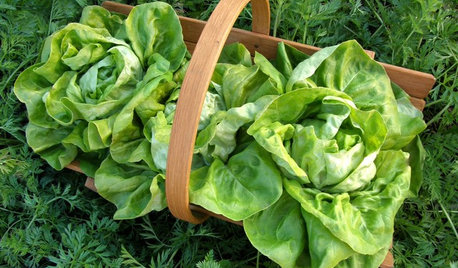
    Growing lettuce and other greens can save money quickly.

  • 17 years ago
    last modified: 11 years ago

    You need to find a good spot for the garden. It needs full sun and good drainage and at least a six inch depth of decent soil. Clay loam can be amended; impenetrable clay subsoil is usually hopeless, and needs to be removed and replaced with good topsoil. Or you can pile topsoil on top of it. Your garden needs a source of water. If it's pretty far away from your outside spigot, you will need to buy some hose. If there are big trees next to the garden, they will suck up ALL of your water and fertilizer. I'm not exaggerating. So no big trees near the garden.

    You will have to prepare the soil. This isn't a good time. It needs to dry out somewhat before you can till or dig. So you will need to be patient. If you have some plastic film, clear or black, you can put it over the area where the garden is going to be, and it will help the soil to dry out earlier. If you use black plastic, it will also kill the weeds and grass.

    The next step is to improve the soil. If you don't do this, your crops aren't going to grow well, and weeding is going to be miserable, especially if you have dense clay. I always do the same thing when I'm making a new garden: I till in about one inch of sand and one inch of organic material, such as compost or rotted bark, along with a generous sprinkling of lime and superphosphate. The lime corrects the soil acidity (our soils here are always acid, as far as I know).

    You will notice that the dollar bills are starting to flow now, right? If you want a successful garden, you have to make an up-front investment. If you don't do it right, you will end up like many (most?) new gardeners: with a garden full of weeds, and no desire to continue. You will definitely not save money the first year, because of the up-front costs. You will get the investment back over several years of gardening, assuming you get pretty good at it. Are you sure you want to do this? Most people badly underestimate the amount of work involved.

    Also, are you in town or in the country? If in the country, how are you going to keep the bunnies, raccoons and deer out of your garden? More money. Slugs may well be your worst enemy. You will have to terminate them with extreme prejudice. Choose your weapon: bait, scissors, stale beer? Bait works best, but has negatives.

    So let's say you've improved your soil, and it's late May, and time to start planting. Are you going to grow from seed, or from plants? Since you didn't grow your own plants, you will have to buy them. I recommend that you do everything on a small scale the first year, until you learn the necessary skills. Try some lettuce and tomato plants, and some green bean, radish, pea and red beet seeds. You will need support for the tomatoes and peas. I use big tomato cages, the ones you find at real nurseries, not the itty-bitty ones at Home Depot. If your soil is well prepared and at least 8 inches deep, try some carrots. I wouldn't try peppers, melons, or eggplant; they're likely to fail for a novice. The cabbage family is not hard to grow, but tends to have bug and worm problems. Try some easy flower seeds, like marigold, zinnia, and sunflower. Kids love Mammoth sunflowers; they get about 9 feet tall. And it's fun to watch the blue jays fight over the seeds in the fall.

    You will need fertilizer. The easiest is to buy some balanced fertilizer such as 5-10-10 or 16-16-16, and forget about doing a soil test. If you find out in a year or so that you are really cut out for gardening, that might be a good time to get a soil test done. There are two ways to use fertilizer. You can mix a teaspoonful into the soil where you are going to place a plant; or you can apply it to the surface around existing plants, and let your irrigation water wash it down to the roots.

    As soon as you start fertilizing and watering, your new garden is going to explode with weed growth. You must control them when they're small, or your garden will be lost. This is when you will be grateful for the sand and compost. The soil will be loose and workable, and it will be easy to pull the weeds. The good news is that next year and the year after that, the weed situation won't be nearly as bad. However, if you let the weeds go to seed, your garden will be a weed nursery forever. You must not let this happen.

    There are lots of learning experiences along the way, like learning to identify pests and how to control them. The best way to learn is to find a really good gardener in your neighborhood. They are getting rare. Let them teach you. Next best is Gardenweb. Approach gardening books and mass-media garden gurus with skepticism. There's a lot of BS out there. And ignore advertising. Don't buy anything that says "miracle" on it, or that costs a lot of money. Check with your local expert first, or ask on this forum.

    That's all I know.

  • 17 years ago
    last modified: 11 years ago

    Lilydude's advice is excellent. If you've never done this before, I'd suggest you start small - besides the investment in start-up costs, which may be considerable, there is a very large investment required in time and effort in order to be successful. I grew up with a large home vegetable garden and I can remember my dad working out there watering and weeding until dark many nights after spending all day at work, as well as all day most weekends. It's pretty time consuming.

    A lot of vegetables can be grown successfully in containers and this may be an easy way to start. It is small scale and easy to manage. Tomatoes, any kind of lettuce or greens, peas and beans, onions, radish and herbs can all be easily grown in pots. Containers don't have to be fancy - 5G plastic buckets with a few drainage holes will work for most but you do need good quality potting soil. Don't skimp on this. If you have the space, cukes, squashes and zucchinis can be grown in pots as well but need some trellising or spilling room (if you can't grow a zucchini, you truly have a black thumb! - they'll grow inspite of you!). If you have the space in the ground, set aside some room for a pumpkin patch - kids love 'em and that could be assigned your youngster to water and tend as his very own garden. Or try other winter squash or gourds - these odd, often misshappen veggies are very appealing to kids and are dead easy to grow.

    I would avoid melons (too much room required, not hot enough to ripen), eggplants and peppers (heat issue again) and most cabbage family plants (too many insect issues and they bolt too easily unless grown under ideal conditions). I won't recommend you try root crops but they can be grown in containers also if you have deep ones, excellent soil and space correctly.

    Many nurseries offer free seminars and classes in spring on various gardening topics and vegetable and container gardening are very popular ones. Growing any kind of edibles is a hot topic these days. And check out your local Master Gardener association - they often have demonstration gardens and helpful plant clinics.

  • 17 years ago
    last modified: 11 years ago

    My first veggie garden was nicknamed, "the grave". That's the size it was because it was the only area of our property that got lots of sun and had decent soil. I planted very "easy to grow" things -- radish, lettuce, multiplier onions give you bunches of green onions, just make sure you don't plant them all at once! I love peas and they grow easily in cold weather. Beans need hot weather so don't plant them until late May or early JUne. Buy a few small tomato plants in late May. My advice: start small and have fun. That's what your son will remember and the bonus is the great taste.

Sponsored
Landscape Management Group
Average rating: 4.9 out of 5 stars33 Reviews
High Quality Landscaping Services in Columbus