Software
Houzz Logo Print
gchap33

Raised Bed

18 years ago

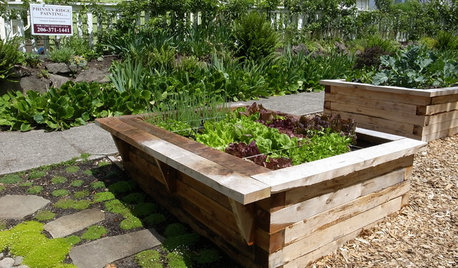
I just built and added compost, manure and soil to them. I realize that it is not the ideal time to build and start a bed, but was wondering if I can still plant some veggie starters this spring and have any success? How long should I let the soil sit before possibly planting some starters? Should I just wait, do a cover such as clover and wait till next year to expect any results?

Beginning gardener needs some help.

Thanks!

Comments (6)

  • 18 years ago

    gchap33,

    Nonsense, you can certainly plant into a new bed. That is, as long as the manure & compost were well rotted. If not, fresh manure can be caustic and burn your plants.

    It is not too late to start veggies from seed, or you can always pick up starter veggies at your local garden centre.

    Read on the seed packets to see when to plant; you will need to determine your last frost date, and plant out sometime after that date (depending on the vegetable, as they have different temperature requirements). Usually they will indicate proper planting times, like, 'Sow indoors 3-4 weeks before last frost' or 'Direct sow after last frost once soil warms up' or something like that. It looks like your last frost date has already past, so it is probably safe to start many of your seeds. Vegetables are generally very quick to germinate, so you shouldn't have to wait too long.

    Check your forecasts and if you are expecting any cool nights (or days) and if so, use a floating row cover such as Reemay. When we lived on the West Coast, that was what we did, and it insulates the plants and gives them a good head start! Please note that if you are starting seeds indoors, you will need the brightest light possible (south facing window or full spectrum fluorescent light, suspended a few inches above the seedlings). They will also need to be 'hardened off' when it is time to move the pots outside. Usually this is done over a week or so, gradually acclimatizing the plants to the bright daylight and the change in temperature.

    You may want to check the specifics with your local Master Gardener's Association (they are there to assist the public with their gardening queries); I know that Oregon is simply rife with gardeners!

    What were you thinking of growing?

    -Plantenthusiast_2008

    Here is a link that might be useful: Last frost dates (US)

  • 18 years ago

    Thanks for the advice. I will have to check into the Master Gardeners Assoc. here in Portland. My Aunt who lives in NY also recommended I do that.
    As far as the compost goes...it was 90% broken down with some egg shells and avocado skins still visible. I was told to use chicken manure to help break it down better and more quickly.
    As far as seeds go, I'm a little nervous about planting them this season. I think I will plant starters instead. I want to read a lot more and become more familiar with the process before I dive in.
    The plan is to grow veggies. Greens, carrots, beans, cabbage, and anything else I find will work well.
    My next step is to learn what veggies are okay next to each other, and if I should throw in some flowers or herbs that could act as good pesticides. I've only started with two 3x6 beds for now. We'll see where these take me this year, with the possibility of making more in the future.
    Thanks again, I think this is such a great way to learn and get my questions answered. Hopefully I can return the favor one day.
    Have a good week.

  • 18 years ago

    Gchap33,

    Just a note on the composting; you can always sive your compost through a coarse screen in order to remove large pieces which have not broken down and return those to the compost pile.

    In regards to poultry manure, I would advise against using it in a vegetable bed. We try to stay away from all animal manures in our organic garden, and prefer to amend it with our own compost as well as supplementary minerals for certain plants, such as dolomite lime for tomatoes & eggplants. Layering your compost with thin layers of grass clippings (which have not been treated with herbicides or pesticides) is a good way to get it churning! Also there are commercially available organic compost accelerators made up of enzymes. They are inexpensive and sold in a box; very simple to use. We do use manures extensively on our flower gardens. Manures can be used, but poultry is one I'd recommend avoiding for veggies.

    I suggest that you read some of Elliot Coleman's books, he is a great source of information for the organic vegetable gardener, and has quite the sense of humor. He also talks extensively about composting in some of those books.

    You will want to build yourself a trellis if you are growing vining and climbing plants such as beans (other than bush beans), peas, cucumbers, vining zucchini, and so on. They are very simple to construct, and can be make from untreated cedar stakes and netting.

    A couple of good companion plants are nasturtiums and pot marigolds (for the marigolds pluck off the seed heads or less they will self sow all over the garden!) Dill and parsley are also reputed to attract beneficial predatory insects. Dill also self seeds readily; it has a lovely smell in the garden.

    You might find that things like lettuce & carrots are best direct sown, but you never know, you might just find some starters of those. Try checking out the seed packets, they often give you an idea of how, when and how labor intensive it will be to plant.

    Heat loving plants should be set out a little later, such as squash, beans, corn, eggplant, and so on. They will really benefit from a covering of Reemay for the first little while to keep that heat in! There isn't much to the order of planting veggies; corn and trellises should be on the North side of the bed so as not to shade out the rest of the plants, vining plants can be planted together along the trellis, other than that, at the moment, I can't think of many other 'rules'. Just plant at you see fit. Sometimes I like to plant the shade lovers (various Asian greens, lettuce tends to like it cooler, etc.) on the North side of somewhat taller plants, say, tomatoes.

    I hope that everything goes really well with your veg garden! Best of luck,

    -Plantenthusiast_2008

  • 18 years ago

    I did much the same as you last year, planted tomato plants and they grew like crazy! I made hollows in the mulch added compost soil and planted squash seeds. I'm still eating them! Check out the compost, soil, mulch forum here on garden web. I learned lots from the group there. Lasagna gardening is fun and works! It also smothers weeds which is great.

  • 18 years ago

    Here are a couple of older threads that may help:

    http://forums.gardenweb.com/forums/load/nwest/msg0421242517141.html

    Here is a link that might be useful: Another thread.......

  • 18 years ago

    I have been planting seeds and seedlings in not-all-the-way composted manure and stuff and things STILL grow. Don't be shy!