Software
Houzz Logo Print
iamleka

15 years ago
last modified: 15 years ago
How can I make a small yard look larger?
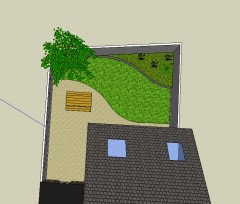
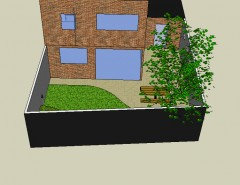
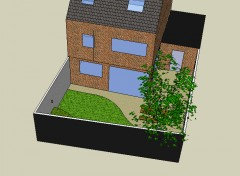
We just bought a house with a small garden (6 meters deep and 9 wide) but we have difficulty designing it to look deeper but keep enough of a lawn.
Any ideas?

Comments (14)

  • 15 years ago
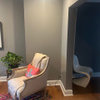
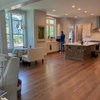
    Added some pictures to let you get a better picture of what the problem is.
  • 15 years ago
    are the walls surrounding your yard a fence or other buildings? maybe a picture of the actual space would be helpful too!
  • PRO
    15 years ago
    One way to make the space appear larger and more visually appealing is to move away from the traditional building, patio, lawn, planting border, then fence. I would move the patio away from the building and elevate planting areas with either walls or mounds. Layer plants and trees by the house and fences.
  • 15 years ago
    Your garden may appear larger by ensuring that you never see your entire yard. Using the backdrop effect. Use fences, trellis or large plants and shrubs.
    Do not use straight paths but winding paths and stepping stones. Let your lawn also wind through the garden.
    Make sure the object close to your house are dark and warm in color, such as hardwood, brick, red, orange, etc. So they demand your attention.
    For objects that are further into the garden, give them light and cool colors, such as mirrors, metal, blue, gray, etc. So they seem to be farther away.
    Do not be afraid to make grand gestures and to show your personality, because it's your garden and you should enjoy it!
    Good luck with your garden.
  • 15 years ago
    I second Agatha's suggestion--visually hide some areas so they are only revealed as you move through the garden. You haven't said why you want lawn, but be aware that it probably won't help your cause.

    In general, I would avoid anything fussy and go bold. If you really have large windows (as shown), use the oversized proportion in the garden.

    Looking at your images, it looks like some kind of ground-level deck slits the narrow space. I would:
    - Rearrange the deck. Start it at the garage (?) and take it straight to the back fence. If the narrow part of the deck provides access to a door or gate that isn't show, then use a path or stepping stones through a garden or lawn to provide circulation.
    - Add water. A long, narrow runnel moving toward or away from the viewer would add length and reflect the sky.
    - Add trees either near the deck, near windows or both--use their trunks to break the visual plane.
    - Add complexity to the ground plane--light/shade/texture.
    - Dark colors recede. If you really need to trick your eyes, use a dark wall or fence.
  • 15 years ago
    My suggestion is through the use of plantings to convey distance the way the japanese trick the eye. They would plant maybe a small tree with bigger leaves (coarse texture) closer to the window off to the side, and smaller shrubs with smaller leaves (fine texture) further away closer to the fence. The eye would be "fooled" into thinking it's all the same plantings and that the ones further away are just smaller versions of the one closer to the house. It helps to use similar plants, like maybe a regular crape myrtle close to the house and dwarf versions at the end of the property.
  • 15 years ago
    I'm sorry, but I meant to say the dwarf varieties would look more distant, and thus give the illusion of space between the plantings.
  • 15 years ago
    If you can, try to maintain a view to a focal point outside your yard even if you have to do a little fence cut out or framing. Taking your eye further out helps make it feel larger.
  • 15 years ago
    I would add a 3D effect suggesting depth at the fence. Cover with ivy, or better yet, grapevines, then make wonderful grape jelly in the fall! It fills in and hides the fence. You still have a wall there, but where?
    Perhaps some espaliered trees- fruit trees work well with this approach. This would give you height but not extend into the yard itself.
  • PRO
    15 years ago
    charlotte suggests
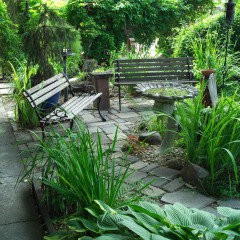
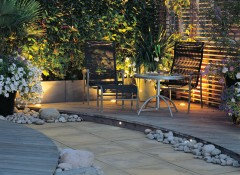
    Because the space is not that large or deep, create rooms within rooms and incorporate winding paths, with periodic 'seating areas' to stop the eye from racing to the back fence. As in all spaces, depth infers more size and therefore staining the back fence, perhaps the entire fence in a very dark, even as deep as ebony, stain will make the 'black hole' effect move the walls out. Incorporating WELL PRUNED (into small tree formats) shrubs, both large and small to suggest walls ... think 1/3 trunk, 1/3 branching, 1/3 canopy for all woody plantings ... and create a sense of mystery because you can't see everything immediately; you have to walk to see what is beyond, will give you the illusion of size. Don't over furnish, don't over plant and a final option is to place something at the back of the yard - even considering finding an old door and frame and attaching it to the fence with a meandering path leading to it (suggesting more beyond) or place an angled arch or arbor with a seat, again inferring there is more just beyond the sight of vision. The yard will be interesting 365, low maintenance AND appear much larger than it really is. Grapes are messy, fruit trees are too ... if wishing to have vines, consider clematis if light permits and when they flower, WOW! As in my own garden, a vine filled chain link and meandering paths suggest a much larger space, and with intermittent seating, more intrigue to get in it, not just look; the other photo shows 'fencing' on a wall (or fence) and a seating space infers again there is more to the yard than you can actually see; illusion and dark back drops do the job without fail.
    Charlotte Cee, landscape designer, Winnipeg.
  • 15 years ago
    Charlotte, love your photos, thanks for sharing! I live in a cold weather climate, MN.. I see lots of plants in your photos that would work in my yard. My yard is a blank canvas and I am excited to get a plan going on it for this spring! Like the use of decking and pavers with stones.. Love the lights and trellis also love the seating areas.. great inspiration! Thanks
  • 15 years ago
    Here are some suggestions that really work (I've done them).
    1. Divide the space into smaller use areas. This is a case where smaller spaces add up to more.
    2. Work with triangles, rather than squares or rectangles, for your use areas. That's because sighting along the side of a triangle appears longer. I for example, you were to come out your back door and look to your right on a diagonal line over to the far fence area, that would appear so much bigger than it actually is.
    3. Have areas that seem to squeeze, then release. So if you came out the back door and walked on a diagonal to the right toward the back and first went next to a big pot, then through an arbor to the grass, the grass area would look much bigger.
    4. Have different levels and surfaces and layers. These keep the eye busy and moving.
    5. You can do this and have a lot of fun at it!
  • 15 years ago
    Hi, again. Just realized I mistook what I guess is a big picture window for a "back door" in my suggestions. So please make believe you're standing at the big window or moving into the whole area from that window while reading my comments.
    Thanks!