Software
Houzz Logo Print
caseynicholson

What's "Period Appropriate" for a 1940's Colonial Revival Home?

11 years ago
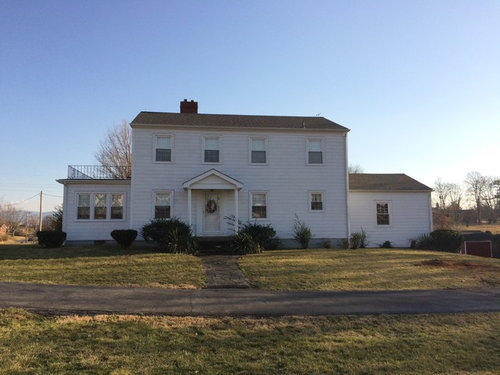
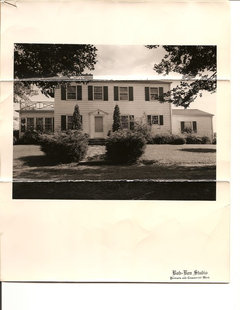
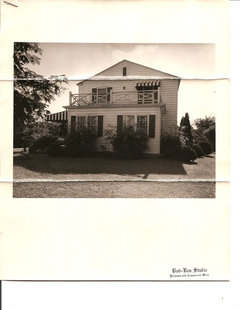
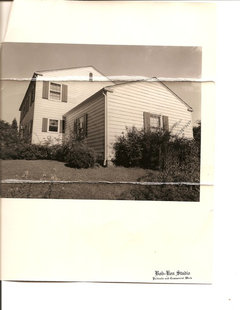
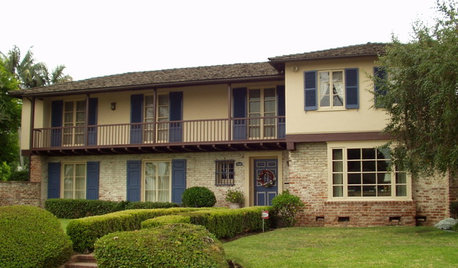
Attached below is a picture of my 1940's home that I'm restoring/renovating. I'm at a stage now where I'm beginning to think about interiors and how I'd like different rooms to look at the end of the day. That's where my confusion begins.

One thing that's important to me is the idea of having a "period appropriate" theme to the house. The home was built in the 1940's and was then purchased by some relatives of mine in 1949, who lived in the home for sixty years. As such, what I have here is a Colonial Revival home whose architecture is meant to draw from a much earlier time period, but the home's build date and the years in which it was lived in make it arguably more midcentury modern. Clearly that's not true of the architecture of the build, but when it comes to things like decorating, paint, furniture, etc., it's certainly true that midcentury modern would have been in style during this home's initial lifespan.

All that said, again, my own sense of taste is less important to me than creating an atmosphere in the home that is period appropriate. In other words, I can find furniture and decor that suits me from a wide range of periods. What I'm aiming for, though, is for the final result to be something that you walk into and know that a certain piece of furniture belongs in this home.

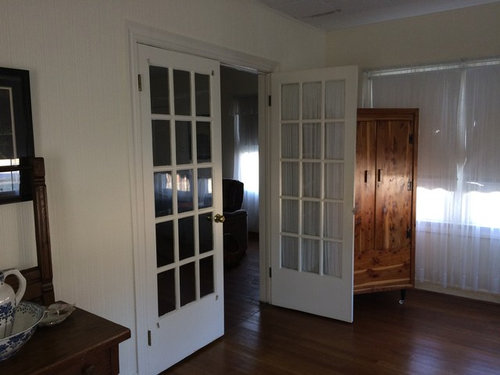
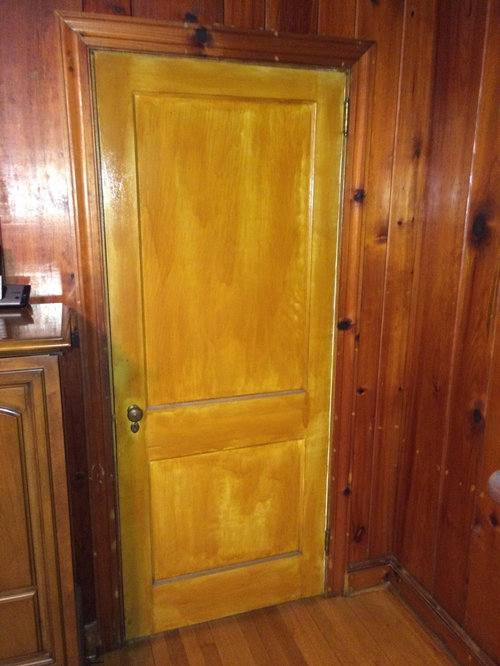
And that's where I'm stumped. What style of furniture and decor SHOULD belong in this home? It's clearly a Colonial Revival home, both inside and out, with crown moldings and such being a bit more ornate than the simplicity of midcentury modern (or at least that's my understanding from a very limited knowledge of such things. I've included a couple of pictures of some of the interior to show the door facings and what not). But, it's also a 1940's home lived in in the latter half of the 20th Century.

So, a long story short, what would be considered "period appropriate" for this home in terms of overall style? If I aim to populate the entire home with midcentury modern furnishings, is that a bit out of place in a Colonial Revival? Or would it be more out of place to have Victorian era and older antique furnishings in a home built ca. 1945?

Comments (27)

  • 11 years ago
    In your situation it seems likes it's less about period appropriate as it might be in a true historic home (or home that is a true reflection of the time it was built) and more about complementing the architecture. So in your case you can't go wrong with traditional furnishings. That being said modern furniture can look great in a traditional home and antiques in a modern home. So in the end it's your personal style.
  • 11 years ago
    Interesting question. I'd also lean toward traditional decor and furnishings, and from the bits I see, it looks like that's what you already have. Here's an article from Old House Journal that may get you started.
    http://www.oldhousejournal.com/was_the_colonial_revival_for_real/magazine/1433
  • 11 years ago
    I can't agree with you sublimating your own sense of taste to the "period" of the home. This is not a historic preservation building. After all, just as your family has lived in it before and left something of themselves behind, so too should you. I would hate to see the house cluttered up with formal, Victorian-looking furniture, which is what many people use for traditional, when in fact, true Colonial interiors often had more simple furnishings and a more casual and practical attitude. Look at the pictures from the rooms at Monticello, for example.
  • PRO
    11 years ago
    last modified: 11 years ago
    Your home was built the year before the U S entered WW 1 1. I would not classify it as Colonial Revival at all, but simply a colonial style. Charming, a little farm style. It is also not mid-century...about 10 -15 years too early.

    You can feel free to decorate it any way that you love. 1940 is not historic, nor was it a time of anything particular going on...a lot of people were still recovering from the depression and were watching their money carefully.
  • 11 years ago
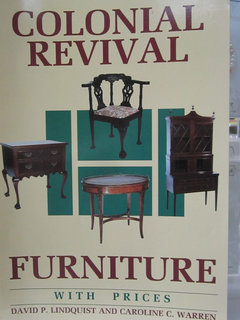
    I also live in a Colonial Revival home, mine is 100+ years old. I have a mix of old & new furniture, pictures & lamps etc. My antique furniture is from late 1800's - 1930's all different time periods. My formal living & dining rooms have mahogany furniture & my kitchen is all dark oak furniture. There is a book "Colonial Revival Furniture" by; David P. Lindquist & Caroline C. Warren, it has lots of great pictures in it. I have some of the Colonial furniture style that is in the book. I love antiquing & just buy what I like & feel comfortable with.
  • 11 years ago
    I recommend watching some early 1940's movies. The furnishings would have been sparse (by our standards) because of the Depression and because people just did not have big squashy couches until the 1970's or 1980's. Flip through some magazines from the period at the library, too.

    Early American reproductions were very common for decades. Take a look at old Ethan Allen ads. Ethan Allen furniture was high quality and quite sturdy; things from the 1960's and 1970's are widely available in second hand or vintage shops and eBay. With some Oriental rugs on the floors and Ethan Allen colonial reproduction furniture, you could walk right in and feel quite at home because the house will be "of a piece".

    Wallpaper would have been used a lot. Chances are, wallpaper in the kids rooms, dining room and kitchen would have been changed every decade or two. Kids rooms more often, of course.

    The wood finishes would have yellowed, by the way, because the varnishes used then would yellow with time. So don't think that the way they appear now is how they appeared when the house was built. The odd looking door may have a coat of yellowed varnish over the original paint.

    Check for lead paint before sanding.
    Casey Nicholson thanked apple_pie_order
  • 11 years ago
    Nothing worse that a Midcentury home furnished to the minutests detail in period. ditto with any other period. Today mood is eclectic. Yo can have some details that are period appropriate but mix other things as well. It is meant to be a home not a museum.
  • 11 years ago
    last modified: 11 years ago
    A bit more info: One may or may not view 1940-1945 as historic. In regard to this particular home, I do, for a variety of reasons.

    First, I don't know the exact build date, but I have deeds that show that the land was bought without a house in 1940 and then sold with a house in 1949. Somewhere along the way the home was built. Imagining it was finished in 1945, that would mean that it was built during the war, a time when taxes were high, people were buying war bonds, and materials were being rationed. That in and of itself makes it a rarity, in my view.

    Second, the man who built the home owned a local lumber company and the house is wooden throughout, including dutch lap exterior siding, thick wooden walls (I've had the pleasure of drilling through a couple of them--it's true that they don't make them like this any more), white oak hardwood floors throughout, etc. I've had several contractors and termite inspectors tell me that they don't see the kind of craftsmanship that they see in things like the sub-flooring and what not anymore. As such, I see the home as worthy of respect and preservation. It doesn't have shutters just now, but as you can see from the pics attached to this comment, at one point the exterior of the home probably was meant to model a Colonial Revival style home.

    Third, the home was built on what was at the time the outskirts of my hometown, and it's now been here for 70 years. It was the first home built in this part of town before urban sprawl saw a great amount of residences and businesses established around the home. Today it faces what has become a business route on a US Highway that runs through town, meaning that traffic passes the home continuously, and has for 70 years now. Put the same house in the middle of a big city and it may not look like much, but here in this small town it's become a part of the landscape.

    Add in the family connection and the nostalgia that brings, and I'm just trying to approach the project with a sense of respect for the structure. I'd like for the final product to be something classy as opposed to treating it as though it was built in 2014. That's not sublimating my own taste, but rather is my attempt to be tasteful.
  • 11 years ago
    Try watching "The Philadelphia Story" and "Bringing Up Baby". Both show houses with style that was aspired to by moviegoers at the time. Don't miss the ruffled tier curtains.
  • 11 years ago
    @Kevin Strader: Thanks for that pic! I really like it. You've actually hit on why all this other mess with the interiors is running through my head. The house is indeed in desperate need of shutters, but it has vinyl replacement windows with a really tacky aluminum wrap around them and I'm trying to figure out a solution to that whole issue before I add shutters. That's got me thinking about what to do with windows, which, if I were to decide to go back to wood, then that's going to have major impact on the interior and not just the exterior. I'm also in the market for new blinds as well, but as with the shutters the windows need to come first.

    So, the windows are kind of the keystone right now--I can't move forward with shutters if I can't solve my issue with the windows, but it's hard to think about windows without knowing what I want the final product to look like when it comes to interiors.

    That said, in asking the general question of which style I should be aiming for on the interiors and furnishing, I'm not saying that I want to set out to make my home a museum, but rather that I need to figure out a vision of what the final product should be in terms of style, because not having that vision is tripping me up on getting the shutters problem solved. I guess you could say that I'm trying to figure out what my target should be, because right now I'm not sure what I'm aiming for.
  • PRO
    11 years ago
    Casey, one of our properties was built in 1949 and I, too, love the period, the quality and the simple blend of a traditional feel with a more open and modern sense of space. We did widen a couple of room-to-room openings and replaced a window to create a vertical line and view to gardens that completely transformed a kitchen eating area.

    In terms of furnishings, I do feel that your best bet is a blending of materials and styles that conveys a history. You can tilt that in a number of ways and if mid-century modern is your bent, no problem. One of our short-stay suites, Mid-Century Oaks in Victoria, BC, playing up that vibe yet still incorporating pieces that are complementary but not strictly mid-century. That's how I would approach your home.

    Clean lines, good woods, effective linking of the palette within and among rooms, higher end upholstery in designs that complement the overall plan, and you've got it. My advice is to take time to plan one (or more) strategies and then execute the plan. If you can incorporate family pieces, you build in value that just can't compete with an entirely purchased decor.

    Enjoy the process--great house.
    Casey Nicholson thanked John James O'Brien | Inspired Living, by design
  • PRO
    11 years ago
    Casey, just read your comment on need to redo the windows. Had a similar problem an, while not inexpensive, redoing them presented opportunity to re-evaluate sills, etc. In a former above-ground basement area where we wanted to eliminate any sense of basement, the walls were furred out to hide footings, resulting in a thick wall at window height. Deep pine sills were installed and electrical outlets on the sides to increase the feeling of "substance" as well as practical utility. With that in mind, I suggest thinking about how you might utilize the area around windows in unconventional ways. The surprise of unexpected practicality or charm is worth the extra (and clever design in the right circumstance sometimes means extra is not so much) The result lasts the life of the property. I envy you this project - have fun!
    Casey Nicholson thanked John James O'Brien | Inspired Living, by design
  • 11 years ago
    Maybe some ideas in the houzz tour
    http://houzz.com/ideabooks/4368994
    Casey Nicholson thanked intown123
  • PRO
    11 years ago
    Casey, redoing the windows with 6 over 6 individual pane energy efficient windows is not going to be cheap, but I would view it more as a restoration. Don't know when those windows were installed but if they're fairly old then anything you put back is going to be much more energy efficient. No, you're not restoring an 1800's Federal Mansion but you are working with a house that if nothing else, has some local history.

    If you think about it, only the wealthiest would get rid of all their furniture and redecorate with what the new style of the day was. So, unless your last name is Vanderbilt, work towards a mix of styles. Maybe go with a Duncan Phyfe dining room set (which fits the period of your houses construction) and find other styles similar that work with it. If you think about most homes there isn't one style today that permeates the entire house. We have 1940's dining room furniture, a more urban look in our sons room, early american maple in our daughters room . . . If you are looking for high quality pieces from the 1940's - 1950's take a look at Willett furniture. It was made in Louisville Kentucky and is higher quality than anything that you can find today. It's not cheap, but it will last forever.

    It's interesting that your old pictures showed the house with shutters. The other thing I noticed is that the small front porch was added at a later date. The original looks better.

    Good luck in your renovation/restoration/redecoration.
  • 11 years ago
    last modified: 11 years ago
    I would keep the house light and bright with a combination of painted furniture and antiques, not Victorian, but more simple lined Colonial styles, coupled with more transitional upholstery pieces. Forgo overstuffed leather, "Tuscan" colors, huge sectionals and oversized furniture. It looks like you have property, so where privacy isn't an issue I would stick with simple window coverings like linen drapes, woven Roman shades or matchstick blinds, kept open for maximum light. Not all windows have to be covered. A sophisticated farmhouse feel with a collected look would be appropriate for a home that has been in your family for some time. The goal should be to make it look like it has evolved over time, not kept in a time capsule. Below is a great article that might help you with some ideas.

    http://www.houzz.com/projects/413797/1929-farmhouse-renovation
  • 11 years ago
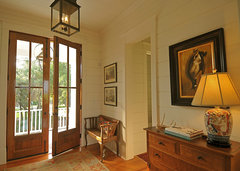
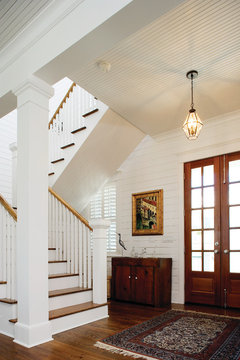
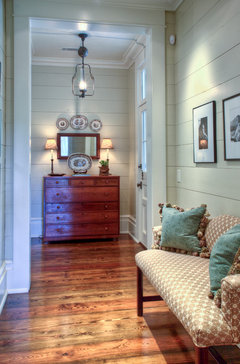
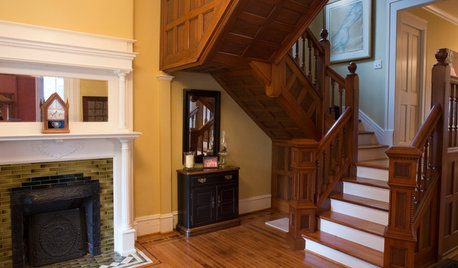
    I really commend you for loving the family home and wanting to really honor and respect it. It sounds like a wonderfully built and well cared for home, good luck on your journey. Here some more pictures that might get your imagination working.

    Home Farm 1 · More Info
    https://www.houzz.com/photos/20-iron-bottom-entry-traditional-entry-charleston-phvw-vp~202309
    Structures Building Company · More Info
    Farmhouse Hall · More Info
    Casey Nicholson thanked User
  • 11 years ago
    I would start replacing those windows. it is a pity to spend money on window coverings that are not curtains, etc only to change windows. The look will be very different too.
  • 11 years ago
    @Kevin Strader: The shutters were taken off when the house was covered with aluminum siding in the 1960's. I had one wall inside the garage that showed what the original dutch-lap wood siding looked like that was original to the house, and it was beautiful, so my 2014 project was having the aluminum removed and having the underlying wood siding repaired and replaced. Of course, the shutters seem to have been discarded when the aluminum was installed.

    That said, is there any way you can get me a larger copy of that pic where you put shutters on the house than what I can download from here? I really like what you've done there and I'd LOVE to see it in a larger version than the thumbnail that it lets me download.
  • 11 years ago
    Also, regarding the front porch, the small front porch was of course there in the old pics. It's the portico that has been added. I hate the pillars on the portico and I'm looking to get those changed at some point. The portico itself, though, is made of wood with good quality shingles that I just re-roofed, and it's nice to have a covered entrance, so I doubt I'll be getting away from the portico.
  • 11 years ago
    Is it just me, or do the porticos bow out toward the sides, away from the door? It's especially noticeable on the left one (looking at the photo).
  • 11 years ago
    @makaloco: The left pillar is slanted. That's one of those things on my to-do list, but it's basically mounted into the porch with concrete, so just one of those things that hasn't been tackled yet. I'd like to replace both pillars altogether. They're aluminum, and I'd like to find something a bit larger and more classy looking.
  • 11 years ago
    Yes, I meant the pillars, sorry. The portico looks fine. I agree that slightly larger pillars would make for better proportions, but of course you can't do everything at once.
  • 10 years ago
    last modified: 10 years ago

    Your home is a colonial style, and it certainly would not be mid-century modern because that is a style (one story and modern with very large windows) and not just the time period when the house was built. The colonial style was popular beginning in the 1940s due to patriotism inspired by the World War II era. I agree with other posters that colonial furnishings were very simple and basic. If you want to give the home an updated look, paint the walls a soft white or soft yet vibrant pastels like light yellow-green, pale blue, or light yellow with lots of snow white trim and black wrought-iron hardware for doors and cabinets. You may choose simple tailored curtains or ruffled priscillas and cafe curtains, depending on your personal taste, to be in keeping with the colonial look. The exterior of the home would look wonderful in white with dark shutters that are the same color as the roof. However, you might choose a silver grey roof and add harmonizing black shutters since a light-colored roof would make the house cooler in the summer. A light green roof and slightly darker green shutters also would look nice on a white house.

  • 10 years ago
    Hi Casey, in a lot of areas, this is a very typical house. There was a LOT of suburban building going on in the 20s and 30s and into the 40s. I personally love the 40s and the more traditional 50s houses because they are "newer" than the 20's houses and seem to have larger rooms, and more "modern" layouts, while still retaining the construction quality and respect for traditional architectural of earlier 20th century residential construction.

    I think it is great to respect the era of the home when it comes to repairs and renovations. When you go into one of these older homes, so often the "worst" problem is not a worn, but original feature - it's the improvements someone made between 1950 and 2015. Windows are SO important. I think it is great you are focusing on that. But please don't try to exactly match a particular era when it comes to removable furnishings. That is not good taste - it is an offbeat quirk. Traditional, classic furnishing are fine, if that is your preference. But furnishings, especially upholstered pieces, window treatments, linens, etc. we're not intended to last forever. Trying to recreate a snapshot of a different time is a mistake. You want to house to be cohesive overall, but it should be a home, nit a stage set.
  • 7 years ago

    Casey, it has been a while since you posted your questions. I just happened across this conversation and am wondering about your progress. Yours is indeed a late period Colonial Revival house, not mid-century modern, which is a whole different animal. I admire your desire to preserve and honor the house. People may say it's not historic, but it is, and it represents a time in our nation's history that has been displaced by "progress." I love the Colonial Revival Houses and have a page on Facebook with that name, where you will find hundreds of examples, most from real estate listings but other sources, too. Join us if you enjoy what you see. John

  • 7 years ago

    I just came across this thread and I'm so curious how the house came out. I am trying to solve a vaguely similar interior decorating problem where I've got a lot of inherited Colonial and primitive pieces (not all Revival, mind you, actual Colonial, in some cases) but I've collected quite a bit of mid-century modern over the past few years because I get a kick out of it. I'm at the point where I have to choose one or the other and unload something but I'm torn between the two so I keep trying to figure out a way to blend some of each. I figure people back then couldn't typically afford to ditch all their Colonial pieces they acquired in the 1930's-40's but, of course, they continued to buy furniture and things in the 1950's which would have had that mid-century style. How did they blend it? The simple lines are a common thread to each but the mid-century style cleared out the ruffles and frou-frou in the decor, especially curtains and upholstery. I like that fact but I also like the real aged wood of the antiques. How the heck did they pull it off? Or did they? What's a furniture hoarder to do?

    As to the house, I applaud the preservation and loving restoration. I just saw one very similar torn down to make way for a waffle house. People went in and stripped everything they could but the bones of that house were so sturdy, it would have lasted another 200 years. It was a disgrace. I'd recommend an old Cary Grant movie called Mr. Blandings Builds His Dream House to the owner to watch to get that period vibe.