Software
Houzz Logo Print
denamoses1

need help getting oil stains out of my dining room table

11 years ago
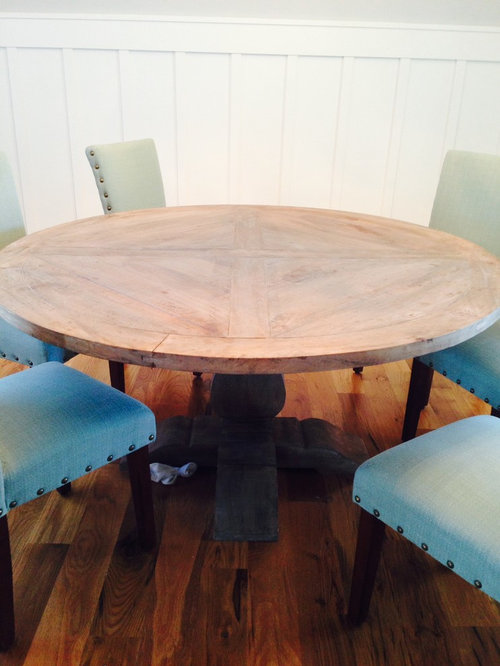
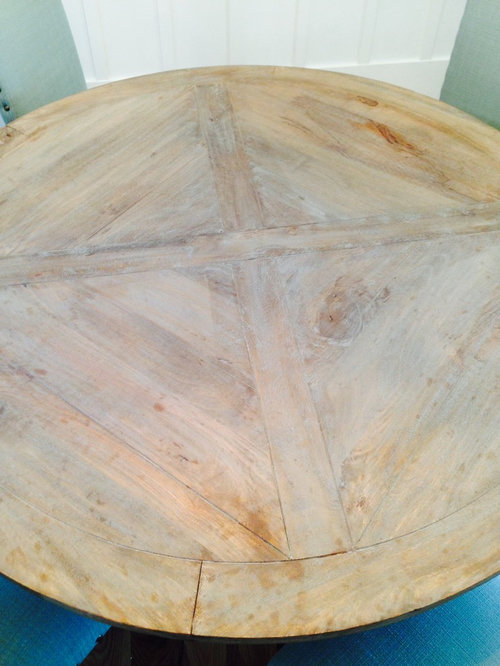
I bought a rustic looking mango wood dining table 6 weeks ago, not realizing that I was supposed to protect it with wax before using. There are now grease stains all over it. Is there any hope to get them out? I tried cornstarch, which worked for some, but not all. Any advice as to what to do to help this table look good? I'm hoping to get more stains out before applying wax (or oils??). Also open to any advice as to which is best- wax or oil, and what type. Any/all advice most appreciated!

Comments (31)

  • 11 years ago
    I' m thinking neither. Hope you get some posts from the Houzz 'wood guys' out there. I know they can help you.
    denamoses1 thanked sandradclark
  • PRO
    11 years ago
    Most likely this will have to be sanded down below the stains and then a finish applied. My knowledge as to how to go about removing oil/grease stains from raw wood is limited but if this was a hardwood floor (the theory is the same) you have to sand past the grease and then apply finish. If you don't sand past the stains then you have a very poor chance of getting a finish to stick.

    I will let the furniture guys come in and tighten up some of the gaps in my explanation.
    denamoses1 thanked Cancork Floor Inc.
  • PRO
    11 years ago
    last modified: 11 years ago
    If I was to try to get it out, I'd try acetone and/or lacquer thinner. They may draw out the grease. Soak a rag and rub then dry with a clean rag. If it seems to work keep at it until it doesn't come out any more. Then lightly sand with 180 grit, going with the grain for every area.

    Wax and oil finishes are not permanent. You will have to "refresh" them at regular intervals or risk the same thing happening again. If you aren't into regular maintenance, find a good qualified finisher in your area and have them put on a quality top coat. Explain to them what happened and what you have done already. I would recommend Conversion Varnish. It's sheen can be anywhere from dead flat to high gloss. It must be sprayed on so it's not a DIY product.
    denamoses1 thanked Al Fortunato Furnituremaker
  • 11 years ago
    I was thinking lacquer thinner as well, but I did not really know. I think we did that on my 1890 black walnut table. Good luck. Special wood may take didn't tactics. Climates affect finish as well.
    denamoses1 thanked sandradclark
  • 11 years ago
    After you get it cleaned up you may want to protect before using w/ a light plastic cover under your table cloth to keep it protected. Only for short intervals.
    denamoses1 thanked sandradclark
  • 11 years ago
    I would just stain the top surface of the table a dark color!
    denamoses1 thanked horselover222
  • PRO
    11 years ago
    The greasy spots will stain different than the not greasy areas.
    denamoses1 thanked Al Fortunato Furnituremaker
  • 11 years ago
    Not a furniture guy, but I oil my table regularly. There is a very good chance the mineral oil will stain the woo. The same color. I would stain the underside with some butter or something, then wash it with gentle soap, then apply mineral oil. see if it works. Could save you a lot of elbow grease.
    denamoses1 thanked greenfish1234
  • PRO
    11 years ago
    Anything put on the bare wood will change its color, even water.
    denamoses1 thanked Al Fortunato Furnituremaker
  • 11 years ago
    Yes, as if you are lucky they stain it the SAME color!!
    denamoses1 thanked greenfish1234
  • PRO
    11 years ago
    Why not just stain the entire top with what made the current stains? I think denamoses1 would like to fix the problem not cover it up, since it is a new table. I'm sure the bottom is sanded to a different grit than the top, which is common for factory made furniture. Time=money, you know. So the results on the bottom will be different than on the top.
    denamoses1 thanked Al Fortunato Furnituremaker
  • 11 years ago
    No need to be snarky, Al. I see your point but this table is unfinished and the plan is to wax or oil. That means (I assume) that the desired end result is a living piece of wood that will age and patina with use. Mineral oil is an accepted and excellent penetrating and protective oil, and there is a very good chance that it will hide or acceptably diminish the fingerprints, more of which are guaranteed to come and go in the future as oil/wax fades and is reapplied.
    denamoses1 thanked greenfish1234
  • PRO
    11 years ago
    I think wax or oil would both be a fine finish but will require reposting. As others have said I suspect that the current oil stains will disappear into the oil or wax topcoat. Definitely don't use a water based product.

    Retailer should have educated you better, this seems like a problem on a table...
    denamoses1 thanked Ellsworth Design Build
  • 11 years ago
    I'm not very knowledgeable about getting stains out of wood, so I'd give the solutions mentioned by others a try. Personally, I'd probably just lightly sand it if it's solid wood. (I'd also sand the base to get an even look post-treatment, but that's your decision of course.)

    Regarding what to do afterwards. Best thing would probably be to go with what's called "Danish oil finish", not to be confused with a regular oil finish. It provides more protection against heat and stain than either oil or wax. I'm from Denmark (maybe I'm biased towards the name :D), so I had to look it up, but in the US it seems "Watco" is a trustworthy and perhaps the largest supplier of this. It's available in lots of colors, or "Natural" (i.e. Clear), so you can get whatever you want.

    Alternatively, go with a wax finish, it provides better protection than regular oil treatments and requires less maintenance. It's sold in liquid, paste or solids. I would recommend paste. It requires more effort to apply than oils, but it lasts longer and provides better protection, which I consider worthwhile on surfaces that you come into contact with daily.
    denamoses1 thanked Mark
  • PRO
    11 years ago
    last modified: 11 years ago
    OK I concede. I'll let denamoses1 make the final decision based on everybody's input. I'm not saying my suggestion is the only correct one. But after 34 years in the business, I do have a little experience. But I make mistakes also. One of the things my Dad taught me is: "Anything worth doing is worth doing right the first time". Maybe the quick fixes are the right way. Good Luck denamoses1.
    denamoses1 thanked Al Fortunato Furnituremaker
  • 11 years ago
    You can do both oil and wax. Mineral oil will even out and "feed" the whole top, blending the other oil marks with it; wipe it on, let it soak for 30 minutes, then wipe off the excess. Let it dry overnight (or longer), and then apply your wax. Yes, you'll have to reapply the wax eventually, but the interval (if you don't have kids wearing it out) is something like every 6 months to a year (if that; I have several pieces that are going strong at 4 years). If you go with a poly topcoat, just be sure to use an oil-based and not a water-based finish. You'll have off-gassing while the finish cures (which takes at least a week), and do bear in mind that even a poly needs reapplication periodically...but you can't simply touch up a poly, you'll have to strip and refinish the whole thing.
    If you choose to sand the top "past the stain," you will certainly get yourself fully rid of the stains and retain no risk that the stains don't blend. However, if you don't have a basement or garage or warm porch that you don't mind getting completely covered in sawdust, this is an extremely messy solution to your problem. If I were you, I would try the oil first. If it doesn't blend, you can try a bit of oil-based stain. If it still doesn't blend, then you can move to the sanding solution. Mineral oil, by the way, is the way to go for this...any plant/nut-based oil will eventually go rancid. And then the whole project is basically ruined forever. So don't do that.
    denamoses1 thanked Heidi Dyke
  • 11 years ago
    Baking soda. Let it sit overnight, then go at it with a small hard-bristle brush.
    denamoses1 thanked Emmy
  • 11 years ago
    Thank you all so much. I am heading to the hardware store in the next few days- have two small children who keep me from going sooner. I will let you know how it goes!
  • 11 years ago
    It's mango and as such anything will be a struggle. Those Asian woods make for furniture at a good price, just not durable or treatable with normal American products. Go back to the store you bought it from and ask them for the care sheet, which should have been provided at purchase. You may even get an exchange.
  • 11 years ago

    What did you end up doing?? I have the same problem, we had crab and butter and left rings all over the table!

    l

  • 11 years ago

    I clean bare wood with rubbing alcohol before finishing it. It cleans the wood, I have no idea if it will take the grease stains out, but it won't hurt the rest of the wood in the process.


  • 11 years ago
    Hi, Try lemon juice and olive oil.
  • 11 years ago

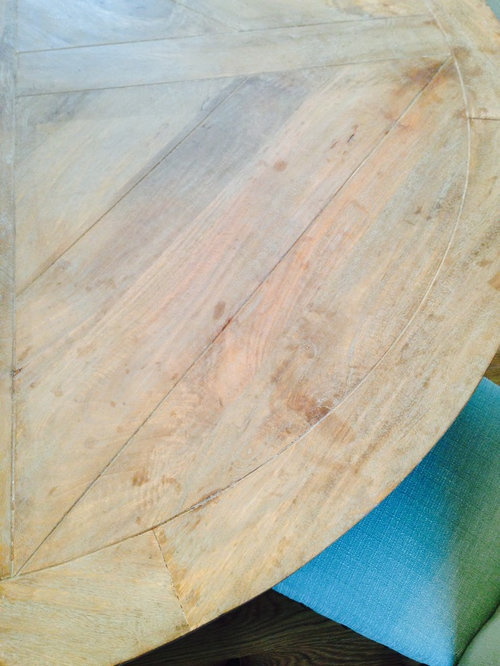
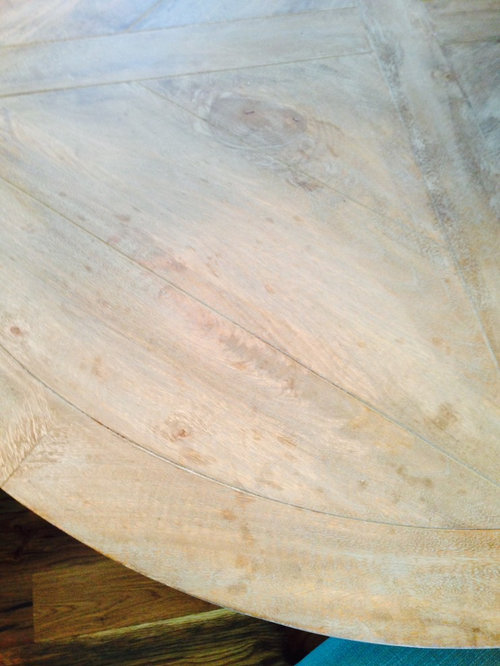
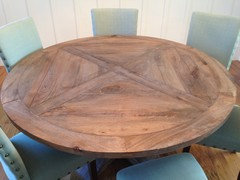
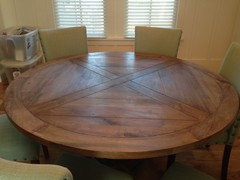
    So, I realized that the acetone, sanding then applying paste would have been the most effective method, but I have zilch experience with such things and was afraid I'd make a mess of it. And I had not gone to the store to ask for an exchange and wanted to try the least abrasive method first. So, I first tried baking soda over night and scrubbing it in with a brush. I did that for a couple days. Surprisingly, it worked with a whole lot of the stains. See first picture below. I was grateful for the suggestion. But not all the stains came out completely. So I went to the store and told them my problem. They offered to give my money back, but didn't have the same table to do an exchange- and I really love the table. So I asked if they would still take the table back if I tried putting a wax finish on it and see what comes of that. He said fine. So I applied the paste wax he suggested- Johnson's paste wax- and as far as I'm concerned it looks great! The color is a bit darker, but with the other natural wood markings, you (well, I at least) can't tell there were any oil stains. Now, I do wish the color would have been the exact same as it was before, but it was either protecting the wood from other markings, or a slightly dark table. I chose the latter. See picture 2. I'm overall happy with it and am really grateful for everyone's input and help!

    -Dena


  • 8 years ago

    I know this post is old, but hopefully you will see my question. Can you please clarify if you used just dry baking soda, or was it a paste of baking soda and water? (sorry if this seems like a stupid question!). I have an untreated acacia table. Sanding is not an option because it is handscraped, so sanding would remove the texture. Thank you.

  • 8 years ago
    I ended up using a beeswax called Feed n Wax helped a lot.
  • 8 years ago
    This is what I used in mango wood
  • 8 years ago

    Thank you! I'll give it a try.

  • 8 years ago

    DC did the Howard feed N wax work on the mango wood? Did it stain it darker? I have water stains on my mango wood dresser!

  • 8 years ago

    No personal experience with mango wood; however, with other woods (a scratched table top that was in need of refinishing anyway and a cutting board) I've successfully removed different kinds of stains by placing a stack of paper towels over the stain and wetting them with that thick gloppy no-splash bleach. If the stained area does whiten more than the rest of the wood, you may need to wipe the entire table with the wet paper towels to "even" out the colors. (Always be careful using bleach for cleaning.)

    Since Dawn dish liquid is even hawked as useful for removing oil from the feathers of water foul affected by an oil spill, you might want to try this idea with Dawn before trying bleach.

  • 8 years ago

    Post lead sentence says "oil stain"; text says "grease stain" -- what caused this stain ... might matter about cleaning it.