Software
Houzz Logo Print
waldenpond_gw

Boxwood rescue! Please help!

11 years ago

I had this 4' 40+ year old boxwood hedge on the edge of my property, just opposite my neighbor's rotting fence. My neighbor hires a contractor to replace the fence and long story short, he ripped out the hedge in the process of doing so (it was in his way he said, unbelievable). I didn't know about this right away, but it could have been out of the ground as long as 3 days. (the contractor said "a couple hours" but I know different)

Our weather has been fairly mild, avg in the 40's-50's and the root structure did look pretty intact albeit dry looking (very little earth on it). I got it back in the ground shortly after the discovery and watered it with some Miracle-Gro (i didnt know what to do). It's been a couple weeks and so far, so good. But I have been told, ill effects may not be immediately visible.

I am no expert by any means. It's not a model specimen but I'm determined to save it. Can someone tell me what I should do? Any opinions of if will make it or not?

Please help!
Thanks in advance, Dan

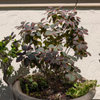
ps. photo is of how i found it. this is the fence side of it (pretty sparse), its much greener flipped over

Comments (16)

  • 11 years ago

    It's pretty hard to be optimistic. The photo shows very few root hairs and if the plant had been out of the ground for days, they likely would have died anyway. On the other hand, boxwood is a pretty tough plant, and you never know. Replanting was fine, fertilizer not a good idea, but should not do any real harm. It is true that evergreen plants are often deceptive. The leaves can look fine for quite a while even when there is no viable root system. Then when the reserves in the above ground tissue are exhausted, they cannot be replaced and the plant shows that it has been effectively dead all along.

    I'm not clear about the extent of the hedge and I understand why people want to avoid conflicts with neighbors, but this was such a serious and destructive act, I would ask that the plant be replaced. Don't wait on this, but you can make it clear that you want a replacement if the one you replanted doesn't make it.

  • 11 years ago

    Yes, would not be surprised if tops go brown and dry later instead of making new growth.

  • 11 years ago

    Even though it seems counterproductive according to conventional wisdom, which would have you leaving the foliage on the plant to make food for the organism as a whole, I'd prune at least 90% of the greenery off the plant to slow transpirational water loss in hope of circumventing a complete collapse of the plant. The plant's chemical messengers will signal the plant to focus on root generation and as roots come back on line the plant will start back-budding. You're MUCH more apt to save this plant if you DO balance roots (almost 0 functioning) to shoots.

    I've salvaged a LOT of sizable evergreen shrubs set out for roadside p/u and turned them into healthy bonsai plants. Also, the idea that you should NEVER trim to balance roots and shoots isn't valid w/o some qualification. For instance, emergency transplants of deciduous trees in leaf during hot, dry, sunny weather is often ONLY doable if you defoliate or prune the top back hard. Also, if the plant is going to shed foliage and branches a compromised root system can't support anyway, it's better that YOU decide what branches should go than leaving it to Mother Nature's whims.

    Al

  • 11 years ago

    New spring root growth from cut root ends is caused by hormones sent from stem tips, fueled by energy stored in stems. Cutting both of these (stem tips and stems) away reduces ability of shrub to form new roots in response to root damage.

  • 11 years ago

    Not so. Auxins must be present in roots only in greater quantity than unconjugated cytokinins to initiate root growth. If the plant is still viable, and since cytokinins are primarily synthesized in root apices (which have all been destroyed), by leaving on a little foliage the polar flow of auxins (shoots to roots) will easily ensure superiority of the concentrations of auxins and stimulation of root growth is assured. Additionally, super concentrations of auxins tend to stimulate lots of elongation with little lateral bifurcation - something we really don't want.

    Plants have internal chemical messengers that guide them toward growth that is in their best interest, so the plant will 'know' what to do. By leaving a plant with a hopelessly inefficient (practically nonexistent) root system to support the volume of foliage shown in the picture, you sacrifice reason on the altar of convention and invite wholesale collapse of the organism.

    If the plant had a functioning root system that was even close to being able to support the plant's top mass, there would be nothing to discuss - I'd say transplant and hope for the best ..... but this isn't a conventional situation.


    Al

  • 11 years ago

    Plants, as you say are integrated systems. The top supports growth of the roots and vice versa. Cut off most of one and the other has less to sustain it.

    Where dehydration through foliage is a concern the answer is to place the foliage in an enclosed, humid environment, shade the top from the sun etc. Since this box has been sitting around for days the cow is probably out of the barn as far as that is concerned.

  • 11 years ago

    Sometimes you need to break from convention when faced with unconventional occurrences. In normal situations, I agree with what you are saying, and illustrated I understand conventional thinking as it applies to things like transplanting of plants not circling the drain. I work with plants like this all the time, so I understand that following current convention for this application is going to be counter-productive, this, by way of practical experience. First priority - do what's necessary to keep the plant VIABLE - the plant will sort out the rest.

    You know the plant is going to shed at least 90% of the top growth in a drought response anyway, because of the total lack of fine roots. It's entirely possible that the plant might die back so the only part that's viable is the root to shoot transition zone. In both cases, loss of all or almost all foliage or dying back nearly to the ground is the plants natural response.

    Hard pruning the top before the leaf abscission layer forms greatly reduces water demands and will help the plant avoid collapse. Hard pruning AFTER the abscission layer forms doesn't help as much, but does reduce water loss through lenticels and periderm.

    Al

    This post was edited by tapla on Wed, Feb 4, 15 at 17:34

  • 11 years ago

    Cutting the top back to supposedly balance the plant out is the conventional approach and not what I am talking about. So who is stuck in conventional thinking in this instance and who isn't?

  • 11 years ago

    No - that USED to be conventional thinking a couple of decades ago. Current convention is NOT to "balance" roots to shoots during NORMAL transplanting applications because we want to retain as much foliage as roots can support. This is far from a normal transplant.

    Dan seemed to be more than able to decide what sounds like the most reasonable approach. I wish him well regardless of how he chooses to move forward.

    Al

  • 11 years ago

    There are no roots to support the top.

    Basically you are rooting a cutting (albeit a very large cutting).

    And conventional procedures for rooting a cutting are to significantly reduce the foliage surface to prevent overall dehydration and collapse of the plant.

  • 11 years ago

    Good analogy, Dave.

    From this
    {{gwi:82261}}

    to this
    {{gwi:82264}}

    before sticking the cutting and to prevent collapse.

    *****************************************************************************

    If you're going to go to this
    {{gwi:6337}}

    from this
    {{gwi:55262}}

    you'd better go from this
    {{gwi:80442}}

    to this
    {{gwi:6990}} about 10% of the original volume of foliage remains after pruning subsequent to the severe root reduction.

    If you don't reduce the canopy after removing a root volume of such significance, the plant will collapse or shed branches YOU think are important to the end composition. Better the grower to take control in extreme situations - convention is fine/ makes sense for conventional apps.

    Al

  • 11 years ago

    Obviously, the practice of pruning the crown of a transplanted tree or shrub does not reflect what actually
    happens to the plant physiologically. In addition to
    interfering with the plant's ability to establish its
    roots, the removal of a significant portion of the cr
    own also means the plant has lost biomass and cannot
    photosynthesize at its previous level. Thus, plants
    that have been top pruned are hit with a "double
    whammy:" part of their photosynthetic system is re
    moved, and those resources that are left are directed
    towards new shoot development. It's no surpri
    se that root establishment under these conditions is
    difficult

    Here is a link that might be useful: The Myth of Top-Pruning Transplanted Material

  • 11 years ago

    sounds like tapla & dave have the right idea. We greatly reduce the foliage during cutting preparation even when the cutting will go into an environment of 100% humidity. I can't recall ever digging a BL evergreen that didn't respond by shedding some foliage, its the natural response of the plant. Youtube has countless "how to" videos where plants have been salvaged and formed into bonsai by greatly reducing the tops.
    Anyone here familiar with the "Rime of the Ancient Mariner"? That old "Myths" link reminds me of the albatross in the story LOL. I'm surprised to see it resurface again. I thought that we had put it to rest when it first came out several years ago. It is a major embarassment for WSU, the "researcher" needs to go on sabatical to J Frank Schmidt for a year or two and learn something about propagation and pruning.

  • 11 years ago

    You keep trying to pound a square peg into a round hole. Dr Scott, bless her heart, has dispelled a lot of horticultural myths, but one of the things that sets her apart is her ability to qualify her work as she writes. Dr Scott is talking about transplanting plants with viable, functioning root systems, not plants that lack a functioning root system entirely. "Research performed under landscape conditions ...." We're not discussing a plant you're shucking out of a nursery can and dropping in a planting hole, like Dr Scott is.

    Recognize this?:

    6CO2 + 6H2O + sunlight ------> C6H12O6 + 6O2

    See that 6H2O in the equation that is required for photosynthesis? If the plant can't take up and move water (no roots), how can photosynthesis take place? Roots come FIRST. The first thing to emerge from a seed is the root radicle, and a push of top growth (quantified as a function of sustainable mass) is always preceded by a volume of root growth sufficient to sustain the top.

    In this individual case and in other cases where the root system is severely compromised, it makes no sense to cling to (current) convention (square peg - round hole). It's spring there. The plant should have a LOT of energy reserves in cambial tissues, stored for the spring push. After the top is reduced, the plant will use stored energy to push root growth. As root growth comes on line, and the plant can support top growth, foliage will follow. Diminished auxin flow means cytokinin is king, so as the plant is able to support new growth, back-budding will occur and the plant will soon establish and maintain it's own balance between roots and shoots, as is their normal growth habit.

    Al


  • 11 years ago

    While interesting, the discussion has strayed pretty far from the op's original dilemma. Only waldenpond can decide which is more important: saving the original plant or replacing it with a boxwood more or less like the one he/she had. The chances of saving the original, imho, are very slim and even if possible it will be many years before it looks like it once did. This was such an unnecessary and thoughtless act on the part of the handyman, I would not hesitate to ask him and/or the neighbor to pay for a replacement if and when the death or barely alive status of the original plant becomes obvious.

  • 11 years ago

    Since we're still talking about a box that needs (needed?) saving, I don't think we have strayed all that far from the OT; and the information can be useful to anyone who might encounter plants they might like to salvage in spite of a badly compromised root system. I agree with the idea the plant is probably unsalvable at this point if WP hasn't acted, but don't agree it would take years for the plant to get back on track. My guess is, if it isn't badly limited by cultural issues aside from the uprooting, it would be back on track and growing normally by the start of the next growth cycle (spring '16) or before, even after having been pulled back from the precipice.

    I actually have a box in a 5 gallon can that I picked up off the curb (picture on request) with all the foliage dead and roots completely exposed except for those within about a gallon of soil directly under the base. I pruned it back hard, and even pruned the roots to about 1/4 of the original volume. It reacted in typical fashion - it sulked for 2-3 months in open shade, then started to back-bud. At that point, I moved it to full sun. It's over-wintering in the garage now and is strong enough for me to start carving hollows in the heavy trunk and further reducing the roots so it will eventually fit in a bonsai pot.

    Al