Software
Houzz Logo Print
tlbean2004

why does the fascia board rot even with drip edge?

11 years ago

Some parts of my fascia board are rotting. Even though there is a metal drip edge. Why does this happen and what is the point of the drip edg if there is still going to be rot?

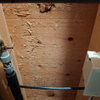
The fascia boards are in a few peices along the length of the roof. One of the pieces that was replaced at some point before i owned the house is slightly sticking out. Is does not rest flush with the other boards. When i was standing by my front door i saw some painted wet wood on the porch. when i looked up it was from that piece of the fascia.

There are actually 2 boards. The first board is about 6 inched and the board on top of that is about 2-3 inches and the metal drip edge lays against that. Im hopeing that the rot did not spread to the 6 inch board but just the smaller board will need to be replace.

How do i prevent this from happening again and do i need to rush to get it fixed or can i have somebody fix it this summer?

Comments (17)

  • 11 years ago

    Can you post pictures?

    There are a lot of reasons for the problem, and fixes depend on the reason.

    Age, whether the fascia was painted correctly, freeze damage, improperly installed drip edge, improperly installed fascia, incorrect roofing, too much shade in moist climate, and more.

  • 11 years ago

    Did someone run the shingles flush with the drip edge? That is my guess. If so, the shingles should overhang the drip edge approx. 3/4".

    Another problem could be, the type of drip edge used. There is a "C" type drip edge out there, which IMHO, should never be used. Drip edge should have a kicker bend at the bottom, to let any drips, drip away from the fascia.

    This post was edited by Roof35 on Wed, Jan 14, 15 at 22:03

  • 11 years ago

    the shingles do overhang it by about an inch.

  • 11 years ago

    Saw it happen a lot in damp climates.

    Cool moist air gets drawn into the attic and condenses on the inside face of the fascia board. The placement of the fascia board on a house itself contributes some to the problem (outside warm or cold and the inside just the opposite = moisture forming ) 99% of the time the back side of the board is not painted or protected allowing it to basically rot from the inside out. The homeowner will not even know about the rot until they start seeing the paint bubble/crack/peel or happen to doing other work such as on the gutters or drip edges or be in the attic and find it by chance.

    Since the attic needs to be vented to allow hot air to rise. They are really not much you can do about them rotting. You prevent your attic from venting. You will then see moisture running down your walls inside of the house. which is not good.

    A few things that you can do to prolong the life of your fascia board.

    Use a good quality pressure treated wood.

    Paint or treat (oil based) all of the surface sides (front, back, top, bottom and end edges) before you hang it.

    The most expensive that I really only suggest for new houses while under construction. Use composite wood for fascia boards.

    Think of a fascia board as your cars windshield. In the winter it is clear and bright until you get in the cold car and almost instantly you have fogged up windshield from moisture.

    About the same thing happens to your fascia board every time the temperature between the inside and outside changes.

    You can slow the rate in which it rots.. But you can't stop it.

  • 11 years ago

    Somebody probably caulked that horizontal joint, making a perfect water trap. That is one of the places where you never want to caulk. Always take a hard look at every horizontal seam before filling it with caulk to make it look pretty and seamless, it mostly does more harm than good. The question is "does caulking this keep water in, or keep water out?"
    Casey

  • 11 years ago

    is the tar paper/felt under the shingles under the
    drip edge?

  • 11 years ago

    "is the tar paper/felt under the shingles under the
    drip edge? "

    Imo,the most valuable post in this intire thread.
    You diy types make a note of this commonly made mistake.

  • 11 years ago

    A great many builders today use PVC for fascia boards and other exterior trim subject to moisture and rot. The PVC is flexible and therefore difficult to install without at least one helper. It also releases a lot of PVC dust when cut, planed or sanded. It will not, however, rot and is available in enough colors so that it will not usually ever need to be painted.

  • 11 years ago

    In my experience, at least here in Michigan... ICE due to poor insulation or ventilation in the attic IS the #1 cause for this and many other roof related problems. As ice forms it helps trap any melting snow or rain along with forcing it to go places it shouldn't. If it were in my neck of the woods I would first ask you "do you have lots of icicles in the winter". What do you have for soffit and is it vented? You have lots of options, but my recommendation would be to replace the sub fascia that is rotten only do all if needed and install aluminum fascia over the wood, changing the soffit to a ventilated style if needed.

  • 11 years ago

    "is the tar paper/felt under the shingles under the
    drip edge? "

    I dont know and i dont think so....

    should it be?

    I had the roof replaced 5 years ago and that is still the same drip edge that was on it previously.
    I dont think the roofers took it off and then re-installed it.
    The tar paper probably does not run under it.

    Once i replace it, will putting pvc or alumnum over the wood prevent my from ever having to replace again?

    Please advise.

  • 11 years ago

    felt goes over drip edge so that water is shed
    from the roof.

    if drip edge is over felt, it lets water in
    & holds it there.

    why would anyone re-use drip edge?
    standard is to replace it when roof is repaired/replaced.

    why don't you take a look?
    we can't see it from here.

    look at areas you have circled in your pics
    & a few others. snap a pic or two to share.

  • 11 years ago

    akamainegrower, while that is great that using the PVC the fascia will not rot it may mask other issues of poor installation which will cause much greater issues than rotten fascia.

  • 11 years ago

    hmmmm
    Drip edge was not in the quote for the roof.
    And i dont think it is in bad condition.
    It is also painted, and if they replaced it then it would have needed to be painted.

    I dont know but hope the felt paper goes over the drip edge.
    i will take a look later on.

  • 11 years ago

    millworkman: Proper installation is a necessity for a great many things. Poorly installed PVC trim can indeed mask other problems, but I have a hard time seeing that as a reason for not using it. Poorly installed wood trim can also mask problems as it rots in places hard to see from the outside.

    tlbean2004: Do not put PVC or anything else over wood. All that does is create a place for water to collect between two different materials. PVC is designed to be used alone as a replacement for wood. Will you ever have to replace it? Never is a very long time, but given correct installation, PVC trim will last much longer than wood.

    If your rot problems, however, were the result of improperly installed drip edge, etc., you may get good long life with wood once the problems are corrected. Rot resistant wood such as cedar or pressure treated is a good idea, but proper priming of all surfaces before installation is also very important.

  • 11 years ago

    Oh I agree aka, my point was just he needed to find out the issue before replacing the fascia.

  • 11 years ago

    I did a read through the thread and didn't catch if anyone mentioned this, but is there a gap between the drip edge and the fascia board?

    If not, water can transfer from the drip to the fascia via capillary action. Instead of dripping off the drip edge, the bead transfers from the drip edge to the wood and runs down the face of the fascia.

    Also, was the fascia primed and painted before or after installation? If afterwards, then probably just the front and bottom edges of the fascia are primed and painted. The top and back can absorb moisture, the paint holds the moisture in, leading to rot.

    So overall, myriad issues to address.