Software
Houzz Logo Print
imcheetah

interesting trees for zone 7

11 years ago

We just built a Mediterranean style house in the Pacific Northwest, zone 7. We are looking for some interesting, unique trees that would give us that look. I think we are zone 7, perhaps an upper 6. I would like to go with trees that are either broadleaf evergreen, or something that would look different than common maples and such. If you have any ideas, please share. Any advice would be really appreciated. I have a lot of rhododendron shrubs, some camellias and a southern magnolia. Just wanted to get ideas on what else is out there that would survive in our climate.

Comments (23)

  • 11 years ago

    Skinny, fastigiate trees tend to have a Mediterranean look. Examples would be Beech (i.e. Fagus sylvatica Dawyck), Oak (i.e, Quercus X Warei "Kindred Spirit), Italian Cypress (may be fully cold hardy in Z7). Parrotia persica would fit the style too IMO. Citrus trees, etc.

  • 11 years ago

    Where are you in the PacNW that your zone is 6 or 7?
    Mike


  • 11 years ago

    Oriental Raisin Tree (Hovenia dulcis)
    American Persimmon


  • 11 years ago
    We are northeast of Vancouver, Hockinson. Our elevation is a little higher.
  • 11 years ago

    Metasequoia! great story and look. you can limb it up for a more formal look or leave the lower branches on for that cool fluted trunk.

  • 11 years ago
    last modified: 11 years ago

    A shrub you would like is escallonia. Most are cold hardy to zone 8 but there is at least one cultivar noted for zone 7 hardiness. Additionally, heaths and heathers in mass plantings will give a real Mediterranean vibe.

    For trees: Decaisnea fargesii, Stewartia species (several species to choose from), paw-paw of which the two cultivars (you need two for pollination) to choose for fruit flavor/less seeds and trying to make life easier for you... I would suggest: 'Susquehanna' & 'Wabash'. You may also like Aesculus turbinata or Aesculus turbinata var. pubescens (one has hair on the leaf underside, the other does not) - large tropical-looking foliage as well as orchid like blooms. Pseudocydonia sinensis and Pinus bungeana, as well.

    Other plants in general I would suggest: Lavender; Russian Sage; Hydrangea 'Pistachio'/Hydrangea/Hydrangea quercifolia cultivars; Acer palmatum 'Manyo-no-sato'; Acuba japonica; Nandina domestica; Viburnum nudum 'Winterthur' & 'Brandywine' (pair for pollinators);

    Dax

  • 11 years ago
    last modified: 11 years ago

    When you get into broadleafed evergreens, a half zone makes a big difference in plant selection. I'd check out your nearest nursery and ask them. Or tell us what your normal low maximum temp is that you typically experience there.

  • 11 years ago
    last modified: 11 years ago

    at a new build.. they really have no idea about potential micro climates ...

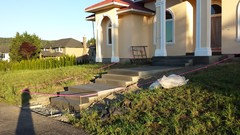
    a pic of the house.. might get you some landscaping ideas ...

    and i note.. you dont really tell us plot/land size.. etc .... its hard to recommend plants.. with no clue of what size limitations are ...


    i would also suggest.. you track down local labeled botanical gardens.. and visit them ... they are the best indicators of what might grow nearby ... as well as high end nurseries ...

    ken

  • 11 years ago
    last modified: 11 years ago

    borderline 6/7 in the PNW is a fairly rare microclimate...or maybe I should call it mesoclimate...rare in the sense that not many people live up in the hills

    this is a case where it might be best to ask at a reputable local nursery, as Dave helpfully pointed out (I'd skimmed past his post before)

    Not that it is a bad recommendation but the very hardiest escallonia struggles in my garden where it has averaged to 7b since I bought it...it has a bit of green now on branches that were snow protected but it barely survived this winter with a low of 1 F.

    Heaths and Heathers would mostly thrive, except the tender arborescent/shrubby ones like E. lusitanica that are grown in the milder parts of the PNW. They are also popular nursery material there...most of the plants grown by Heaths & Heathers in Shelton, WA seem to come from a Vancouver wholesaler. (legally imported I'm sure)

    [edit - oops, I thought you were north of Vancouver, CANADA! I am aware of the WA state town. I couldn't see any other way you'd be borderline 6/7. Are you sure you are that cold?]

  • 11 years ago

    "Mediterranean style house in the Pacific Northwest"
    Genista aetnensis, if you can find it, would look very Mediterranean, and is fully hardy throughout zone 7. Just make sure it has full sun.


  • 11 years ago

    What I'm wondering-and I'll admit, this is not how one makes forum friends-is why Mediterranean-style? What has that to do with the PNW? I feel the same way when down in S. FL. Lots of clay-tile (or facsimile thereof) roofs and white stucco, plus all the other accoutrements of the style, stamped out ad nauseum. I guess you could say I don't like it! And while I'm not really sure what house style is appropriate for north of Vancouver, down in S. FL are a few remnant "old Florida houses" and they are very cool....and fit in with the locale.

    Carry on. I realize my rant adds nothing to the discussion!

    +om

  • 11 years ago

    I looked up Hockinson on Wikipedia. It's at just over 300 ft above sea level.
    I'm in the lower foothills SE of Seattle, north of you, at 750ft and I'm Zone 8.
    Zone 8 can grow some palms.
    Escallonia barely survives and not worth growing here. Down in Seattle, yeah.
    Why not grow some Arbutus?
    Mike


  • 11 years ago

    I thought about Arbutus, too.

    I'll have to scratch escallonia from my mind unless zone 9.

    Dax


  • 11 years ago
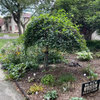
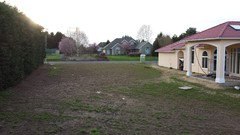
    I am attaching a couple of pictures, one of the backyard, and the other one is of the front yard. It's a junior acre, some slope. The front yard is a more sloped than the back yard. So I don't know if that helps in terms of plant suggestion ideas. And by the way, thank you so much to everyone who shared ideas. Really appreciate your help guys.
  • 11 years ago

    That house is so cool. You'll have a wonderful outdoor space as well.


  • 11 years ago
    last modified: 11 years ago

    "What I'm wondering-and I'll admit, this is not how one makes forum friends-is why Mediterranean-style? What has that to do with the PNW?"

    What has any style of new-built housing to do with any part of North America? What is imcheetah supposed to live in, an authentic Salish Indian dwelling?

    Unless you're going to go modern, minimalist boxes with no adornment - and I have seen a fair # of those in the PNW - housing has to be built in some kind of style, and there's no truly indigenous style the suits a modern dwelling. There is that sort of PNW lodge style (think Twin Peaks pilot, the hotel and Packard residence) but that's no less a pastiche in most cases.

    Anyhow, getting back on topic, getting back to the pictures I don't like to spend time "online landscaping" here, but a few words of advice, don't overdue the plantings (a common mistake), don't be tempted to plant a bunch of nonsensical so-called "foundation shrubs"*, don't rule out well controlled vines on arbors or pergolas (always approprate for "Mediterranean") and if the back has a drainage problem, install a french drain now before you do anything else. I'm a little surprise the builder didn't grade-off the back of the house more given the high winter rainfall there. Does the house have a basement or not? Or maybe it's just the angle of the picture. You'll know whether it's a problem or not.

    * for example, the house across the lane...what is that spot of hedging and tree way to close to the house actually accomplishing? If you think your house looks good, you don't want to hide it with trees and dense shrubbery. That's a pretty mild case though, of foundation-itis.

  • 11 years ago

    Now I've gotten my logorrhea river going, darnit...
    A bed of heaths and heathers for example, in the front would never fight to block the view of your house, and yet still 'complement' it or whatever, in the way foundation shrubs allegedly do. Or of very low growing Mediterranean subshrubs like lavenders, cistus, etc.


  • 11 years ago
    davidrt28: thanks for your suggestions and yes, I see your point about not over doing it. I guess what I am trying to accomplish is more of an evergreen look without too many pine and fur trees:). Mostly broadleaf evergreens. I love the look of eucryphia, but I hear that it doesn't do too well here. Everyone I talked to in Portland area said that it eventually dies.
  • 11 years ago

    davidrt28: Everyone in our local nurseries seems to think we are borderline zones 6-7, which is disappointing to me:). I know that Portland is mostly zone 8b, but we are a little north and higher elevation with more property and less buildings/traffic, "city heat", so I don't know. I just don't want to end up with a bunch of plants that will die after the first hard winter.

    wisconsitom: It is pretty transparent that you don't like that style, and it's OK. I agree that it might look out of place in a different climate if you go overboard, but I think there is a way to make it blend in pretty well too if you mix in some native plants. And ultimately, house design/look is just a matter of preference. Style and taste are like religion and politics, you know?

    Big Thank You for all your ideas, everyone! I will look up some of the plants you suggested.


  • 11 years ago

    Well, I'd look for zone 6B trees/shrubs then.

    The list of broadleaf evergreens dwindles quickly at that line. You really have to make sure what zone you are in otherwise you are in for heartache as you lose them to the cold.

    Are your summers dry? How hot? How cold have you seen winters? Winters wet? Do you have winter warmups - if so, how warm? Do you have dessicating cold winds in winter. All this comes into play.

    NatureRus thanked Dave in NoVA • N. Virginia • zone 7A
  • 11 years ago

    Yes, my comments were misguided at best. Good luck with your project!

    +oM

    NatureRus thanked wisconsitom
  • 11 years ago

    Are you affected by the cold winter winds coming down the Columbia River from the east side of the Cascade Mountains?
    Mike


    NatureRus thanked Mike McGarvey