Software
Houzz Logo Print
mzdesign2015

Hickory flooring questions

11 years ago

We like hickory flooring, and want to achieve a look (particularly color) similar to these:

https://www.houzz.com/photos/custom-dark-stained-hickory-flooring-traditional-bedroom-phvw-vp~3977713

https://www.houzz.com/photos/kitchen-modern-kitchen-cincinnati-phvw-vp~1189654


I have a few questions I hope the community here can assist with:

1. We want to keep a contemporary look and don't want large knots, so we don't want character grade hickory. Would we be better served by #1 Common or Select grade? I can't seem to find examples of photos with select grade hickory on Houzz, particularly with a darker stain. We like the color and grain variation hickory naturally has, but don't want large knots. Will select grade kill much of that variation and look comparatively boring, especially with a dark stain? Any photo examples?

2. We figure we'll do an onsite custom stain. Are the colors in these photos hard to achieve with commonly available stains? Any tips on how to get close? To achieve this look, do we need to go with an oil-based polyurethane, or can it be done with water-based? I'm concerned with yellowing over the years if we go oil-based (I really dislike yellow / orange tints in wood floors), but then again perhaps with this dark of a stain it's not a concern?

Thanks for any input!

Comments (24)

  • PRO
    11 years ago

    We spent 6 months developing this prefinish look for a client that really wanted a particular look for Hickory. Any look can be achieved with a custom prefinish.

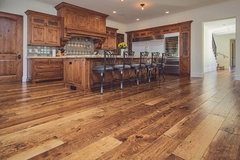
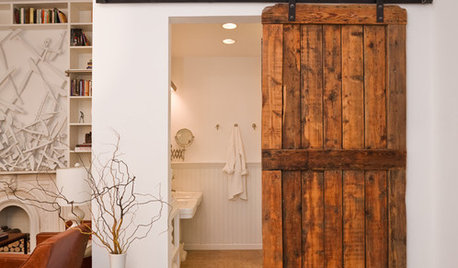
    Custom Hand-Scraped Hickory Floor in Cupertino California · More Info


  • 11 years ago

    Try Somerset Flooring Hickory. It is modern and has the variation of hickory. I put the Character Hickory saddle in my home and love it. It is not as rustic as the photo above. Our flooring is engineered.

    Hwy 60 Kitchen · More Info


  • 11 years ago
    last modified: 11 years ago

    I actually already knew that #1 would work, since I've seen it. My question is whether select grade will work. I'm being offered it as in-stock, which makes a difference to me as time is of the essence. However, I can't find it anywhere in photos, and it seems no one is using it. Any ideas?

    Also, Doctor Structure - I'm in Colorado. Thanks for the detailed reply.

  • PRO
    11 years ago

    A Select Grade Hickory floor will have fewer knots. I think finishing on site is a great idea for a custom stain. It gives you complete control over the finished product.

  • PRO
    11 years ago

    There should not be that much difference between the select and #1 unless they are marketing it as a quartered or all clear product. It is perhaps counter-intuitive that a site finished floor will appear to be more modern than a pre-finished floor. This is because the site finishing process involves sanding the boards flush to each other and because the installer can drive the boards tightly to each other without concern for damage to the finish. A well done site installed floor can be shear and close to seamless. The pre-finished floors typically have beveled edges and so there is a planked look that I would associate with antique houses.

  • PRO
    11 years ago

    Doctor Structure, great advice given!

  • 11 years ago
    Doctor Structure - I talked with an experienced (20+ years), high volume installer in the area who said he was unfamiliar with the terminology of "building up" stain. Is there another way to describe what you're saying? They do a lot of mixing of custom stains, and said they rarely use a pre-made standard stain. It's hard to believe he would simply be unfamiliar with an approach. They're offering to mix a custom stain and apply 3 coats. Are you saying that rather than mix and apply, you stain one color, then add another? If so, won't that lead to a result that can't be consistent or seen in advance. A clarification would be much appreciated!
  • PRO
    11 years ago
    last modified: 11 years ago

    Step by step oil finishes from Hardwood Floors Magazine

    http://www.hardwoodfloorsmag.com/sanding-finishing/step-by-step-applying-oil-finish-on-wood-floors.html. A post today from hardwood floors magazine. I wanted to get this in while it is on my screen. I'll reply in a second entry.

  • PRO
    11 years ago

    The short of it is that your installer is still in business because he doesn't layer color finishes. Most production installers want to use techniques that get them on and off the job quickly and produce a predictable commodity result.

    Most customers also want a cost effective, predictable result and have a limited budget. The flooring installers can't afford to wait out drying times and such they way a furniture maker does. I do not fault them for this. There is just not enough play in the time and money equation for them to make a profit if they need to apply a coat of stain, a shellac sealer, another coat of stain, two coats of oil, and a wax coat.

    Honestly the only reason that I can afford to do this sort of finish work is because, A. I tend to work for higher end clients and B. because i am a GC so we are on the job for long term conducting many phases of construction. I can put a coat down and go do something else while it dries. The relative inefficiency of this approach is covered by a total economy of scale. I might put down the stains and sealers one week, and not come back to top coats and wax until all the painting is done perhaps a few weeks later. I know that it would be hard for me to find a sub who would agree to such a schedule so normally I will lay the floor with my own crew and have a sub come in just to do the sanding and put down a sealer coat. She or he is then off the hook and paid and I have my own buffers and take over the finishes from there.

    The other issue is whether he is an oil finish guy. I believe that he is an excellent floor person and capable of beautiful work. But he may or may not specialize in oil finish techniques. Also if he is a high volume commercial guy he may be very wed to techniques that he can rely on others to perform consistently.

    In any case the approach would be to put down one or two coats of one tone either analine dye or oil stain. Let that coat dry, top coat it with a sealer to lock the first color in. Shellac is an easy and very fast drying sealer. The shellac color can vary from ultra clear to a very dark reddish brown (garnet http://www.rockler.com/liberon-garnet-shellac-flakes-250g ) depending on the grade of shellac. So this also may add a layer of color but the main value of the shellac is to isolate the two oil based stains from each other. Buff down a compatible second coat of stain. Let that dry and then top coat with two coats of finishing oil. The first coat of oil can also be pigmented by adding Japan color or artists oils by this point you may have added a 4th pigment. The final coat of oil should be, in my opinion, clear in order to bury the pigments. Lastly, if you still have it in you, add a wax coat a week or so later with a buffer. The waxes also may be pigmented (5) if this is desired or appropriate. The oil finishes can stand alone without wax but wax is easily renewable. It protects the finishes below and allows you to polish up the floor, without dust, whenever this is desired without having to do much but move a bit of furniture around.

    Because the work is slow the process and pigments can be adjusted slightly to control results.

    The way to know the effect is to do some sampling in advance. This can be done on a few pieces of flooring by hand in a shop in order to approximate the color effect.

    If the person that you have found can show you high quality work that is satisfactory then he may be the right guy ultimately. I also blend stains for a single or multiple passes of the same tone. This depends on the job, the customer's goals, time allowed, and the specific desired result in terms of color and depth of color. The sample photo that you showed was a very deep, color-variegated, almost hand-rubbed finish on Hickory which is naturally a fairly light wood. The approach that I describe would give you a very rich finish with a gentle luster. In a small room I might simply do the whole finish by hand. In a larger space I would use a buffer and a more production approach.

    I think that I said in my first post here that the skill of the finisher was more important than the chemistry.

    Below are a few links that describe color layering approaches. Admittedly these are all on woodworking rather than flooring websites. I come to floor finishing as a woodworker first and so have developed some processes that were originally employed in our wood shop, and then on some small floor areas, before expanding them to whole residences.

    http://www.woodworkersjournal.com/layered-color-special-effects-with-stain/

    http://en.allexperts.com/q/Woodworking-2320/2011/7/layering-multi-stains.htm

    http://www.finewoodworking.com/how-to/article/glazes-and-toners-add-color-and-depth.aspx

    This is a link to WOCA oil flooring finishes. I have had excellent results with these products although I admittedly "doctor" the finishes with my own pigments sometimes in order to achieve specific results.

    Woca might be able to lead you to a finisher who is familiar with their process and thereby familiar with a variety of oil finish techniques. They have US distributors.

    http://woca.info/woodcare/floor/high-solid-master-oil.php

    Good luck. I hope that I have not complicated it all more than I have helped.


  • PRO
    11 years ago

    http://www.gandswoodfloors.com/project.html this is from a Boston floor specialist who uses aniline dyes


  • 11 years ago

    Thanks for all the additional info. I must admit that it's difficult to appreciate the difference that sealing between stain layers might add. Also, I've learned that the techniques you describe are higher maintenance (refinish top layer every year or two). I might have to go with a more traditional approach and mix / add stains without a seal between them. Of course, I'd rather be more economical as well. Thanks for all the advice!

  • PRO
    11 years ago

    I think that the main difference lies in the time involved for the initial application and the problem of finding a specialty finisher who is comfortable with the process.

    The best quality oil finishes are as durable as most polyurethane top coats. To really make a difference in durability one would have to look towards engineered clear catalyzed resins. These tend however to have a heavily coated bar top look and make more sense in commercial environments. Oils have, In my view, the advantage of being easier to repair in the case of a severe scratch or other localized damage. A new coat of oil can be added as required without sanding and scraping the floor. I keep the old (soft) pine floor oiled and waxed in a rental that I maintain for this reason, once all that work that I described is done, then I can stain out the scratches and buff up the floor between tenants in a few hours and it all looks newly finished and is ready to walk on the same day. Even waterborn acrylics would require a longer turnaround time. From this vantage point and if the homeowner is comfortable with some basic maintenance tasks the approach that I described is a lifetime finish. Properly cared for, a floor done this way will look better in ten years than it does on the first day.

    Because oils deeply bond and saturate there is no issue of peeling
    or flaking which is a common problem with poly, especially when applied
    over stains, and again especially if the finisher does not give multiple
    coats of stain adequate drying time.

    Top coat of varnish (polyurethane) and acrylics (waterborne) degrade slowly and eventually fail (admittedly, if the work is properly done after many years) and require a complete re-sanding. Over many years this means that the wood floor itself is ground through. So after two or three drum sandings the whole floor gets ripped up and replaced. If I did this to my rental--a mid nineteenth century Victorian, then in a decade the antique floor would be completely destroyed, instead the oil and wax fill cracks and voids and help keep the floor, hopefully for the next generation.

    Wax coats must be maintained but they are superficial as relative to the oils so there is no sanding and the maintenance can be performed room by room without needing to vacate the house. They dry in minutes and are never "wet." High traffic areas, such as entries and hallways can be rebuffed and low traffic areas let go much longer. Buffing a wax floor is a little less work than steam cleaning a carpet and a bit more than vacuuming.

    But there is no argument or judgement coming from me. This approach is for a certain customer, with a certain home, specific needs, and perhaps even a certain time of life. I do all sorts of fancy things for my clients, but... I come home to a small, less than 1000 square foot, rustic log cabin with very simple finishes.

    Whatever you choose to do, post a photo when its done and I hope that you enjoy your home and the life within it to the fullest.

    mzdesign2015 thanked Doctor Structure
  • 11 years ago

    Thanks again for all the input. We've decided to do the simpler and more economical standard onsite stain. We're working with DuraSeal and expect to coat with oil based polyurethane. Can anyone suggest a mixture of DuraSeal stains to get close to the look of these floors? I've seen Special Walnut on sample boards, for example, but the links here look a little darker and warmer to me.

    Here are the links again:

    [https://www.houzz.com/photos/custom-dark-stained-hickory-flooring-traditional-bedroom-phvw-vp~3977713[(https://www.houzz.com/photos/custom-dark-stained-hickory-flooring-traditional-bedroom-phvw-vp~3977713)

    [https://www.houzz.com/photos/kitchen-modern-kitchen-cincinnati-phvw-vp~1189654[(https://www.houzz.com/photos/kitchen-modern-kitchen-cincinnati-phvw-vp~1189654)

    I appreciate all the help!


  • PRO
    11 years ago

    Just make sure the duraseal stain is compatible with the finish. Check to see how "smelly" your home will be and for how long. Some people with COPD, asthma, migraine and sensitivities to chemicals have issues with oil based products aggravating their health issues (people with neurological disorders such as ALS, Parkinson's, MS, etc. can be hyper sensitive to indoor air quality). VOC content, off-gassing and SVOCs (semi-volatile organic compounds) all contribute to poor in-door air quality. Some people find the smells linger for weeks...making it hard for them to move back in. Have a chat with your flooring professional to hear about what others have had issues with.


  • PRO
    11 years ago
    We specialize in site finished. Call me directly.7807077542 Michael
  • 11 years ago

    Likely using DuraSeal oil based poly as a finish. For stain, either DuraSeal or Old Masters. Any thoughts on how to achieve the color from the links above mixing either DuraSeal or Old Masters stains? Are they of comparable quality? Thanks.

  • 11 years ago

    Andy ideas? I'm hoping someone out there knows their DuraSeal stain colors well. Ultimate Hardwood helped me out, but I'd like to get some more ideas.

    I've seen Special Walnut on my hickory - a bit too light and perhaps not quite warm enough

    I'm guessing dark walnut will be too ashy with insufficient warmth.

    Mix dark walnut with red mahogany? Mix dark walnut with English Chestnut?

    Or mix Special Walnut with those?

    Perhaps I'm getting it all wrong. Should I start with Antique Brown or Medium Brown instead?

    I have no idea where to start, so would appreciate any suggestions. I can't very well ask my contractor to sand and water pop the wood and try every combination of the above in several percentages.

    I'd appreciate any help at this point!

  • 11 years ago

    We're trying to get this color:


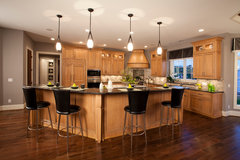
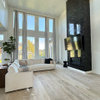
    Kitchen · More Info


    Or, similar:


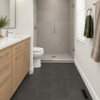
    Custom Dark Stained Hickory Flooring · More Info


  • PRO
    11 years ago

    An onsite visit with a flooring finisher should be able to produced some sample stain colors.

  • 11 years ago

    I have a flooring guy, but we're talking about potentially 20+ combinations. If my guy hasn't done a similar color on hickory, it's shooting in the dark and taking a lot of time. I just need some suggestions on where to start, if anyone has any ideas. Such as: "antique brown is perfect", or "mix 50/50 royal mahogany with special walnut". Anything to get me in the ball park would be helpful, and I can adjust onsite from there.

  • 8 years ago

    I realize that this thread is from 2015, but what did you decide? I am toying with the same issue currently. We have selected hickory, and trying to figure out the best DuraSeal combo. Are you happy with your floors?

  • 8 years ago
    Jill,

    We're very happy with two parts special walnut to one part dark walnut.

    We achieved the look of the pictures I posted, to my eye. The warmth of the color depends on lighting. With sun / daylight it generally reminds me of a somewhat cool brown I associate with typical walnut. In the evening with warm overhead lighting it takes on a warmer tone I see in my pictures. We love it.

    Hope that helps.