Software
Houzz Logo Print
piersonse

Possible herbicide exposure?

11 years ago

Hi all,

I've been trying to diagnose an issue with my tomatoes, eggplants, and beans. I assumed they were having their own individual problems, but after researching online I wonder if they may be suffering from herbicide exposure. My research indicates that manure may harbor herbicide if the animal eats something treated with it. My beds were filled this year with a mix of topsoil and pretty well composted manure - It had a slight smell, but for the most part smelled like dirt. Soil is reasonably moist at 2-3 inches and plants get 8-9 hours sun per day. Eggplant and tomatoes have been out for about 3 weeks.

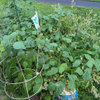
I have attached some pictures of the 1) beans, 2) tomatoes, and 3) eggplant.

1) The bush beans grew two leaves and stopped growing (this happened to every single one of them). Initially I thought an animal was taking the new growth after first leaves and it killed the plant.

2) The tomatoes have small cupped leaves on all new growth. Some of the plants look better than others, but it is evident on all tomato plants. Early growth seemed bushy and stems were thick, which I thought may be due to high nitrogen content in the possibly not-composted manure. This still may be the case.

3) The eggplant has severely cupped leaves on all new growth. Old growth seems fine. Interestingly I noticed some cupping on the second set of leaves when they were seedlings still indoors. However this cupping is extreme and the leaves are very stiff/coarse.

Peppers, brassicas, root vegetables, greens are thus far not affected (peppers have not been out that long)

I'd love to hear what you all think may be affecting these plants. I realize there are an endless number of possible inflictions, but am curious to know if anyone believes it might be herbicide exposure.

Thanks a lot! Sorry the pics are sideways.


Beans


Tomatoes


Eggplant

Thanks a lot!

Comments (44)

  • 11 years ago

    The tomatoes look like they were exposed to 2-4D. Most likely drift. Did you spray or did
    a neighbor?


  • 11 years ago

    I don't spray, but a neighbor was spraying something a couple of weeks ago. I assumed roundup (does that have 2-4d)?. I think he only sprayed his driveway. My thoughts were it was not enough to have a great impact on my garden (although the garden is close his driveway) which is why I though it may reside in the soil. But I have no experience with this.

  • 11 years ago

    Agree with Jr - that looks like drift damage. Herbicides will drift for over 1/2 a mile if the wind is right.

  • 11 years ago

    Thanks for the information guys. I assume there is nothing to be done about this, but wait it out and see if the affected plants can over come it? Am I wrong to think the herbicide could reside int he soil?

  • 11 years ago

    Yeah that is about all you can do - other than come up with some way to prevent it from happening again by talking with the neighbor so you can cover when needed.

    But no it can be found in some composts and composted manure if it wasn't well composted to begin with. But in those cases you see the effects in the older leaves too, not just new growth.

  • 11 years ago

    beware of products like WEED BE GONE. they contain 24-d and dicamba. your tom look like that is what they were hit with drift. Roundup kills the plant that is sprayed and (if used properly) does not kill plants they weren't directly sprayed.

  • 11 years ago

    Thanks. I live in an urban area and can't be sure what was sprayed or where it came from, but it sounds like it was something with 2-4-d. My garden is pretty exposed to the neighborhood. As digdirt mentioned, the best I can probably do is ask neighbors to let me know if they plan to spray so I can try to cover.

  • 11 years ago

    Your eggplant looked like a photo I'd see before. It was of eggplant grown in compost contaminated with aminopyralid. Scroll halfway down this page and look at the photo gallery. Sure you didn't take those pictures, too? green mtn compost info

  • 11 years ago

    Yeah,I saw that photo also. That's why I thought it may be a result of contaminated horse manure (I have a fair amount of it in my garden beds). The beans also look similar to the ones on that page, although mine only produced two leaves and stopped growing. As mentioned before, the tomato and eggplant leaves that were present at transplant still look OK.

  • 11 years ago

    Good catch, about aminopyralid. That herbicide is long lasting and, in particular, does not get broken down much in animal digestive systems and by biological processes in soil. It can take years to go away entirely, if not exposed to sunlight. I think it was a few years ago in the Pacific Northwest that a whole bunch of gardeners lost their whole crops because they applied compost contaminated with it.

    People get all huffy about Roundup, but these other herbicides are pretty nasty by comparison. This stuff just came on the market about a decade ago. It appears to be non-toxic and not mutagenic, but is disastrous for farming.


  • 11 years ago

    In general the signs point to aminopyralid. This is primarily based on how my eggplants look - I can only find a couple pictures of eggplants with herbicide damage and both are related to aminopyralid. However, if 2-4-d (or other herbicide) causes this issue in eggplant it could be airborne, as I can't connect the tomato damage to a specific type of herbicide. Several sources also mention that aminopyralid effects spinach and lettuce. I have had no problems with spinach or lettuce, although they are in a different bed (with same soil).

  • 11 years ago

    If we're talking aminopyralid, your bed may be useless for a long time.
    Not sure what advice to give you, aside from removing all the soil and
    hauling it to a superfund site. There are established ways to test for it, but what does one have to do to get rid of it?

  • 11 years ago

    Yeah, that's what it sounds like. I hate to even think about removing all the soil from my beds. I'll do the test and hope the damage was from drift. Thanks everyone for the help.

  • 11 years ago

    To me it is amazing that people still buy manure at big box stores or other places which produce commercial compost. Aminopyralid lasts years underground. I use leaves and urea since a long time.


  • 11 years ago

    Yes, I believe that's correct, that it is rapidly degraded by sunlight. So maybe one strategy would be just to spread your bed out in a thin layer and give it a suntan.


  • 11 years ago

    BTW, we can blame Dow for this. Yep, Monsanto, you're off the hook this time!


  • 11 years ago

    Good advice on the spreading. Unfortunately I am lacking on space. I have 4 4x12 beds 10-20 inches deep and it's probably not feasible. Possibly the rotten wood would be worth a try? I'm testing the soil with beans using a sample from the bed and a control. Should know in a few weeks if soil is contaminated.

    And the soil mix was not purchased from a box store or commercial location - it was from a horse farmer who distributes locally. I'm new to gardening and obviously didn't do enough research to know this is a concern. Had I known I would have at least tested the soil first before putting it into my beds, if not forgoing it all together.

  • 11 years ago

    I think the best non-edible use of it is to spread it in the lawn, real thin. At least it is some use. It will work as weed and feed, but I think the bio-remediation via fungi should be tried. Fungi really digest any complex molecule.


  • 11 years ago

    piersonse - have you asked the neighbor what he sprayed with? That would narrow down the choices somewhat. You can also take a small container of the manure mix you used and plant a couple of bean seeds in it now. That too can eliminate one possible cause and/or confirm the other. Won't fix the current problem but you'll at least know what you are working with. Is any info available from the source of the manure about what may have been used or not used?

    Dave

  • 11 years ago

    Dave, I haven't asked, but I will see what the neighbor used to try and narrow it down. I have also noticed a lawn service doing work the past few days a couple doors down - I'll ask there too. I did plant a couple of bean seeds in some small pots this evening - I'll update in a few weeks with results. I've also emailed the manure supplier to see if they can provide any info.

    glib, your idea of spreading the soil in the yard is at least a way of disposing of it. That may be the best/only way to easily dispose of it if I need to remove it. And maybe the lawn I never cared about will actually look a little better :)

  • 11 years ago

    Dave's point is a good one. It is necessary to establish whether it is the compost or possible herbicide over-spray. Two possible reasons. Certainly, a seed-test on the compost is called for. If you do that seed test, be sure to have a control that doesn't include the compost.

    What is exasperating about this is that it isn't even necessarily the fault of the compost supplier. For all that poor horse farmer knows, you just take manure and compost it, and you're good to go. If that farmer has to track the herbicide that might have been spread on the feed those horses ate, that's a real disincentive to him/her. The fact that there are widely used herbicides that simply don't naturally degrade is absolutely mind boggling. That constitutes seriously damaging pollution. I believe the UK has banned aminopyralids entirely. If the problem turns out to be the manure, that horse farmer needs to stop selling the stuff, and your local farmers need to get a heads-up about it asap.

  • 11 years ago

    Dan, Agreed, will narrow it down to figure out if it's the soil before moving forward with anything. And I've got the control going too.

    You're right, if it is the soil, I don't think the farmer would know anything about it, and I certainly wouldn't blame him. If it does turn out to be the soil, he will be the first to know.

  • 11 years ago

    Most likely the contaminated manure.
    See this link for how to do an easy bioassay to confirm or not. (link is in menu at the left.) http://whatcom.wsu.edu/ag/aminopyralid/
    Plenty of images, also.

    Also tells how to compost the stuff to break down the herbicide. Active, hot pile.

    Further, if you love corn, this is the year to grow it as grasses are resistant to this particular herbicide.

  • 11 years ago

    Yes, that's a good link. I actually gave it above, but perhaps inconspicuously. Now, at least by my reading, that link does NOT tell how to compost in such a way as to break down aminopyralid. Where did you see that info?

    According to Dow, brassicae (e.g. broccoli, cabbage, cauliflower) are also somewhat resistant to it, as well as grasses. Leeks,
    onions, shallots and garlic may be harmed if the contamination is heavy. FWIW, it has been established that vegetables grown in such contaminated soil are safe to eat.

    Interestingly, I understand that there is a prohibition on use of it for hay intended for export outside the United States. So presumably the idea is to protect international growers, but to screw growers here.

    I hope this isn't what's going on with piersonse, but even if it isn't it's really an issue that vegetable gardeners need to understand, and take very seriously to protect themselves.

  • 11 years ago

    If the soil is contaminated, does anyone know of any research that indicates how safe it is to eat unaffected crops. I've seen anecdotes here and there, but I haven't seen any consensus. My brassicas, swiss chard, and spinach seem unaffected, and as jean mentions corn would be unaffected.

  • 11 years ago
    last modified: 11 years ago

    Sorry Dan, was writing at the same time as you. Thanks for the info on the safety. To be honest, I still like the idea of spreading it on grass to dispose of it (again after proving it's in the soil), which was mentioned earlier in the thread. Does anyone have any additional comment on that regarding environmental impacts or other considerations.

  • 11 years ago

    This from Dow, which is consistent with reports on it from EPA. Pretty benign stuff.

    ---

    Eye and Skin Contact
    Eye contact with aminopyralid may cause severe irritation with corneal injury, which may result in permanent impairment of vision, even blindness. Chemical burns may occur. Prolonged skin contact with aminopyralid is essentially nonirritating and is unlikely to result in absorption of harmful amounts.

    Ingestion
    Aminopyralid has very low toxicity if swallowed, and no harmful effects are expected from swallowing small amounts.

    Inhalation
    Brief exposure to aminopyralid dust is not likely to cause adverse effects.
    Cancer and Birth Defect Information In animal studies, aminopyralid did not cause cancer or birth defects in laboratory animals.


  • 11 years ago

    ... and I should have added to that, this paragraph. Again, pretty benign stuff.

    --

    Environmental Information
    Based on laboratory test guidelines, aminopyralid cannot be considered as readily biodegradable. However, field studies showed aminopyralid is likely to be non-persistent and relatively immobile. Aminopyralid is practically nontoxic to birds, fish, honeybees, earthworms, and aquatic invertebrates. Aminopyralid is slightly toxic to aquatic organisms on an acute basis.


  • 11 years ago

    Thanks Dan. Dow also claims that if affected plants produce a harvest that aminopyralid levels in the fruit are low and are safe to eat, but can not be sold. EPA did not comment on that - other UK studies also indicate very low levels, but they are not rigorous studies. I assume unaffected crops would have a lower level, but I have not seen any research on that.

  • 11 years ago

    If it is the soil, there are many things that will still grow in it. I had used horse manure from a friend that was contaminated. It took a long time to break down so I planted sensitive crops in other areas. The most sensitive crops were nightshades and legumes. I have heard okra is sensitive as well but I never planted it in the area. I kept adding other compost over time and planted things that could handle it. Corn did well, melons, squash, etc.

    One thing I learned when taking horse manure is to ask what the horses eat. If they are fed alfalfa, a legume, it is a pretty safe bet that it is not contaminated. If they eat oats, then I am more careful about where I spread the manure.

  • 11 years ago
    last modified: 11 years ago

    Thanks tishtosh - good to know. I just found your post from a few years ago - great information.

  • 11 years ago

    In my area, we've been having problems with this sort of contamination for at least 5 years. None so far this year but it's very early in the growing season for us. Warm weather crops aren't in as yet.

    When you obtain the manure, you can -- and should -- ask about any herbicides used on the farm or by the farmer.
    But you need to know that some farmers won't have a specific answer because they have hired a pest control company/person to do their spraying for the crop/pasture. Even so, the farmer can request that info.

    Okay, I first saw the info about managing soil where contaminated OM was
    used in WSU info about clopyralid contamination. (Clopyralid &
    Aminopyralid are very similar herbicides in their action &
    persistence.) http://puyallup.wsu.edu/soilmgmt-old/Clopyralid.html .

    I
    don't see it now, but as I recall, the gist was to irrigate &
    cultivate actively through the season. Growing a "grass" (corn) would do
    the same thing and, IMO, make better use of the water.


    - - - - -
    I thought I was well informed about contaminated OM, but I hadn't come across some which has been added to this thread.

    So, here's a plea to PLEASE include URLs for the info you're turning up. Doing so helps us all.

  • 11 years ago

    I am the OP for this post, but am now using my own account rather than my wife's. I wanted to follow-up on the results of the bioassay and what I've been growing.

    The bioassay using beans, indicated that the soil is contaminated. This is likely due to aminopyralid (or similar herbicide) contamination in manure I purchased from a horse farm. Some beans did not grow, but some did and were severely deformed compared to beans grown in normal soil.

    I currently have (or had) the following crops growing in the soil without any noticeable affects: squash, okra, carrots, basil, cilantro, leeks, broccoli, cauliflower, kale, beets

    The following may have minor effects, but the effect may also be due to other factors: swiss chard (curling of older leaves), melons (some minor deformity in several vines), lettuce

    The following have produced fruit but are noticeably affected and new growth has not improved: Tomatoes (cherry tomatoes are producing normal yield, Cherokee purple and mortgage lifter at lower than normal yields), Peppers (hot and bell)

    The following generally grow, but are severely deformed and do not produce fruit: Eggplant, bush beans.

    Things like carrots and okra are said to be affected, but in my soil they have grown without any problems.

    Somewhat reluctantly, I have been eating the produce from affected and non-affected plants. My decision is based on scientific studies (some referenced above) such as: http://www.fao.org/fileadmin/templates/agphome/documents/Pests_Pesticides/JMPR/Report07/Aminopyralid.pdf, which indicate that high doses may have some harmful effects in rats/rabbits but are unlikely to be carcinogenic to humans or have other impacts on humans. This is paired with information from DOW that the aminopyralid levels in fruit are low: http://www.ncagr.gov/SPCAP/pesticides/documents/AminopyralidGardenerResponse29Apr09.pdf

    I have not found any studies that measure aminopyralid levels in vegetables grown in the soil, so if anyone has information on that it would be helpful. Also, I'm unsure whether non-affected plants still maintain any of the herbicide in their leaves/fruit.

    I will try some remediation efforts this fall (primarily aeration of soil) and grow non-affected plants in the beds next year.

  • 11 years ago

    I you have a local gardening forum, you really should inform everyone in the area. Again, it's really not the horse farmer's fault, but people shouldn't be getting compost from that farm. I guess that farmer should be informed as well. If he/she is responsible, the compost sales from that farm will stop.


  • 11 years ago

    I don't have a local gardening forum, but I have notified my local extension office. I have also notified the farmer, who has a reasonably large side-business selling his compost, although I have not heard back yet.

  • 11 years ago

    If you are in NC, you may want to get in touch with the folks at the Mountain Crops Research Center in Fletcher. They have been helping figure this one out after leasing a field that had just been treated with Milestone. I think five years went by before they could use it in their tomato breeding program.

  • 11 years ago

    Thanks. I'm actually in Virginia, but I will get in touch with them to see if they are able to provide any information.

  • 11 years ago

    Re eating produce from this bed, I see from http://whatcom.wsu.edu/ag/aminopyralid/ that ...

    Are fruits and vegetables grown in aminopyralid contaminated soil safe to eat? According to Dow AgroSciences, "If aminopyralid has been introduced into your garden, and plants are showing symptoms of herbicide damage consistent with aminopyralid, but produce a harvestable yield, these inadvertent aminopyralid residues are at a level low enough that you can eat the produce from the garden. Produce from the garden cannot, however, be sold."

    Thank you for your careful effort and responsibility in the face of this unfortunate occurrence.

  • 11 years ago

    I am so very sorry that it is in the soil. I understand how much it hurts. Time does heal that wound but it still is not fun.

  • 11 years ago

    That's really useful information for an aminopyradized gardener -- what grows, and what won't. Sounds like legumes are hit especially hard. Tishtoshnm had trouble with tomatoes, but you don't? Given that this stuff may not go away for a while, some careful assessment of what one can and can't grow is probably worth hearing about.


  • 11 years ago

    Thanks all for the comments. Dan, I do have trouble with tomatoes as well. Of 9 plants, 8 produced fruit, although the foliage and stems of all are severely affected. The early blooms yielded pretty well with a few slightly deformed fruits; however, there are noticeably fewer flowers forming now and less fruit. Cherry tomatoes are the exception - I'd say I'm getting as many cherry tomatoes as ever, even though the plants look like they belong in a horror movie.

    On another note, I found a lab that tests for aminopyralid - Columbia Food lab based in Oregon. It's cost prohibitive for me ($220 to test soil and $320 to test residual levels in vegetation), but perhaps the info will be useful to others.

  • 11 years ago

    This is the Dow herbicide label that farmers of any language are supposed to understand and follow, since the label is the law. EPA told Dow it was good enough. Methinks they are all wrong. Dow label for aminopyralid

  • 11 years ago

    Here is this wonderful stuff. Just don't do what you usually do, and everything will be fine.

    One could say, what kind of fools does Dow take us for? On the other hand, what's really going on here is that Dow takes us for smart people who read the instruction manual before we do composting. What? You don't read the instruction manual before you do composting??