Software
Houzz Logo Print
joe_fristoe

Conifers are boring?

11 years ago

When growing up (turn 38 in less than a month) I always thought of conifers of pine trees and didn't care for them at all. I started getting into horticulture...azaleas, hydrangeas, then camellias. When I fell in love with camellias, I realized I needed shade, then came basic hybrid slash/lolly. Over the past year, I've realized just how amazing conifers are, as well as how many things really are conifers. My first "gotta have it was a recent our he of Pinus thunbergii thunderhead, as well as a Majestic Beauty, but purchasing some Pinus Mugo pumilio sort of helped me dive into the web and do some research.


We don't have any real conifer places (that I know of) in the southeast, but I will get them. I have no problems waiting on them to grow, as that is part of the fun. Each spring and fall I love watching the new growth emerge. The entire hobby is a huge stress relief and can't get enough of it.


now, to find which species will not survive in humid 7a of north Alabama. Thanks for posting all the photos, as they truly inspire us conifer newbies!

Comments (18)

  • 11 years ago
    last modified: 11 years ago

    I sort of have similarly come to appreciate them more via thinking about them as a utility providing shade for "interesting" plants like Ericaceae/Theaceae. In the best woodland gardens (IMHO) it's a gestalt, the sum is better than the parts, it all comes together...conifer/hw overstory, shrub layer, perennial/ephemeral layer. I will say that dwarf conifers still aren't really interesting to me except as an accent here and there, but to each his or her own.

  • 11 years ago

    Actually, the southeast has some absolutely stunning collections of conifers...Just visit Armstrong Atlantic University Botanical Garden, JC Ralston Arboretum, Atlanta Botanical Garden, Leu Gardens etc. to see. Our climate and soils is perfect for a huge number of warm temperate and subtropical conifers. Tom Cox and John Ruter recently published a book on conifers for the southeast. if you are on Facebook, there is a group called "ACS Southern Region" that has lots of posts showing great conifers here. On top of that, the SE region is home to many cool native species...

  • 11 years ago

    This topic has come up before....so, do some searching on here. There have been lists of conifers for the southeast..

    Some genera (just to name a few) that do well here include:

    Amentotataxus, Araucaria (some species, depends on the zone - only A. anguvstifolia for you), Calocedrus, Cathaya, Cephalotaxus, Chamaecyparis, Cunninghamia, Cryptomeria, Cupressus, Fokienia, Glyptostrobus, Juniperus, Keteleeria, Metasequoia, Nageia, Pinus (many species and cvs.), Platycladus, Podocarpus, Sequoia, Taxodium, Tetraclinus, Thujopsis, Tsuga, Widdringtonia

  • 11 years ago
    last modified: 11 years ago

    Even as far down as Orlando the dominant native trees on soils other than waterside bottom-lands (or wet depressions) are pines. And even certain wet depressions may become filled by what is called "cypress domes". The student union building at the huge university in Orlando has a big wooden deck that runs along the edge of a cypress dome there, with a boardwalk that cuts across through the trees at one point, to the other side of the depression they occupy. Using these platforms one can view the interior of this habitat, from an elevated position.

  • 11 years ago

    Conifers are a little sneaky sometimes. I must say this forum and then the internet gave me a greater appreciation.

    Still nothing like seeing a skylands or ogon in person.

  • 11 years ago

    Why stop at Orlando? The entirety of what S. Florida used to be, wherever the elevation was such that the site wasn't wetland, was covered by pines, primarily Pinus elliota, the very attractive slash pine. This continued/continues on down into some of the islands of the Bahamas. So pine forest, as an ecological type, was extremely commonplace quite far to the south. Nowadays, of course, all those areas of S. Florida with pine coverage are being cleared for development, given the fact that topographically speaking, these areas are roughly one foot higher in elevation than are the surrounding wetlands. Bye bye pine woods...it's going extremely fast. But hey, look, a new Walmart!

    +oM

  • PRO
    11 years ago

    Conifers for city street trees is my fascination. You have to consider location very carefully, but I think the wildlife habitat potential and diversification with broadleaf trees, make them worth planting. There are many other reasons as well. Clapp, Harper, & Ryan listed them all at this site: http://gibneyce.com/seminar-64.html#Built

  • 11 years ago
    last modified: 11 years ago

    Why stop at Orlando?

    Because that's where I've been.

    You have to consider location very carefully

    Due to low-branching, conical growth habits (when young), falling cones, dripping resin and persistent foliage litter.


  • 11 years ago

    Personally (and maybe this is just me being a homer), I think you are in somewhat of a sweet spot for conifers, especially if your zone 7a has a bit of elevation. I think you will find there are many more conifers that you can grow than not. In addition to some of the species listed above, many spruce will thrive in zone 7, including Picea abies, Picea orientalis, and Picea omorika, each of which has many really exciting (i.e. not boring) cultivars. Some even have success with Picea pungens (although many of mine struggle). And if you look for firs grafted onto Abies firma, you'll probably find you can grow many fir species, too.

    The South gets a bad rap for being inhospitable to many conifers, but there is a big difference between the Piedmont areas of the south and the coastal plain.

  • 11 years ago

    Haha Embo, that's exactly why I know about the pines further south! Never would I have expected S. Florida to be so piney. Then I got there and looked around. Wow!

    +om

  • 11 years ago

    Yes, actually the diversity of conifers one can grow reaches a maximum in the SE USA around Orlando. They are just not species that most people have heard of..Araucariaceae and Podocarpaceae are large families with many subtropical species. +om I agree about S. Florida. In places in the Everglades where the primary trees are south Florida slash pine and Pond cypress - it reminds me of a boreal scene. Clear lakes, with rock and very little organic soils (albeit old coral limestone). I lived in MN and spent a lot of time in the "North Country", yet in very south Florida, I almost feel like I'm in the north again because of the landscape. Of course there are huge differences - but the feeling is similar.

  • 11 years ago

    Abies firma grows very well here even in north Florida. They put on good growth and look perfect in full sun. No mature ones yet - but maybe someday.

  • 11 years ago

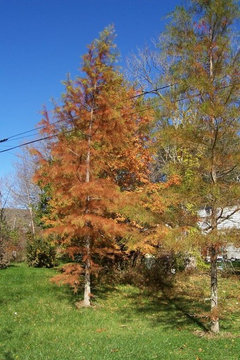
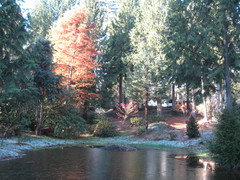
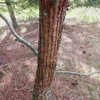
    Conifers are boring? Here's your boring (pondcypresses):

  • 11 years ago

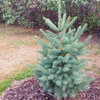
    Here's one of mine.

    The first one I ever saw was in Florida. They even stand out there!

    Mike

    The leaning tree has been removed. The Fall color was disappointing. ;-)

    Notice the frost on the groundcover. (weeds)

  • 2 years ago

    I know this thread is old but If you’re in Florida I’d try the East Asian Pseudotsuga species. They are practically invincible in the heat and humidity and will probably live longterm up there

  • 2 years ago

    I'd would like to try the East Asian Pseudotsuga, the problem is finding a fresh seed source or any source at all for that matter, this holds true to many of the central American and and other east Asian conifers as well. Actually I think that pseudotsuga and keteleeria would be suitable for the Florida Christmas tree industry, which has limited options at the moment, such as sand pine which is a nice form, but doesnt hold heavy ornaments great, Virginia pine doesn't grow great or fast this far south and there seems to be some sort of stigma against using juniperus, and then the shipped down northern trees are already brown and look terrible half the time when they get here the aforementioned Asian conifers could alleviate these problems if seed sources could be found.

  • 2 years ago

    Wouldn’t Momi fir do well in northern and central Florida as well? I saw online that there are some growing in Tokyo which is a hot and humid zone 9b/10a