Software
Houzz Logo Print
austin_bozarth

Standby Generators - 20KW

11 years ago

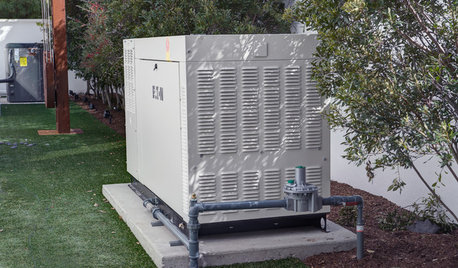
I am working on a kitchen renovation and have received tons of great advice from these forums, so I need to run something by you all. As I will already have a plumber and electrician deeply involved in working on my power and gas lines, I figured I might as well see about adding in a whole house generator as I think I can get a deal on the install. So, I have two key questions. 1) how large of a generator should I get and 2) what brand? I want to keep the generator price below $5k and have the following objectives:

1) We have some very expensive medications that must remain refrigerated. Let's just say that the meds are worth many generators and it is key that they not be spoiled.

2) 200 amp circuit breaker box

3) 2200 ft2 house

4) 4 ton main AC with a gas furnace

5) 2 ton supplemental AC (I don't need to run this in an outage)

6) Electric water heater

7) Miele DF Range

8) SZ 42 BI Refrigerator

9) 24" Wine Fridge

I have found that there are several generators in the 20 to 22kw range which are air cooled. I like this as it will keep costs down and I don't believe we need to pay the premium for the water cooled power sources. My gut is to go with the Kohler, but wanted to see what folks here say. Right now I am thinking of the 20RESAL model.


Comments (4)

  • 11 years ago

    20kw will not service a 200 amp panel completely. You would need more like 48kw or larger, larger if you intend to run at full load for any length of time.

    And I don't think you're going to get a 20kw generator installed for any thing close to $5k.

    If you have gas, then you will probably want a gas generator (NG or propane). If propane, you'll need to account for the size of a tank.

    How often to you lose power and for how long? This will help with sizing.

    I'm going to give a WAG and say the 4 ton AC will draw around 25 amps when running. About 3 times that for startup.

    You can look on charts for some of the other things. I would guess 3kw-5kw for the electric water heater. The fridges won't be that much. The range is gas top/electric oven? Probably around another 3kw-5kw depending on mode.

  • PRO
    11 years ago

    Contact Generac Directly ask for there advice. They have smart switches which can reduce the needed size of a Generator. They also have a Database of distributors and installers with certifications to handle a professional installation. I am not a Generac installer but really look forward to becoming one in the future. I like that Home Depot endorses them. I recently Was given an opportunity to give a proposal for an installation and for a 200 amp panel with load shed selection through the smart switch I was able to specify a 16KW.. This still had some limitations yet covered all the homeowners needs. I'm not sure if others manufacturers have this technology in their Generator sets.

  • 11 years ago

    There are several choices that can be made in installing an automatic backup genset. Recent electrical code requires a generator matched to the load. You can install a big dumb (whole house) generator that will run everything in your house. You can install a transfer panel and run some of the loads in your house. You can install load controls and prioritize loads. In my mind, the third brings up the question of the reliability of the smart system so tread carefully with that alternative. Unless you live in a very inexpensive market, I don't think that you will get a 20 KW installed for $5k.

    I recently had a 16 kW genset installed in such a market at my fathers' house for a total of $7k including upgrading from 125 to 200 amp service. The new main panel includes a transfer switch that powers the circuits on the lower part of the panel. It was an advantage to keep the electrical "controls" in one place in the finished basement. Special case here was that the old panel had a bad reputation (fire hazard, deserved or not).

    If you want to run everything on the list, assuming that you have a gas range, change out your water heater for a gas-fired model. That will save you 4.8 kW right there and lots of fuel money in the long run. A variable-speed compressor in your HVAC system will be much more backup genset friendly, but that is something that you probably don't want to change just for this project. Your electrician will make the call on what size you need depending on what alternative you collectively choose.

    As far as the genset itself goes, any of the residential air-cooled models should work well, Koehler, Generac, Briggs. A lot of the cost variation will be in how complicated routing of the gas lines is and how complicated re-routing of electrical cables is if you go with the second or third alternative. If all of your electrical is in a simple service panel in an unfinished basement and the gas lines run through there too, it will be easiest. If not, there is some head-scratching to be done to find the most efficient way to install what you need. Creativity and experience in retrofitting gensets counts here.

  • 11 years ago

    I guess it depends on your wording of recent. An AUTOMATIC transfer switch has for some time required that the generator be sized for the loads automatically switched. This means if you have one like mine that switches the entire 400A serivce you need a honking big generator. If you have a transfer switch that only moves more essential loads you can get by with a smaller panel.

    If you have a manual transfer, they allow free you from the sizing limitations as they figure you'll be smart enough to shed the loads to what the generator can handle before activating the switch.

    My liquid-cooled Generac has been pretty faultless. The thing is beautifully designed for service (wish my car was done as nicely). The longest part of changing the fluids is the drive to the local coolant recycling place. (All the auto parts stores will take the oil fortunately).