Software
Houzz Logo Print
ewwmayo

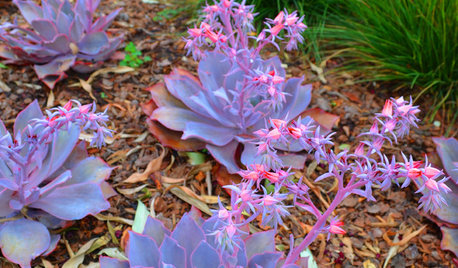
Succulents back-budding from higher light?

11 years ago

Now that my succulents have been under my lights for a while, I noticed a lot of them are back-budding even though I didn't prune or pinch them. Have any of you noticed similar things happening to your plants? They all stopped growing taller.

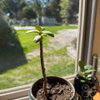
This Crassula ovata cv 'Tricolor Obliqua' has new leaves center-left and tiny leaves are growing in the far back near the base:


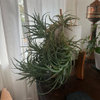
This Crassula aborescens grew leaves on the left out of the side of the trunk and another pair just started near the base (in the dark area). The new leaves on top are oddly growing 'inverted' with the concave sides facing down:

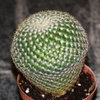
Not sure what's going on with this Sempervivum calcareum (ID not confirmed). It started growing these buds all around the sides - around 8 of them. Possibly pups?

Even my Faucaria felina is growing new leaves between the existing ones. Here are two leaves getting 'squashed' between the others. Another new pair is growing on the far left (among many others):

Can't say I don't mind having shorter, denser plants? It's just a much bigger change than what I expected. This is happening to many other of my plants too, these are just a few.

My understanding was that more light resulted in shorter internode spacing on new growth only. After this, I'm thinking this is not actually the whole story.

I'm a little curious and also a little worried what everything will look like after a few months...

Comments (8)

  • 11 years ago

    Awesome! That photo explains everything, thanks Rina.

    I am keeping mine inside for the winter, unfortunately. All my flower beds are partial to full shade only. My hostas love it at least?

    Have you kept yours in that pot over the winter? Maybe in the future I could keep one on my roof.

  • 11 years ago
    last modified: 11 years ago

    eww

    The plant posted above is the one I divided; I only bought it this spring. I ended up with countless new plants :) - all for abt. $7!

    They have been poted into gritty, mostly 3 small chicks /pot, and larger one singularly. Also have couple of plastic saucers with holes drilled that have few plants in them. They are going to spend first winter outdoors.


    These are different, divided early in spring from last years plats - they are in wooden box (with wire mesh bottom covered in landscape fabric for good drainage, box has short legs):
    Rina

    Btw; maybe partial shade won't be a problem for winter. If you have enough pots, you could try one . They really don't need that much sun in winter - will be covered by snow anyway :)

    ewwmayo thanked rina_Ontario,Canada 5a
  • 11 years ago

    I have noticed this too. My Dorstenias are especially prone to branching under grow lights. It may have something to do with the light wavelengths and plant response, or they may just really like their growing conditions :-)

    ewwmayo thanked Ben was 10a/26, now 7a/34
  • 11 years ago

    Hmmmm tight and compact growth is usually a good thing, yes? Maybe because its getting excellent light it doesnt need to push branching growth upwards? I have no idea lol

  • 11 years ago
    last modified: 11 years ago

    Rina - Man alive, that is a lot of Sempervivums from just one pot. I really like the idea of having a saucer like that. Seems like something I can easily manage. Keep me posted on how those ones do through the winter!

    Right now I just have the one plant. It was a wedding favour from a good friends of mine last year. I'm planning on sending her "One Year" photos of it on her/his anniversary (this weekend). If it pups though, I might get enough for a small community dish.

    Ben - Thanks for reaffirming this! Do you have a photo of your Dostenia(s)? They look pretty cool as a collection of trunks instead of just one.

    MintyLemonade - Agreed! Tight and compact growth definitely looks nicer, plus everything should hopefully continue to fit within my growing space.

    I actually found a really interesting journal article today on Light Signaling in Bud Outgrowth and Branching in Plants by Leduc et al. It's quite long and a bit complicated/technical but there is a lot of good research and interesting findings.

    The discussion goes far beyond Auxin and into things like Cytokinins/Phytochromes, which I hadn't the foggiest idea what they were about at all. Other hormones, plant sugars, and things like light wavelengths are also discussed.

    I would sum up the research journal as follows: Plants have many photoreceptors located all over - stems/leaves/roots/etc. High light intensities help signal these places and trigger the plant to have increased branching and bud outgrowth.

    The exact process is very complicated and not entirely known quite yet.

    It is clear that if there is a low ratio of Red to Far-Red light coupled with reduction of Blue light intensity, branching will decrease. Additionally, photoperiod does not impact branching in most plants.

    If I dare conclude.... it is possible to 'mask' etoliation in some succulents to some extent, depending on the species and growth habit. Of course, you can't hide particularly large leaves, but the internodal distances can end up looking shorter because of branching?

    Feel free to keep posting your thoughts, examples of your own plants, and ideas! Thanks!

  • 11 years ago

    Ewwwwmayo I greatly appreciate your detailed and scientific approach to all things plants!

    I tried to click the link but it doesn't take me anywhere says:

    "Error 404 - File not found

    The webpage you are looking could not be found.
    The URL may have been incorrectly typed, or the page may
    have been moved into another part of the mdpi.com site."

    If you can find an alternative link I would love to read the article, any opportunity to mask or 'reverse' etoilation would be a welcome one! I think this would not be possible with many mesembs like lithops/conos/etc. I've been iffy about buying grow lights for awhile, but with this it seems especially critical to have good light during the winter months to ensure compact growth.

  • 11 years ago

    Minty - sorry I messed up the link with an extra period! Edited so it should work now.

    The conclusion of masking etoliation is my own. Sometimes a purchased plant isn't ideal or I accidentally grew one in lower light than necessary. Or it was fertilized too much. At least through this plant behaviour (if I can call it that?), it's more comforting to know that extra leaves and branches are able to fill in the space at least a little.

    Agreed about grow lights. I didn't expect to try so many different things with my lights, but it's really interesting to see the effects of different light levels even in a fairly short period of time.

    I can pretend my succulents are hanging out in California, yo!