Software
Houzz Logo Print
slupher

Mirage Floors creaking and popping

10 years ago

I had Mirage engineered floors installed in my new home and the creak and pop with every step. Installed according to manufacturers instructions - clean level floor, product acclimated, verified using correct nails, correct underlayment, etc. No other problems with any other floors in the house, just the Mirage. Concealed crawl space, so no dampness issues, RH of 41%. No one can tell me what's wrong with them. Has anyone else had any problems with this product?

Comments (25)

  • 10 years ago

    I looked at their website and saw this under the FAQ section.

    There are many probable causes that could explain a squeaky/noisy floor. If the subfloor is not properly set, the material or the underfloor supports are inadequate, the floor can squeak. The noise that comes from the floor can also be caused by an improper nailing. It is likely that noise can occur if the floor is subjected to excessive moisture or excessively dry conditions.

  • 10 years ago
    Yes Bette, I read that too and none of those conditions exist in my home, which is why no one can tell me what's wrong.
  • 10 years ago

    We've redone half the floors in our house, and my husband was fanatical about making sure the subfloor was screwed down enough so it didn't squeak. From what he told me, you're supposed to screw it down approximately every six inches. We did that and our floors are dead silent.

    I think your problem is that your subfloor needed to be screwed down as nails can come loose.

  • 10 years ago
    thank Hayley, but our floors are both screwed and nailed, and we upgraded to the thicker subfloor (1.25 inch) and they are over engineered joists. very solid. no other rooms have squeaks or movement.
  • 10 years ago

    I live in Ontario, Canada. We were going to have wood floors installed, the fellow was actually a qualified wood floor inspector. If there was a problem with an install by someone else in the region, he would go inspect to figure out the problem. Is there something similar in your area? This fellow's business is a member of the National Wood Flooring Association, USA & Canada. Have you contacted the NWFA for advice? Maybe they can point you to an impartial inspector?

    slupher thanked Bette P
  • PRO
    10 years ago

    I've heard of popping with glues and with some "under pads". It is a very particular sound. I don't know why it occurs, I just know it can. You would need to have a wood flooring inspector (NWFA Certified) come in and have a look/listen. It is going to be a bit of a head scratcher to figure this out.

    Sadly, one of the most defining tests = remove floor to see if noise continues. If it does NOT...then it was something to do with the underlay/nail/floor install. If the noise continues then we know it is something to do with the subfloor. This is the worst case scenario. Before you go to such a drastic measure, please bring in a Certified NWFA Wood Flooring Inspector.

    slupher thanked Cancork Floor Inc.
  • PRO
    10 years ago
    @slupher may I ask a few questions:
    1) what is the span of joisting?
    2) what are the floorcoverings in the other rooms where there's no squeaking?
    3) what is the thickness of flooring(a pic of a crosscut wood be great)?
    4) you said this flooring was nailed? Do you mean stapled or cleated?
    5) can you verify if there was self levelling?
    6) if they self levelled did they prime the substrate?
    Please advise and email me directly
    woodwize@gmail.com
    Thanks
    slupher thanked ULTIMATE HARDWOOD LTD
  • 10 years ago

    We also have Mirage floors in our new build and have experienced the same issue. The floor creaked with every step throughout the summer months. We used the AC to maintain the RH at the suggested level, but the floors continued to creak. As the humidity has dropped, with the arrival of autumn, the floor is silent. The floor inspector is sheduled to visit next week. Thankfully, I videotaped the floor creaking and will show the inspector the tape.

    slupher thanked babs0507
  • PRO
    10 years ago
    last modified: 10 years ago

    I agree with the above, if it's not the subfloor issue, there could be many reasons which can cause "creaks" and pops, not excluding the installation.

    I'm not a floor installer but I did lots of reading on the subject in my days because I been using solid or engineered flooring almost on every project i've done and we do lots of flooring repairs for Homeowners, so I will stick my two cents in and I hope it helps.

    Let's assume the subfloor is solid, level and that is not an issue for now (but keep in mind when installing engineered flooring, floor must be flat and you cannot have variation of more than 3/16" in a 8 - 10' radius. The floor could look flat, but in some places it could be out and to a "naked " or "untrained" eye it will be hard to spot even 1/2" variation, so it's important a straight edge is used to make sure the surface is flat, because most of the time that is the leading problem when the floors will pop or start to creak.

    As the Engineered flooring goes, how wide was the plank you used ( 3,5,or6")? The size of wood planks can also affect how much the board will expand and contract. The wider the board is, it will move more than narrower board so that also cam play a role, and in some cases we would see excessive gaps or cupping and even "warping" in some cases when seasonal changes occur and you deal with different levels of humidity. I would start there and check the Humidity level inside your home. I believe most flooring manufacturers recommend relative humidity level should be at 55% max year round to reduce seasonal floor movement.

    You also mentioned your crawl space is dry... But does your crawl space has proper ventilation? If not, that can also be an issue even if the crawlspace is dry.

    Possible installation issues. I believe there is a chart provided in the installation guide which gives you the start point measurement which you have to follow, doing that accounts for minimum expansion along the wall. Did the installers followed that? That is very important to maintain that distance.

    Was your floor installed perpendicular to your joist system? If not that could also be a problem even with everything flat and subfloor being secured properly, you will have move flooring movement when flooring is installed in the same direction as your floor joists.

    Someone asked already if they used staples or cleats... I'm not sure, but I think on engineered floor you can only use staples. Did they use the right staples? We did a few repairs with similar issues and they used the wrong staples which were intended for 3/4 flooring and that was a big issue. If that's the case, that could also be an issue.

    Also important to maintain the right air pressure if they used pneumatic floor nailer and the right amount of staples should be used per plank, I believe industry standard is 4-6 inches along the tongue and 2" from each end (pros can correct me if I'm off) Improper nailing can also be a major issue.

    That's pretty much covers it all, or at least that is where I would start checking to see what is the problem and why it's doing what it's doing.

    Good luck and drop a note if you can when you or someone else get to the bottom of it, just curious to know what was the problem.

    Good luck

    slupher thanked GN Builders L.L.C
  • 10 years ago

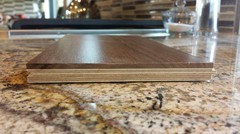
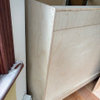
    Thank you all for your insights and information. The subfloor is 1.25 inch thick on engineered I beams at 24 inches on center, and the flooring is installed perpendicular to the joists. The other areas of the house have carpet, tile, and vinyl with no squeaks or cracks anywhere. During the wood floor installation, the installers did sand down a few areas where the subfloor was a little high at the joints, but they brought it to within manufacturer's tolerances. The flooring was stapled, every 4 to 6 inches, with those staples that have a hook on the end like an L shape, which I understand is what the manufacturer specifies. The flooring is a 5 inch plank, and they did a good job of keeping the spacing at the walls correct, and our base molding covers the small gap. We had an incident after installation where another contractor damaged the floor and some boards had to be replaced, and at that time could see the appropriate staple spacing, the appropriate underlayment, and when the flooring was out and we walked on the subfloor it was quiet. The humidity in the house is within normal ranges, I have two hygrometers, one on each thermostat which says 44% today. The crawl space is concealed, but is ventilated by a continual fan which pulls the air through the crawl space and into the house. Its really great system, nice dry clean crawl space and no bugs or rodents. I made a video of the noise, but its too large to upload, so I will try to shorten/compress it. Thanks again for your help. I've attached a picture of the flooring; it is 1/2 inch thick.


  • PRO
    10 years ago

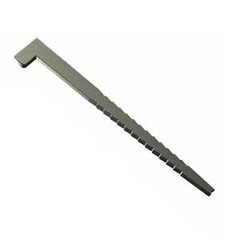
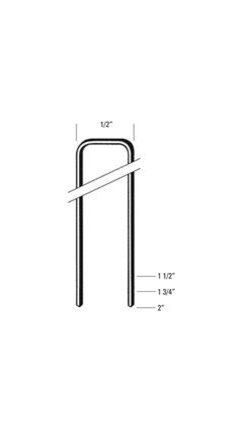
    I would make sure that you can use cleats instead of staplers for engineered flooring. The tongue in Engineered flooring is much thinner and the backing material is much softer compared to 3/4 solid floors. This is why staplers are used, because they provide better holding power when it comes to engineered flooring. If you look at the cleat picture bellow, you see how thick the top is, so the nail must be driven far enough into the plank, so the next piece can go in, since the tongue is thin and there is no much backing on the plank, that tongue can easily break or crack, so some installers will simply break the tongue off and keep going, so you end up with voids which cause the friction and you get squeaking, creaking and popping. (I sure hope that is not the case)

    By going what you said "with those staples that have a hook on the end like an L shape"... The L shaped fastener is a cleat not a stapler and it's intended to be used with a 3/4" flooring. So there is a big difference between the two. Other than that, it seems that everything else is pretty much meets normal conditions for floor installation so that could be your problem. I can't think of anything else, other than what already been suggested by others and me.

    This is a cleat


    Stapler


    slupher thanked GN Builders L.L.C
  • 10 years ago

    Thank you GN Builders, the picture you provided of the cleat is what they used, I had the wrong terminology previously. This bulletin from the manufacturer , http://www.miragefloors.com/pdf/Technical-Newsletter-30.pdf, states the 1/2 in engineered flooring should use ushaped staple or cleats. The cleats should be 18-20 gauge and no longer than 1.25 in long. I have one that I will find and measure.

  • PRO
    10 years ago

    I know you mentioned that the underlay is "what is recommended"...but you didn't state what it was. I find this statement in the Mirage link a fascinating one:

    "Using a compressible acoustic underlay pad under solid wood floors can create excessive noise when used with a mechanical fastener"

    I know that foam underlay can squeak when pierced...sounds like popping bubble gum when you walk on it. I would as what was the underlay that was used...I've also seen 'tape' make this horrible crunching sound as well. Tape is often used to hold two pieces of under pad together. I wonder if we have tape that is crackling and crunching.

  • 10 years ago
    Hi Stephanie, the underlayment used is called Aquabar B. My understanding is that is is a light tar paper with a front and back paper covering. it can be purchased at home depot.
  • PRO
    10 years ago
    Aqua bar B is not a tar paper. It is a thin layer of asphalt paper between basically 2 layers of Kraft paper. It used as a moisture retarder. There are several different types of Aqua bar but let's assume it's correct. That won't explain "popping" noises. My best guess would be fasteners have penetrated too far into the tongue and possibly cracked the tongues. Find a squeaky spot and have the installer pull boards in that spot. I did leave my email to discuss in detail if you want qualified answers by someone who is both NWFA certified and still installs flooring.
    slupher thanked ULTIMATE HARDWOOD LTD
  • 10 years ago

    We are having a similar experience with our 12 Oaks engineered flooring. I'm also in Ontario - Bette P. Are you able to share the information regarding someone who can come and inspect?

    Thanks!

  • PRO
    10 years ago

    You can find NWFA inspectors in Canada...the website accepts Canadian Postal codes.


    www.nwfa.org

    http://woodfloors.org/certified-professional-search.aspx

  • PRO
    10 years ago
    Drew Kern out of Milton Ont. Is a certified inspector I believe.
  • 10 years ago

    I purchased mirage chateau engineered floors. They have been installed for 1 year and creak every day. I've had mirage come out and they blame it on moisture. Which is just an excuse since I have a whole house de/humidification system and the levels are kept stable. Below is the denial of our claim after buying 4000 sq ft of flooring. They claim to have a great warranty but they don't have any action behind it.


    Hi,
    An evaluation of your claim application has been made, please find our answer below.

    Cupping Engineered wood: The edges are higher from the center part of the board. Cupping
    on an Engineered wood product occurs when there is not enough moisture or humidity in the
    air, as a result the wood layer (Ex. Oak) will start to shrink and become cupped.

    Gapping (side/end): The gapping can be related to the movement (expansion/shrinkage) of
    the wood due to humidity fluctuations (Ex. Low/High RH) and can even be associated to
    subfloor shifting. *Also, the pictures show other gaps/cracking of the trims, doorframe, gypse
    etc., which are site related too.

    Creaking/squeaking:
    Creaking/Squeaking is always caused by movement, low humidity/moisture and/or humidity
    variations can accentuate the phenomenon.

    This claim is environmentally related (Ex. 27 - 29% RH). Exposure to excessive heat,
    dryness or moisture may cause damages to the flooring. It is natural, due to the inherent
    properties of wood that some minor contraction and expansion may occur. In order to
    prevent any Cupping and else we recommend to maintain a normal relative humidity level
    between 40-50% yearlong.

  • PRO
    10 years ago
    @gerbs73 forward me the actual 'inspection' report along with the inspectors name and contact info please.
  • PRO
    10 years ago
    last modified: 10 years ago

    Creaking and popping is normal for the first month or two after installation. The cause (if not installation) is humidity changes during installation (hard to control but it will settle). Mirage Hardwood is a near perfectly made product so for them to have a defect is a 1 in 1000 chances. But if you're concerned have a Mirage inspector look at it. Don't think they will until about 2-3 month after installation though to allow the floor to properly settle. Popping and creaking is a normal occurrence for brand new hardwood, don't worry!


    If you live in a state that has extreme humidity changes during the year- you may have a worry there.

  • PRO
    10 years ago
    I think what @koebers is trying to say is that sometimes hwd can be a bit noisy upon new installation because each and every board has a slight difference in moisture content and tempurature and until they all 'equalize' they make a bit of noise. This is supposed to go away. If it's been well over a year then I'd reccommend getting an NWFA well reviewed inspector who is an unbiased third party to complete an inspection. Mirage guys are totally biased-if they want to retain employment that is...
  • PRO
  • PRO
    10 years ago

    @gerbs73 - I'm sorry to say but the inspection report is describing "dry cupping". The RH they measured (27%- 29%) is quite low for wood. Human beings LOVE 30-35% humidity (great for skin, hair, etc) but horrible for wood. Most woods prefer an RH of 45%-65%. Mirage has stated that 40% - 50% is the sweet spot for their floors.

    Having constant humidity is one thing. Having CORRECT humidity is another. Because you have a whole-home system that you can easily manipulate, try raising the humidity (slowly...perhaps over 1 week) to the 40% and see how it goes. The humans will feel uncomfortable for a little while...but that discomfort will go away once the correct humidity (for the wood) is maintained. Give it a go. You have nothing else to lose and plenty to gain.