Software
Houzz Logo Print
matthew_rader98

Starting A New Vegetable Garden. Fall/Winter Tips?

11 years ago
Hey all,
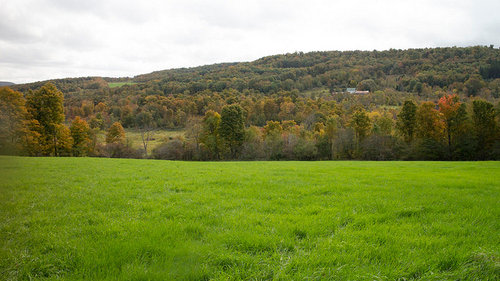
I recently bought a piece of property in upstate New York and plan to build a small home on next year and a large garden on as a weekend retreat from work and life in NYC. The property is former farmland and is currently covered in very thick grass.
I'm eager to get started but cold temperatures have already set in. I'm wondering if I should batten down for the winter and wait of if there is anything I can do this fall into winter to prepare for next spring.


We're starting from zero so there is a lot to do.


The first chore will be removing the thick grass. Do you think it's worth removing the grass and flipping it in hopes that it will decompose over the next 5 months?

A soil test could be done now.

Need to dig post holes and build a fence to keep out critters.


Any advice is appreciated - especially in dealing with the initial thick farmland grass cover.
Thanks :-]

Comments (28)

  • 11 years ago

    Yes to all of that, with a huge AMEN to bringing water there, meaning a spigot, at least. Draw up a plan. Figure the layout of your bed/s, rows, etc. Do you want a bench? Raised beds? trellises for climbing crops? Potting shed/tool shed? Now is the time to consider all of that. You don't have to build it all, just know where you want it eventually.

  • 11 years ago

    It is going to be tough to tend to a garden only on the weekends, and definitely keep it small or it won't turn out to be much of a getaway, but rather an all weekend every weekend affair (unless that's what you are going for)

  • 11 years ago

    heavy mulch and drip irrigation cut down on maintenance a lot...

  • 11 years ago

    I don't know if you're going in ground or raised beds, but be sure you leave enough room in your pathways to maneuver wheel barrows, wagons etc and have a way to bring a truck in to deliver soil/compost/wood chips or whatever.

    When my hubby built a large fence to keep the dog in the yard, he included an 8 foot panel that can be removed. This allows a truck or even small tractor to get into our yard! Nancy

  • 11 years ago

    Good tips everyone. Any thoughts more specifically on what can be done this fall though in preparation of the area?

  • 11 years ago

    I would suggest covering the grass, not with plastic, but with organic material--leaves, hay, manure, etc. and let that decompose until spring.

  • 11 years ago

    Just my take on it but I'd suggest fencing it and sorting out the water and then watching the land for a year. See where the sun falls. Watch for where frost/snow stays longest in spring. Figure out the prevailing weather/wind. Maybe plant, and protect, some trees to give them a start. Take into account any shade from the future home.You could spend a lot of time preparing beds and then down the road discover they are in the wrong place. Of course you could make a temporary bed that isn't too much of a loss if it turns out unsuccessful.

  • 11 years ago

    Lots of animal pests in NY. You will want a 6-8 foot tall fence for the deer, and you will either want to bury it a couple feet, or lay chicken wire at the bottom bent outwards away from the garden, so that one foot at the chicken wire is spliced with the fence is two feet are on the ground (bury a little). This is very important for grounds.

    And definitely lots of mulch or the weeds will be unmanageable, on that newly reclaimed earth, unless you build raised beds.

  • 11 years ago

    my suggestions would be to start small with say a 25' X 25' plot. Pick out a few things to grow. (4-5 crops) Since you will only be there 2 days a week, make it simple to start. You could fence off a large area and add small plots inside the fence as your gardening skills improve. I like have small plot within a large garden so I can drive a mower between the plots. it is easier to carry your harvest 25' instead of 75'.

  • 11 years ago

    I disagree with starting small. The fence is a lot of work and should be built once. If you are away most of the time, consider a top of the fence leaning outward to mess up the deer. it is a lot of work as I say. Use the extra space inside to grow storage crops, such as winter squash and potatoes, which are very little work and are not time sensitive. Or cover crops if you want to go full blown organic.

  • 11 years ago
    last modified: 11 years ago

    Definitely do not skip or skimp on the fence or you are likely to be very disappointed and waste hard work.

    The fence can be easily modified and added on, so IMHO you can start small. It is not that much work if you use metal stakes and galvanized wire and do the no dig method I described. If you grow something like squash you can as suggested fill up a large space without worrying much about weeds for most of it. But also the smaller the space the less inclined deer would be to try to jump in. If they are motivated enough they can clear 8 feet no problem, but if it isn't a huge area they are both reluctant and lazy to jump much of anything - especially in the abundance of stuff to eat in the summer.

  • 11 years ago

    I live on an old farm with a veggie garden and ornamental beds adjacent to fields that look fairly similar to your photo. IME field grass is pretty tenacious stuff, far more resilient than lawn grass. I have found that a full season under clear plastic with sealed edges will get hot enough to kill it off, but at this time of year the sun isn't direct enough or hot enough to kill off the roots. Digging and flipping it won't kill it; it will just start growing again even flipped on a dryish compost pile, so I shake off all the soil and spread it on wire mesh so that it totally dries out before adding it to the compost. Even cutting it to ground level and covering with cardboard and 8" of mulch won't kill it completely; it will send some sprouts up through the mulch. A four inch deep border around the garden isn't deep enough - the grass just grows under it and into the beds, so either plan to edge the garden every year, or bury a border that is 8" or so deep.

    I'd also consider talking to nearby farmers about whether they will deliver manure, if there is a sawmill where you can get sawdust for mulching paths or if there are sources of straw for mulch. Around me the local dairy farmer will deliver a large truckload for a cost and I can get horse manure (which is weedier) for free from local stables. As others have said, mulching will help keep weeds and moisture under control while you are gone during the week, and having a fence both above and underground will be essential to keeping out the critters since you will be gone during the week. For me voles and woodchucks do far more damage than deer.

    Floral's suggestion to wait until you know where the buildings and trees will be is a good one unless you don't mind having to move the garden.

  • 11 years ago

    The other nice thing about a large fence is, if you have extra space, you can plan berries and fruit trees. Even in New England, there are a number of no spray fruits available. Great advice by Babs, a rhizome barrier is also advisable.

  • 11 years ago

    glib, I will defend my position on starting small. 1. this is a part time garden only being tended to 2 days a week. 2. this is a beginning gardener. starting off too big will only lead to discouragement. I will stand by my opinion of starting off small and fencing off a larger area to expand the garden as the owner gains more experience and desire to grow more.

  • 11 years ago

    Thanks Glib. We're going all in with the large garden.

    It just makes sense from a fencing point and we don't want to have a huge drop in production from our current rooftop garden (500lbs per year). Not too concerned about two day a week maintenance - that's the fun part. Deer and rabbits are a vacation after dealing with sun scorch and constant 10mph winds for the past decade. Finally being able to grow more than a couple full sized pumpkins will be nice too. :D

    I am worried about ridding the field grass though. I'm going to try smothering but it's not going to do a good job being this late in the year already. I'm going to get the fence up first and then go from there.

    Thanks everyone! <3


  • 11 years ago

    this late in the year is the time to smother the grass. Cover it thickly enough, and it will be rich soil by spring.

  • 11 years ago

    I'm a person who checks on things in my 25' x 60' garden twice a day during the growing season. Weeding, picking, whatever. I can't imagine having a garden and only having access only 2 days every 7. What crops do you hope to grow? Just curious.

  • 11 years ago

    There are many crops that hold well that can be managed just with weekend visits. Sweet corn, Garlic, Peppers, Winter squash, root crops like carrots, beets. I agree it will be tough to manage the more time sensitive crops like Tomatoes, Asparagus, Broccoli without being there to harvest at peak ripeness.

  • 11 years ago

    Idk about peppers - they are very easily storm damaged and the ones I have grown require careful supporting.

    I would suggest one of the hard stemmed winter squashes for SVB. Carrots, Beets, Onions, Leeks, Garlic, Potatoes, all sound good (though look out for Late Blight especially in Western NY).

  • 11 years ago

    Peter - I was speaking more to the need to be there for a timely harvest. I use the cheap tomato cages for peppers with a centered T-post zip tied to 4 cages and don't have any problem with supporting the peppers. Occasionally a branch that has several bell peppers on it will break from the weight but I try to keep an eye out for it and harvest a few green before it breaks.

  • 11 years ago

    Sorry to derail but LoneJack would you mind posting a link to what you are referring to? I need some cheap and easier solution than this year for next year.

  • PRO
    11 years ago

    I'm curious about the building a small home part... How big is this parcel of land, and how close to the garden is this house going to be?
    I ask because building construction can really make a mess of an area- and depending on how things are situated, you might be putting a lot of time and effort this fall into a garden that might end up being moot. Like you might end up putting it right were contractors need to be, or a large fence might interfere with how stuff gets built- or you might find that the garden is too far away to properly plan in your irrigation (are you doing it's own well, water line, water collection from the roof of your house?). Or you might find that it would just be easier to have a bulldozer scrape that grass layer off your garden, so you might as well just hold off till construction starts and you have the big helper equipment there to get the job done.


    Other than that... I would say start with fence big, garden small. Lay out your fence once- it is easy to add on, but it's nice to have a full enclosure right away. Then you can have your garden staging and equipment in the enclosure along with your garden.

  • 11 years ago
    last modified: 11 years ago

    Peter. I don't have any pictures that I can show you but I will try to explain a little better and draw a little diagram. The cages are the 54" cages that they sell at Lowes or Home Depot. I use a 4'x10' bed for Peppers and I put 2 rows with 6 plants in each row in the bed. Then I put one of the cages around each plant. I then drive a 6' T-post (3 total) that are centered between 4 cages (2 in each row). I then take zip ties and attach each cage to the centered T-post or sometimes I zip tie the cages together. As long as 1 or 2 of the cages in each group of 4 is attached to the T post the caged peppers kind or support each other.

    O O O O O O

    ..T......T.......T

    O O O O O O

  • 11 years ago

    Sounds like you will do well with this...thinking ahead and coming in with prior growing experience is huge. I've grown in my back yard and also at a plot that I visited once a week or so. The management is different but very doable if you plan differently for each location.

    You will need to arrive each weekend mentally and physically prepared to deal with any problems that you discover came up in the previous week. Don't waste time being overly upset by "bad" things that may have happened while you were away. Maybe you will need to spend a lot of the time dealing with pests, maybe watering, maybe fence failure, maybe storm/wind damage when you first arrive each week. You just never know what will greet you, but don't let it get you down, most is fixable. And often most everything will be fine and you'll be amazed at the changes a week brings. And many problems can often be avoided by upfront planning and a little work...ie. using row covers, mulch, well planned and well constructed fencing, and possibly automated irrigation depending on your climate/weather.

    Crop selection is also different. Veggies needing timely harvest may be out, but that still leaves lots of things to grow. I've found I can adjust my harvesting ideas and still grow many crops others rule out because they think they must have frequent harvesting. You can pick tomatoes at breaker stage along with the vine ripened ones and a week later the plants and fruit should be fine for a repeat picking. Pick any beans over an inch long and a week later you will return to many perfectly sized ones, some overgrown ones okay for soup, and some tiny ones. Pick any cucumbers you see, again even 1 inch ones, and a weekend later you should have a nice harvest again. Following the same method, zucchini, summer squash, etc. can all work out....some of the baby veggies will be fussy to cook with and some of the larger ones may sometimes be best in the compost, but it can work if you adjust your thinking and your eating and cooking methods. It took me awhile to get over having to throw out a few overripe items and worrying about which tiny veggies to pick and which to leave. But now I love knowing I can go away if I want and still have some beans and cucumbers.

    Potatoes, beets, carrots, dry beans,onions, winter squash, etc., etc., etc., all do fine with weekly check ups...even less often if mulch is keeping weeds out and water in the plot.

    Enjoy the land, expect challenges and enjoy learning from them.

  • 11 years ago

    I love vegetables with non-timely harvest. Garlic, potatoes, onion, cabbage, winter squash, any conceivable root crop, chard, radicchio, lettuce, collard, lacinato. That is already a complete garden in my book, and makes my life easier. I think tomato, pepper and eggplant can also be picked weekly without problems. The only veggies which are critical are okra (not recommended in the North), string beans, broccoli, cukes and zucchini.

  • 11 years ago

    naturegirl- the only thing I disagree with is the zucchini. I have gone away for less than a week to find zuks that you could add wheels and ride away on! I'm not sure how to handle those, except to peel and de seed, cook down, then pure for a soup stock in the freezer (have plenty of that this year!) Nancy

  • 11 years ago

    Can confirm that the cheap tomato cages work for peppers. I use them and all my peppers survive micro-burst type weather with zero issues. They work on eggplants too.