Software
Houzz Logo Print
ewwmayo

Stapelia turning black?

10 years ago
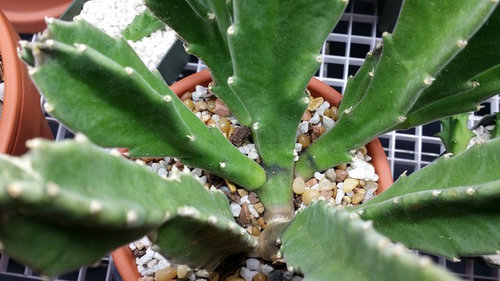
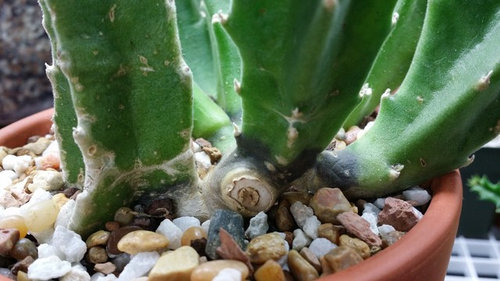
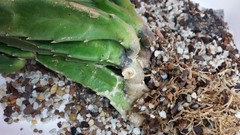
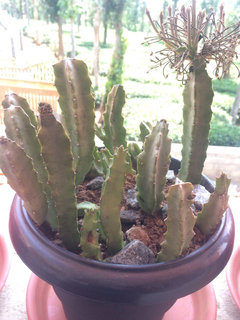
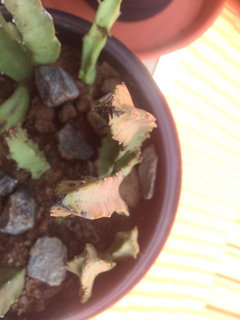
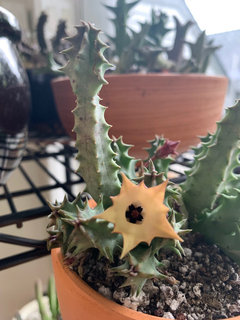
Just noticed that the main portions of the stem of my Stapelia is turning dark/black. Do you guys think it's rot? This plant was infested with mealybugs and I doused it in alcohol and pyretherins over one week ago.

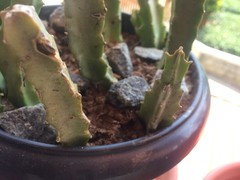
The portions are still very firm and feel normal (slight indentation is from my fingernail). Anybody experience this before? It was growing some small buds, but I think they are getting dropped.

So far I'm planning to watch carefully and am ready to hack the plant to bits if anything starts to turn mushy. Haven't unpotted to check the roots/lower stem yet but maybe this is a good idea?

Comments (27)

  • 10 years ago
    last modified: 10 years ago

    I don't grow these so I really can't tell how serious it is, but it looks not so good to me. :-(

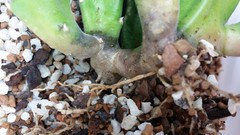
    There is black at the base of all three stems in the second photo. All are sharing the same root with a previously removed stem just below the black. I think a below ground level inspection is a good idea.

    ewwmayo thanked paracelsus
  • 10 years ago

    This is what it looked like in September when I first got it. I believe the whole plant is from a large branch cutting:

    It was a darker more mottled off-colour then, which I suspect from nutrient deficiency (heavily root bound) and slightly higher light. They definitely turn darker with stress... so I hope it's just stress from the alcohol/pesticide.

    But as you say, it doesn't look so good (to me too).

  • 10 years ago

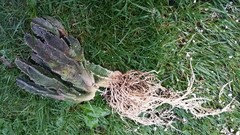
    Brad - Okay, I've dumped the pot:

    It's going to be a REAL setback if I have to cut the entire bottom off!

  • 10 years ago
    last modified: 10 years ago

    Kevin, this has happened to me with S. gigantea more than once. It only generates more plants! LOL Like we need more plants. I think you better get the knife out sooner than later!

  • 10 years ago

    Howard - Hahaha, that gave me a good laugh. What do you think caused the problem, overwatering? I definitely don't need more plants!!!

    The greenhouse doesn't really have a guarantee for succulents, but I'm going to bring it back tomorrow and see what they say. I think the root cause was mealies and my treatment didn't really help either. At the least, I can tell them they probably have a whole bunch of mealies hiding out somewhere.

    Note to self: dousing and dunking in diluted alcohol is a very bad method for Stapelia. Do not attempt again.

    Really didn't expect Stapelias to be susceptible to rot. Feel free to share more of your own experiences as well if you think it will help! More I know the better. =)

  • 10 years ago

    I have been told that members of the Asclepiad family are easy to grow. Over the years I have lost more of these to rot than any othe genera. I doubt it was the alcohol treatment. All though I don't emerse plants in it but use it as a spray. I use systemic imidacloprid.

    ewwmayo thanked bikerdoc5968 Z6 SE MI
  • 10 years ago

    I dont know what would give you the impression otherwise, but yes, Stapelias ARE indeed highly


    susceptible to rot. Everything I have read has told me this. I have managed to keep mine going for 15 years now, but have lost a few sections to rot over that time. They will turn dark when placed in full sun.

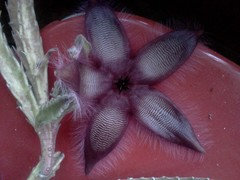
    This is my latest flower.

    Christopher

    ewwmayo thanked kaktuskris
  • 10 years ago

    Howard - In this case, I think that's what I should have done. Thanks for the support, sometimes it's easier if someone else gives the bad news.

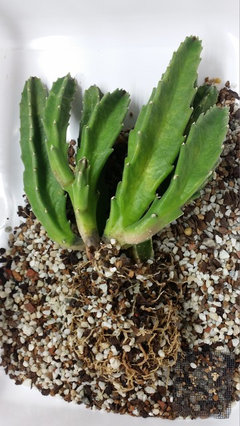
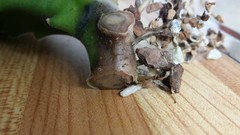
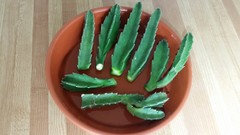
    There was rot at the bottom of all the stems, unfortunately:

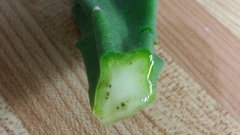
    The rot had not traveled a little up the leaves much, 1/2" at most. This cut was just above one of the dark tissue areas (I cut up higher until it was clean):

    We'll see... maybe in a few months I'll have seven Stapelia!

    Christopher - Thanks for the confirmation that they are highly susceptible to rot. If I had known, I definitely would have treated it differently. Do you alter your mix to be less water retentive? Fantastic looking flower!

    I'm glad I took action quickly - if I had delayed further the stem rot would have certainly have spread further and resulted in smaller cuttings.

  • 10 years ago
    last modified: 10 years ago

    Kevin, we've all been here and done this and it is always painful. Just let them callous and plant them up in a gritty mix. I have found that placing the cuttings flat on the mix, they seem to root better.

  • 10 years ago

    Bikerdoc is right. Any stem below the ground level seems to rot easy. By laying it on it's side, it will send roots down all along the side towards the soil. Keep water to a minimum. Plenty of water in the stem to re-root. I have the most trouble with most of mine and have done the same thing many times. Some I have lost. Funny, S. gigantea, which was my first Stapelia was foolproof. That plant took everything wrong I could throw at it. When I got more different kinds, I found out the hard way. Bikerdoc can grow H. zebra which I could barely keep alive. I found out that the seeds that I have grown is much stronger and rot resistance. Most all summer they were floating in water. The part that goes into the soil is made up of some thing different and makes the plants hardier. After a few years, the area is so over grown with roots that it doesn't matter any more. Plants are funny, if they loose the will to live, nothing can save them. So please don't shock them. I believe shocking them makes them loose the will to live.

    ewwmayo thanked Stush2049 Pitts. PA, zone 6
  • 10 years ago

    Thanks Stush, I had figured laying them on their sides to root is the best way and you've definitely confirmed that. I didn't expected others to have trouble with these at all, so all the tips are quite helpful.

  • 10 years ago

    Kevin, I have mine in no special mix at all, have not repotted in years. This was its first full summer outside it its 15 year life. One thing I learned on mine is do not water on cloudy days. I rarely water this, but more in summer of course.


    Christopher

    ewwmayo thanked kaktuskris
  • 8 years ago
    Recently my Zulu has started showing black spots all over its stem especialy at its tips. I thought it could be a root rot ( but i watered sparing EVERY MORNING). But to my suprise the roots were fine. Could it be sunburn? As i sprayed water over its stem to clear off the dirt . Or could it be a fungal disease? Plz help me guys. I took it from the wild. It had a few main roots. So i planted it immediately. What should be the modality if treatment? Should i cut the stem? Or repot in another dry pot( i have left the planted pot dry for days). Photos down below.
  • 8 years ago

    Don't know. Mine does this during winter months and recovers come late spring when I put them back outside with more sun. Got to do it slowly over time due to not sunburning them, just like us. I cut off all the black stems and rooted them up by themselves and they responded and grew just as good as the main plant. So if a fungus, it did not spread to consume the plant. Too little water, the stems turn brown and shrivel up, too much water then the back spots shows up. Maybe the use of Captan or an anti-fungicide might help but I don't know.

  • 8 years ago

    Orbea is highly susceptible to stem rot but the whole stapeliad family can get it. I agree with Stush that they lose the will to live. Stem rot isn't 'just' fungal infection, it's an indication that growing conditions are not right. Stapelia need extremely well-draining medium and they hate having cold, wet roots. I often lose plants to rot if they are growing outside in autumn if it rains. Stapeliads are also highly susceptible to root mealies and I would not use rubbing alcohol on them. Imidaclodaprid, as Howard recommends

  • 8 years ago

    Imidaclodaprid as in use in Bayer 3 in 1 or Bonide house plant spray. I use this twice a year. After I bring them out and again a few weeks before I bring them back in. Since I been doing this, never had another insect problem. Watch if you want seeds so as not to disturb pollination.

  • 8 years ago

    At least you managed to save them

    ewwmayo thanked niksouthafrica
  • 8 years ago

    Makes you feel better. That's exactly what happens in their native habitat. Stems re-root further away from main clump and spreads the plant further. What pictures I have seen showed the same conditions. Best looking plants are what's grown in greenhouses.

    ewwmayo thanked Stush2049 Pitts. PA, zone 6
  • 8 years ago

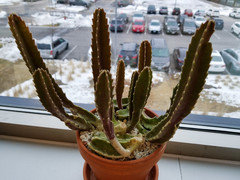
    From my office window:


  • PRO
    4 years ago

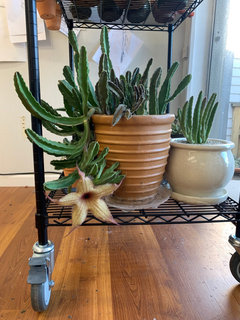
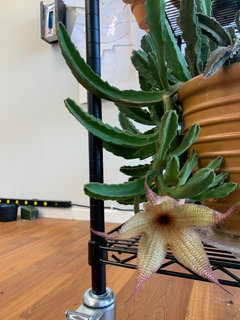
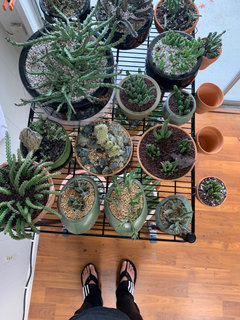
    I have now collected 30 different Stapelia, Orbea, Huernia and so on species. They are indeed very prone to rot! I started with Stapelia Gigantea over a year ago. I almost killed it at the very first. It’s now a beast and has had its first two blooms this month. All my others have been a gambit! Many have lost sections due to rot. And I’ve barely watered. However, it was in fall and I know now ( No water after summer ) I am on the coast just 30 yards from the bay water. All my collection are on a cart, indoors. Hopefully next spring/ summer, they all “kick in”!

  • 4 years ago

    Good luck @Kirk McGuire! Nice collection you have.


    I have a large variety of Stapeliads now. They are watered weekly throughout the year now and I have gotten a good handle on mixes to use and what light conditions they grow well in. The one in my original post now flowers each year with a couple of blooms now. It's always an exciting and stinky time.

  • PRO
    4 years ago

    Thank you… One reason I think I’ve had some rotting early on. Is that I purchased many of mine in the fall, online. Many were shipped bare root from Puerto R. ( much warmer ) We are right in the San Francisco Bay. Much colder though no frost. I think some of my plants had a bit of shock. I am sure I’ll see marked improvements by Summer. And once everyone has acclimated, maybe even small watering in winter. All of mine are indoors, in my sculpting studio, on a rollable cart. Enabling me to place them on my deck when needed. Thanks, again. Best of luck!

    ewwmayo thanked Kirk McGuire
  • 4 years ago

    Sounds like a good way to go. Having a mix suited for your environment conditions goes a long way and they don't really need very big pots surprisingly (at least to my own experience or maybe I just don't have much space heh). I also keep a fan running always when my plants are indoors to help things stay dry. As spring comes there should be lots of growth for you. =)

  • PRO
    4 years ago

    I use cactus succulents mix, then I add chunky perlite and lots of small volcanic and granite. I do have some larger pots, down to 4” as well. We’ll see… So far the ones in larger pots have done better! However, they’re the larger species. In summer I watered my Stapelia Gigantea daily. ( from below. It grew so much and bloomed for the first time. ) Bound to lose something… I previously had been concentrating on cactus in ground, tree mounted orchids and bromeliads. Around 2-300 plants between those. It’s all a learning curve… And it’s interesting how what may work for me doesn’t work for someone else, vice-versa. I am in Zone 10… I use a fan as well!

  • 4 years ago

    Easier to manage watering with smaller pots. But I do agree that they will flourish more in larger pots!

  • PRO
    4 years ago

    Right. I do use a large lab style glass dropper for water control. I also collect rain water and use it most the time. Cannot wait to see how my first spring/summer goes for 28 of my 30.

Sponsored
High Point Cabinets
Average rating: 5 out of 5 stars21 Reviews
Columbus' Experienced Custom Cabinet Builder | 4x Best of Houzz Winner