Software
Houzz Logo Print
emleigh_beyors

grub worms in raised bed HELP!

11 years ago

i am preparing to plant garlic (zone 6a)...but when i went to prepare the bed found a ton of grub worms (it's a raised bed, 4 ft x 4 ft).
i sifted through the soil and picked out 100 or so (i just tossed them down the slope a few feet away from the bed...will they come back?!)
is there anything i can put in the soil now when I plant the garlic...or should i just pick out all i can and hope for the best?
and what should i do for the rest of the beds (which i won't be planting until spring).
thanks for any advice!

Comments (16)

  • 11 years ago

    Beneficial nematodes helped in my raised beds. I'm also learning about milky spore for long term control.

    EmLeigh Beyors thanked User
  • 11 years ago

    thanks. i plan to do the beneficial nematodes next year. and milky spore...but right now what should i do in order to plant my garlic?


  • 11 years ago
    last modified: 11 years ago

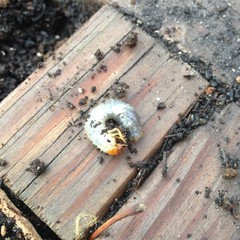
    What do your "grub worms" look like?

    I ask because that's a generic term gardeners use for various critters, not all of which respond to nematodes.

    For now, please describe the critter -- color; size; shape; etc.

    Next time you find one, take a picture and post it.

    EmLeigh Beyors thanked jean001a
  • 11 years ago

    Agree with grubby - many so-called "grubs" are no threat and a percentage of them in any soil is normal.. The damage, if any, is done by the beetles they turn into next spring. So as you plant and find them just toss them out of the bed and move on.

    Dave

    EmLeigh Beyors thanked digdirt2
  • 11 years ago

    Thanks Dave. What would you do about the beetles they turn into in the Spring? Here's a photo of what I'm dealing with (it's about .5 inches diameter):


  • 11 years ago

    It could be the grub of the fig beetle. They are great in a compost bin. Do you or your neighbors have fruit trees? The adult is iridescent and flies slowly.

    It could be some other type of grub, but most eat decaying material. It would also help to know what is common where you live. For example, in my neck of the woods, we don't have Japanese beetles, so that's not a possibility.

    Identifying white grubs


  • 11 years ago
    last modified: 11 years ago

    I would have smashed them as I found them or at least put them in a container and took them well away from the garden.

    Last fall I picked out about 75 huge grubs in the horse manure. I found just a few more this spring. I do not know of any damage they caused...if any were left by then.

    https://www.pioneer.com/home/site/us/agronomy/crop-management/corn-insect-disease/white-grub/


  • 11 years ago

    Skunks, moles and raccoons eat grubs. I would think that if they discovered a substantial population of grubs, they could damage your garlic while digging them up.

  • 11 years ago

    < What would you do about the beetles they turn into in the Spring?>

    That would depend on what beetle they grow into. Some are a threat but many beetles pose no threat to garden crops. Beetles are identified by the marking on their rear end, their raster pattern. See this link to determine which ones you have.

    http://www.msuent.com/assets/pdf/03GrubID.pdf

    Dave

  • 11 years ago

    If 5 inches in diameter (or is it circumference, which is still humongus!), it's most likely the larva of the green fruit beetle. It eats dead organic material not live plants of any kind. If that ID is correct, the adult is a large beetle which specializes in over-ripe fruits such s peaches and figs.


    See http://www.ipm.ucdavis.edu/PMG/GARDEN/FRUIT/PESTS/grfruitbeetle.html

  • 11 years ago

    Chickens! Then you get fertilizer too! Nancy

  • 11 years ago

    I live in St. Louis...zone 6a, in a very wooded area with no fruit trees or even other gardens close by. I use a lot of compost...so I do have a lot of organic material in my beds for things to munch on.

    I see all kinds of beetles around. Since these are small raised beds (4x4) I spent about a hour yesterday removing all the dirt from one, sifting through it, and picking out all the grubs (probably another 100 or more). I'm confident I got 99% of them out. Then I planted my garlic.

    I tried to look at their back ends to determine what kind they are, but I couldn't see any markings at all. I'll try again with a magnifying glass.

    Anyway, I don't know if I wasted time picking them out or not...but it makes me feel better that I removed them. If the weather stays nice enough I'll sift through my other beds one by one and then think about it again in the Spring. I'm leaning toward the beneficial nematode approach, as I get lots of things munching on my plants and from what I understand, it can't hurt. I'll research more over the winter.

    Anyway, thanks for all the comments and advice! I'll update when/if I learn more about what I have!

  • 11 years ago

    You can sift them out. I've had to several times- hundreds if not more from a single 4x8 bed. I toss them in a bucket of water for at least a week so they die- otherwise they just crawl off... They eat roots and can kill plants when in large numbers, I lost several plants to them when I believed the people who said they wouldn't do any harm. (In addition to nitsua being right on the money about the damage done by critters digging for them...)

  • 11 years ago

    Typing at the same time, EmLeigh. :)

  • 11 years ago

    Phew. Glad to hear they're not 5 inches! So probably not green fruit beetles -- those would be more like 3 inches or so.


    You can probably get the grubs identified if you submit to your state's land grant university. They have county offices -- Extension Service office -- but folks there may not have the required expertise. Ask them if they can submit to the university's insect clinic for ID. Here, in Oregon, insect ID is free.


    This page will help you find your county's Extension Service office:

    http://npic.orst.edu/pest/countyext.htm