Software
Houzz Logo Print
mitchell_parker

Poll: Would you live in a 3-D printed house?

10 years ago
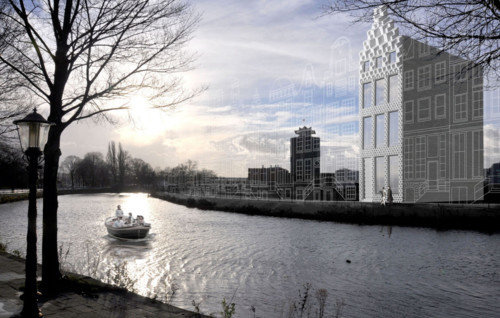
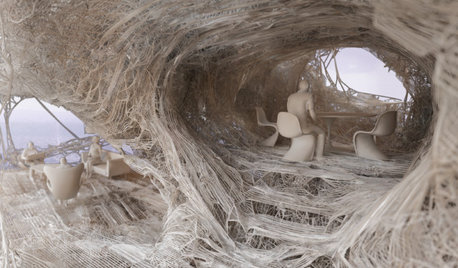
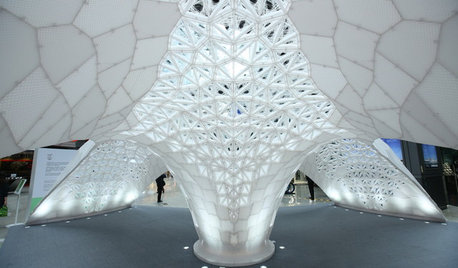
As architects in Amsterdam are underway constructing what they say is the first 3-D printed house (renderings shown here), we want to know: Would you ever live in one?

Yes
No
Other

Comments (38)

  • PRO
    10 years ago

    I would be interested in seeing it


  • 10 years ago

    Voted other...It would definitely depend on the material. I take a lot of comfort in my home feeling "solid" and tend to go towards older homes in general.

  • 10 years ago

    Yes, as long as they don't have any of the problems that Edison's houses had. I used to live down the street from these.

    http://flyingmoose.org/truthfic/edison.htm

  • PRO
    10 years ago

    I read the article on Edison's concrete homes, very interesting.

  • PRO
  • 10 years ago

    No idea what this means... please explain.

  • 10 years ago

    Went with other. It depends on the finished product for me I guess.

  • PRO
    10 years ago

    How about one of those Tiny Houses

  • 10 years ago

    KOH, that is incredible and fascinating. That has the be the quietest construction site I've ever seen! Can you imagine falling asleep, and when you wake up, the empty lot, next door has half a house built.


  • PRO
    10 years ago

    I'm glad you liked it. I'm still curious about building a Tiny House using plastic. The walls and ceilings could be webbed for strength and insulation pockets. What say you Mr. Parker?

  • 10 years ago

    actually wanted a concrete house but found out i couldn't have the large amount of windows that i wanted. this was per local code. this is impressive technology. looked at all sites shown and found them fascinating. the usc plans look like a terrific set of applications for this technology. kudos to all involved....

  • PRO
    10 years ago

    Technology can be so amazing. The innovation seen in the home in recent years is great, looking forward to seeing what the future brings!

  • 10 years ago

    We did rent a house where all the building materials were synthetic and made to look like painted wood and render. I was quite conscious that I was touching plastic. So no.

  • 10 years ago

    Not if it was plastic. Concrete maybe, but plastic does not last and would probably have to be demolished in a few years.

  • 10 years ago

    I am not an early adopter on this one. I will wait to see if it falls into the canal.

  • 10 years ago

    ROFL!!

  • 10 years ago

    My first reaction was "No, too much plastic around already," but I see I'm totally behind the times. The videos about building with concrete (here's another one <https://www.youtube.com/watch?v=WzmCnzA7hnE>;) are amazing. Quick, cheap, long-lasting - what a great solution for low-cost housing, disaster relief, etc.

  • 10 years ago

    4mega, why did code not allow for more windows? Is it an efficiency, cooler climate thing?

    After looking at the videos and seeing how it's done, also realizing that they wouldn't use plastic, but cement, I would totally live in a 3D printed house. I live in a concrete block house and the 3D printed walls seem very similar to concrete block. It has voids, to fill with rebar and cement/grout, for support. Of course it could get a crack, but so can concrete block.


  • 10 years ago
    Why not?! ☺️
  • 10 years ago

    Fascinating. Looking at their website, it seems that the parts that are printed are more like a framework to use for shaping and supporting concrete ultimately, as opposed to the castle which was printed entirely of the concrete. I'm very interested in monolithic building techniques, but I think this stuff will still require study for awhile. Monolithic domes are extremely sturdy, they apparently went through a lot when it came time to tear down the Xanadu house, I heard somewhere or other that they couldn't get it to come down with a wrecking ball or bulldozer, they had to get in there with hacksaws and cut everything to pieces. They are built of foam and cement that use a balloon to give it shape and structure, and an arch or dome is very strong.

    Apart from vandalism and lack of maintenance, the Ensculptic house in Minnesota is celebrating 50 years still standing, it's a thing of beauty that is being lovingly restored, I'm very happy to see that. They used some very diverse materials in that one, burlap, ropes, foam, and concrete? Not sure about that part. While the support system of the two homes differs, the thing they have in common is that they are built of polyurethane foam shaped by a framework of some kind, coated in concrete, and then painted or something over that. I think the Xanadu house was just painted over that, but there seems to be some disagreement over whether Ensculptic was just painted, or if it had fiberglass applied and then painted. The Canal house also seems to be heading in that direction, but they will have flexibility in creation that has not been seen before.

    I would have some concerns about extruding the concrete for a larger building than a yard folly, there is no rebar or anything else in the castle video for support, the walls are very graceful and lovely, but what will continue to hold them together after a few winters?

    I haven't read over the Canal house's entire web site just yet, but they are working on ways to extrude parts and household items of various kinds out of a variety of test materials, many of the materials they are testing are from natural sources. The one thing that did stand out for me in the article about the Canal house is that they aren't trying to print the entire structure out of plastic or concrete or what have you, they are experimenting with different forms of printed supports which interlock in sort of a web, then filling the supports with some sort of lightweight concrete. Imagine how strong the structure of a spider web is but in a human sized scale, and then imagine how strong it would be if you could fill in and coat that structure in a durable material.

    In addition to that they also seem to be experimenting with printing out various forms of finishing touches that could be added on to make each structure unique.

    My own dreams of experimenting with monolithic constructions some day concern attempting a framework along the lines of how they built Ensculptic, with polyurethane foam filling in the framework, and then instead of coating it with concrete or fiberglass, I would like to try coating it with the spray on truck bed liner stuff that they have been advertising on tv, that they spray on a screen installed on the bottom of a boat, and the boat still floats. That stuff now comes in several different colors, and can also be painted, it seems to me like it could be a good medium to seal the structure, and as near as I have been able to find out, once sealed, polyurethane foam is stable, it just needs to be coated with "something", as if it were exposed to air and sunlight and such directly then it breaks down. While a technique like that might not necessarily be sufficient for a house, it might work out for a folly in the yard.

    One thing that I am certain of, is that the building codes need to be brought up to date, most places where one would attempt a monolithic construction have no idea what to do with a place like that, not in the way of inspections, or how to appraise a building like that or anything. Such constructions have been more the domain of amusement parks and movie sets than being considered a valid building technique for housing, yet when you consider how many people go through an amusement park, and what the kids are likely to do to constructions there, that stuff has to be really tough and long lived, and the techniques used to create them should be experimented with, in the construction of homes and other buildings. But first the codes have to get there, not only for the county's comfort or the mortgage company's comfort, or the insurance company's comfort, but also to have a set of standards for a home, store, office building or what have you in order to insure the health and safety of the occupants..

    Municipalities need to be trained in the techniques of such constructions, and will have to write codes so people can buy and insure such constructions without a lot of hassle. The original owners and the current owners of Ensculptic couldn't get a mortgage for it because it didn't conform to local standards of housing, even after the place is still standing and still quite sound after 50 years. (Though they might have been able to get one on just the land, the house was sold to the current owners as a tear down...)

    On the plus side of it all is that monolithic construction is pretty cheap in comparison to traditional methods of building a frame house, and there may also be some benefit there in the way of heating and cooling, as one basically lives in a styrofoam cooler. You can also start with just one room, and add on a room at a time fairly easily, as near as I can tell. To print a versatile framework might make building much cheaper, and of course when housing is cheaper, it becomes easier to work toward home ownership for a wider range of people.

    I will definitely be watching the Canal house with interest to see how it all unfolds.

    I'm not an architect or engineer or anything, just someone who likes to build weird stuff :)


  • 10 years ago

    LOL Saskalily :)

    4megarama, perhaps there are structural reasons why they couldn't have as many windows in a concrete house as you would like, but here's a thought, if you want more windows to let in natural light, as opposed to letting in air, perhaps the local codes would allow you to incorporate glass blocks in the wall design, they are made for that sort of thing, you wouldn't have a view to speak of, but you would still have more light in the house, and the glass blocks are textured in a way that allows for light and still offers privacy. They could be in addition to regular windows.

    I think 3d printing shows a great deal of promise for inexpensive housing, for tiny houses, and for inexpensive and quickly assembled disaster houseing, and could be built small, such as the Katrina cottages were and very easily added to as the homeowners get back on their feet and get their insurance and stuff taken care of. It is obviously very experimental at this time though, as Saskalily said, let's see if it falls into the canal. Even so, I will be watching with a great deal of excitement and interest....

  • 10 years ago

    Mitchell, thanks for posting on the contour crafting, I look forward to exploring their ideas as well!


  • 10 years ago

    No, I'll pass. I live on farm in windy Kansas. I'd be afraid it would blow away during tornado season or burn down during fire season.

  • 10 years ago

    Wonder if it would stand up to the tropics.

  • 10 years ago

    Hmm. Good idea, but I am more worried about the unemployment rate these gadgets are going to bring about. After industrial revolution, now we will be facing technology revolution in the near future.

  • 10 years ago

    I wonder if you could do a cobb house with 3D printing? This idea of printing on this scale is so exciting - infinite possibilities. For example, you could 3D print big polycarbonate greenhouses and amazing sunrooms. Love all the comments and links.

    We could inexpensively house the poor. Imagine no tent cities or homeless! We could provide schools, community centers, grain silos, barns, and damns and other water retention structures in very poor regions.


  • 10 years ago

    Marsia, that is what we all *really* need, a future vision that leaves us all optimistic and excited about it. Like when I was a kid. The housing techniques I'm excited about. The gadgets they want to embed in the structure, no thanks. I don't want to go to college just to walk into my own home, tech has outpaced my education and lifespan.

    Here's an article you might like, about a community of tiny houses
    designed to help the homeless get back on their feet, and employ them: : http://bit.ly/1O7vWLk


  • 10 years ago
    Would depend on energy costs.... Living in Las Vegas that's the number one concern. Number 2 is will it melt at 110 degrees?
  • 10 years ago

    The canal house website specifies that what they are doing is experimenting with various frameworks that would be assembled, then filled with concrete, which would make it more or less a monolithic construction. A house made of concrete in Las Vegas would most likely be a good thing, and would probably have a high R value, the plastic parts would probably be entirely encased within the concrete, and the outer shell would also likely be painted or otherwise coated. If they are successful in their experiments, a dry, hot environment such as Las Vegas may very well be an ideal environment for such construction, monolithic constructions are easier to keep cool, or so I've heard. Such construction could also be adapted for different regions so that the building could have thicker concrete walls. A little research shows that Spanish , Italian / Mediterranean and Pueblo styles are common in your neck of the woods, these styles with their stucco exteriors would adapt well to concrete constructions. It would also be likely to offer low maintenance, when they work out all the bugs.


  • 10 years ago

    Something I was thinking about yesterday that could be exciting in the future.

    What if I wanted something special in my decor, like the Celtic knotwork style decor used where the Elven folk live in The Lord of the rings. To have something like that in the here and now would be unattainable with my budget. But what if the day should come when I could take a photo of such work and the measurements of what I want- let's say a frame of Celtic knotwork to go around a window. In the future it might be possible to take these specs somewhere like Home Depot (are you listening HD?) and they could have a department that prints the design out in a heavy polyurethane foam (there are already stock moldings made from the stuff that mimic antique plaster and moldings) and then they apply a finish to it that makes it stable and ready to install and paint. 3D printing has already brought down the prices of things such as artificial hands to a point where just about anyone could afford them. I might not be able to take a photo straight from the LOTR set for them to copy, as that would be copyright infringement, but what I could do is take the measurements, draw it out and let them program it in and poof! And even though they would not be able to take just any photo and reproduce it, it is also likely that they could offer collections of decor items they can print out in such a way, so then they would offer an LOTR licensed collection of moldings or what have you that could be made like that, and print them out at a way lower cost than what the originals were, and make it available to the public. How much fun would that be? Movie sets and costumes as well would be revolutionized by 3d printing, need 100 samurai costumes? Make the original, then instead of having to make molds and pour resin or what have you, you print the rest of them, way cheaper. Won't decorating be fun when this sort of stuff becomes common place? I look forward to it. There are already some models of 3d printers available for use at home, but they aren't very big. I might like to get one to play with someday though!

  • 10 years ago
    Absolutely not if it was plastic. Why are we producing more plastic? Read about the plastic swirling in the ocean, an island the size of Texas, or better yet, take a walk on any beach and see the plastic that washes up every single day.
  • 10 years ago
    Ok, a concrete material, yes. Why not?
  • 10 years ago

    Never say never I would think about it.

  • 10 years ago
    Ummmmm, No.
  • 10 years ago

    There is an error here because the Chinese have been building 3D printed homes with concrete for a while now.

  • 10 years ago

    That does not surprise, they invented so many things.

  • 10 years ago

    That's a maybe for me. After buying Ensculptic I found I could not get insurance except through the state and as a state resident. Just another problematic aspect of atypical construction.