Software
Houzz Logo Print
ruth_batt

Crepe Myrtle needs

10 years ago

Is anyone really experienced caring for these? I've had 2 die on me and 3 others are thriving. I can't tell if it's from lack of fertilizer or too much water or what. I'd like plant on in a little patch that's bound by a concrete sidewalk type barrier to be in the entry of my gated neighborhood, but I'm not sure I can trust one not to die there. Heh. I absolutely adore them and I can't seem to find a rhyme or reason why they die randomly. My last crepe myrtle I had for four years and then up and died--this is after it survived a deep freak freeze we had. The following spring it lived through the summer, then the next spring it never came back and it was confirmed dead. Thanks for any tips, ideas!

Comments (20)

  • 10 years ago

    explain the soil ... the culture.. [sun, shade... etc] ./..


    tell us how you water ...


    how you planted them ...


    and how and why you are ferting them ...


    are they mulched ...


    have you ever inserted finger.. and found out if they need water or are dry ...


    and better explain the barrier .... is it in fact.. a giant cement pot??? .. does it have drainage???


    a pic might help also ...


    ken


    Ruth B (zone 8a) thanked ken_adrian Adrian MI cold Z5
  • 10 years ago

    Looks like ken covered them all.

    Oh, wait! Where are you?

    Mike

    Ruth B (zone 8a) thanked Mike McGarvey
  • 10 years ago


    Ruth B,

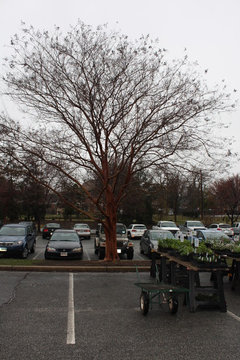
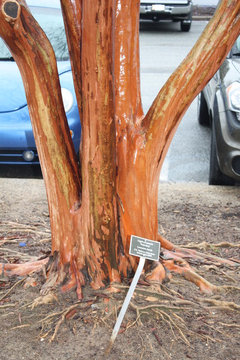
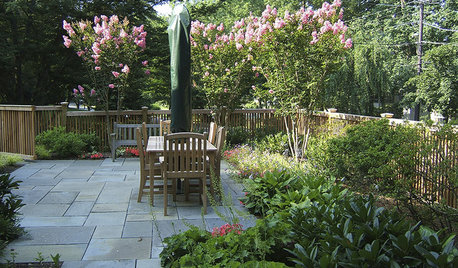
    Here are two pics of CM's in a tight location like you described. They're doing great. That's the reason CM's are so popular, they can take some of the worst locations, median strips, schoolyards, strip mall plantings. People hack them back and "murder" them and they come right back. This is in Wash DC.

    Ruth B (zone 8a) thanked sam_md
  • 10 years ago

    Wow!!! Thanks for the pics Sam. Those are very old trees!! I'll have to snap a pic of the area(s) in question as they are quite a bit narrower. To answer the above questions:

    I'm in Southern Utah

    Soil is sandy so I always amend the soil with rich mulch/paydirt before I plant anything.

    The areas in question are both full sun.

    Both areas are watered on a drip line. Don't know the timing of the front area, but for my yard, it's in a corner spot at the front of the lawn area. The drip was about, say, 20 minutes every few days in the summer (Temps 100+ all summer and often up to 110) and about once a week in the spring and fall.

    I never fertilized the crepes myrtles after they were established. Well, that's not true, I'd sometimes administer Dr. Q's Plant Tonic if they looked stressed.

    I would often check the soil (insert finger) and it always seemed moist but not wet.

    Pics forthcoming when I get a chance. Thanks!!

  • 10 years ago

    Where exactly in south Utah are you located? There are some odd geographic micro-climates gathered in that area (according to Sunset Western Garden book) that could complicate things. Do you see other crapes well-established and blooming in your area? Sunset shows a rather limited range of suitability for these shrubs in Utah so this may be worth pursuing further..

    Another thing to consider is the soil pH. Crapes thrive best in a slightly to moderately acidic soil (5.0 to 6.5). A large portion of the southwestern US tends towards more alkaline soil conditions as does the irrigation water. Depending on how your soil tests out, you may need to do some amending to create a more suitable growing environment.

    Ruth B (zone 8a) thanked gardengal48 (PNW Z8/9)
  • 10 years ago

    I'm in St. George. Lots of established crepes, none as big as the photos, but there are many "trees" over 15 feet tall in the old areas of town.

    How do I create a more acidic soil? Just more pay dirt or is that like nitrogen specifically or what? How do I maintain that soil pH after the plants are established?

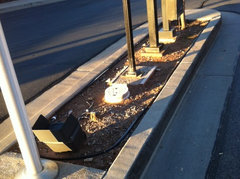
    Area I'm considering trying to get a CM to grow.


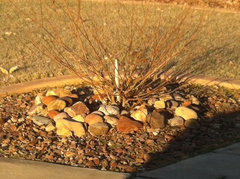
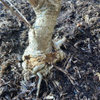
    This was taken this morning. observe the short white stalk which is the remnant of a mini-tree CM that was lavender color. It died, and these "shoots" always came up but I would hack them off. When the main bush died I let these grow... they are color white or maybe off-white is a better description. Anyone have any idea why it grows like this?


    Thanks!

  • 10 years ago

    The best way to lower soil pH/increase acidity is to apply sulfur. How much is required depends on your current soil pH. And it is not an immediate fix - takes some time to become effective, usually several months. And is also not permanent - you would need repeat applications over the years of sulfur or some other acidifier like an acid lovers fertilizer or cottonseed meal.

    Previous GW discussion about growing crapes in Utah.

    Ruth B (zone 8a) thanked gardengal48 (PNW Z8/9)
  • 10 years ago
    last modified: 10 years ago

    Crepe Myrtles love full sun, lots and lots of heat and lots and lots of water.

    I think the problem lays in the water. Your description of how you use the drip irrigation sounds flawed. Drip systems must be left on for many hours because the amount delivered is so small. I suspect that the amount of soil that was moistened was very, very little, and just at the top.

    Also, do you have enough drippers? I think the idea behind drip irrigation is fabulous but in practice, they are difficult.

    Ruth B (zone 8a) thanked tete_a_tete
  • 10 years ago

    Thank you so much all. Okay so I was told CM prefer a deep soak with greater time between. Are they more like ivies then wherein they want to be wet all the time? I'll have to look at my drippers and how they're working and soaking etc. How can I check to see how deep the water is going?

  • 10 years ago

    Crape myrtles are well known for their drought tolerance, once established, so I'm not sure of the validity of needing "lots and lots of water". But a good deep soaking every couple of weeks in the heat of summer would be of benefit and improve both growth and flowering.

    Drip irrigation is an extremely efficient method of watering and how long it needs to be left on in a single setting will depend on the size and quantity of the emitters. And the soil condition. But "hours and hours" may be a bit of an exaggeration. You can tell how deep the water is penetrating by testing - run at a set period of time then dig down alongside the rootball and see how deeply the water has soaked in. If still mostly on the surface, leave for a longer period and retest. You want irrigation water for any single application to percolate down to at least the full depth of the rootball and somewhat deeper than that if possible. You can then allow the soil to dry pretty well between waterings.

    Ruth B (zone 8a) thanked gardengal48 (PNW Z8/9)
  • 10 years ago

    I've just noticed that you wrote about having sandy soil.

    This means that the irrigation water will not spread out, as it will in a clay soil. So you need even more drippers (maybe) than I at first thought. The water will move down through the soil easily (or easilyish depending on what's been done to it) so my 'hours and hours' probably doesn't apply.

    I don't have drip irrigation because I could never get even pressure along the pipes because my garden is not dead flat, but somewhat undulating. Plus, the whole block is on a slope (mild slope). It drove me nuts trying to get the irrigation system to work and I think set the dogs on it.

    I think that Crepe Myrtle will survive even in that frighteningly harsh place. Other shrubs/small trees might tremble, but Crepe Myrtle can handle a lot of stuff as long as it has heat, sun and water. So I stick to my guns here, even though I am not a gun-toting individual.

    Ruth B (zone 8a) thanked tete_a_tete
  • 10 years ago

    Embothrium suggestion of cacti or succulents would be my suggestion for that busy, thin strip. Maybe some trunking Yuccas could survive. That is what I decided for my strip off the hot, blacktop of my driveway. (Crepes like sun and heat but not Las Vegas/lunar landscapes.) Your second picture site looks better, but also tight, and there may also be a lot of reflected heat off the pavement. I personally love Crepes but dislike the super mini Crepes (have not seen the same vitality with these as with semi-dwarfs or even dwarf cultivars). I also use HERBS big time in these difficult areas. Rosemary, lavender, sage, fennel, etc. love heat and drought. You might also consider ornamental grasses.

    Ruth B (zone 8a) thanked User
  • 10 years ago

    Lavender would love it. Sandy soil, roasting heat. And it wouldn't need the amount of water that other things need.

    I also don't much care for the small Crepe Myrtles. I do have one, but my favourite are the big ones with the mottled trunks, especially when allowed to grow tall to really show their beauty.

  • 10 years ago

    Ruth, any idea of which crApe myrtle cultivars you have been using? If you said above, I didn't notice. Some cultivars are definitely more finicky than others.

  • 10 years ago

    Sorry Brandon I am not sure. I have only ever planted, what I think is the basic, slow-growing variety. Don't know if it's Dwarf or otherwise. What are the new ones that I seem to have seen a few seasons past that are much faster growing?

  • 10 years ago

    tete: Do you know which kind you refer to as the "big ones"? What are mottled trunks and can you post a pic or two? Not sure I've seen those around here...

  • 10 years ago

    Ruth, I just mean the old fashioned kind - the kind that always existed before these new-fangled, short shrubby ones came onto the scene. Lagerstroemia indica is what I know it as.

    Sorry for delay in answering. I was looking at every Crepe Myrtle I came across to see if it was photo-worthy but they all seemed strangely lacking. The best one I ever saw was a bright pink, tall and slender fellow in an old garden. Unfortunately, he disappeared a few years ago. Don't know why.

    (No, he's not at my place.) (Pity.)

  • 10 years ago

    I am coming to this thread quite late. You have received so much good advice, but I would like to contribute since I live in zone 7A and grow 16 crape myrtles.

    I am concerned with your picture. If it were my yard, I would remove the rocks, and clear out the area to prepare a planting area of 4-5 feet square. I would dig down to at least a couple of feet, test the drainage, put in good soil that will allow drainage. I would go around the area with a pic axe and dig into enough of the surrounding soil to be sure I would get drainage.

    When I planted my two crape myrtles for the front yard, i went to a local nursery, and found out what was native to or easily grown in Oklahoma. (The crapes had American Indian names - small fact that pleased me.) I purchased two white ones, and have been very happy with them for probably more than 20 years.

    Since I mainly grow roses, I choose to cut mine back each spring, and control their growth so they look well with the roses. They grow just fine.

    I do not often water my crape myrtles, but when i do water them, I totally drench them.

    This is such a long response, I hope it helps.

    Sammy

  • 10 years ago

    Ruth, I just noticed that you asked why the CM grows like that (in your photo above). Many plants do that if they are cut right back. CM is one such plant.