Software
Houzz Logo Print
xochitl74

best brands and installation on cork flooring?

10 years ago

My contractor wants to get Home Depot cork flooring, which doesn't seem well reviewed. What are brands that people recommend?

There seem to be two ways to install - gluing down on subfloor or pieces that snap into each other. Is one better than the other?

Thanks!

Comments (19)

  • PRO
    10 years ago

    There is a very knowledgeable pro on Houzz named Cancork. If you can find the profile you can ask a direct question.

    Xochitl thanked Brickwood Builders, Inc.
  • 10 years ago

    Thanks Brickwood Builders, Inc. I found their profile and asked directly!


  • 10 years ago

    Cancork Floor Inc. Thank you for your detailed response!! It was extremely helpful!! Plus, have read your responses to other cork floor issues. I think, for our small kitchen, we will go with glue down.

    Both Globus and Duro Design are sold in stores here in Los Angeles. Globus says that installation of the glue down tiles is similar to vinyl tiles, at least with theirs, that come pre-glued.

  • PRO
    10 years ago

    Globus and DuroDesign use preglued tiles because each batch is hand made for the client. Preglued (known as prebuttered) tiles have a shelf life of 3-6 months and then the glue loses its bonding power. That's why my company doesn't use prebuttered. We carry stock in our warehouse that is ready to ship the day it is paid for. They add $1-$2/sf just for this factory based preparation. This is normal to add costs like this.

    The installer will add adhesive to your subfloor and then lay the tiles into the adhesive (probably a contact cement adhesive). It will be the same adhesive that is used in the factory. Once the floor is laid, it SHOULD BE site finished (both Globus and DuroDesign site finish their cork). Both Globus and DuroDesign ship the required amount of adhesive and finish for the job. It should be part of the "cost per square foot" for the materials. Sometimes it is not and you pay extra for the liquids.

    The prebuttered tiles save TIME and labour at the job site...but the materials are more expensive because it is done at the factory. They add their mark-up on the factory costs. If you add a step at the factory, you add a higher mark-up for the customer.

    Please make sure you have the right subfloor for your cork tiles. You cannot install over top of old flooring. The old floor must be removed, the subfloor properly patched and leveled (must be real plywood or cement board) and then the cork can be glued to it. Subfloor preparation is not included in the costs for install. Subfloor preparation can add another $1-$3/sf onto the job (depends on what is needed...).

    If you are doing other renovations, please make sure the cork floor is LAST...so many ruined floors have been because other trades have dropped things or tried to "clean" a cork floor with their own special blend of cleaners (usually sitting in a spray bottle in their tool kit) only to discover the cleaner has eaten through the finish. This has happened more times than I can count.

    Cork goes in last.


  • 10 years ago

    Cancork Floor Inc. My husband wants Globus because of the finish. We have wood floors that have heavy wear along certain paths and our current finish on the wood requires that we sand the whole house before we can refinish the floors. He wants a finish on the cork that will allow patch finishing and will not require stripping before we finish the floor. Polyurethane requires sanding before it's finished, no?

    Our contractor had already estimated for preparing the floor - ours dips and bows in places (our house dates from 1941.) Glued down is more expensive, pre-glued or not, considering labor costs, but seems a better way to go for durability, noise and allergies (I am a sufferer.)

    Thank you for the advice on putting the floor in last! I'll make sure to do that. And thank you again for your advice! You have been instrumental in helping us choose the best product for us!!

  • PRO
    10 years ago

    Cork finishes are normally "abraded" before a new coat of finish is put down...patch finish is not recommended as there will be an obvious difference between patch and original. Most finishes (like Globus, DuroDesign and Forna) need to be "refreshed" every 7-10 years...every 5 years in high wear areas such as kitchens. When it comes time, the floor will be HEAVILY cleaned, lightly abraded (not sanded off; abraded and left intact) and then a new coat of finish OVER THE WHOLE FLOOR will be applied. Not a patch...whole floor.

    As for hardwoods with wear through issues, it is possible to "catch" them early enough and to do a screen and coat. This is often done around years 12-15. This is done so that you can have a handsome looking hardwood for another 10 years without having to pay the expense of a full sand and refinish.

    I'm not sure why your husband believes cork can accept a patch finish. It can be done (I do it at work all the time under my desk chair...but mine is a commercial floor that is not my pride and joy) but most homeowners don't like the look. It is perfectly safe to do a patch...but the LOOK is pretty ugly.

    I would ask your husband where you got the idea that a patch is an option. I think he might be mixing it up with a "refresh" or "refurbish" (lightly abrade the whole floor and then coat the WHOLE FLOOR with new finish). This is, in essence, a screen and coat that is done for hardwoods. Same theory. Same results. Much different from a "patch".

  • 10 years ago

    Cancork Floor Inc. I've attached the link to what Globus Cork says is required to maintain the finish on the floors. They say they use a water-based finish that requires reapplication every year or two, or in heavy use areas, more than once a year. It says no stripping is every necessary (and by stripping I assume they mean abrading?) Our kitchen receives heavy traffic, as we have two dogs that love to race through the kitchen to their doggie door, which is also an exterior door to rear yard. Even though we would be finishing more frequently, the lack of stripping appeals to my husband. They do say on their site that you can spot finish, but I am sure you are right, and it will be noticeable.

    I will speak with the Globus rep on Monday and make sure there is no other maintenance required - like a 5 or 10 or 15 year strip down and refinish. I do want to make sure we are getting the right product - as you are right, you pay a premium for it!

    http://www.corkfloor.com/faqs-cork-floors-maintenance.html

  • PRO
    10 years ago
    last modified: 10 years ago

    Wow...every year...not fun. Globus is selling a polymer polish that is 'quick wearing'. I'm not fond of anything that needs to be done this often. I HATE cork floors that REQUIRE a polish every 6 months or new layer of finish every 1-2 years. If your hardwoods irritated you, you can imagine how irritating you will find this.

    If you decide to work with the POLISH (that dreaded stuff our mothers and grandmothers HATED using) you are going to be "maintaining" this floor every 6 months for the rest of it's life.

    The polish cannot be used 'indefinitely'. Globus sells the LOBA cleaner and the LOBA floor polish. That means their finish (that they ship you) is probably LOBA. At some point, you have to remove the polish to add REAL finish to it. I'm a Loba Dealer so I have some idea as to how these finishes wear and how to use the polishes.

    http://www.loba.de/fileadmin/site_structure/produkte/10011/us/TI_US_10011_FloorCare.pdf

    Thats the link to the Globus "Floorcare" (Loba Floorcare).

    http://www.loba.de/fileadmin/site_structure/produkte/10065/us/TI_US_10065_Remover.pdf

    That's the "remover" for the Globus "Polish" (Loba Floorcare). You will need to use them in combination if you use the polish. Globus makes no mention of the "remover" but ALL polishes have them...Globus doesn't sell it so they don't mention it. But you can bet your bottom dollar it is "needed".

    My clients find polishes annoying (3 days to cure even for the polish) so they usually decide to add polyurethane every 5 years instead of "polish" every 6 months.

    It is your decision (Globus points out that you can decide as to polyurethane or polish...). Just be aware of what you are choosing when you choose "polish". You might want to make your husband the "polish guy" and make him use the polish every six months. After 3 applications I'm going to guess he won't be so enthusiastic. At that point you hand him the "Remover" and tell him to go rent a machine with a "green pad" attachment...so he can mechanically remove all the polish.

    I know they say "no sanding"; they said NOTHING about the need for a machine to remove the polish which is mentioned in the Loba Remover Instructions (instead of hands and knees with a green 'scrubby'). Polishes need some sort of "effort" to remove. Some people will do the hands and knees, and others rent/buy a machine. Much faster.

    Personally I would "skip" the polish and work exclusively with the polyurethane ... I would guess the person responsible for the 'polish' would like that much better as well. It's your call. Remember: all polishes HAVE to come off at some time...usually every 5-7 applications (could be every 3 years).

  • 9 years ago

    @Cancork: Interested in doing whole house (minus bedrooms and bathrooms) installation of floating cork planks. Hard to get a read on which of the many options out there are the most durable (longest waranty and highest density/thickness). Can you weigh in here? Looking for classic mid-century cork look. Thank you! —Sally

  • PRO
    9 years ago

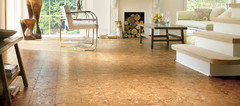
    Hi @Sally-Faust! Cork is a great product - very soft & comfortable underfoot. We have a few great mid-century cork looks! This is our Florence Elite in a classic colour, but there are many others available. See http://www.torlys.com/residential/products/cork/ for all the collections and colours. If we can help you in making your decision, please let us know.

  • 9 years ago

    Anyone know how expanses of cork plank floor and linoleum (Marmoleum) be butted together durably and cleanly? Trying to avoid the "unseemly"! Get it?

  • PRO
    9 years ago

    T-moulding or uneven T-moulding. A cork floating floor needs expansion room. To do that you need a T-mould...which ever one works the best for the floor height difference. I often advise my clients to work with white oak finished/stained to match the cork. The colours in white oak often work well with cork.

    I would not butt these two floors up tight. The cork plank won't like it....and neither will you once it starts its seasonal expansion/contraction. T-moulding and you are good to go (or a reducer...which ever works for the two floors).

  • 8 years ago
    @cancork What do you think about cork floors In Florida in a new home.
    Any advice on any of these cork manufacturers?
    - us floors (natural floors)
    - eco forest
    - APC
    Thank you, a Florida girl with a handicap (need softer floors and want a green floor product), great EE Windows, no kids, a hubby and no indoor pets
  • 8 years ago
    @cancork What do you think about cork floors In Florida in a new home. Any advice on any of these cork manufacturers? - us floors (natural floors) - eco forest - APC Thank you, a Florida girl with a handicap (need softer floors and want a green floor product), great EE Windows, no kids, a hubby and no indoor pets @cancorkfloorinc
  • 8 years ago

    Beware of Cancork. They are knowledgeable, but not the people to order from! I put in Forna engineered cork flooring (from Cancork) 5 years ago in my kitchen. I chose the interlocking planks because I could not find anyone to install the tiles in the area where I live. Cancork supplied the planks I bought. It was sold as a possible DIY, but I had a remodeler do it anyway. The floors do dent, but it hasn't bothered me at all. It is a busy pattern and the dents are really not ugly. Of course, we have a more rustic style in our kitchen. The thing that bothers ma A LOT, and that I would be careful of is that the cork surface chips off and it's apparently not covered by warranty (although reading the warranty, you wouldn't know that--it's only when you ask that they "interpret" the warranty to exclude the chipping and flaking issue.) These are not gouges, they are chips. We used the very expensive Lobo polyurethane that they recommended and applied it exactly according to directions and it immediately peeled up and hasn't protected the floor like they said it would. Disappointed with Cancork and their product, but I still really love the cork. I like the way it looked, the way it felt--just think this is a poor example of the material.

  • 8 years ago

    Is there a response from Cancork on this comment?

  • 8 years ago

    I'm interested in a reply from Cancork to macmartha's statement as well. Most of what I've come across here looks great but an exchange I had with them via their online chat service didn't exactly build confidence.

  • 8 years ago

    I saw an earlier comment from @cancork that applying 100% cork glue-down tiles on concrete "slab on grade" in Texas was asking for trouble. iCork (cancork distributer in the US) gives specific tests needed for concrete base, which make sense (water transport rate- to measure current moisture , and pH - to check for previous moisture problems). So I don't understand why Texas in particular is a bad idea as long as those tests pass. There is a huge range of environments in Texas from very humid to very dry, so I can understand that some areas may have few houses that would pass the tests.

Sponsored
Wannemacher Interiors
Average rating: 5 out of 5 stars26 Reviews
Customized Award-Winning Interior Design Solutions in Franklin Cnty OH