Software
Houzz Logo Print
audrey_a_meyer0

Many Questions

10 years ago
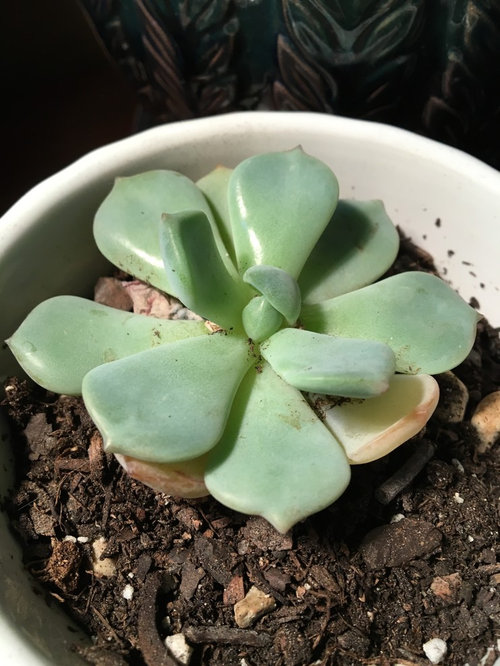
Hi all!

I just have a few questions regarding some new and some old succulents. I should mention beforehand that their pots do have drainage holes and I am in the process of fixing up some better soil for them. Here goes:

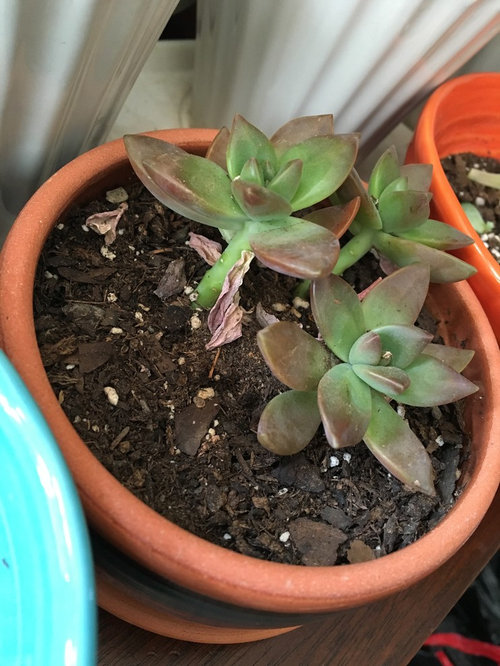
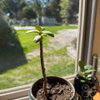
First, I just got this succulent about a month ago and have watered it twice (it has been under a light 8 hours a day), but I think it seems overwatered. The lower leaves are becoming pale and slightly transparent while others are shriveling. Also, the leaves in the center have closed up a bit. First and foremost, I think I need an ID on this one to help me care for it. Otherwise, does anyone know what I am doing wrong here?

Next, I got this succulent at the same time and have been watering it like crazy. It is also under full sun and the soil goes completely dry every couple of days. I feel like I am watering it too much, but I also think it needs it because the lower leaves are drying and shriveling up. Again, I would greatly appreciate an ID here as well.

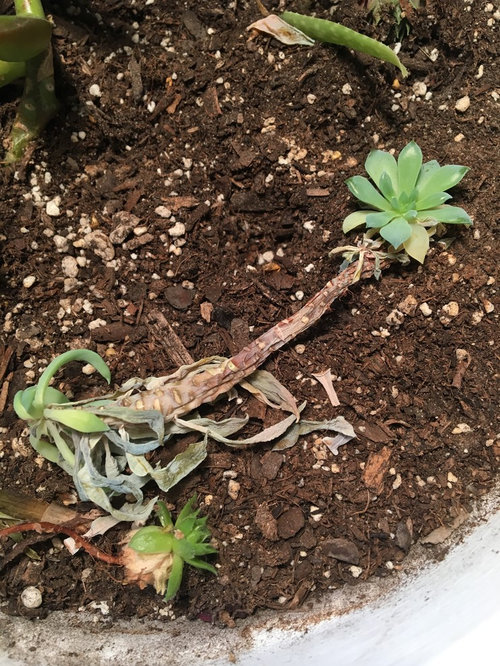
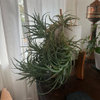
Finally, something is happening that I have never seen before. I have had this plant for over a year and it had been doing great, though a little etiolated, so I put it under a plant light in January. I tried to keep up with watering it, but I think I may have over watered it. It started to look sickly, so I layed off the water. Then, about a week or two ago, all of the stem shriveled and died overnight and I plucked off the leaves that were salvageable. However, there were some new buds coming out of the bottom. All of them died except for one, which is still going strong (see photo). I have no idea what to do here, so basically any advice would be greatly appreciated. Has anyone seen this before?

Sorry this got really long. I would greatly appreciate any ideas you have about ID or over/underwatering, etc. Again, I know my soil isn't too great at the moment and I am fixing it.

Thank you all so much!

Comments (5)

  • 10 years ago

    Let's start with IDs

    Plant 1: Echeveria (Might be a Secunda breed)

    Plant 2: Looks like a Grapto to me, not sure which one in particular

    Plant 3: Same as Plant #1

    Hi Audrey, first if you can state which region you are from, it would help us understand your climate better.

    It still cold (by succulents standard) in the dead of winter for folks like us in the North East, albeit it's already starting to warm up bit by bit.

    Most plants can't cope with the cold and usually die if they are not properly insulated or kept dormant.

    Now back to your first plant, did you repot the plant when you first bought it? Or has it always been in the same container? If you did, how was the roots like? Plentiful? Hairy? Or just a few strains?

    The container seems glazed, so those pots tend to retain moisture much longer than clay (which is breathable) like the pot in your 2nd plant.

    The best way to know for sure is dig your finger into the soil. If you feel moisture, then you are overwatering. If you don't like sticking stumpy fingers into the soil and disturbing the plant (like mine, my partner always call me mr clumpsy), you can always try a dry wooden skewer to do the wet test.

    My guess could be a combination of lack of roots, and too much moisture. A mini fan will help evaporation much faster and cool the plant if it's under lights for 8 hours a day. Note: I've cooked a plant under lights before, even though the CFL light doesn't emit much heat, but a plant exposed under constant temp all day with no air flow can easily be cooked and collapse.

    See those green on your second pot of plants, those are all new growth, plants tend to lose their lower leaves if it's growing new leaves. It's quite normal. Once again, do the wet test before you water each time, that's the most definite way to prevent overwatering.

    I'm afraid your third plant is experiencing dry rot. The roots probably failed the plant a long time ago before you detected it, and the stems just shuts down, drying up, and slowly creeping up to the leaves. The best way is cut the stem where there is healthy flesh and reroot it. I've tried rooting this guy before, it's quite a difficult plant to root through leaves.

    I'll snap a pic of the one I saved when I get home.

    How do you plan to fix your soil?

    I would suggest to buy some perlite/grit or even pumice if you can get your hands on those and mix into your soil.

    Remember, with poor roots, you'll never have healthy plants. So always target to keep the roots happy before you are concerned with the leaves of the plant.

    Happy Growing - Bernard

  • 10 years ago

    I would say that that a lot of your problems will disappear after you have fixed a better soil for them - it will be much harder to overwater (good job on that).

    That last plant does seem a little puzzling, but after all, I don't know what it looked like before it went bad, so that doesn't help either.

    Have a good day!

    ~palmsandsnow

  • 10 years ago

    Bernard-

    Thanks so much for your comments!

    I'm from the midwest, which I believe is zone 4. It is still below freezing here, so all of my succulents are inside. They are in my living room, where there is plenty of air circulation and the temperature is a steady 70 degrees.

    For the first plan, I did repot it. The roots seemed pretty healthy. Though they weren't the most healthy roots I have ever seen, they were white and slightly hairy.

    I was able to find a picture of it when I first got it:

    You can see that it has taken a serious turn for the worse. The pot is glazed, but I just dug my finger far into the soil and it was bone dry, so I gave it some water. I also moved it further away from the light. I can post updates for how that goes.

    For the third plant, the little off shoot is doing very well. It is in a large terra cotta pot, so I am thinking maybe it let it go too long without water. I'll cut off what I can. I tried propagating some leaves a while back and got little shoots coming off, but I didn't water them enough, so I will have to see how these new leaves do. If it helps, I have also found a photo of this plant during January.

    I am going tomorrow to pick up some perlite and pumice. I think I'll have to do some research to find the perfect mixes for each of my plants.

    Your advice to target the roots more than anything is perfect.

    Thanks again!

  • 10 years ago

    Some folks like me grow some of these w/ just cactus & succulent (C&S) mix w/ added perlite, like equal parts of each. Perlite & pumice serve the same purpose (to help aerate the roots & promote fast drainage), so I would buy one or the other, not both.

    I have both & for non-succulents, I mix houseplant mix 50/50 w/ perlite. My C&S, I grow w/ C&S mix w/ lots of pumice instead of perlite.

  • 10 years ago
    last modified: 10 years ago

    Audrey this is how an Echeveria Secunda should look like..

    This is picture was taken last year, and unfortunately I've lost this plant to overwatering, even in the Gritty Mix.

    Fast Forward to now, believe it or not, this is the same actual plant that I took a cutting from the mother plant. And to be honest, this plant has been given much more light than before, so it decides to grow very tight and compact now.

    Your first plant looks more like an Echeveria Tippy. It will have red pinkish hues when it gets sufficient light.

    When you said you consider them "healthy" how much roots were there? If you ask me, this is a sign of healthy roots. Full, long, and white frills covering till the tips.

    Even if you have centralized heating in the living space, low light can also induce dormancy among plants. At this period, the plant either shuts down, or it focus on recovering from its repotting by growing its roots. I don't know how much "air flow" you can get to your plants, but when I mean a fan, I literally have a mini oscillating fan blowing my plants about 8 hours a day. Many of these plants grow in very arid conditions, and rely alot on the windy plains to carry them moisture. If you have moisture sitting on its roots all day in the soil, the plant not only does not absorb the water, it probably suffers from overwatering. This is why so many growers tweak their mix so the moisture do not sit in the soil, forcing the plant's roots to adapt to the scarcity of moisture through dryness of the mix.

    It's tough to gauge when your plant is asleep, and it takes time to practice when to abstain from watering and when to actually give it a little bit to keep it alive and cope through the winter.

    Lastly, I don't know how much light they receive each day, but most Echeverias require about 5-8 hours of light (full or shaded sun) a day to maintain its vigor and compactness.

Sponsored
Peabody Landscape Group
Average rating: 3.5 out of 5 stars8 Reviews
Franklin County's Reliable Landscape Design & Contracting