Software
Houzz Logo Print
chapps

Tipu trees planted close to new home

10 years ago

We just purchased a new home in Los Angeles - a 1926 Spanish Revival that has been thoroughly redone. Even the garden is new. However, I just identified three saplings that were planted about eight feet from the south side of the house - Tipu trees. These are certainly beautiful shade trees, but I'm concerned about the ultimate size of the canopy and invasive roots. If I had done the planting, I would have been thinking more along the lines of crape myrtles. I know I can prune the Tipu trees so that the canopies don't hit the house, but how concerned should I be about the roots, given that they're seven or eight feet from the house?

Comments (17)

  • 10 years ago

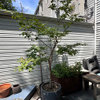
    Forgot to post a pic. You can see the young Tipu trees on the left. Three of them. I think it could be OK, if I prune them correctly.

  • 10 years ago

    I wouldn't be over-concerned. Unless there's something about tipu trees that I'm not aware of, mostly the "root invasion" thing is overblown. It sure can happen with very old sewer laterals, but in those cases, the lateral is already leaky and in need of replacement.

  • 10 years ago

    see link ... see potential ... make decision ... it will be decades before you have a problem though


    is that basically the property line ...


    roots are not an issue if your foundation and sewer systems are modern and intact ... they might take advantage of pre existing problems.. but they rarely cause them ...


    this MI boy doesnt do CA ... nor CA gardening ... i will defer on further thoughts.. beyond general tree lore ...


    ken

    https://www.google.com/search?q=Tipu+trees&source=lnms&tbm=isch&sa=X&ved=0ahUKEwjou5mA8L7MAhWLlYMKHR3BDUUQ_AUIBygB&biw=935&bih=745&dpr=0.9


  • 10 years ago

    Well, it does worry me that one of them may be very close to the sewer line. I may take that one out - I think three in a row is kind of overkill. Removing the center tree will make it look less crowded. And, yes, they're at the edge of the property line, with the property elevated a few feet above the street level, behind a stucco wall. This other pic shows the house from across the street. You can see the Tipu trees on the far left, behind a new Texas privet hedge. I intend to keep that hedge under control, so that the roots don't go crazy, and may put root shields on either side of the sewer line. Whatever the gardener suggests - once we hire one! I've dreamt of living in a Spanish revival house ever since coming to LA many years ago, so I'm thrilled about moving in and making the house and the grounds my own. Once everything is fenced and gated, the dogs are going to have a field day.

  • 10 years ago

    Stephen, unless sewer line is old and dilapidated, no roots are going to get in there. That only happens where the line is ancient, full of open joints, that sort of thing. If a modern PVC type, no worries.

  • 10 years ago

    Well, it does worry me that one of them may be very close to the sewer line.


    ==>>> see link.. old fashioned sewer lines.. clay pipes ... tree roots can invade ...


    if you have modern welded PVC ... there is nothing a tree can do ...


    ken

    https://www.google.com/search?q=clay+sewer+pipes+with+oakum+and+roots&biw=936&bih=745&source=lnms&tbm=isch&sa=X&ved=0ahUKEwiv4oCw8MDMAhXnwYMKHdAmDgIQ_AUIBygC&dpr=0.9

  • 10 years ago

    The tall tree next to the door is a formerly-ailing crape myrtle that the renovator brought back to life. It's in great shape now and really beautiful. Yes, the Tipu trees are making me a bit nervous. Great that they planted large saplings, but I think I might keep two, move to other parts of the property (one front, one back) and plant another couple of crape myrtles in their place, or another tree that doesn't get too large. That palm, by the way, was planted in 1926, with the house - and it's one of the largest you'll see in L.A. Our current street, one block over, has a row of them, planted the same year, and the city has to bring out cranes to trim off the dead fronds each couple of years. When those fronds fall, they're dangerous, like missiles. We've had a few injuries on the street in the last few years, and some broken windshields. Thanks for the advice - and good eye for trees!

  • 10 years ago
    last modified: 10 years ago

    Oh, about the sewer line - here in LA, you'll usually see a mix of clay and concrete pipes used, and many of them haven't been replaced in decades. That's the case with this home - we had the sewer line scoped last week, and the part nearest the house is clay and in perfect shape; the remainder is a concrete pipe that unfortunately is choked with roots just before it meets the city pipes (damn - just one more foot and it would have been the city's responsibility). The owner is having the line blown with water to get rid of the roots and see how much the pipe has been affected. If the part where the roots came in is just a crack, then we can keep the pipe going for years, with regular use of RootX. What's interesting is that when sewer pipes are replaced in LA, they're almost always replaced with clay, not PVC. Even the main sewer line on our street - which was just upgraded a few years ago - are large vitrified clay pipes. Very Ancient Rome! One of the guys installing the city sewer pipes told me that clay was superior to PVC since clay is rigid, can last 100-150 years, while PVC can warp and deflect over time (and remember, I live in earthquake country). And cement pipes can deteriorate if exposed to too much acidity. Of course, our clay piping is clean as a whistle after 90 years, but the cement piping is beginning to degrade and has root intrusion. The Romans knew about the superiority of clay piping - far better than cement, which the Romans invented. I have the feeling that once our line is blown out, we're going to be looking at $$$ in replacement costs. Sigh.

  • 10 years ago

    there are a few things about trees that the answer depends on who you ask. Ask a sewer guy and ask about trees, and you have determined your answer: trees are a menace, they cause expensive damage. Period. However, drive around. Every house has some kind of septic or sewer lines, and most houses have trees. Can they be a problem? That's a far different question than, are they a problem?

    There are two points I consider salient, based on the photos you provided. First, sunward facing. I'm willing to bet the trees were planted to provide shade. Second, Power lines. Shade trees and power lines? But I'm gonna bet you are going to want the shade in a CA summer.

  • 10 years ago

    @waynedanielson. Without a doubt, sewer guys hate trees anywhere near a sewer line. To be fair, it's possible that a majority of sewer lines in So Cal have roots in them, due to year long growth periods and the search for water in drought conditions. Good eye, by the way. Yes, a major concern that I have are the low power lines - the trees will have a wide and high canopy and be up in those lines within the year. That alone is reason enough to swap them out for another, shorter tree. Yes, they were planted for shade, but I don't know any way around the power line issue. They're practically touching the lines now. Luckily, the house has a power AC system. Maybe instead I should add an eyelash pergola to that side of the house and grow some climbing roses, wisteria or bougainvillea on it. Not as great as shade trees, though ...

  • 10 years ago
    last modified: 10 years ago

    "Landscapes are planted to sell houses--the sellers don't care what kind of problems you have after they sell it."

    Amen to this! I would think about just reducing their numbers: leave 1 tipu tree, furthest from the house.

    It's really hard to believe clay is more durable that Schedule 120 PVC. I've seen that stuff in a waterworks supplier yard. It's thick.

  • 10 years ago

    Double amen to landscaping planted to sell houses. I'll be taking out over half of the plants they put in - some invasive items were even planted thickly around the air conditioning unit. Ugh.

    Yes, I've looked up the reasons for using clay pipe, and vitrified clay is far more durable than PVC. Did you know that in Rome, many of the classic fountains are still using the original Roman aqueducts? The clay piping has been repaired over the years - notably in the Renaissance - but it's still clay. Apparently, PVC is really very prone to warping, and the joint seals can deteriorate over time. I think the former is more important in earthquake country. I, too, expected to see PVC or concrete piping replacing our street's main sewer line and was really surprised to see clay. One of the best parts, the contractor said, is that it was pH neutral and not vulnerable to acids, either in the waste or in the ground. He also said a lot of municipalities have rethought the move to PVC, but I think it may just be what's most appropriate for the environment at the end of the day. God knows, I'm not an expert on sewer lines! :)

  • 10 years ago

    while PVC can warp and deflect over time (and remember, I live in earthquake country).


    ==>>> the earthquake part is rather foreign to this MI boy ...


    ken

  • 10 years ago
    last modified: 10 years ago

    Well, I guess as long as today's clays are made as well as Romans made them you will be fine then LOL.

    In truth though I wonder if plastic gets a bad rap because it's the budget choice, but this leads to buying the cheapest plastic available. I had to replace the water line to my house a while ago. I used Endot Endopure which has a lifetime warranty and is incredibly thick. Almost 1/4" (SIDR 7, the thickest available). This is considered the best potable water HDPE line you can buy. It's really not much more expensive than the junk they sell at HD or Lowes, if you consider what you're doing - why save $100 when you're paying thousands for a line replacement? In installing it they hit the old line, even though we hadn't specifically tried to locate it. OMG. This was a junky looking black plastic HDPE plastic whose walls were barely more than paper thick. It was surprising it had lasted so long.

  • 10 years ago

    Heh, seismic retrofitting figures into everything in the Golden State. And with today's report that the San Andreas is ready and overdue to blow, we'll be rebuilding that chimney and retrofitting the foundation of the house before even moving in. And if the sewer goes, well, there's the next project. I'm tempted to leave one of the Tipu trees, since it'll be so great looking, but ... Power lines, sewer line. Sigh. But these are all first world problems - I'm just lucky to be having them and not repeating my 2015 (four spine surgeries, near death, loss of three of our four parents, dead four year old dog/soul mate). So I'm thankful to be just fretting over three Tipu trees. :)

  • 4 years ago
    last modified: 4 years ago

    @Stephen Chappell, house looks beautiful! I'd love to know how things worked out with the Tipus, now 5 years down the road? We're in the process of naturalizing a concrete slab backyard in the Lincoln Heights neighborhood of Los Angeles, and have identified a perfect spot for a tipu with similar proximity to a structure (albeit a low, 3-car garage).