Software
Houzz Logo Print
ophoenix

Embothrium coccineum - is it going to bloom? Please help!

10 years ago

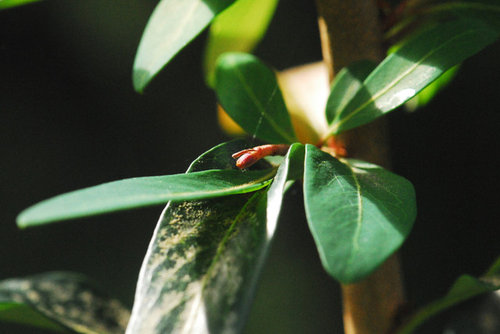
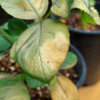
This is a new tree for me. This one is about 7-8 ft and a few years old. Do these little red parts look like they might become blossoms? I check it everyday and can't wait for it to bloom. My neighbor has a huge one and it is absolutely gorgeous! Does this look promising for this summer - or do I have wait another year?

I will keep my fingers crossed till I hear from someone. lol

Comments (12)

  • 10 years ago

    Reddish sprouts are just the new growth :-) No flowers this season.....my niece has two very large trees on her new property and they have just finished their bloom cycle. And Shirley, you want to avoid much fertilizing with this, as it resents phosphorus, as does you close-by planted Grevillea :-))

    ophoenix thanked gardengal48 (PNW Z8/9)
  • 10 years ago

    Boo Hoo! Thanks - will have to wait for next year. Thanks for the info on fertilizer. Fortunately, we are able to depend on the liter from the fir trees and lots of mulch for all the nutrients needed by our garden.

  • 10 years ago
    last modified: 10 years ago

    Wants full light exposure or it grows spindly and may lean over. The mantra about the phosphorus makes it seem like if you even talk about it where the trees can hear you they will fail. But I put lawn fertilizer on mine - once - and got a noticeable improvement in growth and leaf color. Probably the phosphorus is more of a concern with specimens in soil-less potting media, or where it might start to build up due to repeated applications.

    ophoenix thanked Embothrium
  • 10 years ago

    Thanks - it is in the ground and looking really good. I just want it to bloom!! But looks like I will have to wait. It is in the best spot for the most sun in the garden.

  • 10 years ago

    Seedlings seem to often start blooming at about head height, so yours is likely to be seen in flower any year now.

    ophoenix thanked Embothrium
  • 10 years ago

    Ron, had to laugh! Whose head? I am a little over 5 ft tall and tree is much taller! haha Will happily post pics if it blooms next May.

  • 10 years ago

    I'm not sure as to why the plant decides to bloom or not. Maybe it is the height but it also can be the maturity of the plant, it has enough energy to direct some of that to flowering. I do know that my three trees didn't start blooming until they were about ten feet tall. Each year since as they grew taller they have put out more flowers. They are now around 15 feet tall. I also have another variety of fire tree called 'Ica Flame', This is an evergreen type that isn't as hardy as the semi-evergreen types, but if it can get to size it will put on more of a show than the others. The December 2013 freeze cut the previous summer's growth back. It was eight feet tall then, but was cut back to six feet. Last summer, it put that height back on, and this summer it should be over ten feet tall. It grows fast. But the NWS is predicting a colder than normal winter for the PNW, so I might not get to see a show next spring from this tree. It isn't just the size of the tree, but also the flowers come from the previous summer's wood.

    ophoenix thanked johnaberdeen
  • 10 years ago

    'Inca Flame' I have seen here - including one I have grown myself for some years in a full south exposure - flowered less profusely than usual.

    Recent article on Chilean fire trees, with color pictures.

    https://www.arboretumfoundation.org/wp-content/uploads/2010/11/wott_embothrium-1.pdf


    ophoenix thanked Embothrium
  • 10 years ago

    Thank you for the great article. Very interesting and sort of scary! Can I keep it alive? My neighbor has a huge one and that is where I first saw it in all its glory. I will take photos next spring. We are in Shoreline both houses are at the top of the ravine between Shoreline and the Highlands. I will be sure to get some photos at the Arboretum. I grew up across the street from the west side of the Arboretum, between Boyer and Newton - it was our neighborhood playground. Volunteer Park belonged to the Capital Hill kids, but the Arboretum belonged to the Montlake kids.

  • 10 years ago

    Thanks Ron for the article. I have been watching that big Fire Tree at the Arboretum since the early 1980's. It handled most of the hard freeze fairly well, but the other onces they planted around it didn't, just as the article says. It is great to get a little history of this plant.

    ophoenix thanked johnaberdeen
  • 10 years ago
    last modified: 10 years ago

    Another thing about 'Inca Flame' is it starts blooming in April. So if you have both it and the presumed var. lanceolatum that dominates local plantings on the same site you get an extended season.

    Before we discussed it a friend thought a plant that looked to be 'Inca Flame' to me planted along the main drag through Vashon Island was a Telopea truncata because of the tendency for the flowers to be in spaced out tufts.

    Saturday I drove past this example after not having been on the island for a time and it had died half way back at some point, but was growing up again. I am not sure this damage was due to low temperatures as I don't know when that would have been. The one here has never died back, just had the leaves get singed maybe once or twice.

    Seeds of my plant proved to be more productive than var. lanceolatum in a nursery setting, with the seedlings coming up like cress. And with foliage true-to-type. Sat. I was shown a young fire-tree being grown on the former nursery site - which based on its foliage must have been from the seed of my 'Inca Flame' - that was producing leaves the size of something like Magnolia virginiana var. australis.

    The 2014 edition of The Hillier Manual of Trees & Shrubs (Royal Horticultural Society) calls them Lanceolatum Group and Longifolium Group. This implies that they are thought to be cultivated entities rather than consistent components of the wild populations (var. is a botanical term used for wild plants). When multiple different versions of what is otherwise the same cultivar are known to exist then the term Group is used to account for this.

    The Manual has this breakdown:

    E. coccineum: Leaves semi-evergreen, flowers profuse, brilliant orange-scarlet, rarely yellow

    Lanceolatum Group: Leaves less evergreen, linear-lanceolate, plant "perfectly hardy"

    'Inca Flame': Flowers flame-red*

    'Norquinco': Flower clusters touching, making entire branch scarlet

    Longifolium Group: Leaves longer, somewhat broader, usually evergreen

    *I've never noticed this difference, but perhaps the material that was dispersed here under the name was not clonal

    ophoenix thanked Embothrium